‘As I watch The Footage, Anger Calcifies In My Heart’

http://www.countercurrents.org/zangana100410.htm

‘As I watch The Footage, Anger Calcifies In My Heart’

By Haifa Zangana

10 April, 2010

The Guardian

A novelist and former prisoner of Saddam Hussein’s regime gives her reaction to the Wikileaks Iraq video

I know the area where this massacre was committed. It is a crowded working-class area, a place where it is safe for children to play outdoors. It is near where my two aunts and their extended families lived, where I played as a child with my cousins Ali, Khalid, Ferial and Mohammed. Their offspring still live there.

The Reuters photographer we see being killed so casually in the film, Namir Noor-Eldeen, did not live there, but went to cover a story, risking his life at a time when most western journalists were imbedded with the military. Noor-Eldeen was 22 (he must have felt extremely proud to be working for Reuters) and single. His driver Saeed Chmagh, who is also seen being killed, was 40 and married. He left behind a widow and four children, adding to the millions of Iraqi widows and orphans.

Witnesses to the slaughter reported the harrowing details in 2007, but they had to wait for a western whistleblower to hand over a video before anyone listened. Watching the video, my first impression was, I have no impression. But the total numbness gradually grows into a now familiar anger. I listen to the excited voices of death coming from the sky, enjoying the chase and killing. I whisper: do they think they are God?

“Light ’em all up!” one shooter says.

“Ah, yeah, look at those dead bastards. Nice,” says another.

“Well, it’s their fault bringing their kids into the battle,” one says when ground troops discover two children among the wounded.

In their Apache helicopter, with their sophisticated killing machinery, US soldiers seem superhuman. The Iraqis, on the ground, appear only as nameless bastards, Hajjis, sandniggers. They seem subhuman – and stripping them of their humanity makes killing them easy.

As I watch, I feel the anger calcify in my heart alongside the rage I still feel over other Anglo-American massacres: Haditha (which has been compared to the My Lai massacre during the Vietnam war); Ishaqi (where 11 Iraqi civilians were killed in June 2006); Falluja; the rape and killing of A’beer al-Janaby and her family; the British Camp Breadbasket scandal.

We often hear of the traumas US soldiers suffer when they lose one of their ranks, and their eagerness to even the score. We seldom hear from people like the Iraqi widow whose husband was shot, who looked me in the eye last summer, and said: “But we didn’t invade their country.” Unlike this video, the injustice she feels will not fade with time. It is engraved in the collective memory of people, and will be until justice is done.

Guardian.co.uk © Guardian News and Media Limited 2010

At the Geopolitical Crossroads of China and Russia: Kyrgyzstan And The Battle For Central Asia

http://www.globalresearch.ca/index.php?context=va&aid=18547

At the Geopolitical Crossroads of China and Russia: Kyrgyzstan And The Battle For Central Asia

by Rick Rozoff

Kyrgyz President Kurmanbek Bakiyev was deposed five years after and in the same manner as he came to power, in a bloody uprising.

Elected president two months after the so-called Tulip Revolution of 2005 he helped engineer, he was since then head of state of the main transit nation for the U.S. and NATO war in Afghanistan.

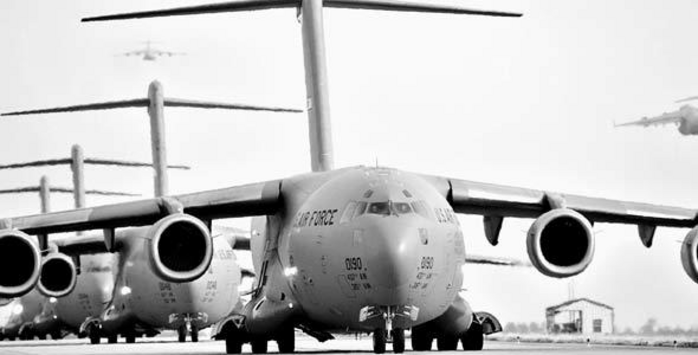
The Pentagon secured the Manas Air Base (as of last year known as the Transit Center at Manas) in Kyrgyzstan shortly after its invasion of Afghanistan in October of 2001 and in the interim, according to a U.S. armed forces publication last June, “More than 170,000 coalition personnel passed through the base on their way in or out of Afghanistan, and Manas was the transit point for 5,000 tons of cargo, including spare parts and equipment, uniforms and various items to support personnel and mission needs.

“Currently, around 1,000 U.S. troops, along with a few hundred from Spain and France, are assigned to the base.” [1]

The White House’s Special Representative for Afghanistan and Pakistan Richard Holbrooke paid his first visit in his current position to Kyrgyzstan – and the three other former Soviet Central Asian republics which border it, Kazakhstan, Tajikistan and Uzbekistan – in February and said “35,000 US troops were transiting each month on their way in and out of Afghanistan.” [2] At the rate he mentioned, 420,000 troops annually.

The U.S. and NATO also established military bases in Tajikistan and Uzbekistan for the war in South Asia, but on a smaller scale. (U.S. military forces were ordered out of the second country following what the government claimed was a Tulip Revolution-type armed uprising in its province of Andijan less than two months after the Kyrgyz precedent. Germany maintains a base near the Uzbek city of Termez to transit troops and military equipment to Afghanistan’s Kunduz province where the bulk of its 4,300 forces is concentrated.)

In February of 2009 the Kyrgyz government announced that it was also evicting U.S. and NATO forces from its country, but relented in June when Washington offered it $60 million to reverse its decision.

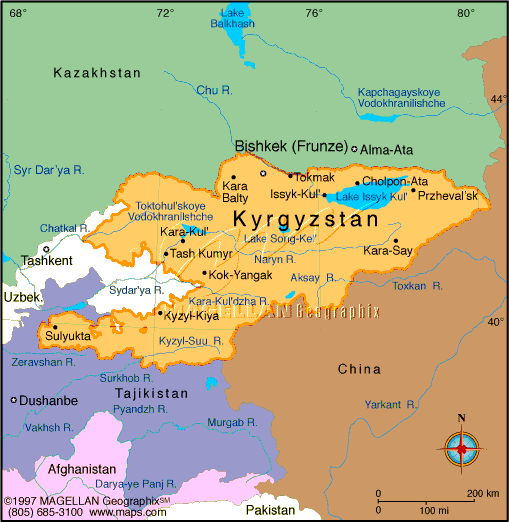
Kyrgyzstan borders China.

It not only borders China, Kazakhstan, Tajikistan and Uzbekistan, but is only separated from Russia by a single nation, Kazakhstan. To gain an appreciation of Russian and Chinese concerns over hundreds of thousands of U.S. and NATO troops passing through Kyrgyzstan, imagine a comparable amount of Chinese and Russian soldiers regularly passing through Mexico and Guatemala, respectively. For almost nine years and at an accelerating rate.

It is not only a military “hard power” but also a “soft power” threat that the Western role in Kyrgyzstan poses to Russia and China.

The nation is a member of the post-Soviet Collective Security Treaty Organization (CSTO) along with Russia, Armenia, Belarus, Kazakhstan, Tajikistan and Uzbekistan – seen by many as the only counterpart to NATO on former Soviet space – and of the Shanghai Cooperation Organization (SCO) with China, Russia and the three above-mentioned Central Asian nations.

According to U.S. officials, during and after the Tulip Revolution of 2005 not a single U.S. or NATO flight into the Manas Air Base was cancelled or even delayed. But a six-nation CSTO exercise scheduled for days afterward was cancelled.

The uprising and the deposing of standing president Askar Akayev in March of 2005 was the third self-styled “color revolution” in the former Soviet Union in sixteen months, following the Rose Revolution in Georgia in late 2003 and the Orange Revolution in Ukraine in late 2004 and early 2005.

As the Kyrgyz version was underway Western news media were asking the question “Who’s next?” Candidates included other former Soviet states like Armenia, Azerbaijan, Belarus, Kazakhstan, Moldova and Uzbekistan. And Russia. Along with Georgia, Ukraine and Kyrgyzstan those nations accounted for ten of the twelve members of the post-Soviet Commonwealth of Independent States (CIS).

As Agence France-Presse detailed in early April of 2005: “The CIS was founded in December 1991 on the very day the Soviet Union disappeared….But over the past year and a half, three faithful Kremlin allies were toppled in…revolutions: Eduard Shevardnadze in Georgia, Leonid Kuchma in Ukraine, and, last week, Askar Akayev in Kyrgyzstan….Even though Kyrgyzstan’s new interim leaders have vowed to continue their deposed predecessor’s Moscow-friendly policies, the lightning toppling of the government there has spawned speculation that the CIS would soon collapse.” [3]

The leader of the “color revolution” prototype, Georgia’s Mikheil Saakashvili, gloated over the Kyrgyz “regime change,” attributing the “brave” actions of the opposition in Ukraine and Kyrgyzstan “to the Georgia factor,” and added, “We are not waiting for the development of events, but are doing our best to destroy the empire in the CIS.” [4]

Shortly after the uprising former Indian diplomat and political analyst M.K. Bhadrakumar wrote of the then seemingly inexorable momentum of “color” revolts in the former Soviet Union:

“[A]ll the three countries [Georgia, Ukraine, Kyrgyzstan] are strategically placed in the post-Soviet space. They comprise Russia’s ‘near abroad.’

“Washington has been expanding its influence in the arc of former Soviet republics — in the Baltics…the Caucasus, and Central Asia — in recent years with a tenacity that worries Moscow.

“Ever since 2003 when Mr. Akayev decided on allowing Russia to establish a full-fledged military base in Kant he knew he was on the American ‘watch list.’ The political temperature within Kyrgyzstan began to rise.

“The Americans made it clear in many ways that they desired a regime change in Bishkek….The ‘revolution’ in the Central Asian state of Kyrgyzstan has already thrown up surprises. A comparison with the two earlier ‘colour revolutions’ in Georgia and Ukraine will be a good starting point.

“First, the striking similarities between the three ‘revolutions’ must be duly noted. All three are meant to signify the unstoppable spread of the fire of liberty lit by the United States in Afghanistan and Iraq in the aftermath of 9/11.

“But behind the rhetoric, the truth is that the U.S. wanted regime change in Georgia, Ukraine and Kyrgyzstan because of difficulties with the incumbent leadership. The leaders of all the three countries — Eduard Shevardnadze in Georgia, Leonid Kuchma in Ukraine, and Askar Akayev in Kyrgyzstan — had enjoyed the support of the U.S. during most of their rule.

“Washington had cited them repeatedly as the beacons of hope for democracy and globalisation in the territories of the former Soviet Union.

“Their trouble began when they incrementally began to edge towards a resurgent Russia under Vladimir Putin.” [5]

Seven weeks after Bhadrakumar’s column appeared his analysis would be confirmed by no less an authority on the matter than U.S. President George W. Bush.

Visiting the capital of Georgia a year and a half after its “Rose Revolution,” he was hosted by his counterpart Mikheil Saakashvili, former State Department fellowship recipient and U.S. resident, who seized power in what can only be described as a putsch but nevertheless said:

“Georgia will become the main partner of the United States in spreading democracy and freedom in the post-Soviet space. This is our proposal. We will always be with you in protecting freedom and democracy.”

Bush reflected Saakashvili’s inflated estimate of himself: “You are making many important contributions to freedom’s cause, but your most important contribution is your example. Hopeful changes are taking places from Baghdad to Beirut and Bishkek [Kyrgyzstan]. But before there was a Purple Revolution in Iraq or Orange Revolution in Ukraine or a Cedar Revolution in Lebanon, there was a Rose Revolution in Georgia.” [6]

A few days after the Kyrgyz coup Bush welcomed Ukraine’s “orange” president Viktor Yushchenko – who this January only received 5.45 per cent of the vote in his reelection bid – and applauded his U.S.-assisted ascent to power, saying it “may have looked like it was only a part of the history of Ukraine, but the Orange Revolution represented revolutions elsewhere as well….We share a goal to spread freedom to other nations.” [7]

Beyond the threat of the dissolution of the CIS and of the CSTO, in April of 2005 Der Spiegel featured a report with the title “Revolutions Speed Russia’s Disintegration.”

In part it revealed the prime movers behind the events in Kyrgyzstan. According to Der Spiegel, (April 4, 2005):

“As early as February,” Roza Otunbayeva – now the apparent head of the provisional government – “pledged allegiance to a small group of partners and sponsors of the Kyrgyz revolution, to ‘our American friends’ at Freedom House (who donated a printing press in Bishkek to the opposition). …

“Trying to help the democratic process, the Americans poured some $12 million into Kyrgyzstan in the form of scholarships and donations – and that was last year alone. Washington’s State Department even funded TV station equipment in the rebellious southern province town of Osh.” [8] [9]

This process of geostrategic transformation, from the Balkans to the former Soviet Union and the Middle East was also supported by Freedom House, the National Endowment for Democracy, the National Democratic Institute, the International Republican Institute and other non-governmental organizations.

A week after the “tulip” takeover the project director for Freedom House, Mike Stone, summed up the role of his organization with two words: “Mission accomplished.” [10]

A British newspaper that interviewed him added, “US involvement in the small, mountainous country is higher proportionally than it was for Georgia’s ‘rose’ revolution or Ukraine’s ‘orange’ uprising. [11]

Assistance also was provided by Western-funded and -trained “youth activists” modeled after and trained by those organized in Yugoslavia to topple the government of Slobodan Milosevic in 2000:

Compare the names:

Yugoslavia: Otpor! (Resistance!)

Ukraine: Pora! (It’s Time!)

Georgia: Kmara (Enough)

Kyrgyzstan: KelKel (Stand Up and Go)

Behind them all, deposed Kyrgyz president Askar Akayev identified the true architects of his ouster. On April 2 he stated “There were international organisations who supported and financed the Tulip Revolution in Kyrgyzstan.

“A week before these events I saw a letter on the internet signed by the US ambassador to Kyrgyzstan. It contained a detailed plan for the revolution.” [12]

The Kyrgyz Tulip (formerly Lemon, Pink and Daffodil) Revolution was as unconstitutional and as disruptive to the nation as its Georgian and Ukrainian predecessors were, but far more violent. Deaths and injuries occurred in the southern cities of Osh and Jalal Abad (Jalalabad, Jalal-Abad) and in the capital of Bishkek.

It was also the first “color” revolt in a nation bordering China. Not only did Russia and China voice grave concerns over the developments in Kyrgyzstan, Iran did also, seeing where the trajectory of “regime change” campaigns was headed.

In the four decades of the Cold War political changes through elections or otherwise in any nation in the world – no matter how small, impoverished, isolated and seemingly insignificant – assumed importance far exceeding their domestic effects. World political analysts and policy makers asked the key question: Which way would the new government align itself, with the U.S. or the Soviet Union?

In the post-Cold War period the question is no longer one of political philosophy or socio-economic orientation, but this: How will the new administration support or oppose U.S. plans for regional and global dominance?

With Roza Otunbayeva as chief spokesperson if not head of a new Kyrgyz “people’s government,” there is reason to believe that Washington will not be dissatisfied with the overthrow of her former “tulip” partner Bakiyev. She has already confirmed that the American base at Manas will not be closed.

Less than two months after the 2005 coup Otunbayeva, then acting foreign minister, met with her U.S. counterpart Condoleezza Rice in Washington during which the latter assured her that “the U.S. administration will continue to help the Kyrgyz government promote democratic processes in the country.” [13]

Shortly after the March “democratic transformation,” its patron saint, Georgia’s Mikheil Saakashvili, boasted that “Roza Otunbayeva worked in Tbilisi in recent years and was the head of UN office in Abkhazia. During the Rose Revolution she was in Georgia and knew everything that was happening…the Georgian factor was a catalyst of many things going on there [in Kyrgyzstan].”[14]

From the U.S. perspective she appears to have reliable bona fides.

Russia has put its air base in Kyrgyzstan on high alert, though comments from leading Russian government officials – Prime Minister Vladimir Putin in particular – indicate an acceptance of the uprising which has already caused 65 deaths and hundreds of injuries.

But Russia attempted to put the best face on the revolt five years ago also.

Which direction the next Kyrgyz government takes will have repercussions far beyond the nation’s small size and population (slightly over five million).

It could affect U.S. and NATO plans for the largest military offensive of the Afghan war scheduled to begin in two months in Kandahar province.

It could determine the future of the Collective Security Treaty Organization and the Shanghai Cooperation Organization, the two major potential barriers to Western military penetration of vast tracts of Eurasia.

The stakes could hardly be higher.

Notes

1) Stars and Stripes, June 16, 2009

2) Agence France-Presse, March 4, 2010

3) Agence France-Presse, April 3, 2005

4) The Messenger, March 31, 2005

5) The Hindu, March 28, 2005

6) Civil Georgia, May 10, 2005

7) Associated Press, April 4, 2005

8) Der Spiegel, April 4, 2005

9) Russian Information Agency Novosti, June 16, 2005

10) The Telegraph, April 2, 2005

11) Ibid

12) Associated Press, April 2, 2005

13) Interfax, June 15, 2005

14) Civil Georgia, March 30, 2005

Stop NATO: http://groups.yahoo.com/group/stopnato

Blog site: http://rickrozoff.wordpress.com/

To subscribe, send an e-mail to: rwrozoff@yahoo.com

or

stopnato-subscribe@yahoogroups.com

Rick Rozoff is a frequent contributor to Global Research. Global Research Articles by Rick Rozoff

Occupied Washington, DC

http://www.commondreams.org/view/2010/04/10-1

Occupied Washington, DC

by Stephanie Westbrook

As a visitor to our nation’s capital, I cannot tell you how disconcerting it is to step off the metro and find yourself face to face with a F-35 fighter jet. Where you would normally expect to find ads for cell phones or museum exhibitions, Washington’s subway, the second busiest in the country, instead displays full color backlit billboards for some of the most deadly – and expensive – weapons systems ever produced.

The ads for such companies as Lockheed Martin, the world’s largest weapons producer, Goodrich, KBR, AGI, BAE Systems and Northrop Grumman can be found in many of the metro stations in the Washington metropolitan area. Not surprisingly, the heaviest concentration is at Pentagon City and near government offices at the Federal Center and Capitol South stations. Undoubtedly, the ads aim to influence key decision-makers, but they also serve the purpose of selling to the general public the concept that only our superior military prowess can protect us from a hostile world.

The billboards range from explicit ads for attack helicopters and combat vehicles to more subtle billboards for companies such as little-known DRS, owned by Italian weapons maker Finmeccanica and 26th among the top 100 Pentagon contractors, or for “rugged” Dell computers designed to meet Defense Department specifications for military-use.

Far from subtle is Northrop Grumman’s marketing approach in the Capitol South metro station, the closest to Congress. In an all out assault on the visual senses, the station has been literally festooned by the country’s third largest military contractor. Apparently considering the usual ad space along the tracks to be insufficient, Northrop Grumman ads can also be found on all four sides of columns installed near the turnstiles, on banners strung up along the railings upstairs and even on the floor just before the escalators. CBS Outdoor, responsible for the ad space in DC metro stations, claims that “Capitol Hill Station Domination is an impactful way to get your message in front of the Congress and decision-makers in DC.”

An estimated 17,000 Capitol South metro passengers are confronted daily with Northrop Grumman Global Hawks and X-47 Unmanned Combat Aerial Vehicles, which boast a 4500-pound weapons bay, E-2D Advanced Hawkeyes, Viper Strike-armed Fire Scout unmanned helicopters and E-8C Joint Surveillance Target Attack Radar Systems (STARS), all designed “for an unsafe world.” According to the centrist Brookings Institute, 90% of drone casualties in “targeted” strikes in Pakistan have been innocent civilians. Yet ads for these systems, which carry price tags ranging hundreds of millions of dollars when factoring in development costs, are on full display.

Perhaps most startling of all the Capitol South billboards is the ominous scene of a bombed out apartment building above the slogan “By the time you find the threat, we’ve already taken it out of the picture.” Northrop Grumman fails to fill us in on what happened to the people living in those apartments.

Following the trend of major defense companies wishing to cozy up to powerbrokers in Congress and at the Pentagon, Northrop Grumman recently announced plans to relocate its California headquarters to the DC area. Officials from Washington, Virginia and Maryland have been falling over themselves trying to influence the decision of the $34 billion company.

The District of Columbia has gone as far as offering a $25 billion incentive package for what Northrop Grumman estimates to be a measly 300 jobs, which will be filled primarily by company executives moving from Los Angeles!

The defense contractor presence on the DC metro is but one example of the ubiquitous signs of militarism in Washington. Standing out like sore thumbs, military personnel dressed in camouflage can be seen everywhere from the food court at the shopping mall to the line at the bank. Combat fatigues were ordered everyday wear for all service members, including those with desk jobs, following the September 11, 2001 attacks. I asked several camouflaged service members the reason behind the combat uniforms and all sheepishly replied that is was in support of the “troops in the field.” One woman told me, “That’s a good question. You feel kind of funny wearing this.” Looking down at her desert boots, she said, “It’s not exactly office wear.” But it is a clear and constant reminder that the nation continues to be on a war footing.

Signs calling for support of the troops can be found on everything from restaurant walls to dump trucks. Cheering on the “troops in the field” is also the Liberty gas station on Columbia Pike in Arlington. Directly above the gas pumps is a red, white and blue sign that reads “Support Our Troops.” This is either the result of disturbingly twisted logic or an astonishingly candid call for protecting U.S. access to Middle East oil reserves.

Walking the halls of Congress, you will find memorials at the offices of many representative and senators for the fallen troops from their district or state. What you will not find are any memorials for the 2,200 veterans who died in 2008 as a result of a lack of health insurance.

At Union Station, Amtrak passengers should not be surprised if a soldier or two cut in line. Signs in the station invite uniformed military personnel to skip to the head of the ticket line. According to Amtrak, which is the only Department of Defense approved rail passenger carrier in the US, it is a way for the company to “extend their thanks.” That’s all and good but why wouldn’t Amtrak want to do the same for teachers, healthcare professionals, firefighters, librarians or non-profit volunteers?

Much of this is not necessarily new; the militarization of our society has been progressing for decades, permeating our schools, research and development programs, law enforcement and culture. And despite the heavy concentration in Washington DC, the phenomenon is certainly not limited to the nation’s capital. The signs of militarism in our country are ever-present to the point of becoming virtually invisible, while subconsciously persuading us to accept violence and war as not only a suitable solution to conflict, but the only one.

The fighter jets and missile-firing drones are anything but invisible to the people in Iraq, Afghanistan and Pakistan. Let’s rebel against their apparent “normalcy” here in the US. As a start, contact Dan Langdon, CBS Outdoor’s Vice President and Regional Manager letting him know that ads for deadly weapons systems have no place on the DC metro, or anywhere else for that matter! Dan.Langdon@cbsoutdoor.com

Upheaval in Kyrgyzstan Could Imperil Key U.S. Base

“Upheaval in Kyrgyzstan could Imperil key U.S. Base”?  More like U.S. Base created conditions that bred corruption and fueled popular unrest that eventually toppled the government.

>><<

http://www.nytimes.com/2010/04/08/world/asia/08bishkek.html?hp

Upheaval in Kyrgyzstan Could Imperil Key U.S. Base

By CLIFFORD J. LEVY

Published: April 7, 2010

MOSCOW — The president of Kyrgyzstan was forced to flee the capital, Bishkek, on Wednesday after bloody protests erupted across the country over his repressive rule, a backlash that could pose a threat to the American military supply line into nearby Afghanistan.

The New York Times

Opposition politicians, speaking on state television after it was seized by protesters, said they had taken control of the government after a day of violent clashes that left more than 40 people dead and more than 400 wounded. The instability called into question the fate of a critical American air base in the country.

Riot police officers fired rounds of live ammunition into angry crowds of demonstrators who gathered around government buildings to rally against what they termed the government’s brutality and corruption, as well as a recent decision to increase utility rates sharply. Witnesses said that the police seemed to panic, and that there was no sign of supervision. In several cases, demonstrators wrested their weapons away from them.

By early Thursday morning, opposition officials occupied many government buildings in Bishkek, and were demanding that the president, Kurmanbek Bakiyev, sign a formal letter of resignation. Mr. Bakiyev has issued no public remarks since the protests began. An official at the Bishkek airport said Mr. Bakiyev was flying to Osh, a major city in the southern part of the country.

A coalition of opposition parties said a transition government would be headed by a former foreign minister, Roza Otunbayeva. “Power is now in the hands of the people’s government,” she said in a televised address on Wednesday evening.

Those same opposition leaders were angered last spring when Obama administration officials courted Mr. Bakiyev — who they admitted was an autocrat — in an ultimately successful attempt to retain rights to the military base, Manas, used to supply troops in Afghanistan. President Obama even sent him a letter of praise.

Russia had offered Mr. Bakiyev a sizable amount in new aid, which the United States interpreted as an effort to persuade him to close the base in order to limit the American military presence in Russia’s sphere of influence. After vowing to evict the Americans last year, Mr. Bakiyev reversed course once the administration agreed to pay much higher rent for the base.

An American official said late on Wednesday that flights into the base at Manas had been suspended. Lt. Cmdr. Bill Speaks, a spokesman for United States Central Command, said late on Wednesday that some troops and equipment scheduled to transit from Manas to Afghanistan were likely to be delayed because of the government upheaval and that the military was preparing to use other routes.

The American attitude toward Mr. Bakiyev ruffled opposition politicians in Kyrgyzstan, who said it was shameful for the United States to stand for democratic values in the developing world while maintaining an alliance with him.

The Kyrgyz president’s son, Maksim, had been scheduled to be in Washington on Thursday for talks with administration officials. The opposition views the younger Mr. Bakiyev as a vicious henchman for his father, and was infuriated that he was granted an audience. The State Department said late on Wednesday that it had canceled the meetings.

Opposition leaders have been divided in recent weeks over whether they would continue to allow the American military base to remain, but it seems clear that they harbor bitterness toward the United States. And neighboring Russia, which has long resented the base, has been currying favor with the opposition.

“The political behavior of the United States has created a situation where the new authorities may want to look more to Russia than to the United States, and it will strengthen their political will to rebuff the United States,” said Bakyt Beshimov, an opposition leader who fled Kyrgyzstan last August in fear for his life.

Mr. Beshimov was one of numerous opposition politicians and journalists who in recent years have been threatened, beaten and even killed. Kyrgyzstan, with five million people in the mountains of Central Asia, is one of the poorest countries of the former Soviet Union, and has long been troubled by political conflict and corruption. Mr. Bakiyev himself took power in 2005 after the Tulip Revolution, one of a series of so-called color revolutions that seemed to offer hope of more democracy in former Soviet republics. Since then, the Kyrgyz human rights situation has deteriorated. Mr. Bakiyev easily won another term as president last year, but independent monitors said the election was tainted by extensive fraud.

Tensions in Kyrgyzstan have been brewing for months, and seemed to be touched off in the provincial city of Talas on Tuesday by protests over soaring utility rates. Then on Wednesday, thousands of people began massing in Bishkek, where they were met by heavily armed riot police officers. Dmitri Kabak, director of a local human rights group in Bishkek, said in a telephone interview that he was monitoring the protest when riot police officers started shooting. “When people started marching toward the presidential office, snipers on the roof of the office started to open fire, with live bullets,” Mr. Kabak said. “I saw several people who were killed right there on the square.”

Dinara Saginbayeva, a Kyrgyz health official, said in a telephone interview that the death toll could rise, and that more than 350 people had been wounded in Bishkek alone. Opposition leaders said as many as 100 people may have died.

While the fighting was raging, security forces still loyal to the president arrested several prominent opposition leaders, including Omurbek Tekebayev, a former speaker of Parliament, and Almazbek Atambayev, a former prime minister and presidential candidate. They were later released after the government’s resistance appeared to wither.

While opposition leaders have promised to pursue a less authoritarian course, Central Asia has not proved fertile ground for democracy. Mr. Bakiyev himself took office declaring that he would respect political freedoms.

Whatever happens domestically, a new government will have decide how to balance the interests of the United States and Russia, which both have military bases in Kyrgyzstan and want to maintain a presence in the region. Paul Quinn-Judge, Central Asia project director for International Crisis Group, a research organization, said Russia had stoked anti-American sentiment in Kyrgyzstan in recent months, often over the issue of the base.

Nevertheless, Mr. Quinn-Judge said he suspected that opposition politicians would in the end decide to permit the base, though not before giving the United States a hard time. “My gut feeling is that it can be smoothed over,” he said. “But they have got to move fast to reach out to the opposition, and do it with a certain degree of humility.”

Elisabeth Bumiller contributed reporting from Washington.


Military boosts research funding for biofuels and solar power in Hawai’i

The military wants to grow biofuel crops in Hawai’i to reduce its dependency on imported oil. That’s good and all, but Hawai’i can’t even feed itself.  Something like 90% of food is imported. Why grow jet fuel?   That the military is exploring alternative energy sources in Hawai’i should be a warning about how vulnerable and dependent Hawai’i is.

>><<

http://www.honoluluadvertiser.com/article/20100407/NEWS01/4070368/Hawaii+biofuels++solar+power+being+boosted+for+military+use

Posted on: Wednesday, April 7, 2010

Hawaii biofuels, solar power being boosted for military use

By William Cole

Advertiser Military Writer

The Navy wants to increase up to sevenfold the state’s solar power output as part of a militarywide effort in Hawai’i to reduce its dependency on foreign fossil fuels.

About 160 people from 61 companies on the Mainland and in Hawai’i attended a forum yesterday at Marine Corps Base Hawaii to discuss the effort.

A short distance away, also on Marine Corps Base Hawaii, a biofuels gathering that focused on growing renewable energy crops for Navy fuel drew 250 people and about 100 companies.

The meetings were separate, but the goal is the same: a drive by the military to curb its use of foreign oil. Officials said Hawai’i is the most oil-dependent state in the nation, getting 90 percent of its fuel from overseas nations.

In January, the Navy and U.S. Department of Agriculture signed an agreement to increase biofuel crops and other renewable energy sources for military use.

Hawai’i was chosen for the initial collaboration between the two federal entities.

Agriculture Deputy Secretary Kathleen Merrigan yesterday called the biofuels gathering a “historic day for Hawai’i.”

“This charter partnership, under the agreement, gives us the chance to tap the under-utilized agricultural potential of Hawai’i,” Merrigan said at a news conference.

On Maui today, U.S. Sen. Daniel K. Inouye, D-Hawai’i, will join with Merrigan and officials of Hawaiian Commercial & Sugar Co. to discuss commercial production of advanced biofuels and other renewable energy sources for the Navy.

Officials said the Office of Naval Research will commit about $2 million a year to the effort and the Department of Energy this year will add another $2 million.

Jackalyne Pfannenstiel, assistant secretary of the Navy for energy, installations and the environment, said at the news conference yesterday that the state of Hawai’i is a partner with the Navy and Agriculture Department in the renewable energy effort.

That partnership “will allow us to model what can be done, what crops can be grown in Hawai’i, and show how we can use them to help our nation get off fossil fuels,” she said.

Navy demand for jet fuel will be used as the “pull” for renewable fuel crop growth.

Growing oil

Robert King, president of Pacific Biodiesel Inc. and one of those attending the first day of the two-day industry forum, said Hawai’i doesn’t have commercially grown oil crops in the state, and the big issues are which fuels to grow, and which ones are right for Hawai’i.

“I like the tone that we are hearing, that we are going to move (on biofuel crops), we are going to do this, it is going to happen,” King said. “But let’s see if it hits the ground with some real projects.”

Pacific Biodiesel, started in Hawai’i, produces biofuel from used cooking oil.

King said the city of Honolulu is one of its biggest customers.

Algae, jatropha, camelina and other crops are mentioned as possible fuel sources.

Hawai’i Pure Plant Oil grows jatropha on 250 acres of former sugar and papaya land in Kea’au on the east side of the Big Island. The company claims jatropha, which doesn’t compete with food stocks, is up to 50 times more productive than corn per acre for biofuel.

King said an investment needs to be made in “helping farmers to grow the next crops (in Hawai’i). We’ve been trying to get these first models out there for a long time, but it’s just been real difficult to get any traction for that.”

Tapping sunshine

Separately yesterday, Naval Facilities Engineering Command Pacific briefed about 160 people representing 61 companies on a big solar power expansion being overseen by the Navy for the military in the Isles.

The maximum value of all contracts combined is $500 million for up to 30 years.

The solar projects, being offered to small businesses, are expected to be built on rooftops, parking structures and open land on sites that total up to more than 6 million square feet.

The initial 20-year task order for Army, Navy, Air Force, Marine Corps and Army Reserve facilities covers 2.8 million square feet of space, including 1.2 million feet of runway site on Ford Island.

‘That’s huge’

The Ford Island site work would require a State Historic Preservation Division review and approval with a finding of “no adverse effect,” the Navy said.

Thin-filmed panels would be placed no more than a foot high above the ground with no disturbance to the asphalt except for weed clearing, according to Navy documents.

Not all the square footage cited by the Navy would be covered in photovoltaic panels or solar “thermal” power systems. Rather, contractors will propose projects that they will build, own and operate on those sites — and that can vary in size — to meet the Navy’s power purchase rate of less than 16.6 cents per kilowatt hour for the first two years.

That electricity rate would provide a cost-savings for the government over fossil fuels.

Arthur Athas, vice president of market development for Solar Power Partners out of Mill Valley, Calif., said the 56 megawatt maximum solar production being sought by the military dwarfs the approximately eight mega-watts of photovoltaic power now produced in Hawai’i.

“A 56-megawatt solicitation — that’s huge,” Athas said. “It places Hawai’i in the forefront of renewables in the United States.”

Putting that energy on Hawaiian Electric’s grid will be the biggest challenge, and the utility has to perform interconnection studies, he said.

Reach William Cole at wcole@honoluluadvertiser.com.

Fuse Yūjin: The Complete Withdrawal of the US Military from Ecuador: A Victory for Sovereignty and Peace in Latin America

Japan Focus has translated into English two important articles about anti-bases struggles.  Below is the second of two parts, ‘The Complete Withdrawal of the US Military from Ecuador: A Victory for Sovereignty and Peace in Latin America’ by Fuse Yūjin.   It gives an excellent overview of the campaign to oust the U.S. military base from Manta, Ecuador.   Part 1, Marines Go Home: Anti-Base Activism in Okinawa, Japan and Korea by Kageyama Asako gives an excellent comparative analysis of the demilitarization struggles in Okinawa, Korea and Hokkaido.  These articles are valuable reference materials for Hawai’i activists.

>><<

http://japanfocus.org/-Fuse-Yujin/3336

The Complete Withdrawal of the US Military from Ecuador: A Victory for Sovereignty and Peace in Latin America

Fuse Yūjin

Translated by Philip Seaton

US forces withdrew completely from Ecuador in September 2009. How does the Democratic Party of Japan’s coalition administration see the “victory for sovereignty and peace” as it sways between the imperatives of the Okinawan people’s will and the US-Japan Alliance with respect to the transfer of the Futenma Base on Okinawa? This is the second in a two part series on US military bases. The first part is Kageyama Asako and Philip Seaton, Marines Go Home: Anti-Base Activism in Okinawa, Japan and Korea

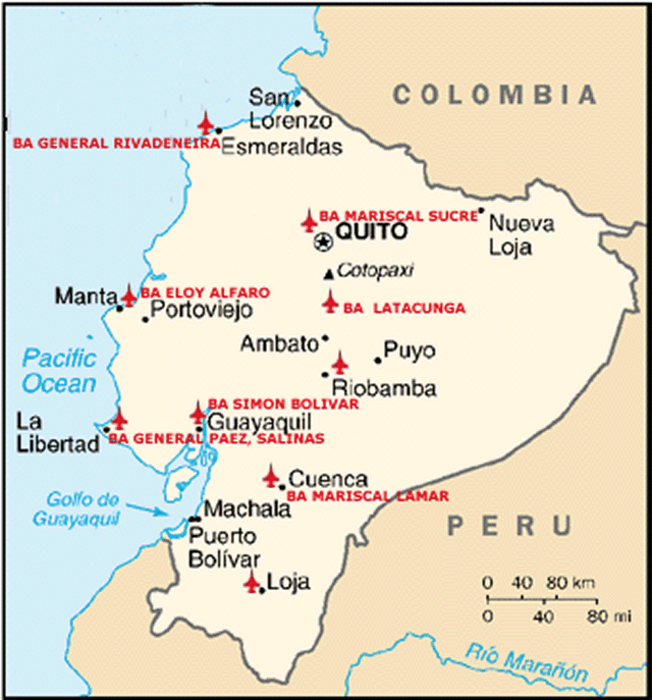
In Spanish, Ecuador means “equator”. Manta is a port town facing the Pacific Ocean in the west of the country. On the coast is a large Ecuadorian air force base. From 1999, the American military had been using the base as a Forward Operating Location (FOL).

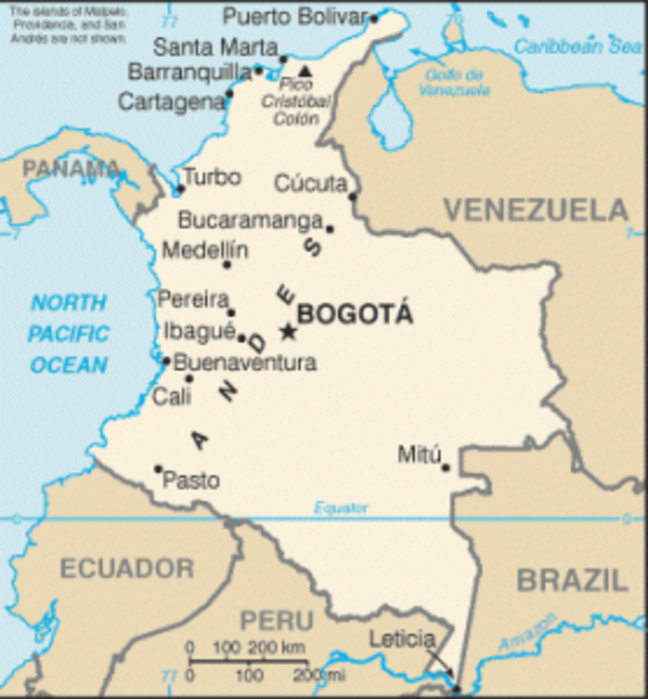
US planes withdrawn from Manta, Ecuador, were transferred to Colombia.

Ecuadorian President Rafael Correa announced that the agreement leasing the base, which expired in November 2009, would not be renewed. The American military ceased operations from the base on 17 July 2009. The last personnel left the base on 18 September, and the facilities used for a decade by the American military were all returned to Ecuador.

At a ceremony marking the American withdrawal, Foreign Minister Fander Falconí made the following strong statement: “The withdrawal of the American military is a victory for sovereignty and peace. Never again foreign bases on Ecuadorian territory, never again a sale of the flag.”1

Meanwhile, a relieved Defense Minister Javier Ponce commented: “I am glad that President Correa has fulfilled his election pledge and preserved the constitution.”

On the same day in the capital Quito, the citizens’ group Anti-Bases Coalition Ecuador held a concert of celebration. In exuberant Latin style about 200 people celebrated the American military withdrawal with singing and salsa dancing at an amphitheater. Messages of congratulation were read out from anti-base movements across the globe, starting with Japan, and each was greeted by loud applause.

Helga Serrano, the coordinator of the Anti-Bases Coalition, commented during a slide show that looked back over the struggle, “This is a victory not only for the Ecuadorian people, but also for the network of people across South America and the globe who have fought for the removal of foreign military bases.”

Ecuador as a base for US intervention in Colombia

Using the pretext of “cracking down on drug trafficking”, the US was able to sign a ten-year lease on the base with former President Jamil Mahuad in 1999. Following the signing, AWACS (Airborne Warning and Control System) and P3C maritime patrol aircraft were stationed at the base, along with around 400 military personnel at its peak.

Martha Youth, a spokeswoman for the US Embassy in Quito, announced at the closing ceremony on 18 September that along with other Forward Operating Locations in Central and South America, a total of 700 tons of drugs with a value of 35.1 billion USD had been seized. “We’ve done good work in cooperation with the Ecuadorian authorities”, she said.2

However, Pablo Lucio Paredes, head of CONADE (Comisión Nacional de Control Antidopaje del Ecuador) gave a different view.

“Our country has received no benefits from American operations out of the Manta base these ten years. From the outset, the base’s real purpose was linked to the American geopolitical strategy to involve our country in the civil war in neighboring Colombia.”

The US base was located at Manta, Ecuador

In the same year that the Manta Air Base lease was signed, the pro-American government in Colombia started a cleanup operation Plan Colombia against the rebel group FARC (Fuerzas Armadas Revolucionarias de Colombia, Revolutionary Armed Forces of Colombia). Then in 2001, when the US began its global “war on terror,” Plan Colombia also came to be seen as part of it.

As operations against FARC intensified, conflict expanded into the border regions with Ecuador. The Colombia military, with support from the US, engaged in the large-scale aerial dispersion of defoliant on the pretext of “the elimination of drugs”. This caused serious damage to the health and agriculture of people living on the Ecuadorian side of the border.

Around the Manta Air Base, women and young people faced greater harm: there was an expansion of the sex industry and increased numbers of crimes committed by American service personnel, who were given local immunity from prosecution under the terms of the Status of Forces Agreement (SOFA). Furthermore, there were successive incidents of fishing boats or boats carrying immigrants being attacked or detained by the American naval vessels that frequently came to Manta port. All these incidents caused mistrust of the American military to slowly grow.

Foreign Bases Outlawed Under the New Constitution

Against this background, in 2006 local groups opposing the base joined forces with national human rights groups, farmers, indigenous peoples groups, young people and students to form the Anti-Bases Coalition Ecuador. In November of the same year, Rafael Correa was elected president of Ecuador with a pledge to prevent renewal of the base lease. Expectations that the base would be removed increased sharply.

Then in March 2007, with the support of the new government, the first International Conference for the Abolition of Foreign Military Bases was convened in Quito and Manta by an international network of anti-base activists.3 President Correa, who had pledged the introduction of a new constitution during the election, held a referendum on establishing a Constituent Assembly in April 2007. The electorate gave their approval. The Anti-Bases Coalition Ecuador proposed inclusion of a clause forbidding the establishment of foreign military bases to the committee drafting the new constitution.

The process of creating the new constitution was thoroughly grounded on the principle of “participatory democracy”. Prior to the establishment of the Constituent Assembly in November 2007, debates were held in local communities and schools. As a result, around 3,500 proposals were submitted to the committee drafting the constitution, and a number of forums with citizens’ participation were held while the Assembly was in session.

Then on 1 March 2008 there was an incident in which the Colombian military launched a cross-border attack on a “FARC Camp” said to be just inside Ecuador, in which 25 people were killed.

A few days later, Admiral James Stavridis of U.S. Southern Command stated in testimony to congress that he had observed military action by Ecuadorian and Venezuelan forces on the border with Colombia, and that the Colombian military, with continuous support from the US, prevailed in the fierce battles.4 It is clear that the US forces based at Manta were either directly or indirectly involved in the operations.

Just as it was being made clear once again that the real role of the Manta Base was a “launch pad for intervention in the Colombian civil war”, on 1 April 2008 the Constituent Assembly approved by a large majority the inclusion almost without change of the clause forbidding the presence of foreign bases put forward by the anti-base movement. The new constitution was put to a referendum on 28 September, and it was approved with a majority of 64 per cent on a voter turnout of 94 per cent.

Toward a South America Without American Bases

At the ceremony on 18 September 2009 marking the complete withdrawal of American forces from the Manta base, Foreign Minister Falconí said, “Now in Latin America there is a new vision and deep-seated change to reject all forms of subordination to others.”

For a long time, South America has been called the “US’s back yard”. However, there is now a broadening “domino effect” whereby countries are trying to break away from subordination to America and overcome the neo-liberal economics pushed onto them by America. The undercurrent to the expulsion of the American military from the Manta base was also this larger flow of events.

In January 2009, the Bolivian people also approved in a referendum a new clause in the constitution forbidding the establishment of foreign military bases.

By contrast, in August 2009, the American and Colombian governments approved a deal for the US military to use seven Colombian military bases for the next ten years as a replacement for the Manta base.

Location of seven new US military bases in Colombia

In response to this, the Union of South American Nations (UNASUR) consisting of twelve South American countries including Colombia approved a resolution at its meeting of the heads of state in Argentina, August 2009, that the stationing of foreign troops must not threaten the sovereignty and territorial integrity of all South American nations, nor the peace and stability of the region.  Furthermore, as a measure to ensure this, UNASUR intends to concretize the “inspection of military bases” in the future.

At the concert of celebration held in Quito there were also representatives of Colombian anti-base groups. The Anti-Bases Coalition Ecuador presented them with a boat on which both the Ecuadorian and Colombia flags were painted.

As Helga Serrano from the Anti-Bases Coalition explained, “The boat represents our wish to pass our fight over to Colombia. Now we are working toward the goals of the removal of all American military bases from South America and the declaration of our region as a region of peace. We have started to discuss how we can forge a common strategy that transcends national borders.”

Fuse Yūjin is a journalist. This article appeared in the 20 November 2009 edition of Shūkan Kinyōbi (Weekly Friday). Notes and links have been added by the translator to provide additional context. Quotations are retranslations from the Japanese and may differ from the original.

Philip Seaton is an associate professor in the Research Faculty of Media and Communication, Hokkaido University. An Asia-Pacific Journal Associate, he translated this article for the Journal. He is the author of Japan’s Contested War Memories and translator of Ayako Kurahashi’s My Father’s Dying Wish. Legacies of War Guilt in a Japanese Family. His webpage is www.philipseaton.net

Recommended citation: Fuse Yūjin and Philip Seaton, “The Complete Withdrawal of the US Military from Ecuador: A Victory for Sovereignty and Peace in Latin America,” The Asia-Pacific Journal, 14-2-10, April 5, 2010.

Notes

1 France 24, US quits air base used in anti-drug operations, 19 September 2009.

2 Washington Post, As U.S. Closes Military Post, Ecuador Hails Restoration of ‘Sovereignty’, 19 September 2009.

3 Transnational Institute, Ecuador: International Conference for the Abolition of Foreign Military Bases, 15 March 2007. For more on this developing movement, see Andrew Yeo, ‘Not in Anyone’s Backyard: The Emergence and Identity of a Transnational Anti-Base Network’, International Studies Quarterly (2009) 53, 571-594.

4 Admiral James Stavridis, Congressional Testimony, March 2008. Note: The testimony is available in full on video via this link. The text in this translated article is a paraphrase.

5 Colombia Reports, Colombia stands isolated at UNASUR meeting, 28 August 2009.

Kageyama Asako: Marines Go Home: Anti-Base Activism in Okinawa, Japan and Korea

Japan Focus has translated into English two important articles about anti-bases struggles.  Below is the first of a two part series in Japan Focus by Kageyama Asako.   It gives an excellent comparative analysis of the demilitarization struggles in Okinawa, Korea and Hokkaido. Part 2, ‘The Complete Withdrawal of the US Military from Ecuador: A Victory for Sovereignty and Peace in Latin America’ by Fuse Yūjin looks at the victorious campaign to oust the U.S. military base from Manta, Ecuador.  These articles are valuable reference materials for Hawai’i activists.

>><<

http://japanfocus.org/-Kageyama-Asako/3335

Marines Go Home: Anti-Base Activism in Okinawa, Japan and Korea

Kageyama Asako

Compiled, edited and translated by Philip Seaton1

The US military’s Kooni Firing Range in the South Korean village of Maehyang-ri was closed in 2005, following a concerted effort by anti-base activists. Maehyang-ri was one of three anti-base struggles featured in the documentary film Marines Go Home: Henoko, Maehyang-ri, Yausubetsu (official website here, trailer here) directed by Hokkaido-based independent filmmaker Fujimoto Yukihisa. In this article, journalist and filmmaker Kageyama Asako (narrator and co-producer of Marines Go Home) discusses the lessons from Maehyang-ri in the context of the Futenma relocation debate that is at the heart of current US-Japan conflict.

This is part of a two-article series that considers the base relocation issue from perspectives beyond Okinawa. The other is ‘The Complete Withdrawal of the US Military from Ecuador: A Victory for Sovereignty and Peace in Latin America’ by Fuse Yūjin.

The Futenma base relocation issue has been dominating the headlines in Japan ever since the formation of the Hatoyama administration in September 2009. Understandably the focus has been on Okinawa, long the center of anti-base activism. But we should see the Futenma base relocation issue as part of a much broader problem. In this article I want to consider the Futenma issue in the context of other activities within the international anti-bases movement.

I have been involved in the anti-bases movement for many years and serve on the Hokkaido Asia Africa Latin America Solidarity Committee (HAALA). HAALA is an organization that opposes neo-colonialism, respects the rights of people to self-determination and aims for the equality of all peoples. Revocation of the US-Japan Security Treaty and the removal of all American bases from Japan are among its aims. We have links with Vietnam, Nicaragua, Cuba and South Africa among others and are involved in various humanitarian projects there. A representative of the Japan Africa Asia South America Solidarity Committee went to Ecuador to attend the anti-base activities described in Fuse Yūjin’s article [add link], and have also visited Venezuela and Bolivia.

The International Network for the Abolition of Foreign Military Bases (INAFMB) took off at the World Social Forum held in Mumbai in January 2004 and was launched officially as a result of its first international conference in Quito and Manta, Ecuador, in March 2007. I attended the Mumbai meeting as the representative of HAALA. It was an unforgettable experience. To have 130,000 people gathering from across the globe under the slogan ‘Another world is possible’ in a meeting of such diversity and vibrancy was enough to really make one believe it could happen. In particular, the demonstrations by members of India’s so-called ‘untouchables’ caste left a particularly strong impression. Their cries of ‘If another world is possible then it must include us’ brought it home that only by raising one’s voice is there any hope to change things.

World Social Forum 2004

Marines Go Home

In response to the calls to action in Mumbai, and also as part of the fortieth anniversary celebrations of HAALA, we started making a documentary film: Marines Go Home, Henoko, Maehyang-ri, Yausubetsu. Marines Go Home (2005, official website here, trailer here) focuses on some of the individuals and activists dedicated to the removal of US bases from three towns and villages in Japan and South Korea. In Yausubetsu (in Eastern Hokkaido), the film depicts the ‘live in protest’ of Kawase Hanji, who for many years refused to leave his home in the middle of Yausubetsu Enshujo (Yausubetsu Maneuver Area), a Japan Ground Self Defense Forces (JGSDF) firing range in Eastern Hokkaido.2 Yausubetsu is the largest training area in Japan. Each year since 1997, US marines have been coming to Yausubetsu to conduct live-fire training, all paid for by the Japanese taxpayer.3

The local struggle against the training exercises has continued for over 40 years. For many years, the Yausubetsu Peace Bon Festival was held on Kawase’s property. This festival and the Yausubetsu issue have long been at the heart of HAALA’s activities (and as such, a number of members appear in Marines Go Home). The fortieth festival was held in 2004.
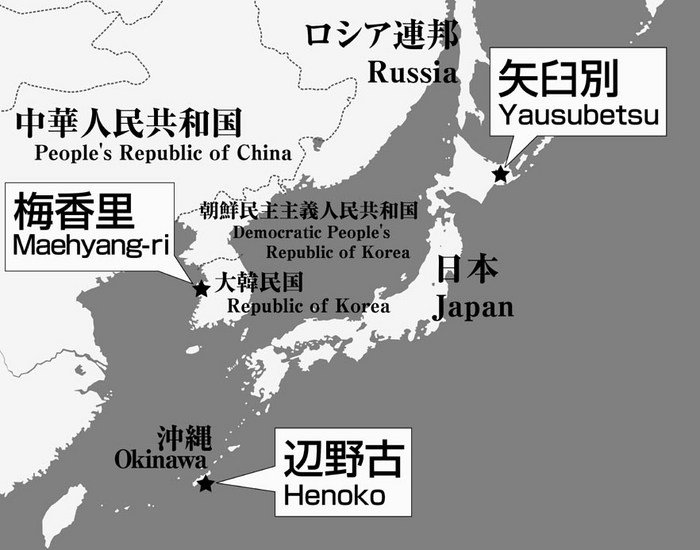
In September 2003, HAALA arranged for a special guest to visit Yausubetsu to witness a US Marines Corps training exercise. Chun Man-kyu was the leading figure in the struggle to close a firing range just off the coast of Maehyang-ri village in South Korea. The American military started using the Kooni firing range there in 1951. Up until the closure of the firing range in 2005, twelve local people had been killed, either in accidents or by unexploded ordinance from the range. There was also an incident in 2000 when an A-10 fighter dropped six missiles into the sea very close to a residential area and damaged 700 houses.

Finally, the film documents the protests against the surveying work being undertaken off the coast at Henoko in preparation for the transfer and upgrading of the Futenma air base to Camp Schwab in Henoko, part of Nago city, Okinawa. The first plan in 1996 was to construct a floating heliport. This was rejected in a plebiscite in 1997. In 2002 the plan was changed to a permanent base with a runway built on a massive landfill. This plan was withdrawn after desperate protest in September 2005, only to be replaced by a new and even bigger plan drawn up by the Japanese and American governments the following month (October 2005) for a two-runway base in Henoko along the coast of Camp Schwab in Oura Bay. The deep water in Oura Bay means nuclear aircraft carriers would be able to visit. All these plans have been made in the face of stiff local opposition and would destroy a pristine marine habitat supporting among other species rare blue coral reefs and the internationally protected dugong.4 Just before the Democratic Party of Japan defeated the Liberal Democratic Party in the 30 August 2009 general election, the outgoing and deeply unpopular Aso administration signed the so-called Guam Treaty, which the US interprets as binding the Hatoyama to an agreement to build the Henoko base.5

Protestors try to prevent survey work on the proposed Henoko offshore runways site.

Marines Go Home was released in 2005 (and an updated version was produced in 2008, official site here). A lot has happened since Marines Go Home was first released. The anti-base movement in Hokkaido suffered two keenly-felt losses in 2009 when first Kawase Hanji and then former US marine Allen Nelson6 (a staunch supporter of the ‘Marines Go Home’ message) died. With Kawase’s death, a rethinking of the strategies used by anti-base activists in Yausubetsu became necessary. The strategy could no longer be built around the theme ‘preserve Kawase’s way of life’. Thankfully, a woman who used to lodge with Kawase continues to live in the firing range, although conditions are tough. The people in and around Yausubetsu will continue the struggle, although as a vital site for the anti-bases protest movement this struggle needs as much local and international support as possible. It would be too much to ask local people to assume the whole burden of organizing activities and maintaining homes, livelihoods and places to gather within the firing range.

Kageyama interprets for the late Allen Nelson during a talk at Hokkaido University in 2007.

Anti-base activists in Henoko have also faced a mounting struggle. As part of the planned redeployment of American forces agreed by the US and Japan in 2006, there were plans to construct deep-water port facilities at Henoko. This decision required another environmental survey, but in contrast to previous protests (depicted in the 2005 film) in which protesters canoed out to occupy the survey rigs and delay work, this time the Japan Coast Guard obstructed the protests. The Coast Guard had previously stayed out of the standoff between contractors and protestors. The level of violence used against the protestors reached life-threatening levels on occasions. Furthermore a Marine Self Defense Forces frigate was sent to the area. According to local media, the frigate had divers on board who set up survey equipment on the seabed under the cover of darkness. It was also a clear warning to protestors that the Japanese government, without any legal basis, was prepared to deploy military forces. Despite the risks, the protests have continued on land and at sea.7

The protestors also faced a split in the anti-base movement during the 2006 Nago mayoral elections.8 That election was won by the LDP-Komeito-backed Shimabukuro Yoshikazu, who supported the construction of the base. The anti-base movement vote was split between two anti-base candidates, both of whom were city councilors: Oshiro Yoshitami and Gakiya Munehiro. Gakiya was supported by the Social Democratic Party, Communist Party, Okinawa Social Mass Party, Democratic Party and the unions, but had voted for the move from Futenma to Henoko in 1990, so many opponents of the base felt unable to support him.

After the 2006 election, the number of people in the tented camp dwindled in the face of the confusion over the mayoral race and the violent tactics being used against protestors. In the midst of all this, the leader of the Inochi wo Mamoru Kai (Saving Life Society), Kinjo Yuji passed away. It was a tough time, yet the movement survived.

The anti-base movement was brought together again with the January 2010 election of Inamine Susumu as mayor of Nago on an anti-base ticket.9 Earlier there had been change on the prefectural level: at the 2008 Okinawa Prefectural Assembly elections, LDP-Komeito lost its majority, allowing the assembly to pass a resolution opposing construction of a new base on 18 July 2008.10 Then during the 2009 general election, the LDP-Komeito coalition lost all its parliamentary seats in Okinawa. This was a backlash against the government on the bases issue, and also over the deeply unpopular healthcare reforms adversely affecting the elderly. The new extent of unanimity in Okinawan opposition to the Henoko plan was demonstrated on 24 February 2010 when ‘Okinawa assembly members voted unanimously to adopt a written request urging the central government to relocate the Futenma base outside the prefecture.’11

With the exception of the governor, the entire Okinawan leadership was now in the hands of anti-base forces, and even the Governor has faced tremendous pressure to reject the Henoko plan. Following the wave of optimism that accompanied the victory of the Democratic Party of Japan in the August 2009 elections on a specific pledge to move bases outside the prefecture, or outside of Japan, serious doubts have arisen about the base decision. In the face of intense US pressure, the DPJ is actively exploring alternative base sites including Henoko and other Okinawan islands as well as on mainland Japan and in Guam. Of course, even if the Hatoyama administration succeeds in honoring its election pledge to move Futenma out of the prefecture or out of Japan altogether, this would not be more than a slight dent in the US military presence in Japan: at present (March 2010) comprising 85 facilities covering 77,000 acres of land, and numbering 36,000 on-shore personnel and 11,000 personnel afloat.12 Nor would this halt the increased integration of US and Japanese military forces, a process which is accelerating. The US military continues to conduct live-fire exercises in Yausubetsu. Indeed, the majority of SDF facilities are used jointly by the Japanese and US militaries on a daily basis, as are a number of civilian facilities such as ports and airports.

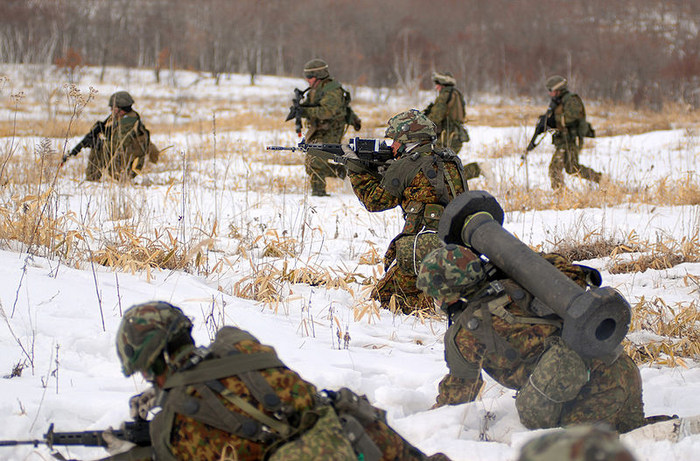
Marines training with GSDF soldiers at Yausubetsu, March 2008.

So while all attention is focused on Futenma, what is actually occurring is the ‘Okinawaization’ of Japan. As former marine Allen Nelson has testified, during the Vietnam War Okinawa was used as a training location for soldiers en route to Vietnam.13 This role seems to be being extended across Japan. The political need to reduce the burden on Okinawa was the underlying reason for the relocation of US Marine Corps live fire drills from Okinawa to Yausubetsu in 1997, and those ‘skills’ practiced in Hokkaido have been exported to conflicts in other parts of the globe. As Saito Mitsumasa has demonstrated, the Misawa base in Aomori has long been a key part of the projection of US nuclear strike capability in Asia, which makes a mockery of Japan’s three non-nuclear principles (as does the much more public revelations of the ‘secret pacts’ during the Cold War to allow nuclear weapons into Japan, which was officially acknowledged by the DPJ government in March 2010). Furthermore, Misawa is currently being used as a forward staging area for bombing missions in Iraq and Afghanistan.14 These developments illustrate that US forces are not in Japan for the protection of Japan or peace and stability in Asia, but for the projection of American power throughout Asia and the Pacific, even to the Middle East.

Learning from Maehyang-ri

In the context of the Futenma base clash there are many lessons to be learned from the successful campaigns in Maehyang-ri to shut the firing range. Of course there are some important differences between Japan and South Korea, too. But we can summarize the keys to success as follows.

A helicopter gunship blasts an island off the coast of Maehyang-ri.

The first is the political background, namely the democratization of South Korea in the 1980s, and particularly following the 1987 presidential election after years of military dictatorship. Citizen’s groups mushroomed, and the anti-base group in Maehyang-ri was founded in 1988. Previously, any opposition to the base risked repression as a ‘North Korean spy’. The Maehyang-ri struggle was an integral part of the democratization process.

Even so, and this is the second point, citizens showed great resilience in the struggle. Despite democratization they still faced repression and intimidation. In November 1988, local residents demanded the removal of the base. In protest they occupied the base and tried to prevent the live-fire exercises. They occupied the base again in 1989 and risked their lives to stop the exercises.

In response the American military forbade entry to the base. In retribution they dumped four trucks worth of sand on Chun Man-kyu’s fields. When irate local people tried to occupy the base, 50 people including Chun were arrested. Then in 2000 after the incident in which an A-10 plane dropped its payload causing damage to many homes, the US military continued training as if nothing had happened. This triggered widespread protests across the country. Around 40,000 police were deployed. They arrested 100 protestors, including Chun, and 500 people were injured in clashes. Despite all these trials, the protest movement persevered until it was eventually able to get the base closed in 2005. The role of direct action was vital, as was the resilience people showed in the face of the risks that direct action entailed.

Chun Man-kyu inspects the ordinance littering the beach of Maehyang-ri.

Third, international solidarity in the anti-base movement was also vital. Chun’s active development of links with groups in other countries (Marines Go Home shows him on his September 2003 visit to the Yausubetsu firing range meeting Kawase Hanji) raised the profile of Maehyang-ri. It became a rallying call for the anti-bases movement, alongside the campaign to stop US navy live-fire exercises on Vieques, Puerto Rico.

In fact, the Maehyang-ri protestors learned one of their most effective strategies from Japan. In Yokota, for many years Japanese citizens had been filing lawsuits against the US military and Japanese government on the basis of noise pollution caused by US jets using the base. In 1998, 15 residents of Maehyang-ri filed similar suits, which ended in victory in the courts in 2003. The base was breaking Korean law regarding the levels of noise pollution, so local people had “a real case to present to the government”.15 The verdict pronounced for the first time that the noise pollution from the American base was unlawful. Each plaintiff was awarded about 10,000 dollars in damages. Following this, in 2001 a further 2,000 plaintiffs sued the Korean government. The ruling in December 2004 ordered the government to pay total damages of 10 million dollars.

The legal victory over noise pollution at Maehyang-ri has a counterpart in the lawsuit filed in San Francisco that the construction of the Henoko base would violate the National Historic Preservation Act. The court found in favor of the plaintiffs in January 2008.16 This should have provided the appropriate legal barrier to the Henoko base issue, although the US and Japanese governments forged ahead in signing the Guam Treaty in 2009, which is an agreement to do something already declared illegal by the courts.17

But, as in the Henoko case, we cannot decontextualize the Maehyang-ri campaigns from broader US military strategy. The current US strategy in South Korea stresses the creation of ‘hub bases’. The Maehyang-ri firing range may have closed, but farmers have been evicted from their land around the Songtan Air Base (also known as Osan Air Base) and the army base Camp Humphries in Pyeongtaek to expand the bases there. This occurred during the presidency of President Roh Moo-hyun, a lawyer and central figure in the democratization movement.

The Pyeongtak struggle was fierce. In 2005 around 200 farming households were thrown off their land under a compulsory land acquisition order. Having been removed from their land they also lost their livelihoods. The farmers and their supporters continued to resist, but the Korean government deployed 10,000 police and 1,000 troops. They cordoned off the villages and moved in heavy equipment to destroy the farmland and buildings. The final villagers were forced to leave in April 2007.18

This is not to say that the Kooni firing range in Maehyang-ri was shut down because it was unnecessary: it had often been called the best firing range in Asia by the US military. Ultimately, Maehyang-ri was breaking Korean law and untenable in the face of local opposition. But when it was shut down, training was simply shifted to other South Korean facilities, Alaska, Okinawa or elsewhere. Bases will not be returned because they are ‘not needed’. Neither is it a question of saying that a base can be closed when an alternative is found. Anti-base forces are not interested in saying ‘not in my back yard’. We are saying ‘not in anyone’s back yard’ to the over 1,000 overseas bases that the US military maintains throughout the world.

A Global Struggle

In 2005 I attended the fifth World Social Forum in Porto Alegre, Brazil. I showed a 15-minute segment of Marines Go Home (at the time still under production). It was not easy to screen the film outside in a tent, or to give the accompanying talk in English, but it was warmly received. A Korean woman asked me to explain more about the Henoko struggle, Indian and American participants shook my hand, and a person from Iraq pointed out that ‘Marines Go Home’ is a slogan there, too. I really felt as if the messages of Kawase Hanji, Chun Man-kyu and all the activists in Henoko were resonating elsewhere.

It is all too easy to see base struggles in isolation, but in reality there are similar issues in many places. Japanese people are often surprised to learn that anti-base protests exist in the US, too. In 2006 I spent a lot of time in the US collecting materials for our next film, America Banzai: crazy as usual (official site here). With colleagues in the Southwest Workers Union (who I had met through WSF), I learned about the fight against the environmental damage and noise pollution caused by the Kelly Air Force Base (since 2001 the Kelly Field Annex, part of the Lackland Air Force base in San Antonio, Texas). The base had handled nuclear and chemical weapons. Waste was just dumped into local creeks causing serious health problems from cancer to birth defects. Local residents protested on numerous occasions to the air force and US government. Only after Kelly Air Force base closed were the causes of the health problems partially disclosed, but the air force and government never admitted any responsibility or compensated residents.

Some of those activists appeared in America Banzai. In 2009, a number of people who had appeared in America Banzai visited Japan to take part in a speaking tour to similarly affected places in Japan: Kanagawa, Iwakuni and Okinawa. The discussions of the damage caused by the Kelly Air Force base made quite an impression. Many Japanese think that the base issue exemplifies an American double standard by which things that would not be permitted in the US are forced onto Japan. This is not the case. Both countries suffer from the same problems. Whether in Japan, South Korea or the US, the fundamental problem is the government and military riding roughshod over local people. One senses, however, a heavy element of racism and discrimination surrounding the bases issue. In the case of Kelly Air Force Base, most local residents were poor Mexicans. Laws, it seems, are adhered to more closely when the people harmed by the bases are not the poor, indigenous peoples, immigrants, Japanese, Koreans or others.

Given the complexity of the bases issue, there is little reason for confidence that President Obama and Prime Minister Hatoyama will bring much ‘change’, despite the moods of public optimism following the launches of their respective administrations in 2009. However, Prime Minister Hatoyama’s decision to delay a final verdict on the Futenma base has at least provided a chance to increase discussion of the bases issue in the Japanese media. What has ensued is a major power struggle between popular local opposition to bases and the powerful vested interests promoting them. One can only hope that come May, when Prime Minister Hatoyama announces his decision, he chooses the will of the Okinawan people over the demands of the US. After all, would that not be fulfilling the ideals that America has so frequently used as an excuse to go to war: the spread of democracy, and the respect for the will of the people that democracy entails.

Kageyama Asako is a Hokkaido-based journalist and filmmaker. In addition to Marines Go Home, she has been involved in three films shot in the US: 「アメリカばんざい Crazy as Usual」 (English title God Bless America), 「アメリカ – 戦争する国の人びと」 (English title God Help America) and 「One Shot One Kill – 兵士になるということ」. Details on all these films are available here. To order the films, email morinoeigasha@gmail.com

Philip Seaton is an associate professor in the Research Faculty of Media and Communication, Hokkaido University. An Asia-Pacific Journal Associate, he compiled this article for the Journal. He is the author of Japan’s Contested War Memories and translator of Ayako Kurahashi’s My Father’s Dying Wish. Legacies of War Guilt in a Japanese Family. His webpage is www.philipseaton.net

Recommended citation: Kageyama Asako and Philip Seaton, “Marines Go Home: Anti-Base Activism in Okinawa, Japan and Korea,” The Asia-Pacific Journal, 14-1-10, April 5, 2010.

Notes

1 The article has been compiled through correspondence between Kageyama Asako and Philip Seaton. We are grateful to Mark Selden for his helpful comments.

2 See Tanaka Nobumasa, ‘Defending the Peace Constitution in the Midst of the SDF Training Area’.

3 “[Live-fire] training has been conducted on mainland Japan since the governments of Japan and the United States formally agreed to cease the firing of artillery on Okinawa in 1996. Fire maneuver areas were chosen on the mainland for artillery training exercises at Hijudai, East and North Fuji, Ojojihara and Yausubetsu. The signed agreement requires the Japanese government to fund all additional expenses not incurred when firing on Okinawa, such as transportation of personnel, equipment and barracks facilities.” Leatherneck, ‘3/12 Marines rain steel at Yausubetsu’.

4 For a detailed history see Gavan McCormack and Matsumoto Tsuyoshi, ‘Okinawa Says “No” To US-Japan Base Plan’ and Gavan McCormack, ‘The Travails of a Client State: An Okinawan Angle on the 50th Anniversary of the US-Japan Security Treaty’. For updates on the anti-base struggles and US-Japan negotiations over the closure of the Futenma Base and the construction of a new base see numerous entries at the Peace Philosophy Centre.

5 Gavan McCormack, ‘The Battle of Okinawa 2009: Obama vs Hatoyama’.

6 Allen Nelson’s story is described in Philip Seaton, ‘Vietnam and Iraq in Japan: Japanese and American Grassroots Peace Activism’.

7 For more on the protests, see Kikuno Yumiko, ‘Henoko, Okinawa: Inside the Sit In’. See also the 2008 version of the documentary film Marines Go Home.

8 See Urashima Etsuko, ‘The Nago Mayoral Election and Okinawa’s Search for a Way Beyond Bases and Dependence’; The Japan Times, ‘Base moderate elected Nago mayor’, 23 January 2006.

9 See Urashima Etsuko and Gavan McCormack, ‘Electing a Town Mayor in Okinawa: Report from the Nago Trenches’.

10 Gavan McCormack and Matsumoto Tsuyoshi, ‘Okinawa Says “No” To US-Japan Base Plan’.

11 The Japan Times, ‘No head-start base talks with U.S.’, 25 February 2010.

12 This data accessed on 24 March 2010 from U.S. Forces Japan.

13 Philip Seaton, ‘Vietnam and Iraq in Japan’, The Asia-Pacific Journal.

14 Saito Mitsumasa, ‘Mission Impossible? Misawa as the Forward Staging Area for the Secret US-Japan Nuclear Deal and the Bombing of Iraq’. On secret pacts, see The Japan Times, ‘Secret Pacts Existed; denials “dishonest”’, 10 March 2010.

15 South Korean Defense Analysis Official, interviewed by Andrew Yeo, ‘Local Dynamics and Framing in Korean Anti-Base Movements’, Kasarinlan: Philippine Journal of Third World Studies 2006 21 (2): 34-60, page 54.

16 For more on the lawsuit see Miyume Tanji, ‘U.S. Court Rules in the “Okinawa Dugong” Case: Implications for U.S. Military Bases Overseas’, Critical Asian Studies 40:3 (2008), 475-487.

17 See Gavan McCormack, ‘The Battle of Okinawa 2009’, The Asia-Pacific Journal.

18 For more on Pyeongtaek, see Andrew Yeo, ‘Local Dynamics’, Kasarinlan.

Documents confirm 1959 Japan-U.S. secret meeting over court case

Did the U.S. interfere with the outcome of a trespass case in Japan where in 1959 protesters were accused of trespassing on a U.S. military base slated for expansion?  After a district court in Tokyo acquitted the protesters on the grounds that the U.S. bases were unconstitutional, secret meetings took place between the U.S. and Japanese governments. The Japanese Supreme Court later overturned the lower court ruling.   The Japanese government has long denied the existence of any documents related to these meetings, but recently one of the former defendants in the case received documents from the secret meeting from the government.

>><<

http://mdn.mainichi.jp/mdnnews/news/20100403p2a00m0na007000c.html

Documents confirm 1959 Japan-U.S. secret meeting over court case

In a drastic turnaround, the Foreign Ministry has acknowledged the existence of documents on a secret meeting between Japan and the United States following a 1959 court decision that ruled the U.S. military’s presence in Japan unconstitutional.

The ministry disclosed the documents to one of the former defendants in the so-called Sunagawa Case, in which anti-base demonstrators accused of trespassing on a U.S. military base in western Tokyo were acquitted after a court ruled the base unconstitutional. The decision was later overturned by the Supreme Court and the defendants convicted.

Shortly after the initial ruling, the then U.S. ambassador to Japan met with the Japanese foreign minister and the Supreme Court chief justice, but the Foreign Ministry had denied there were any documents left regarding the meetings.

The latest revelation underscores the ministry’s reluctance to comply with the principle of information disclosure, following a recent finding that the ministry may have discarded some of the important documents related to secret pacts made between Japan and the United States during the Cold War.

The documents related to the secret bilateral meeting over the Sunagawa Case were disclosed on Friday evening to Shigeru Sakata, 80, a resident of Kawasaki, who along with 40 supporters had filed a request for their disclosure following the change of regime in September last year.

“We need to scrutinize the content (of the documents), but it’s a step forward,” said Sakata.

Sakata is among the former defendants accused of trespassing on a U.S. military base in Tachikawa, Tokyo, while they staged a protest against the base’s expansion in July 1957. Out of the 23 demonstrators who were arrested in September the same year seven were indicted, but all were acquitted by the Tokyo District Court in March 1959 after the court ruled the U.S military’s presence unconstitutional. However, prosecutors appealed the case to the Supreme Court, which overturned the lower court decision in December 1959.

Since the Supreme Court decision came shortly before the January 1960 revision to the Japan-U.S. Security Treaty, suspicions were raised that Tokyo and Washington rushed to settle the case by annulling the lower court decision ahead of the bilateral security arrangement amendments.

In April 2008, it emerged through U.S. official documents that then U.S. Ambassador to Japan Douglas MacArthur II met with Japanese Foreign Minister Aiichiro Fujiyama over the district court ruling and urged Tokyo to appeal the case to the Supreme Court. The U.S. documents also revealed that MacArthur discussed the timetable of the appeals hearing with then Supreme Court chief justice Kotaro Tanaka.

Sakata and others filed a request for the disclosure of information over the issue in March last year, but the Justice Ministry, the Foreign Ministry, the Cabinet Office and the Supreme Court all replied by May last year that there were no documents regarding the meetings with the U.S. ambassador.

Following the change of government in September last year, the petitioners once again filed a request for information disclosure in October, after Foreign Minister Katsuya Okada ordered a survey into Japan-U.S. secret pacts on the introduction of nuclear weapons into Japan and other issues. Although the Justice Ministry, the Cabinet Office and the Supreme Court insisted on nondisclosure in November, the Foreign Ministry pledged to “continue to investigate the case” while saying they “could not identify the documents at this moment” in its reply on Dec. 25.

The documents that were disclosed to Sakata on Friday evening came in 34 pages, handwritten and sealed as “confidential,” and are titled “minutes from a meeting between Minister Fujiyama and the U.S. ambassador in Tokyo.” The meeting took place in April 1959, only two days after the Tokyo District Court ruling. Lawyers and others from a group supporting Sakata will analyze the details of the documents.

Gentaro Tsuchiya, 75, a resident of Shizuoka and another former defendant of the Sunagawa Case, said: “Due to the heightened public attention on the bilateral secret pacts issue, the Foreign Ministry may have had no choice but to give serious consideration (to the disclosure of the documents).”

Military may use stimulus money to start biofuel production in Hawai’i

Stimulating alternative sources of energy may be a good thing, but the question remains why is the military doing this?  If the government were to subsidize conversion of diesel vehicles for example, wouldn’t it stimulate the necessary demand to justify biofuel ventures?  The U.S. military is already the largest consumer of energy in the world, is the largest single consumer of petroleum in the world (enough oil in one year to run all of the transit systems in the U.S. for the next 14 to 22 years!) and consumes 1/4 of the world’s jet fuel. [Barry Sanders, The Green Zone: The Environmental Costs of Militarism, AK Press, 2009]   With 1.5 million troops, the military consumes approximately the same amount of fuel as countries like Indonesia with a population of 235 million.   If it poisons our well, or destroys the global climate, it ain’t security.

>><<

http://www.honoluluadvertiser.com/article/20100403/NEWS01/4030337/Hawaii+crops++algae+may+get+funded+for+military+biofuel

Posted on: Saturday, April 3, 2010

Hawaii crops, algae may get funded for military biofuel

Pentagon makes big push for ways to cut dependence on oil

By William Cole

Advertiser Military Writer

The U.S. Department of Agriculture and the Navy are hoping to jumpstart the growth of crops and algae in Hawai’i that can be used for military fuel as part of an aggressive drive by the Pentagon to reduce its dependence on foreign oil and increase renewable energy sources.

An industry forum Tuesday and Wednesday at Marine Corps Base Hawaii will bring together government officials and potential biofuel companies from Hawai’i and the Mainland. As many as 40 companies and 250 people are expected to attend.

The Navy and the Agriculture Department want to evaluate the use of American Recovery and Reinvestment Act funding to set up biofuel projects in Hawai’i “as soon as possible.”

How much funding remains unclear, but Hawai’i was selected for the initial collaboration between the two federal entities “because Hawai’i’s energy costs are among the highest in the nation and imported oil supplies 90 percent of the state’s energy,” the USDA said. “A viable agricultural sector in Hawai’i can enhance Hawai’i’s energy security, and energy projects like those anticipated by the Navy’s needs can help rural economies.”

Experts say Hawai’i’s biofuel crop pursuit is in its infancy, and challenges include the need to build an entire pipeline — crop selection, growth and refinement of oils — to start satisfying Navy needs.

But the U.S. military is moving aggressively toward renewable energy sources — and the demand for it.

The Air Force recently flew an A-10 Thunderbolt II on a biofuel blend of oil from camelina, a plant related to mustard, and conventional JP-8 jet fuel.

Tests with F-15 and F-22 fighters and C-17 Globemaster III cargo planes are expected to follow.

The Navy, meanwhile, is expanding tests of biofuel blends in marine gas turbines that it uses in the surface fleet and tactical vehicles.

On Earth Day, which is April 22, the Navy will fly a “Green” Hornet F/A-18 on a biofuel and jet fuel mix.

By 2016, the Navy wants to deploy a “Great Green Fleet” that will be powered entirely by alternative fuels, said Navy Secretary Ray Mabus during the signing of the Navy and Department of Agriculture agreement on Jan. 21.

“Through alternative energy use, improved technological efficiencies and biofuel development,” Mabus said, “we are going to improve the range and endurance of our ships and our aircraft, reduce their reliance on a vulnerable supply chain, and create a resistance to the external shocks that come from overreliance on a fragile global oil infrastructure.”

The goal of next week’s sessions is to use the purchasing power of the Navy as a “pull” for production.

The state has some biofuel production, but most of it comes from waste cooking oil and not from crops or algae, officials said.

Creating markets

“If you talk to the biofuel developers, they want to know, ‘Hey, am I going to have a market? If I produce this stuff, who is going to buy it?’ ” said Ted Peck, Hawai’i’s energy administrator. “What the Navy is going to do, and the (entire) military is going to do, same as the utility is going to do — they are going to create a market for local crops that are going to help drive that.”

The U.S. military consumes about 80 million gallons of jet fuel a year in Hawai’i, Peck said.

Dovetailing with the military’s pursuit of biofuel crops is interest by Hawaiian Electric, which this week said it is looking for a long-term supply of biofuels made from feedstocks produced and processed in Hawai’i.

HECO Executive Vice President Robbie Alm said the formal request for proposals is the next stage in the company’s commitment to create a market for locally grown biofuels.

This first call for proposals will test the market and determine what HECO’s next actions will be, officials said.

Many of the details of the Navy and Department of Agriculture collaboration remain unclear. Both federal entities are waiting for next week’s forum to provide more information.

Breakout sessions will focus on the “big picture” for biofuels in Hawai’i, opportunities and challenges for agriculture producers, and converting crops into usable fuels.

Peck said part of the plan may include the Navy leasing some of its land to growers. Among that land may be the 7,500-acre Naval Munitions Command Lualualei on the Wai’anae Coast, he said.

What Hawai’i farmers could grow also would have to be determined.

The Pentagon’s Defense Advanced Research Projects Agency is betting on algae. DARPA recently told the British newspaper the Guardian that large-scale refining operations nationwide could within a few years produce 50 million gallons of fuel per year.

The goal is to get algae jet fuel down to $3 or below per gallon. San Diego-based General Atomics was previously awarded a $19.9 million DARPA project to work on algae jet fuel. The contract included work by Hawai’i BioEnergy, which was established by Kamehameha Schools, Grove Farm Co. and Maui Land & Pineapple.

Algae work in Isles

Peck, the state’s energy administrator, said there are about eight companies either doing or planning to do algae work in Hawai’i.

Cyanotech Corp. has one of the largest algae farms in the nation at Keahole Point on the Big Island, but the 90-acre facility produces nutrient products BioAstin Natural Astaxanthin and Hawaiian Spirulina Pacifica, and not biofuel.

The University of Hawai’i estimated that the state could sustain a maximum of 40,000 acres of algae ponds, but fuel yield and cost-effectiveness for algae remains a subject of debate.

The New York Times recently reported that the Agriculture Department would soon announce a joint project with the Navy to grow camelina in Hawai’i to make biofuel. Camelina originated in northern Europe, grows up to 3 feet tall and has seeds containing 35 percent oil.

Another possibility mentioned is jatropha, a shrubby tree that grows on arid land and is suited to the tropics and subtropics, and whose seeds also are a source of biofuel.

The biofuel pipeline that officials say is needed in Hawai’i was extended a bit more in January when the Department of Energy awarded a $25 million grant to an Illinois company to build a demonstration plant to convert forestry, agriculture and algae “feedstocks” into green transportation fuels.

The demonstration plant at the Tesoro Corp. refinery in Kapolei is expected to start up in 2014.

“I can tell you, from our perspective, this (biofuel development) is worth our time and attention because it can be transformative for Hawai’i’s agriculture industry and for Hawai”s energy independence ,” Peck said.

Reach William Cole at wcole@honoluluadvertiser.com.

Japan Lawyers International Solidarity Association speak out Futenma base

Thanks to the Peacephilosophy blog for sharing this statement. There is a Japanese language version of the article on the peacephilosophy website.

>><<

http://peacephilosophy.blogspot.com/2010/04/statement-on-mcas-futenma-by-jalisa.html

Thursday, April 01, 2010

Statement on MCAS Futenma by JALISA, Japan Lawyers International Solidarity Association 日本国際法律家協会 普天間基地に関する声明

Statement on Marine Corps Air Station Futenma

According to newspaper reports, the government maintains that Japan must provide a replacement facility for Marine Corps Air Station Futenma in Okinawa, which is used by the US Marines, that it has given up on finding a candidate site outside of Okinawa, and that the base will very likely be relocated within Okinawa.

From our stance of seeking to implement the spirit of the United Nations Charter and the ideals of Japan’s Constitution, we of the Japan Lawyers International Solidarity Association believe that the government’s judgment invites criticism on two points, and we strongly urge the government to reconsider.

1) Japan is not obligated to provide the US Marines with bases.

In the first place, US military bases in Okinawa were illegally expanded and built. Even before acceptance of the Potsdam Declaration on August 14, 1945 land was expropriated while Okinawans were detained in prison camps, and by means of “bayonets and bulldozers” with the start of the Cold War. Such acts are not justifiable even by the law of war, and therefore violate international law. And the Japan-US Security Treaty, which is invoked to paper over these illegalities, establishes that bases are provided to US forces under the conditions that provision is based on the will of the Japanese government, and that it contributes to the security of Japan and the Far East, but the US Marines, owing to the nature of the force, does not help to achieve such purposes, and as such their stationing in Japan lacks justification under the treaty. Further, 75% of US military bases and facilities are concentrated in this one prefecture of Okinawa, and all Okinawans want US bases to be downsized and removed. The principles of democracy, which are recognized universally the world over, do not tolerate troop stationing which goes against the will of the people.

2) In Japan the Constitution’s Preamble and Articles 9 and 98 provide the right to seek removal of US military bases.

The Japanese Constitution provides that “never again shall we be visited with the horrors of war through the action of government” and recognizes that “all peoples of the world have the right to live in peace, free from fear and want.” It says that the Japanese renounce war, do not maintain “land, sea, and air forces, as well as other war potential,” and it pledges to faithfully observe “established laws of nations,” which include the law of war and international humanitarian law. From the perspective of this extensive peace design, when at least part of the US forces stationed in Japan are highly problematic to bringing about peace and eliminating “fear and want,” it is possible to exercise one’s legitimate rights, including appeals to the international community, to resolve the matter which is the cause. In view of the situation with US military bases, which is a never-ending stream of aircraft crashes, traffic accidents, crimes, and pollution, it stands to reason that the people of Okinawa Prefecture seek the return of Futenma Air Station, and, with respect for their will, the Japanese government indeed has the right to take the initiative and ask the US government to immediately remove Futenma Air Station.

March 24, 2010

Japan Lawyers International Solidarity Association, Executive Committee

Osamu Niikura, President. Jun Sasamoto, Secretary-General