Unmanned military space planes usher in new weaponry era

Unmanned military space planes usher in new weaponry era

http://www.washingtontimes.com/news/2010/apr/23/unmanned-space-planes-to-usher-in-new-weaponry-era/?page=2

By Shaun Waterman

SPECIAL TO THE WASHINGTON TIMES

The Pentagon’s test launch of two unmanned space vehicles Thursday highlights efforts to develop a generation of high-altitude, high-speed weapons systems that could make the heavens a new battleground.

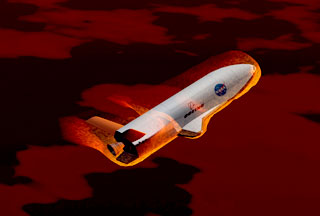
At Cape Canaveral, Fla., the Air Force went ahead with the long-anticipated maiden flight of the troubled X-37B space plane, which launches vertically into orbit on the back of an Atlas rocket but descends into the atmosphere and lands itself, as the space shuttle does.

The X-37B has been in development for more than 10 years and had “a tumultuous history,” said Gary Payton, the Air Force’s deputy undersecretary for space programs. “So … it’s great to see the X37 finally get to the launchpad and get into space.”

The launch took place just before 8 p.m. EDT, and Mr. Payton said it had not been decided when to bring the vehicle – which can spend up to nine months in orbit – back to Earth.

“We don’t know when it’s coming back for sure. It depends on the progress that we make with the on-orbit experiments,” he said.

Meanwhile at Vandenberg Air Force Base, Calif., the Defense Advanced Research Projects Agency (DARPA) test launched another space plane – the Hypersonic Technology Vehicle 2 (HTV-2), known as the Falcon.

The Falcon is a suborbital vehicle launched on a solid-fuel rocket booster made from a decommissioned ballistic missile. Just outside the atmosphere, the plane separates from the rocket and glides back to Earth at more than 13,000 mph – more than 20 times the speed of sound.

Thursday’s 30-minute, 4,100-nautical-mile test flight – which had been scrubbed twice this week because of bad weather – was slated to end with the Falcon crashing into the ocean just north of a U.S. military test site at the Kwajalein Atoll in the Pacific.

DARPA’s $308 million research program is building two Falcon vehicles, the second of which is scheduled for launch early next year.

Defense analysts say the Falcon is part of the Pentagon’s effort to develop the capability to strike anywhere in the world with a conventional warhead in less than an hour – known as Conventional Prompt Global Strike, or CPGS.

CPGS is a new class of weapons that officials hope will address recent threats, such as terrorist nuclear weapons, and help reduce U.S. reliance on nuclear weapons as a strategic option in more conventional conflicts.

DARPA said only that the Falcon program is designed “to create new technological options that enable capabilities that address urgent threats to our national security.”

But a statement to The Washington Times from U.S. Strategic Command, which is in charge of CPGS, said the Falcon will demonstrate key capabilities for the development of this new class of weapons.

Solving the challenges of launching an unmanned vehicle into suborbital space and gliding it down at hypersonic speed to accurately hit a target on Earth “could lead to the deployment of a CPGS capability – an ability to hold emerging threats at risk with a rapid, non-nuclear option,” the statement said.

“It is premature to discuss the actual implementation of this capability until the technology has sufficiently matured,” the statement concluded.

No one from Strategic Command was available for comment.

The purpose of the X-37B program is less clear, in part because it remains highly classified.

“What does it do? Nobody knows,” said John Pike of the Virginia-based think tank GlobalSecurity.org.

He estimated that the program – the actual expense of which is hidden in the Pentagon’s “black,” or classified, budget – is likely to cost more than $1 billion. The launch vehicle alone – a two-stage, liquid-propelled Atlas V rocket – costs as much as $200 million, Mr. Pike said. Ten years of development on the plane – as the project was shuffled from NASA to DARPA and finally to its current institutional home in the Air Force – is likely to have cost hundreds of millions of dollars more.

Mr. Pike said the Air Force had been determined “for the last half-century” to get plane-type weapons systems into space, even though it was unclear what their purpose would be. “There is a doctrinal imperative for such a vehicle that transcends any describable mission it might have,” he said.

Mr. Payton told reporters that the Air Force has “a suite of military missions in space and this new vehicle could potentially help us do those missions better.”

Air Force launches exotic air/spacecrafts in race to attain military control of space

In recent weeks the U.S. Air Force launched two advanced air/spacecrafts that are raising concerns about the push to further militarize space.   On April 22, Earth Day, the military launched a top secret robotic space plane known as the X-37B Orbital Test Vehicle (OTV).   Press TV ran a more detailed article about this classified technology (Article is also posted below).  Policy analysts have warned that this military application of space vehicle could violate the Outer Space Treaty (1967) that reserves outer space as a domain for peace.  Some analysts say that the Department of Defense would have scrapped its support of the OTV unless the program had military applications.

Meanwhile, the Air Force launched from Vandenburg Air Force Base another exotic aircraft, a hypersonic glider that crashed into the Pacific near Kwajalein after its flight across the Pacific.  (The full article is posted below)  Mike Reitz writes in an email post: “…now this is one strange little “news” story…launch what must be a multi-million dollar space vehicle just so it can “crash and sink” somewhere off Kwajalein in the Pasifik…and that’s it?”

>><<

http://www.presstv.ir/detail.aspx?id=123813&sectionid=3510203

US to launch secret ‘space warplane’

Mon, 19 Apr 2010
Press TV

golinejad20100419222123687
An artist’s conception of the X-37

The United States Air Force has announced that it will launch a secret space plane that has sparked speculation about the militarization of space.

The Pentagon has set April 21 [delayed until April 22] as the date for the launch of the robotic space plane known as the X-37B Orbital Test Vehicle (OTV), which is a reusable unmanned plane capable of long outer space missions at low orbits.

Since the nature of the project is shrouded in mystery, defense analysts allege that the US military is building the first generation of US ‘space Predator drones’ that will build up the United States’ space armada, the Christian Science Monitor wrote in a recent article.

Military experts argue that the US Department of Defense would not have saved NASA’s costly X-37B project, which had been scrapped, if it did not have a military application.

They say the US wants to maintain a leading role in space via the development of the new ‘space weapon’ at a time when other countries like China are expanding their space programs.

However, US military officials maintain that the X-37B will only be used for transporting payloads and facilitating space experiments.

The OTV is capable of supporting a range of tests, the Air Force spokesperson for the project said earlier at the 26th National Space Symposium.

“The first mission will emphasize proving technologies necessary for long duration reusable space vehicles with autonomous reentry and landing capabilities,” Angie Blair added.

She went on to say that the “specific details of the OTV capabilities, limitations and vulnerabilities” remain classified.

The X-37B can stay at an orbit between 200 and 800 kilometers for around 270 days before landing automatically at Vandenberg Air Force Base in California, reports say.

The location of the mission control center for the Boeing-made space vehicle is also a classified secret, but Blair says that Air Force Space Command’s 3rd Space Experimentation Squadron (AFSPC) will run the operation.

Military space specialist Professor Roger Handberg, who is the chair of the Department of Political Science at the University of Central Florida in Orlando, told Space.com that the X-37B project may signify continued U.S. Air Force interest in a rapid response vehicle along the lines of the long-proposed space maneuver vehicle.

He added that the project could be viewed “as the logical extension of the push into unmanned aerial vehicles (UAVs) where vehicles used for observation have moved into weapon carriers and various other missions, many classified.”

“From the perspective of international observers, especially in space-aspiring states such as China, the X-37B program just reinforces their view that the U.S. is pushing to gain first mover advantage in rapid response, including possible weaponization of space using this vehicle or a derivative,” Handberg noted.

Political analysts say that the X-37B project could be interpreted as a violation of the Outer Space Treaty of 1967 if the space plane is used for military purposes.

The Outer Space Treaty of 1967, officially known as the Treaty on Principles Governing the Activities of States in the Exploration and Use of Outer Space, including the Moon and Other Celestial Bodies, states that the exploration and use of outer space shall be carried out for the benefit and in the interests of all countries and shall be the province of all mankind; states shall not place nuclear weapons or other weapons of mass destruction in orbit or on celestial bodies or station them in outer space in any other manner; the Moon and other celestial bodies shall be used exclusively for peaceful purposes; astronauts shall be regarded as the envoys of mankind; states shall be liable for damage caused by their space objects; and states shall avoid harmful contamination of space and celestial bodies.

Article IX of the Outer Space Treaty states: “A State Party to the Treaty which has reason to believe that an activity or experiment planned by another State Party in outer space, including the Moon and other celestial bodies, would cause potentially harmful interference with activities in the peaceful exploration and use of outer space, including the Moon and other celestial bodies, may request consultation concerning the activity or experiment.”

In addition, a proposal has been put forward for a Space Preservation Treaty that would ban all space weapons, but no country has signed the treaty so far.

+++

http://www.sfgate.com/cgi-bin/article.cgi?f=/n/a/2010/04/23/national/a104117D86.DTL

Air Force launches hypersonic glider over Pacific

Friday, April 23, 201

(04-23) 10:41 PDT VANDENBERG AIR FORCE BASE, Calif. (AP)

The Air Force has launched an experimental hypersonic glider able to travel more than 4,000 miles in 30 minutes over the Pacific Ocean.

The 30th Space Wing at Vandenberg Air Force Base says a Minotaur 4 rocket carrying the glider blasted off Thursday afternoon from the central California coast. The Air Force statement does not reveal the result of the test involving the Falcon Hypersonic Technology Vehicle 2.

A fact sheet from the Defense Advanced Research Projects Agency says the vehicle was to be accelerated into the upper atmosphere, separate from its booster and glide across the Pacific at 13,000 mph.

Thirty minutes and 4,100 miles later it was to crash and sink near Kwajalein Atoll, some 2,100 miles southwest of Hawaii.

Guam Senator Cruz demands demands radiation tests for Apra harbor

Senator B.J. Cruz from Guam is demanding that the Environmental Protection Agency require the U.S. military to test for radiation contamination be conducted in Apra Harbor before dredging and dumping of the sediment is approved.   He is right to demand these studies.  It is widely known that U.S. navy ships have leaked radioactive water in Apra.  Given the nuclear history of the Mariana islands, it is reasonable to expect that there is radioactive sediment in the harbor.

In Hawai’i, radioactive Cobalt 60 contaminates the sediment in Ke Awalau o Pu’uloa (Pearl Harbor), leaked from the nuclear power plants on navy ships.    The EPA knows this, but is not requiring a thorough clean up.  The EPA should at least require that the military study the contamination of the harbor sediment to know the baseline level of environmental and human health risk that exists.

>><<

http://mvguam.com/index.php?option=com_content&view=article&id=11842:cruz-demands-radiation-tests-&catid=1:guam-local-news&Itemid=2

Cruz demands radiation tests

THURSDAY, 22 APRIL 2010 04:34 BY THERESE HART | VARIETY NEWS STAFF

VICE Speaker BJ Cruz is protesting the U.S. Environmental Protection Agency’s policy decision to not require radiation testing for dredged materials from Apra Harbor that would be dumped into the proposed ocean disposal site.

EPA said the testing was not necessary, prompting Cruz to fire off a letter to Nancy Woo, associate director of EPA’s water division for Region 9.

“It appears then that the dumping of any radioactive sediment under that equivalency threshold is an acceptable practice,” Cruz wrote.

“I take this to mean that, absent any proof that fuel and concentrated waste from nuclear reactors or materials used for radiological warfare were leaked into Apra Harbor, dredging and dumping may proceed without testing. That I cannot accept,” he added.

According to the Federal Register, EPA is proposing to designate the Guam Deep Ocean Disposal Site as a permanent ocean-dredged material disposal site located offshore of Guam. Disposal operations at the site will be limited to a maximum of 1 million cubit yards a calendar year and must be conducted in accordance with EPA’s site management and monitoring plan.

The Federal Register further reads that EPA should conduct an extensive series of tests and studies to determine if radiation exists in Apra Harbor waters or its sediments to independently confirm the Navy’s claim that the amount of leakage from nuclear-powered vessels is insignificant.

Woo has sent Cruz the final environmental impact statement for the designation of an offshore ocean-dredged material disposal site.

*Assurance*

In an April 14 letter, Woo assured Cruz that his concerns regarding radiation in dredged sentiment in Apra Harbor and its dumping in Guam waters have been addressed, but the vice speaker said he was far from reassured.

Woo cited USEPA regulations that prohibit ocean disposal of high-level radioactive waste and materials. Woo also stated that radioactivity testing will be required when there is reason to believe that elevated levels of radiation may be present.

The rules that Woo cites refers to fuel and concentrated waste from nuclear reactors and materials used for radiological warfare.

Cruz said he is concerned that EPA will allow the dumping of any radioactive material below high levels of concentration, which he said, is obvious.

Cruz believes that before any dredging occurs in Apra Harbor, samples taken from the depth of the proposed dredge must first be tested for radiation.

“It is common knowledge that the U.S. Navy discharged radioactive material into Apra Harbor on more than one occasion. It is imperative, then, that no dredging of the harbor take place until adequate radiation testing independent from that reported by the U.S. Navy has been conducted on proposed dredge sites,” wrote Cruz.

Solidarity for Guam grows in the U.S.: Famoksaiyan launches a new blog

The West Coast branch of Famoksaiyan, a Chamorro network working to resist the U.S. military expansion in their homeland, has launched a new blog to keep people up to date on the struggle for justice in the Marianas.  It is a new and important link in the growing network of demilitarization groups and movements against U.S. military bases around the world.  Here’s a description from the website:

“Famoksaiyan” translates to either “the place or time of nurturing” or “the time to paddle forward and move ahead.” We are a grassroots network of activists, scholars, students, community leaders and artists who seek to push a progressive political, economic and social agenda for Chamorros and their communities at the local, national and international levels, through the promotion of the work of decolonization and cultural/historical revitalization in their politics, creative endeavors and everyday interactions.

Koohan Paik/Nation: Living at the ‘Tip of the Spear’

http://www.thenation.com/doc/20100503/paik/print

Living at the ‘Tip of the Spear’

By Koohan Paik

This article appeared in the May 3, 2010 edition of The Nation.

April 15, 2010

I was born in Pasadena in 1961 but raised in South Korea and other Pacific Rim locales, finally settling in Hawaii. During my coming-of-age years, between 1971 and 1982, my family lived on a beautiful small island in the western Pacific: lush jungles, remote waterfalls and mysterious freshwater caves. I remember riding horses through abandoned coconut groves and balmy nighttime spearfishing in some of the most abundant reefs in the world.

That place was Guam, at the southern tip of the Northern Mariana Islands, a US colony. Many people think of Guam only as a giant military base, the nexus of US forward operations in the Pacific islands–“the tip of the spear,” as the Pentagon calls it. That has certainly become its primary fate. The base occupies fully a third of the island and is off-limits to civilians, including the indigenous Chamorro people, who claim the oldest civilization in the Pacific. Even during my childhood, though I barely noticed it at the time, there was the constant background drone of B-52s roaring overhead to and from Vietnam, and submarines cruising the coasts. Such is the island’s current trauma, after an agonized history that has included repeated invasions and four occupations of varying degrees of brutality over four centuries–by Spain, Japan and twice by the United States.

Despite these serial humiliations, the Chamorros–a unique mélange of Micronesian, Spanish and Asian bloodlines–have always maintained optimism, courage and a resilient sense of humor. So far, they have successfully navigated their delicate existence as traditional peoples on a Pacific island, while also trying to play supportive roles–as nonvoting “citizens” in a US colony, even patriotic active soldiers–for their current master. But now they’re going to need all the resiliency they can muster to deal with the next blow the United States has in store.

I returned to Guam for a monthlong visit with old friends this past November. I was stunned to find the forests of my childhood being replaced by tarmac at an alarming rate; the remaining wild beaches and valleys being surveyed as potential live-fire shooting ranges; and an enormous, magnificently rich coral reef slated for dredging in order to build a port for the Navy’s largest aircraft carrier. I witnessed the rage and hurt, exploding suddenly–and so unexpectedly–from the Chamorro people and other island residents, who have had no say in the planning of cataclysmic changes that will turn their homeland into an overcrowded waste dump for the creation of the hemisphere’s pre-eminent military fortress. My friends told me it’s all part of what’s called the Guam Buildup.

Though technically Americans, people born in Guam have few American rights if they choose to live in their homeland. They can’t vote for president; they have only one, nonvoting representative in Congress, and Congress can overturn any law passed by Guam’s legislature. The island remains one of only sixteen UN-designated “non-self-governing territories”–in other words, colonies. As such, its people have no legal route to appeal any decisions made in Washington. A burgeoning resistance movement is under way, which the military is well aware of. They have hopes that a visit by President Obama, twice postponed and now set for June, will help ease the growing agitation. Given the mood of the people, I doubt Obama can calm anything.

The upcoming changes are all aimed at fulfilling a Pentagon vision set forth in its 2010 Quadrennial Defense Review. The “Guam Buildup [will] transform Guam,” says the report, “the westernmost sovereign [sic] territory of the United States, into a hub for security activities in the region,” intended to “deter and defeat” regional aggressors. Guam will be ground zero for mega-militarization in the Pacific and beyond. John Pike of Globalsecurity.org, a Washington-based think tank, hypothesizes that the military’s goal is to be able “to run the planet from Guam and Diego Garcia [an Indian Ocean atoll owned by Britain] by 2015,” “even if the entire Eastern Hemisphere has drop-kicked” the United States from every other base on their territory.

The swell of US military activity in the Pacific is not confined to Guam. All across the hemisphere, island communities are inflamed over a quiet, swift rearrangement and expansion of US bases throughout the Pacific–on Okinawa (Japan); on Jeju (a joint US-South Korea effort); on Tinian (in the same archipelago as Guam, but part of the Commonwealth of the Northern Mariana Islands); on Kwajalein and the rest of Micronesia; and on the Hawaiian islands of Oahu, Big Island and Kauai. The US Pacific Command calls it an Integrated Global Presence and Basing Strategy. These imperial intentions have barely registered in the American media, despite gargantuan expenditures and plans. Nonetheless, this projection of American colonial assumptions and aggression is taking its toll throughout the Pacific Rim.

The centerpiece of the Guam Buildup is the transfer of about 8,600 marines from Okinawa. When you add their families and construction teams, including entire low-wage crews from the Philippines and Micronesia–there goes the “jobs bonanza” locals were promised–the expected influx will be 80,000 more people on Guam. The island, about half the size of Cape Cod, has a population of about 178,000. The people of Guam, whose largest ethnic group are Chamorro (37 percent of the population), followed by Filipino (25 percent) and then statesiders (10 percent), doubt their island has the carrying capacity to absorb a 50 percent population surge.

In November the Defense Department released a mandatory Draft Environmental Impact Statement (DEIS) assessing the buildup’s effects. It elicited the most blistering responses ever to come from the Environmental Protection Agency, newly resuscitated after the Bush years. The EPA gave the DEIS its lowest possible ranking for proposing entirely ineffective mitigation actions. The agency further enumerated a litany of ecological catastrophes. Hundreds of acres of jungle and wetlands habitat will be covered with concrete and tract developments in order to house tens of thousands of newcomers. There will be massive raw-sewage spills and a shortage of drinking water. The Navy’s plans include the destruction of seventy-one acres of an exquisitely healthy coral reef, home to at least 110 unique coral species, in order to build a berth for a nuclear-powered aircraft carrier, which transports eighty-five fighter jets and 5,600 people.

Meanwhile, the Army wants to turn a pristine limestone forest that stretches from the hills to the sea–site of a prehistoric village that is listed with the National Registry of Historic Places–into a shooting range. In addition, it wants to build ammunition storage bunkers in wetlands areas. The Air Force hopes to build a missile defense shield, as well as hangars, airstrips and helicopter pads, turning Guam into the planet’s premier parking lot for billion-dollar fighter jets, helicopters and drones.

The DEIS provided no adequate alternative actions to any of these problems. Nor did it mention that dredging the reef will dislodge radioactive sediment that accumulated during the 1960s and ’70s when ships traveling from atomic test sites in the Marshall Islands came to Guam to be washed down at Apra Harbor.

The DEIS was written as if Guam’s people, land and culture counted for nothing. The vice speaker of the Guam legislature, Benjamin Cruz, charged that the “problem you had with the original DEIS is that it was done virtually.” Cruz pointed out that the report, prepared at a staggering cost of $87 million, was written by consultants who had never been to Guam and who had simply cobbled together the 11,000-page document based on Internet research and phone calls to Guam government agencies.

The EPA’s excoriating response to the DEIS has prompted lawmakers to question not only the cost of the buildup but also the costs of mitigating the project’s environmental, social and cultural impacts. The governor of Guam estimates that $3 billion will be needed to upgrade infrastructure before any military construction begins. Military construction is already priced at more than $10 billion, assuming that Japan fulfills its promise to kick in $6 billion to help remove US troops from Okinawa. If Japan begs off, the price tag for US taxpayers will soar to more than $13 billion. Surprisingly, Republican Senator Kay Bailey Hutchinson of Texas sharply criticized Pentagon officials at a Senate appropriations hearing in March about the unexpected exorbitant costs of current Asia-Pacific basing strategies. She suggested that the best solution might be permanent bases on the US mainland, “where you don’t have training constraints and you don’t have urban buildup, and it is a more stable environment for our families.”

By contrast, Democratic Senator Jim Webb of Virginia, who has advocated for an increased military presence in the Marianas since the 1970s, is intent on seeing the buildup through. He supports two solutions: pouring billions into massive infrastructure development (highways, waste facilities, power plants, etc.) and moving all the live-fire training to the gemlike island of nearby Tinian. However, many Guam residents feel that infrastructure spending misses the true cultural and environmental dangers of the population spike; and on Tinian, local farmers, who would be forced off their land (à la Bikini Atoll, circa 1946), are aghast that live-fire training would mark the end of agrarian culture there.

The incident that set these plans for the Guam Buildup in motion was the 1995 gang-rape of a 12-year-old girl by US marines stationed at the Futenma Air Base in Okinawa, one of several shocking incidents involving assaults on local girls by marines. Outraged residents pressured the conservative government to reduce or eliminate the American military presence in Japan. Protests culminated in a 2006 realignment agreement between Japan and the Bush administration to close the air base and send half of its troops to a new air base on Henoko Bay, on Okinawa’s east coast, with the other half going to Guam by 2014.

But fierce resistance in Okinawa has derailed the move. Japan’s new prime minister, Yukio Hatoyama, who was swept into power in September on his promise to reduce the number of US troops, caught military planners off guard by refusing to allow base construction at Henoko. In October, Hatoyama incensed Defense Secretary Robert Gates by putting the Marines’ move on hold until he determines an alternative to the Henoko site. The relocation of Futenma remains stalemated.

The people of Guam have never before opposed military plans for their island. In fact, the Chamorros and Filipinos from Guam are arguably the most patriotic people in the nation; more soldiers from the Marianas have fought and died in American wars since 1950, per capita, than those from any other region in the country. However, the sheer magnitude of destruction proposed by the Guam Buildup is unprecedented and has pushed these patriots to their limit. For the first time in the island’s history, they are uncharacteristically speaking out against the military. At a recent public hearing, Chamorro veteran soldier Janet Aguon, who fought in two wars, said, “I’m truly sick and tired of the United States of America and the Department of Defense treating the people of Guam as if they were trash. So my message to President Obama, the DoD, the secretary of the Navy: take the military and put them in your own country and not on our tiny little island.”

Military planners are worried. The Hawaii-based commander of Marine forces in the Pacific, Lt. Gen. Keith Stalder, told the Washington Post in March, “I see a rising level of concern about how we are going to manage this.”

Meanwhile, demilitarization activists have begun networking. The goal: a Pacific for the people. Those from Guam are allying themselves not only with those from Tinian and other Mariana Islands but also with all their Pacific Rim cousins, particularly on Okinawa, in Hawaii and on Jeju Island. These three locations, with Guam, will be sites for the nation’s most advanced missile technology–the ultimate geopolitical “Kick Me” sign. As an example of this pan-Pacific concordance, retired Col. Ann Wright recently joined Pacific Islanders outside the gates of Pacific Command Headquarters on Oahu to protest the Guam Buildup.

“We want Admiral Willard [head of the Pacific Command] to hear this: No means No!” said Wright. “When you force yourself on someone against their will, it’s called rape–rape of the people, the culture and the land. We Americans must stop our government’s military expansion in the Pacific.”

Carmen Artero Kasperbauer, a Chamorro elder whose family’s land is now part of an air base, told the military daily Stars and Stripes, “We hate being possessions to the federal government. That’s why people are angry.” But Kasperbauer, like most Chamorros, doesn’t direct her anger at the troops. “I’m not talking about the uniformed military. We love the uniformed military. Our son…helped liberate the Kuwaitis. But he can’t help liberate me.”

Increasingly, Guam residents are discussing the urgency of political self-determination. “We’re being moved back and forth across a chessboard by two countries: one that once occupied us [Japan] and one that currently does,” pointed out university instructor Desiree Ventura, author of the popular blog The Drowning Mermaid. Clearly, the need for sovereignty is more dire than ever, exposing the real question at hand: is President Obama ready to release Guam’s people from their colonized status?

About Koohan Paik

Koohan Paik is an Hawaii filmmaker and co-author, with Jerry Mander, of The Superferry Chronicles: Hawaii’s Uprising Against Militarism, Commercialism and the Desecration of the Earth (Koa). more…

Hatoyama’s Futenma waffling irks Guam

http://search.japantimes.co.jp/cgi-bin/nn20100413f2.html

Tuesday, April 13, 2010

Hatoyama’s Futenma waffling irks Guam

Islanders in limbo, no say on plans for their fate made from afar

By KAKUMI KOBAYASHI and HIDENORI TAJIMA

Kyodo News

HAGATNA, Guam — Guam has been frustrated by the indecision of Prime Minister Yukio Hatoyama over the stalled plan to relocate U.S. Marines from Okinawa to the U.S. territory as well as its limited political influence over the issue.

While businesspeople relying on economic windfalls from a military buildup yearn for clarity from Hatoyama regarding his promised reworking of the relocation plan, some Guam residents have become vocal about the situation in the face of the prospects of an additional base-hosting burden and the sense of being regarded as “two-thirds American.”

“Everything right now is dead,” Nick Captain, president of Captain Real Estate Group on Guam, said, referring to a 63 percent sales decline to $251 million in 2009 compared with 2007.

Guam’s economy, which had been improving through 2007, has lost steam because of two major negative factors, Captain said. One has been the global financial crisis that followed the bankruptcy of Lehman Brothers and the other the change in the Japanese government.

“A holy grail for the local economy and real estate market involves the transfer of marines from Okinawa to Guam,” he said.

Japan and the United States agreed to move some 8,000 marines and their family members from Okinawa to Guam by 2014.

Guam Gov. Felix Camacho and business leaders earlier welcomed the agreement, expecting the entire construction project, worth an estimated $12 billion, to help shore up the island’s economy, which had been hit by a slump in tourism.

This strong support for the buildup has not been felt recently. Hatoyama’s lack of decision over the relocation plan discouraged potential investors from plowing funds into infrastructure and construction on the island.

On top of that, many residents have become skeptical that hosting more military operations will benefit the civilian community.

Judith Won Pat, speaker of the Guam legislature, said residents in general realize the strategic significance of the island that the U.S. government describes as “a hub for security activities in the region” in the latest Quadrennial Defense Review report.

“The people are more accepting of the military,” which already controls nearly 30 percent of the land on Guam, Won Pat told Japanese reporters in February.

But a report, formally called the Draft Environmental Impact Statement, indicated that more civilian land could be appropriated for a firing range and a massive amount of coral reef could be destroyed by dredging for a naval port for aircraft carriers, according to Guam legislators.

“The people now are starting to question the benefits and to worry about what’s going to happen,” Won Pat said.

Insufficient infrastructure is another problem. Judith Guthertz, chief of the legislature’s committee on the buildup, urged the military to halve the number of incoming marines because the community cannot deal with an influx of population.

Nearly 80,000 additional residents, including temporary construction workers, are expected by 2014 on Guam, whose current population is around 170,000, according to the buildup plan.

On Feb. 11, the 15-seat legislature unanimously adopted a resolution demanding the military revise the buildup plan, branding it as “grossly flawed.” The U.S. Environmental Protection Agency meanwhile deemed the plan “environmentally unsatisfactory.”

Guthertz warned that if the military “steamrolls” opponents to the buildup, it would only alienate itself from the community on the island, whose size is less than half that of Okinawa Island.

In an apparent bid to buck the buildup, Camacho urged people not to forget the sacrifices Guam has made for American security. “We have seen our brave Guamanian sons and daughters fight abroad and die in battle under the United States flag,” he said in a policy speech in February.

Guam is also calling on Japan to help reform the buildup plan and make it more beneficial to civilians because islanders have little say regarding Japan-U.S. negotiations.

Guam residents can’t cast ballots in presidential elections and its representative in Congress does not have the right to vote. “These two big powerful countries (Japan and the United States) are making a decision for our future without us even being at the table,” Won Pat said.

On the day the resolution was adopted, two Diet members from the ruling bloc — Mikio Shimoji and Tomoko Abe — went to the Guam legislature. They squeezed the visit into a whirlwind fact-finding trip on the island as part of a governmental delegation over the transfer of marines from Okinawa.

“We’ll ponder what Japan can do so Guam’s history and culture will be conserved and its economy will grow. Let’s work together and have closer communications,” Shimoji, a lawmaker from Okinawa, said, getting a round of applause.

Meanwhile, a citizens’ group, We Are Guahan, has encouraged Guam residents to get more closely involved in the controversial buildup. The group announced in mid-March that it has collected more than 11,000 signatures from people calling for a meeting with President Barack Obama during a future trip to the territory.

The group is also busy updating people on the latest information about the buildup. “We’re committed to insisting that we have a voice and choice in our future,” said Cara Flores-Mays, a 28-year-old member.

EARTH DAY 2010 Bay Area Groups Demand Halt Of Military Build-up in Guam: Environmentally Destructive & Costly

FOR IMMEDIATE RELEASE

Contact Person:  Erica Benton (510)-928-8247, Rev. Deborah Lee (415) 297-8222

Press Conference & Earth Day Action:

Bay Area Organizations, Scholars and Environmentalists Demand Halt of Military Build-up in Guam:

Environmentally Destructive and Costly

Date:  Thursday, April 22, 2010

Time:  10:30 am

Location: St. Patrick’s Church, 756 Mission Street, San Francisco

Features:  Music, Visuals, expert and community speakers:

Speakers and Press Contacts:

Rima Miles, Refaluwasch Carolinian from Saipan, member of One Love Oceania

Erica Benton, musician & member of Famoksaiyan, a Chamorro and Guam advocacy group

Yoko Fukumura, Okinawan Women Act Against Military Violence

Rev. Deborah Lee , Women for Genuine Security

Aileen Suzara, Filipino American Coalition for Environmental Solidarity

Spokeperson from POWER

Center for Biological Diversity, Miyo Sakashita

Supporting Groups:  Women for Genuine Security, Famoksaiyan (Chamorro and Guam/Marianas Advocacy Group), One Love Oceania, American Friends Service Committee, POWER, Movement Generation, Sonoma County Peace Crane Project, Center for Biological Diversity.

April 5, 2010, SAN FRANCISCO, CA* – On April 22,  Earth Day, several groups will gather outside St. Patrick’s Church in San Francisco demanding a halt to US military expansion on the Pacific island of Guam. Their voices join recent EPA concerns that the Department of Defense’s plan will have devastating impacts on 71 acres of coral reef and fails to come into compliance with the Clean Water Act and Endangered Species Act. The plan will threaten the habitat of thousands of species of marine life, including endangered species such as green sea turtle, hawksbill sea turtle and spinner dolphin.  At a time of economic recession and mounting national debt, the US base expansion on Guam will be one of the largest buildups in recent history, costing US taxpayers an estimated $9 Billion. On Earth Day, San Franciscans will witness the release of a letter signed by 70 environmentalists, scholars, community and religious leaders who are calling on the White House and the Council on Environmental Quality to halt the build-up.

The Environmental Protection Agency, in its evaluation of the Draft Environmental Impact Statement (DEIS), gave the plan the worst possible rating, calling it “inadequate” and “insufficient,” and stating that the impacts  of dredging on the high quality coral reefs of Apra Harbor “are of sufficient magnitude that EPA believes the action should not proceed as proposed.”  The proposed build up, would bring 79,000 more people to Guam, increasing the population of 173,456 by 47%.  According to the EPA, the plan fails to adequately address the impact of this population increase on the water supply and wastewater treatment on Guam, creating adverse public health impacts.

Environmental research organizations, such as the Center for Biological Diversity stated in their public comment:  “The Navy has failed to meet the statutory requirements of the National Environmental Policy Act (NEPA) and regulations of the Council on Environmental Quality…. because it improperly limited the scope of the DEIS and failed to include sufficient information on alternatives, impacts to cultural resources and social justice issues, and Greenhouse Gas Emissions.”

“Our communities in Guam are counting on us to be a voice for them in Washington,” says Erica Benton, a local bay area resident with family ties to Guam and a member of Famoksaiyan, a group which voices concerns for Guam and Chamorros in the diaspora. “The island is an unincorporated territory of the US, which basically means they cannot vote for US presidents and only have a non-voting delegate in Congress. We hope our leaders here in California take a stand with us, and for the environment.”

“This Earth Day, we have to address that the military is one of the biggest polluters on the planet, and the largest contributor to greenhouse gases. The massive build up on Guam directly contradicts efforts to protect our environment from global warming,” says Reverend Deborah Lee, a member of Women for Genuine Security, the local chapter of a global women’s network that works to protect the health and safety of communities around US military bases. The US military has an enormous carbon footprint which must be addressed for the health of local communities and the security of our entire planet.”

As the largest Chamorro population outside of Guam resides in California, groups are calling on California Congressional Representatives and President Obama to:

1) Halt of the current plans for the build up;

2) Before the DOD goes forward, require a rewrite of the Draft Environmental Impact Statement, with an appropriate public comment period of at least 6 months. The new DEIS should address socioeconomic and cultural impacts on local communities, clearly outlined mitigation of environmental impacts and greenhouse gases, and impacts to self-determination.  The process of writing the DEIS should be transparent and include participation of community and environmental watchdog groups.

3) Require the DOD to clean up existing contamination and toxic sites, on and off-base, caused by military operations on Guam, before any base expansion projects are considered;

The San Francisco Earth Day action takes place across the street from the EPA’s Earth Day Festival 11-3 pm at Yerba Buena Garden.  The action is also in solidarity with rallies that will be held in Washington DC and Okinawa, Japan this Sunday, April 25th in protest of a new US base in Okinawa which already holds 30 bases.  100,000 people are expected to rally in Okinawa this Sunday.  The Guam build-up plan includes the proposed transfer of 8,000 Marines from Futenma Air Station in Okinawa after decades of local protests.

Background:

At 30 miles long and around 8 miles wide, Guam is currently home to over 100 toxic sites. The island and surrounding regions use as a military dumping ground since World War II is evidenced today in the record high cancer rates among the population. The military currently occupies 1/3 of the island and now proposes additional land takings. Guam has lived under US administration since 1898 and remains a US colony, one of 16 non-self-governing territories listed by the United Nations.

The proposed Defense Department plan involves moving 8,600 Marines and their 7,000 dependents from Futenma Marine Air Station (Okinawa, Japan) to Guam by 2014; the acquisition of 2,200 additional acres for military use, including live fire training, the expansion of Andersen Air Force Base, and the dredging of 71 acres of vibrant coral reef in Apra Harbor.

Large numbers of contracted workers would also be sent to actualize the Guam buildup, boosting the U.S. territory’s population by 45 percent — adding another 79,000 people to its current 180,000 residents.  (Greenwire Feb 25).

Since the release of the DEIS on November 30, 2009, community groups in Guam have been organizing to have their concerns be heard. One such organization, the We Are Guåhan coalition, recently collected over 10,000 signatures to petition President Obama to step off the base and hear the concerns of the local people when he visits there in June. We have not been able to say yes or no to this (buildup),” says Jon Blas, resident of Guam and member of We Are Guåhan. “Hawaii said no. California said no. But we were never given the opportunity. It’s not fair, especially because it is looking like this is going to hurt us more than help us.” We Are Guåhan’s growing membership felt that a strong message must be sent to Washington DC. The petition states: “The military buildup will permanently change our island and our lives. The needs of all Guam’s people must come first, for this island is our home. It is critical that President Obama hear our concerns.”

Move Troops Back to U.S.

http://www.guampdn.com/article/20100409/OPINION02/4090325/Author-Move-troops-back-to-U.S

Guam Pacific Daily News

Author: Move Troops Back to U.S.

By Doloris Cogan • April 9, 2010

cogan

Guam book for Obama: Doloris Cogan, author of “We Fought the Navy and Won: Guam’s Quest for Democracy,” gives President Obama, then a U.S. senator, a copy of her book during a campaign stop in Indiana. (Photo courtesy of Doloris Cogan)

It’s time to start thinking outside the box. I have read the Region IX EPA comments on the proposed move to Guam of U.S. troops on Okinawa. My conclusion is that both the environmental impact and the cost would be absolutely devastating.

Therefore, I think it’s time to start moving those troops and their families back to the United States, where there are plenty of empty barracks and unemployed workers to build whatever may be lacking. In this space age of the Internet, the Predator, fast fighters and cargo planes, security no longer depends on large forward bases. There is no need for a heavier military footprint on Guam than the island already has.

There is no need to train American pilots on foreign soil or on the Pacific islands. Our National Guard forces from all 50 states serving in Iraq and Afghanistan have proved that.

Many entrepreneurs on Guam will say this idea would deprive them of economic opportunities desperately needed on the island. To them I say, go after federal appropriations for improved roads, schools, trash removal, toxic waste cleanup, land surveys and outstanding reparations for land confiscated by the military decades ago. All that would provide jobs.

You now have the attention of President Barack Obama and Congress. Strike while the iron is hot! The Organic Act of Guam is almost 60 years old, and your infrastructure could use some repairs. Some of the money saved by not making that expensive move from Okinawa to Guam could be used for the above purposes.

Blaine Harden raised the proposed move of the Marines above the radar by writing what became a front-page story in The Washington Post on March 22. I was delighted to see Lt. Gov. Mike Cruz quoted in Harden’s news story, along with many sons and daughters of the heroes in my book, “We Fought the Navy and Won: Guam’s Quest for Democracy.” I met Cruz and many of those sons and daughters in July of 2008 when my book was brand new and I went to Guam for the celebration of Liberation Day.

Guam is at another real crossroads of its history. Decisions should not be made quickly or without full discussion. Saving the island for future generations is up to you.

I met Obama twice at public rallies when he was campaigning for the presidency in Indiana and had an opportunity to ask questions, as well as give him my book, which he later acknowledged with a short personal letter. I’m proud of the picture I have of the two of us and my book, which I used as my 2008 Christmas card. His decision to visit Guam tells me he knows a lot about the island and the implications of moving more troops there.

(Recently) I was in San Diego, signing copies of my book at the Chamorro Cultural Fest. I was thrilled to meet so many Chamorros who are well-educated and holding responsible positions in the Navy and private industry. Guam’s young people are specialists in the high technologies and communications. I’m convinced they can turn those skills into new professions and industries on Guam, supplementing the military economy and tourism.

What’s more, they understand and practice democracy. They could be USAID workers and ambassadors to Third-World countries, and would know better than to try to impose their (or our) culture on their hosts.

This is a great time to be alive and meet the challenges ahead. My interest in Guam is as strong now as it was 60 years ago when I wrote and edited the Guam Echo, airmailed monthly from Washington to 500 Guam members of the Institute of Ethnic Affairs. We wrote in the Guam Echo about “self-determination” for indigenous inhabitants all over the world, and in San Diego I met a few Chamorro leaders hoping and searching for more of that and and less “military domination” for Guam. Self-determination is an “ideal” still discussed at the United Nations, and in the context of the proposed move and the the civil rights of the local Chamorros, it could come up again.

Now is the time to work together to find solutions to whatever serious problems exist. I tend to agree with Theodore Parker, who said, “I do not pretend to understand the moral universe; the arc is a long one … and from what I see I am sure it bends towards justice.”

As writer/editor of the Guam Echo from 1947 to 1950, Doloris Cogan helped get the Organic Act of Guam through Congress, and from 1951 to 1955, she served as Pacific Island Assistant in the Department of the Interior, implementing the act.

http://www.guampdn.com/article/20100409/OPINION02/4090325/Author-Move-troops-back-to-U.S.

Chamoru poets to read at UH Manoa

WHAT: I Kareran I Palåbran Måmi (The Journey of Our Words) Poetry Reading

WHO: Chamoru daughters of Guahan and Poets,

Angela T. Hoppe-Cruz (MSW/MA Pacific Islands Studies Candidate) and

Kisha Borja-Kicho`cho` (MA Pacific Island Studies Candidate)

WHERE: University of Hawai`i at Mānoa, Hawaiian Studies Halau o Haumea, 2645 Dole Street

WHEN: Friday, April 9, 2010

TIME: 4:45-8:00 p.m.

We will be reading pieces we have collaborated on as well as our individual poetry. Much of our work centers on the impact U.S. militarization has had on our home island community of Guahan and the Micronesian islands, which is manifest in social, economic, and environmental injustices. Light refreshments will be served. There will also be a facilitated discussion regarding the themes of the poetry. This event will contribute to our portfolio project for the MA Pacific Islands Studies program.

The event is free and open to the public! Please help us spread the word.

Will the Endangered Mariana Fruit Bat throw a wrench into military buildup plans?

Today, the U.S. Fish and Wildlife Service issued a Draft Revised Recovery Plan for the Mariana Fruit Bat or Fanihi (Pteropus mariannus mariannus). This endangered species has cultural significance to the Chamoru people. As an endangered species, the federal government designated “critical habitat” for the survival and recovery of the species which includes Ritidian point limestone forests, much of Rota, areas on Tinian and a number of the smaller uninhabited islands.  Critical habitat designation has been controversial among Chamoru people because it is seen as adding another layer of federal control over their native lands and resources. However, listing of endangered species and critical habitat designation in this case may provide added leverage against the proposed military buildup.

The Draft Revised Recovery Plan for the Mariana Fruit Bat or Fanihi (Pteropus mariannus mariannus) states:

Urbanization and other forms of development remain a threat to the Mariana fruit bat.  This threat may manifest as fragmentation or degradation of forest habitat, direct disturbance of bats, and/or increased likelihood of new introductions of the brown treesnake or other predators to islands.  On Guam, development takes the form of urbanization associated with an increasing population and tourism industry and the expansion and refurbishment of military infrastructure.  On Rota and Tinian, development includes the clearing of lands set aside as agricultural homesteads (CNMI Senate Bill 13-32, C.S. 1, November 2002; CNMI Senate Bill 14-44, S.S. 1, July 2004), military infrastructure and new businesses such as the casino on Tinian.  On Saipan, increasing urbanization, road building, and the tangantangan charcoal industry are ongoing issues of concern.

The Department of Defense has several military installations and training programs in the Mariana Islands.  The Department of Defense live fire and bombing exercises on Farallon de Medinilla have effectively precluded that island as a foraging or roosting site for fruit bats.  However, survey crews in 1996 and 2008 each observed a single bat on the island, indicating that Farallon de Medinilla may still function as a stopover site for bats in transit (A. Brooke, pers. comm., 2009).  Recent and new activities proposed by the U.S. Air Force at Andersen Air Force Base on northern Guam have been determined likely to adversely affect fruit bats under section 7 of the Endangered Species Act, prompting formal consultation with the U.S. Fish and Wildlife Service to estimate the risk of take and develop measures to avoid and minimize that take.

As of this writing, the Department of Defense is developing Environmental Impact Statements for new training, development, and other activities on Guam and in the CNMI associated with the redeployment of a U.S. Marine Corps Expeditionary Force from Okinawa to the Marianas.  We do not currently have sufficient information to summarize in this draft revised recovery plan the potential threat to fanihi posed by these actions and will evaluate these proposed activities under section 7 of the Endangered Species Act once the data have been provided.

In other words, the military’s Draft EIS for the Guam military buildup in insufficient.  The EPA has already slammed the EIS.  Now USFWS can be pressed to disallow activities that will threaten the survival and recovery of the Fanihi.    The USFWS page on the Fanihi is here: http://ecos.fws.gov/speciesProfile/profile/speciesProfile.action?spcode=A07X

>><<

http://www.honoluluadvertiser.com/article/20100330/BREAKING01/100330055/Feds+devise+recovery+plan+for+Marianas+fruit+bat

Posted at 1:13 p.m., Tuesday, March 30, 2010

Feds devise recovery plan for Marianas fruit bat

Associated Press

HONOLULU — The federal government has developed a plan to help revive the threatened Mariana fruit bat.

The species, known as fanihi in Chamorro, is found only in Guam and the Commonwealth of the Northern Mariana Islands.

The bat’s fur is black and brown, and it has a wingspan of about 3 feet. Some people call the fanihi flying foxes because their faces resemble canines.

The U.S. Fish and Wildlife Service said Tuesday its draft management plan for the species would reduce or eliminate hunting to allow fanihi numbers to increase.

The agency also aims to protect of the best existing fanihi habitat.

Most fanihi now live north of Saipan on relatively isolated islands in the Marianas archipelago.

The agency is accepting comments on the plan through June 28.