Hoomanao (Remember): The Massie Case and Injustice, Then and Now

Japanese Cultural Center of Hawai‘i,

University of Hawaiʻi Mānoa Office of Multicultural Student Services present


Hoomanao (Remember)

The Massie Case and Injustice, Then and Now

UH Manoa Architecture Auditorium

Wednesday, October 21, 6 pm to 8 pm

A nationwide sensation in 1931 – 32, the notorious Massie Case served as a touchstone for race, class, and injustice in Hawai‘i for decades. The case began with an accusation of rape by European American naval wife Thalia Massie against five local young men, and ended with the vigilante killers of one of the men, Joseph Kahahawai, having their prison sentences commuted to one hour spent over drinks with the governor.

A distinguished panel will discuss the Massie Case and its relevance today, outlining the facts of the case, discussing the ways it affected the subsequent history of Hawai‘i and its various communities, and its contemporary echoes in such issues as racial differences in prison sentencing:

  • RaeDeen Keahiolalo-Karasuda, Ph.D., Research Analyst, Kamehameha Schools
  • John Rosa, Ph.D., Assistant Professor, Department of History, University of Hawaiʻi Mānoa
  • Carrie Ann Shirota, J.D., Soros Justice Fellow ’09
  • David Stannard, Ph.D., Professor, American Studies, University of Hawaiʻi Mānoa, author of “Honor Killing: How the Infamous “Massie Affair” Transformed Hawai‘i”

Co-Sponsors:

African American Lawyers Association of Hawai‘i; American Civil Liberties Union of Hawai‘i; American Friends Service Committee, Community Alliance on Prisons; Hawai‘i Filipino Lawyers Association; Hawai‘i People’s Fund; Hawai‘i Women Lawyers; Ka Huli Ao Center for Excellence in Native Hawaiian Law, William S. Richardson School of Law; Imanaka Kudo & Fujimoto; National Asian Pacific American Bar Association, Hawai‘i Chapter; Native Hawaiian Bar Association; Native Hawaiian Legal Corporation; National Association for the Advancement of Colored People, Honolulu-Hawaii Branch; Office of Hawaiian Affairs; UH Mānoa Hawai‘inuiakea School of Hawaiian Knowledge; UH Mānoa Kamakuokalani Center for Hawaiian Studies

For further information on this event, please contact Brian Niiya, Japanese Cultural Center of Hawai‘i, at 945-7633, ext. 32.

Rape of Iraqi Women by US Forces as Weapon of War: Photos and Data Emerge (Warning Graphic)

The Asian Tribune published three photographs of U.S. troops and military contractors raping Iraqi women prisoners.  These war crimes have not been seriously investigated and prosecuted.  Rape as a weapon of war is one of the most egregious violations of human rights by the U.S. military:

In March 2006 four US soldiers from the 101st Airborne Division gang raped a 14 year old Iraqi girl and murdered her and her family —including a 5 year old child. An additional soldier was involved in the cover-up.

One of the killers, Steven Green, was found guilty on May 07, 2009 in the US District Court of Paducah and is now awaiting sentencing.

The leaked Public Affairs Guidance put the 101st media team into a “passive posture” — withholding information where possible. It conceals presence of both child victims, and describes the rape victim, who had just turned 14, as “a young woman”.

The US Army’s Criminal Investigation Division did not begin its investigation until three and a half months after the crime, news reports at that time commented.

This is not the only grim picture coming out of Iraq U.S. forces being accused of using rape as a war weapon.

The release, by CBS News, of the photographs showing the heinous sexual abuse and torture of Iraqi POW’s at the notorious Abu Ghraib prison opened a Pandora’s Box for the Bush regime wrote Ernesto Cienfuegos in La Voz de Aztlan on May 2, 2004.

[…]

It is now known, Cienfuegos wrote in May 2004, that hundreds of these photographs had been in circulation among the troops in Iraq. The graphic photos were being swapped between the soldiers like baseball cards.


Schofield soldier accused of killing contractor in Iraq

Schofield soldier accused of killing contractor in Iraq

By Gregg K. Kakesako

POSTED: 10:21 a.m. HST, Sep 22, 2009

A 31-year-old Schofield Barracks soldier has been charged in the shooting death of an American civilian contractor on a U.S. base in Iraq.

Spc. Beyshee O. Velez, 31, is being held at the brig at Ford Island on two counts of murder, three counts of assault, and one count of fleeing apprehensions. He was charged on Monday.

He is accused of killing Lucas Vinson, 27, of Leesville, La., Sept. 13 at Contingency Operating Base Speicher near Tikrit in Iraq.

The Associated Press reported that the military told Vinson’s family that he was shot three times after offering a ride to an American soldier who flagged down his vehicle on the base.

The Army did not provide details.

Maj. Derrick Cheng, Army spokesman, said that although Velez is charged with two counts of murder, he can only be convicted of one of the two murder specifications. An investigating officer will review all evidence, and make recommendations on the disposition of the charges.

If Velez is convicted of murder at a court martial he could face a maximum sentence of life in prison and a dishonorable discharge.

Assault with a deadly weapon carries a maximum sentence of dishonorable discharge and eight years confinement. Fleeing apprehension carries a maximum sentence of a bad conduct discharge and one year confinement.

Velez is assigned to the 3rd Battalion, 7th Field Artillery Regiment, 3rd Brigade Combat Team.

Vinson was employed by the Houston-based KBR which is the primary contractor in Iraq, supporting troops with services, including housing, meals, mail delivery and laundry.

In July, Sgt. Miguel A. Vegaquinones, 33, pled guilty to involuntary manslaughter in the shooting death of Pfc. Sean McCune, 20, in Samarra on Jan 11. He was sentenced to three years in prison at his court martial held in Iraq.

The two soldiers were assigned to Schofield’s 3rd Brigade’s 2nd Battalion, 35th Infantry Regiment, and had just completed guard duty at Patrol Base Kaufman in Samarra.

The 3rd Bronco Brigade is completing a year’s tour in Iraq and most of its soldiers will be home by the end of next month. Six Bronco Brigade soldiers were killed in Iraq during the nearly yearlong deployment. Col. Walter Piatt commands the 3rd Brigade.

Source: http://www.starbulletin.com/news/breaking/60332382.html

“No regrets” for killing an unarmed Iraqi

Trey Corrales, a former Schofield Barracks soldier killed an unarmed Iraqi, but was acquitted of murder.  Several witnesses died in a helicopter crash before they could testify.  His wife said “There’s something else that God wants you to do.”  How about repent?

Source: http://www.mysanantonio.com/military/59190907.html

GI looks ahead with no regrets

By Sig Christenson – Express-News

Trey Corrales is in a jujitsu class on his back, one foot on his opponent’s waist and the other in the nook of his right arm.

This is called the “open guard” position, and in a moment Corrales will use it to throw retired Air Force Master Sgt. Mike Craft over him, a move called a monkey flip.

The taller and heavier Craft wants to gain the advantage, but jujitsu is a martial art that turns strength into weakness – a subject Corrales, a Burbank High School graduate, can talk about.

“In jujitsu, we don’t take anything the enemy doesn’t give us,” he said after wrapping up a recent class in Leon Valley. “We only attack what the enemy gives us to attack.”

A veteran of Iraq and an Army master sergeant, Corrales fought an insurgency that turned the power of U.S. mechanized infantry into its Achilles’ heel. After surviving snipers and suicide bombers, he faced a sensational murder trial over the killing of an unarmed Iraqi during a raid.

Prosecutors said Corrales, a 36-year-old San Antonio native, shot the Iraqi during a nighttime raid in Kirkuk and planted an interpreter’s rifle on the mortally wounded man. They said he ordered Spc. Christopher P. Shore to finish off the Iraqi that day, June 23, 2007.

Soldiers offered damning testimony in an evidentiary hearing for Shore months before Corrales’ trial. The hearing examiner said Corrales, a leader of that raid, “left no question through his actions that he intended to kill a ‘bad guy’ whether he was a combatant or not.”

Shore cut a plea bargain and testified against Corrales in a trial last year in Hawaii. A jury of war veterans acquitted Corrales, who had served with distinction in Afghanistan before going to Iraq. Shore was granted clemency after the verdict and remains in the Army. He has been promoted from specialist to sergeant.

Nearly 18 months later, Corrales has left Hawaii. Last week, he and his wife, Lily, and their two children stayed at his father’s 20-acre ranch in Thelma. They had a lot on their agenda – the Alamo and Natural Bridge Caverns, the Tower of the Americas and watching high school football games.

For Corrales, the trial and international media attention are over. He harbors no bitterness toward Shore, who testified that Corrales once held a knife to an Iraqi’s tongue. He said he isn’t angry with a parade of other soldiers who testified against him or even an Army that considered seeking the death penalty.

And as he moves on, there’s another thing: Ask Corrales if he is sorry for killing Salih Khatab Aswad, if he’d do anything differently, if he has any regrets, and he’ll say no, though he could improve on some things, particularly the way he put the Army ahead of his family.

“I am sorry that the man died,” Corrales said after a long pause. “As you know, we did try to save his life afterwards, and if it wasn’t for the – as they testified in court – if it wasn’t for the actions … taken by myself and a combat medic, which was ordered by me, he stayed alive for 21/2 days.

“I’m sorry that anybody perishes in any way, shape or form. You know what I mean? As far as the situation in itself, as far as me firing rounds, I try not to second-guess myself in that aspect,” he continued. “I’m trying to keep it in context that, hey, this is my job, if ever a situation arises that I feel I’m 51 percent threatened by the enemy and I need to take action, then by all means I’m going to do so. And the reason I say this is because if I start doubting myself of the actions I took that night, as far as that portion of it, then it could possibly be fatal to me in future combat operations.”

Corrales expects to deploy – and wants to – but that’s later. Right now, he’s headed to Fort Jackson, S.C., a large basic training post. A master sergeant, he’ll report next month and oversee 165 or so recruits and drill instructors.

But as he marks 15 years in uniform, some things will be different, thanks to having been put on trial.

At home, Corrales always put the Army first – even at the expense of his family. He said that as he prepared to go to Afghanistan in 2004, his son once complained, “Gosh dad, you spend more time with those guys than you do with me.”

“Before,” he said, “it was always Army, Army, Army.”

But he was always driven. Long before becoming an Army Ranger, Corrales was a playmaker on the Burbank football team’s first-team varsity defense. An evaluation just before the Kirkuk incident described him as “always at the tip of the spear.” He led 52 successful Small Kill Team missions in Kirkuk in 2006 and 2007.

SKTs are three- to five-man sniper teams that work over 24 hours where roadside bombs have been laid. Kirkuk that year was a high-risk deal.

By the time he was charged in Aswad’s death, half of Corrales’ platoon had been killed or wounded. One of his gunners, Spc. Frederick “Freddy” Meyers, was shot in the head but survived. Another GI suffered severe brain injury when a suicide bomber struck Corrales’ convoy Sept. 28, 2006 – his son Trey Albert II’s birthday.

Facing death on a gurney or life in prison helped open his eyes. But, so, too, did surviving those missions and not being on the one that would have claimed his life had he not been charged and taken from the unit.

His replacement and nine other GIs were killed in a helicopter crash Aug. 22, 2007. Corrales thinks it was “a sign that things happened for a reason.” At first, he felt guilt that he should have been killed, but his wife had another view.

“I’m not ready to tell our children they don’t have a daddy anymore, so take that as a blessing,” Lily told him. “There’s something else that God wants you to do.”

But just what that is isn’t yet clear.

On the evening of his ju-jitsu class he works up a sweat, easily throwing Craft to the mat, despite the retired airman being 25 pounds heavier. As darkness settles, Corrales talks and laughs, Lily and the kids standing nearby.

His ordeal was “a bumpy road,” one made necessary by the military justice system, and Corrales said he doesn’t hold it against the Army. He said that quitting out of spite or in an emotional moment, an option some might take, isn’t for him.

“We didn’t fight so hard to stay in,” he said. “What happened doesn’t change my belief. My job is an infantryman. I’m a Ranger. That is the job I chose. I love what I do. I love being in the Army, I love it. There’s nothing that’s going to change that.”

Ex-military man and former wife face attempted murder charges for starving their daughter

Ex-military man and former wife face attempted murder charges for starving their daughter.

>><<

http://www.starbulletin.com/news/20090905_Parents_put_on_trial_over_neglected_child.html

Parents put on trial over neglected child

Melvin and Denise Wright are charged with attempted murder

POSTED: 01:30 a.m. HST, Sep 05, 2009

Indigo Wright weighed 29 pounds, half of what a healthy 12-year-old should weigh, when paramedics responded to an emergency call to her parents’ Kinau Street apartment two years ago.

She was in critical condition when she arrived at Kapiolani Medical Center for Women & Children, brain-damaged from malnourishment and “severely” underweight.

Her parents – Melvin and Denise Wright – were indicted six months later by an Oahu grand jury on charges of attempted murder.

The couple had been charged in 2000 with misdemeanor endangering the welfare of a minor. Both were granted a one-year deferral after Denise pleaded guilty and Melvin pleaded no contest.

Debra Loy, the public defender assigned to defend Denise Wright, told a jury yesterday that there are two victims in this case: Indigo and Denise Wright.

Loy said Denise Wright suffered from two mental illnesses – “acute chronic depression” and severe anxiety – as well as “personal disorders” that made her dependent on her husband and caused her to avoid situations that would create conflicts.

Although Loy said Wright failed to provide her daughter with “adequate nutritional” support, she did not intend to kill her.

Lane Takahashi, Melvin Wright’s public defender, said his client had moved out of the couple’s second-floor apartment at 809 Kinau St. in 2004 but continued to pay the apartment’s rent and utilities. However, when Wright lost his job in 2006, he could pay only the rent and utilities and between $150 and $250 a month in groceries for his estranged wife and daughter.

Wright was not “the greatest father to Indigo,” Takahashi said. “But he did not commit the offense of attempted murder in the second degree.”

In his opening statement, city deputy prosecutor Maurice Arrisgado showed jurors five photos, including two taken of Indigo Wright by police on Jan. 7, 2007, in the hospital’s emergency room and another taken seven months earlier.

“She weighed 29 pounds, just skin and bones,” Arrisgado told the jury. “She couldn’t walk.

“She was this close to death,” added the prosecutor, making a small gap with his thumb and index finger.

“Paramedics couldn’t get any glucose readings. Her pulse was very, very weak.”

Medical professionals “really don’t understand how she survived,” Arrisgado said.

Loy said Denise Wright also had trouble feeding Indigo because she was not interested in food.

Everett Sakai, the Honolulu police officer who photographed the victim at the hospital and the couple’s apartment, testified that when he examined the apartment, he found a refrigerator with only bottles of the food supplement Ensure, juice, syrup, vitamins and plastic cups.

Arrisgado said that during the two-week trial, a pediatrician will testify that malnutrition resulted in neurological problems for Indigo Wright, who now lives in Charlotte, S.C., with her grandparents, who plan to adopt her. Wright, 15, is in special-education classes and performs at the level of a third-grader.

+++

http://www.honoluluadvertiser.com/article/20090905/NEWS01/909050346/Hawaii+prosecutor+says+parents+nearly+starved+girl++12++to+death

Posted on: Saturday, September 5, 2009

Hawaii prosecutor says parents nearly starved girl, 12, to death

Parents stand trial on attempted-murder charges in 2007 case
By Jim Dooley
Advertiser Staff Writer

Twelve-year-old Indigo Wright weighed only 29 pounds and was nearly dead of starvation before her parents finally sought medical help for her, a prosecutor said as the attempted-murder trial of Denise and Melvin Wright Jr. opened yesterday in Family Court.

The Makiki girl was some 50 pounds underweight and brain-damaged from malnourishment when brought to the emergency room of Kapi’olani Medical Center for Women & Children in January 2007, said Senior Deputy Prosecutor Maurice Arrisgado.

“She was this close to dying,” Arrisgado told the jury, holding his thumb and and index finger less than an inch apart.

Medical professionals “really don’t understand how she survived,” Arrisgado said.

Denise Wright’s lawyer, Deputy Public Defender Debra Loy, said her client was so crippled by mental illness that she couldn’t properly care for the child whom she loved.

“Denise became psychologically unable to care for Indigo,” Loy said.

Loy said Denise Wright also had trouble feeding Indigo because the child became “a non-eater.”

“Indigo wasn’t interested in food,” Loy said.

Lane Takahashi, Melvin Wright’s lawyer, said his client moved out of the Kina’u Street apartment he shared with Denise in 2004, although he continued to pay for groceries and utilities.

In December 2005, Melvin Wright lost his regular job and could only pay $150 to $200 a month to support his wife and child, Takahashi said.

Wright “was not the greatest father to Indigo,” said the defense lawyer. “But he did not commit the offense of attempted murder in the second degree.”

Arrisgado said Indigo, now 15, is living with her grandparents in South Carolina.

“She’s physically very well,” Arrisgado said.

She is attending special-education classes and her grandparents are in the process of adopting her, said the prosecutor.
no schooling

Melvin and Denise Wright met in South Carolina when she was 16 and were married five years later after she became pregnant, Loy said.

Melvin was the first and only man Denise ever dated, according to Loy.

The couple came to Hawai’i when Melvin Wright was in the military and remained here after he was discharged, she said.

According to Loy, Denise has been diagnosed as suffering from acute chronic depression, severe anxiety and two personality disorders.

Her stepfather was “a brutal drunk” and her mother became “physically abusive” after being “mangled” in a car accident, Loy said.

Denise “is a victim,” her lawyer said. “She’s learned how to be a victim.”

In 2003, Melvin told Denise he was seeing other women and then moved out of their apartment, according to the defense lawyer.

Denise became “isolated” with her daughter, Loy said.

“She was afraid to use public transportation, afraid she’d get lost. She was afraid to talk to strangers,” Loy said.

She was “meek and intimidated,” tried but failed to get a job and was totally dependent on Melvin as a provider, Loy said.

Melvin “didn’t want Indigo to go to school” and he didn’t want her to go to a doctor because they had no medical insurance,” Loy told the jury.

When Indigo’s uncle and aunt came to visit in 2006, they were “shocked” by the child’s emaciated state and offered to help the couple but were “turned away,” Arrisgado said.

That was seven months before Indigo was finally taken to the hospital.
‘brain cells die’

On Jan. 7, 2007, Denise called Melvin and told him that “Indigo wouldn’t get up. She was unresponsive,” according to Loy.

Melvin came to the apartment and after “several hours” he called 911, she said.

A physician and a psychiatrist will testify for the prosecution about the terrible effects prolonged starvation had on Indigo, Arrisgado said.

“Brain cells die,” he said. “They don’t come back.”

There was no mention in yesterday’s proceedings of previous charges of child endangerment brought against the Wrights here in 2000.

The state took custody of the girl at the time but returned her to the Wrights after three days.

They pleaded no contest to the misdemeanor endangerment charges, which were dismissed after the Wrights attended parenting classes and abided by conditions similar to probation for a year.

Acting on motions from the defendants and an attorney for Indigo, the courts have blocked public release of state Department of Human Services records about the Wright family until completion of the pending criminal case.

The Wrights divorced in July 2007.

Reach Jim Dooley at jdooley@honoluluadvertiser.com.

Light punishment for assault at Fort Lewis

The man accused of assaulting a female soldier at Fort Lewis slipped through the administrative crack because he was technically discharged from the military at the time of the crime.  He contacted the victim from Hawai’i.

>><<

Last updated August 23, 2009 1:50 p.m. PT

Light punishment for assault at Fort Lewis

By SEAN ROBINSON
THE NEWS TRIBUNE

FORT LEWIS, Wash. — Taylor Mack woke up choking.

She retched blood, spat out a tooth, and squinted through a fog of swollen pain. Her face was broken. She didn’t know it yet.

Slow recognition. Empty apartment, fast-food bag on the bedside table … Fort Lewis.

The barracks. Here with Andre, the night before … and he had wanted to, but she said no … and then something flying at her face a foot, a fist? She couldn’t remember, and Andre was gone.

It was 2:30 a.m. on June 19, 2007. Mack, then 20, was about to stumble into a Catch-22: a legal snafu, excused by the gods of procedure, footnoted with official sympathy.

Mack made one mistake. She got herself assaulted on military property by a soldier who wasn’t a soldier anymore, a man who slipped between the layers of military and federal authority.

Her attacker, Andre John Roberts, 26, had just been discharged. Hours after admitting his crime, Roberts left the base, escorted by military personnel. Officially, he was a civilian, beyond military control. Unofficially, he was free.

More than two years later, Mack is still waiting for justice. Roberts’ whereabouts are unknown. He did not respond to voice mail messages.

Military officials, responding to inquiries from The News Tribune, now say the case was mishandled.

“Clearly this is not the best we can do,” Joseph Piek, Fort Lewis spokesman, said in a written statement. “Mistakes were made, and those mistakes resulted from a genuine misunderstanding by the military police of Roberts’ status at the time of the incident.”

Mack, a Lacey resident, doesn’t think much of that. For two years, she and her mother, Kim Johnson, have sought action on the case. They blame Roberts, but they also blame what they see as a tepid response from Fort Lewis officials.

“It’s been two years, and he’s never gotten in trouble for it,” Mack says. “All they’re trying to do is save themselves.”

“…a Caucasian female with blonde hair entered the CQ (charge of quarters) area. She was crying and hysterical with blood running down her face. Her face was swollen and she was missing a tooth. She was confused and disoriented and appeared to have been assaulted. I called 911 and requested police and medical assistance.” – Statement from military police report, 6-19-07

Before the night of the assault, Mack knew Andre Roberts a little. He was dating a friend of hers. He’d deployed to Iraq, returned in late 2006, and kept in touch. Young and far from his New Jersey roots, Roberts began spending more time at Mack’s mother’s house sleeping on the couch, going on family camping trips.

“It’s like I adopted this other child,” Kim Johnson recalled.

By summer 2007, Roberts was approaching his discharge date. Johnson recalls that he started getting “kind of clingy,” hinting that he might re-enlist if Mack would be his girlfriend.

Mack wasn’t interested. She already had a boyfriend. Her mother, leery of the needy talk, warned her to avoid Roberts.

On Monday, June 18, Roberts called Mack, seeking help with paperwork related to his discharge. Could Taylor just come to the post and look over the forms? She was smart about that stuff.

Mack said she would come after work.

She did not know that Roberts had been discharged almost three weeks earlier. By military standards, he was already a civilian, though he was still staying on the base with friends.

Records obtained by The News Tribune show Roberts was discharged May 31, 2007 but it wasn’t that simple. He had blown off his outprocessing, the paperwork aspect of leaving the Army.

“Because Roberts was not at his place of duty and did not perform his required outprocessing, he was discharged in absentia,” said Piek, the Fort Lewis spokesman.

Roberts was out, but not gone. He was flopping with friends in the barracks, bunking without authorization.

“It is believed that he was being permitted to stay at the unit barracks by friends, without the knowledge of the unit chain of command,” Piek said. “This is a violation of unit and Army policy regarding visitors to the barracks.”

The standard procedure for checking such violations is loose, officials said. Unit leaders conduct occasional barracks inspections, but they typically rely on soldiers to report violations.

When Mack arrived at Fort Lewis the evening of June 19, Roberts was already toasted.

“He’d been drinking before I got there,” she said. “They drink all the time. That’s all the guys seem to do in the barracks.”

As the evening wore on, he bought burgers and took her to an empty barracks apartment – a friend’s old room. Roberts had the key code. He and Mack could stay here, he said.

He wasn’t interested in discharge paperwork. He wanted to talk about something else – about their relationship, their future. He said he was in love.

“I’m like, I have a boyfriend – I’ll never leave my boyfriend for you,'” Mack remembered saying. “I think in the back of his mind he was hoping he could win me away, and that would never happen.”

Roberts wanted to lie on the bed with Mack. She wasn’t into it.

“That’s when the (expletive) hit the fan and he started kicking me in the back, and I’m like, Dude, don’t – seriously, stop,'” she remembered.

Mack stood. She told him she was leaving.

“That’s the last thing I remember,” she said. “Before standing up and spitting my teeth out of my mouth.”

“…Mack walked into the building bleeding from her face and mouth, stating she wasn’t sure what happened or where she was, but that she was (had been) with Roberts.” – Excerpt from military police report, 6-19-07

Roberts wasn’t around. Military police started searching for him. Mack had called her mother, who was driving up to the post. Police took statements, and sent Mack to Madigan Army Medical Center.

While they gathered statements and surveyed the bloody scene at the barracks apartment, Roberts walked into the charge of quarters area and turned himself in. It was 5 a.m., and he was still drunk. He blew a blood-alcohol level of 0.086 on a breath tester.

“Roberts was apprehended, transported to this station, where he was advised of his legal rights, which he waived, rendering a sworn written statement admitting to the offense.” – Statement from military police report, 6-19-07

After citing him, military police handed Roberts off to his old unit: the 542nd Maintenance Company. Standard procedure in such cases: Give the guy back to his commander until the legal stuff’s done.

“Thinking Mr. Roberts was still in the Army, the military police were planning to turn the case over to his chain of command for action as appropriate under the Uniform Code of Military Justice,” said Piek.

The unit took him, Fort Lewis records say, but confusion lingered.

“The noncommissioned officer who picked him up was not in Mr. Roberts’ former chain of supervision, was not familiar with his status, and also believed him to be in the Army,” Piek said.

Piek did not identify the soldier who picked up Roberts. He added that personnel with firsthand knowledge of the incident are no longer stationed at Fort Lewis or have left the Army.

How is unclear, but unit leaders soon realized Roberts was a civilian, already discharged, someone else’s problem.

Military officials did not alert the Pierce County Sheriff’s Department; there was no formal requirement to do so. They didn’t request a hold for the U.S. Marshals service, which they could have considered.

Instead, a few hours after he confessed to beating Taylor Mack bloody, they escorted him off the base and released him into Pierce County.

“He had already been a civilian since 31 May and was no longer under military control,” said Piek.

At the hospital, military police asked Mack and her mother to go over the incident again and supply a more detailed statement.

Both women were worn out. They wanted to go home and get some sleep. Johnson said she and her daughter would come back to Fort Lewis that evening.

When they arrived, military police said Roberts had been released.

Johnson couldn’t believe it.

“That was it,” she said. “We went to give our side and it was never ever brought up again.”

Johnson asked about the Pierce County Sheriff’s Department. Could that agency help? She remembers military police saying she could seek a restraining order against Roberts.

When she and Mack tried that a few days later, they got nowhere. The incident took place on federal property, they were told. This was a Fort Lewis issue.

Johnson wrote to her congressman, Adam Smith, and the state attorney general, Rob McKenna. Letters came back, advising her to talk to Army prosecutors. She tried that too, and hit dead ends.

“I contacted as many people as I possibly could,” she said. “Basically, it was kind of like we’ll get back with you, we’ll call you, and they never called back, and I would follow up.”

When she did get through, she ran into a new obstacle. Johnson wasn’t the victim – her daughter should do the talking, officials said.

Taylor Mack, still recovering from multiple surgeries to her face and jaw, didn’t feel like talking to anybody. Dismayed by Roberts’ release and the apparent lack of action, she believed the authorities weren’t interested.

On Sept. 14, 2007, Capt. Kenneth Tyndal, a federal prosecutor assigned to Fort Lewis, charged Roberts with assault.

Three months had passed since Roberts signed a statement admitting to the assault. The gap in time was standard for routine cases. “It’s not considered a delay,” said Emily Langlie, spokeswoman for the U.S. Attorney’s Office in Seattle.

The charging statement was one sentence long, filling a single page: misdemeanor assault, the lowest level in the federal code, worth six months in jail at most.

Tyndal is deployed overseas, and could not be reached to discuss his decision.

There was a higher level of assault in the code a felony offense with a stiffer potential penalty, linked to attacks that caused “serious bodily injury.”

The original military police report provided nothing to support the tougher charge. It looked like a straight domestic case.

“All we see is what’s in the file,” said Emily Langlie, spokeswoman for the U.S. Attorney’s Office. “The police report indicated one punch and a knocked-out tooth.”

The police report includes an area labeled “injury type,” with a series of checkmark boxes. “Minor injury” was checked, as was “tooth loss.”

Boxes labeled “broken bones,” “severe laceration,” and “unconsciousness” were left blank.

Taylor Mack had been beaten into unconsciousness and left in a barracks apartment. For weeks, she ate through a straw.

“He broke my jaw,” she says. “He broke my nose, broke my eye socket. I had a concussion. I had to get my teeth re-implanted. I couldn’t eat anything besides liquids for a month.”

Those injuries weren’t listed in the police report. There is no sign in records of the incident to show that police followed up on their initial assessment.

Langlie said the U.S. Attorney’s Office could consider revising the original charges if new information comes to light.

Fort Lewis officials say they’re not satisfied by their response to the incident, or the still unanswered questions surrounding Roberts’ departure from Fort Lewis.

Military police acted according to what they knew at the time, said Piek, the Fort Lewis spokesman.

“It’s important to note that, in the final analysis, what was supposed to happen did happen: Because he was a civilian at the time of the incident, Mr. Roberts’ case was referred to the U.S. Attorney’s Office, and he was charged by the U.S. Attorney for his actions,” Piek added.

The charge was a paper move; the citation was sent to a forwarding address. No one actually looked for Roberts. He was never taken into custody. He didn’t show up for his arraignment in U.S. District Court in Tacoma.

That prompted another paper move. The court issued a warrant for Roberts’ arrest. It remains active one among hundreds of federal warrants in Western Washington.

Since 2007, Roberts has spoken to Mack a few times. He’s called via cellphone and sent messages from his MySpace Page, asking her to be his friend.

The page says he’s in Hawaii. His wireless phone number has a Maryland area code. Mack said Roberts has talked of re-enlisting in the military, but it’s unclear whether he has.

He’s told Mack he thought she was dead when he left her in the barracks apartment. She’s asked him why he attacked her. He never answers.

“Andre also has told me that Fort Lewis made him come back at some point, like before he left to go home, they made him come back and clean the room, clean all the blood and all that. He told me the room looked like a murder scene.”

The official response to her case still rankles.

“He almost killed me. He left me for dead in an abandoned room,” Mack said. “All he had to do is clean the room and then they sent him on his merry little way.

Source:  http://www.seattlepi.com/local/6420ap_wa_fort_lewis_assault.html

New Informational Website on U.S. Military Violence Against Women

Announcing A New Informational Website on U.S. Military Violence Against Women

http://www.usmvaw.com

Providing information, analysis, and news about the history of U.S. military violence against girls and women in Okinawa and Japan, and in numerous other locations around the world. Other related concerns include:

* Sexual assault and violence against women within the U.S. armed forces; and

* Militarization and violence against women as an expression of colonialism, imperialism, and war.

The website is a collaborative project designed to deepen and broaden understandings of the relationships between U.S. militarism and foreign policy, imperialism, racism, and violence against girls and women. Organized by a team of faculty and students at California State University San Marcos, in collaboration with Colonel Ann Wright (retired), the project brings together information about United States military culture, historical narratives, stories of victimization, and analysis of the strategies used by Japanese activists to raise public awareness and prevent further crimes against girls and women.

These activists and organizers, particularly Okinawan Women Act Against Military Violence (OWAAMV), who view the U.S. military presence as a threat to local and regional security and happiness, are now making common cause with organizers in the Philippines and Korea who harbor similar concerns, and with activists in the United States and other parts of the world who have long worked for justice and accountability.

We invite you to visit the website and share it with others: http://www.usmvaw.com.

Please help get the word out about this continuing injustice.

We look forward to collaborating with activists, organizers, and scholars with an interest in these issues. Please contact us if we can share information or find ways to work together.

For information about the project, contact Project Director: Professor Linda Pershing, lpershing@usmvaw.com

For questions about the website or to share information, contact: Lezlie Lee-French, LLF@usmvaw.com

Ex-Navy officer gets year for videotaping stepdaughters undressing

Updated at 12:28 p.m., Tuesday, August 18, 2009

Retired Navy officer gets year for videotaping stepdaughters while they were undressing

Advertiser Staff

A retired Navy officer was sentenced to a year in jail this morning for secretly videotaping his stepdaughters while they were undressing.

Robert T. Franks, 49, pleaded guilty to the charge earlier this year and Circuit Judge Michael Town imposed the maximum sentence for the offense.

Town said he may consider releasing Franks from jail after he has served six months of his sentence, but ordered him to complete five years of probation.

Franks’ ex-wife and stepchildren wanted the defendant to be listed on the state’s registry of sex offenders, but Deputy Prosecuting Attorney Leilani Tan said the privacy-violation law does not allow such registration.

“It appears there might be some kind of a loophole” in the law as currently written, Tan said.

She said she will be working with her office on proposing an amendment to the law at the next session of the state Legislature.

But Tan did note that Town ordered Franks to complete sex-offender treatment as part of his sentence.

Franks was featured on the television show “America’s Most Wanted” after he left the jurisdiction to work as a construction manager in Louisiana.

He was arrested there in May 2008 and held on $500,000 bail before being extradited back to Hawaii.

Franks apologized to his family members during today’s court session.

Source: http://www.honoluluadvertiser.com/article/20090818/BREAKING01/90818052/Retired+Navy+officer+gets+year+for+videotaping+stepdaughters+while+they+were+undressing

Here’s more from America’s Most Wanted. http://www.amw.com/fugitives/case.cfm?id=54603

franks_large

Hawaii Dad’s Dirty Secret

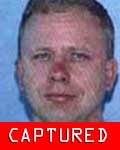
In March 2007, the family of 48-year-old Robert Franks made a startling discovery in their home DVD player.  On a disc was a video of two of the Franks’ female children undressing.  The video looked to be shot unbeknownst to either victim, and seemed to be filmed at different times, on different days. Every scene took place in one of the bathrooms in their home.

When Franks’ wife searched the bathroom, she found a small video camera hidden inside a clock radio.  A second DVD of similar footage was also found.  Cops say when his wife confronted him, Franks confessed. But it didn’t take long for Robert Franks to leave Hawaii and go on the run.

Hawaiian authorities believed that Franks may be working construction and could be hiding out in Ohio or Louisiana.  Franks is described as a white male, 5’9″ tall, weighing 175 lbs., with brown hair and blue eyes.

On May 2, 2008, U.S. Marshals say that Robert Franks was arrested in New Orleans.

Guam Resists Military Colonization

Published on Monday, August 17, 2009 by CommonDreams.org

http://www.commondreams.org/view/2009/08/17-6

Guam Resists Military Colonization

Having No Say When Washington Tries to Increase your Population by 25%

by Ann Wright

The United States and the Chinese governments have some remarkable similarities when it comes to colonization. The Chinese government has sent a huge Han population to inhabit Tibet and overwhelm the Tibetan population, even building the world’s highest railway to get people and materials there.

The United States government, with virtually no consultation with the local government and citizens, is increasing the population of its non-voting territory, Guam, by 25%. 8,000 U.S. Marines, their dependents and associated logistics units and personnel-a total of 42,000 new residents-will be moved to the small Pacific island (barely three times the size of Washington, DC) that has a current population of 175,000. The move will have a tremendous impact on the cultural and social identity of the island.

These military forces are being relocated to Guam, in great measure, because of the “Close US Military Bases” campaign organized by citizen activists in Okinawa, Japan. The United States has had a huge military presence there since the end of World War II.

I thought I was reasonably well-informed about America’s interests in the Pacific. I had worked as a US diplomat in Micronesia for two years and travelled many times through Guam, a US territory, located an 8 hour flight west of Honolulu.

But earlier this month, in Guam on a study tour sponsored by a coalition of Japanese peace activists spearheaded by CODEPINK-Osaka, Japan, which included a former member of the Japanese Diet (Parliament), I learned new aspects of the decision to relocate this large number of U.S. military to Guam.

Guam was first colonized by the Spanish in the 1500s, became a US colony in 1898, a war-trophy from the Spanish-American war and served as a stopover for ships travelling to the Philippines. During World War II, Guam was attacked and occupied by Japan on December 8, 1941, the day after the Japanese attacked Pearl Harbor. American citizens living on the island had been evacuated by the United States government before the attack, but the indigenous Chamorro population was left behind. During the 31 months of Japanese occupation, the Chamorros endured forced labor, concentration camps, forced prostitution, rape and execution by the Japanese military. The United States military returned three and one-half years later on July 21, 1944 to retake Guam.

In 1950, Guam was made an “unincorporated territory” of the United States by a US Congressional act and residents were given US as one of 16 “non-self governing territories” left in the world.

Lands were taken after World War II from the native Chamorro population without compensation by the US military to construct major air and naval bases which the US military still uses. Currently, there are 3,000 US Air Force and 2,000 US Navy personnel and 1,000 employees of other federal security agencies assigned to Guam.

Three Guam legislators told us that the Guam government has not been properly consulted in the discussions between the US and Japanese governments on the relocation of the large US Marine force. Guam officials have been given little firm information about the military expansion plans. They are very concerned about the impact of further militarization of their island as its major income is provided by hundreds of thousands of Japanese tourists who visit the tropical island annually.

They are disturbed by rumors of proposed forced condemnation of another 950 acres of land owned by members of the native Chamorro population for a live fire range for the incoming Marines. Residues of Agent Orange left from the Vietnam War and other toxic wastes from the military bases, plus the possibility that artillery shells and other munitions made from depleted uranium will be used on their island, are all sources of concern for the people of Guam.

In order to get the 8,000 US Marines out of Okinawa, the Japanese government is paying $6 billion to the US government for their relocation. Guam officials are concerned that not enough of the relocation funds will be made available for the large infrastructure improvements that will be needed for the island’s roads, water, sewage and electrical systems as it tries to support a 25% increase in population. They feel the military will take care of its bases but may leave the local population struggling with the new infrastructure problems created by the large number of military personnel.

The Japanese people, too, are in the dark about the details of the billions of dollars they will pay the US government to have US forces leave Japan. Japanese members of our delegation were shocked when they learned from local Guam activists that the relocation budget calls for the Japanese government to pay $650,000 for the construction of each new house on the base, while Guam activists told us the cost of a middle class home on Guam is around $250,000. The Japanese delegation was greatly concerned that their government is funding such inflated projects and is going to raise the budget with Japanese Diet members when they return to Japan.

Of concern to the Guam business community is consideration by US House of Representatives law makers to give Japanese contractors the same access as American firms to bidding on contracts worth more than $2.5 billion in upcoming US military construction projects on Guam. Apparently, the Japanese government, like the US government, likes to have its commercial firms benefit from government aid projects it is funding “overseas.” With Japan’s $6 billion contribution to the $10 billion cost of relocating the Marines, Japan wants some of that money returned to Japan through construction contracts on the Guam infrastructure projects.

Many Guam officials and a large number of Guam citizens are deeply concerned about the cultural, economic and security impact of the dramatic increase in population and militarization of their island the relocation would present. The current cultural divide of those living in relative luxury inside the bases with better housing, schools and services has been a source of friction between the US military and the local population over the years.

Guam officials said that they too have been perturbed about the extraordinarily high expenditures on US military base facilities, when the Government of Guam is strapped financially. The officials said they were amazed and horrified when they learned that the Air Force recently built an on-base animal kennel for $27 million, with each animal space costing $100,000, when locally, the government is unable to provide sufficient infrastructure for its citizens, much less animals.

Professors and students at the University of Guam expressed concern that there will be a sharp increase in sexual assault and rape on the island due to the relocation of US Marines. They believe one of the reasons the Japanese government finally was able to get the US government to move some military forces out of Okinawa was because of major citizen mobilizations that occurred in response to rapes by US military personnel.

In 2008, the US Ambassador to Japan had to fly to Okinawa to give his apologies for the rape of a 14 year old girl by a US Marine. The US military forces on Okinawa had a 3 day stand-down for “reflection” and Secretary of State Condoleezza Rice had to express her “regrets” to the Japanese Prime Minister “for the terrible incident that happened in Okinawa… we are concerned for the well-being of the young girl and her family.”

In April, 2008, U.S. Marine Staff Sergeant Tyrone Hadnott, 38, who had been in the Marines 18 years, was charged with the February 10, 2008, rape of 14 year old girl, abusive sexual contact with a child, making a false official statement, adultery and kidnapping.

On May 17, 2008, Hadnott was found guilty of abusive sexual conduct and the four other charges were dropped. Hadnott was sentenced to four years in prison, but will only serve a maximum of three years in prison due to a pretrial agreement that suspended the fourth year of the sentence. He was reduced to private and given a dishonorable discharge from the US Marines.

The rape accusation against Hadnott stirred memories of a brutal rape more than a decade ago and triggered outrage across Japan. Japanese Prime Minister Yasuo Fukuda said that Hadnott’s actions were “unforgivable.”

There are US Congressional stirrings of concern about the relocation of the Marines to Guam. House of Representatives Armed Services Committee chair Ike Skelton has raised concerns about the size, scope and cost of the move to Guam. “At over $10 billion (two and one-half times the initial cost estimate of $4 billion), it is an enormous project, and I am concerned that the thinking behind it is not yet sufficiently mature,” Skelton said at a recent Congressional hearing. “We need to do this, but it needs to be done right.”

In a challenge to US military “forward deployment” strategy in Asia and the Pacific, Guam activists strongly feel the US military should relocate large forces to the mainland of the US where there presence can be better absorbed by the greater populations and existing large military bases, rather than to their small Pacific island.

However, the US federal government seldom takes into account local feelings about their projects, particularly military projects in a region far removed from the Washington power center.

Guam activists want their voices heard and respected and not to be treated as merely residents of a colony of the United States.

Ann Wright is a 29 year US Army/Army Reserves veteran who retired as a Colonel and a former US diplomat who resigned in March, 2003 in opposition to the war on Iraq. She served in Nicaragua, Grenada, Somalia, Uzbekistan, Kyrgyzstan, Sierra Leone, Micronesia and Mongolia. In December, 2001 she was on the small team that reopened the US Embassy in Kabul, Afghanistan. She is the co-author of the book “Dissent: Voices of Conscience.” (www.voicesofconscience.com)

U.S. sailor gets life sentence for murdering a Japanese taxi driver

Last year, I visited the site where the U.S. sailor stationed at Yokosuka Naval Base stabbed the Japanese taxi driver to death.  We placed flowers at a makeshift shrine.

>><<

Sailor gets life sentence in Japanese taxi driver’s death

By Erik Slavin, Stars and Stripes
Stars and Stripes online edition, Thursday, July 30, 2009

YOKOHAMA, Japan – U.S. Navy Seaman Olatunbosun Ugbogu will serve life in a Japanese prison with labor for murdering a taxi driver last year, a three-judge panel ruled Thursday in Yokohama District Court.

In finding him guilty, lead judge Masaaki Kawaguchi called Ugbogu’s insanity defense “groundless.” He ruled that Ugbogu was sane when he stabbed Masaaki Takahashi with a kitchen knife after a roughly $200 ride from Tokyo’s Shinagawa Station to Yokosuka’s Shioiri neighborhood on March 19, 2008.

While Ugbogu maintained that voices in his head forced him to kill, Kawaguchi said the killing was part of a planned robbery that failed when Takahashi screamed in pain after the knife pierced his neck and severed a major artery.

“The crime was cold-hearted and cruel … and committed to get money for socializing,” Kawaguchi said. “It was heinous and selfish.”

In addition to murder, Ugbogu was found guilty of robbery for not paying the taxi fare and of violating the arms control law.

Ugbogu, who wore a T-shirt and ripped jeans to the sentencing, reacted to the verdict with the same lack of emotion that has generally characterized him since the trial began in December.

Ugbogu, who has been taking psychiatric medication regularly while being held in jail, did not have the chance to speak Thursday.

A court-appointed psychiatric expert said in April that Ugbogu may have convinced himself that he hears voices in his head following the stabbing in order to cope with the trauma. But he said Ugbogu acted too methodically to have been schizophrenic at the time of the killing.

Judges said Thursday that they accepted the psychiatric expert’s finding.

“The verdict rejected all the claims made by the defendant and defense counsel. It is truly regrettable,” defense attorney Yasutoshi Murakami said following court Thursday.

Murakami disputed the psychiatrist’s findings but wasn’t allowed to present his own psychiatric witness during the trial.

Murakami said he believed that if a jury had reviewed the situation, they would have scrutinized Ugbogu’s erratic behavior and possibly come to a different conclusion about his sanity. Jury trials were introduced to the Japanese justice system for the first time in May. The start of Ugbogu’s trial preceded that change and his case was heard by the panel of judges.

The judges acknowledged that Ugbogu apologized for his actions, but they later said that the apology was superficial.

“We don’t believe the defendant has seriously reflected on what he did,” Kawaguchi said.

“This case has had very serious consequences, not only to the Yokosuka base, but to the Japanese people as a whole,” Kawaguchi later added.

Ugbogu has 14 days to appeal the decision.

Murakami said he would discuss appeals with his client Friday, but that Ugbogu had expressed earlier his willingness to accept the outcome and move on with his life.

Without an appeal, Ugbogu would be eligible for parole in about 25 to 30 years, Murakami said.

Stars and Stripes reporter Hana Kusumoto contributed to this story.

Source: http://www.stripes.com/article.asp?section=104&article=63954