Critical perspectives on the U.S.-led NATO war on Libya

The western media has hyped the rebels’ “victory” in the war in Libya.  But it’s impossible to know what is really going on if you only get the mainstream media.  Reports are trickling out from independent journalists that contradict the disinformation being spread by mainstream media.  Franklin Lamb reports in Countercurrents.org from Tripoli:

NATO is widely viewed as having violated the three main terms of UNSCR 1973, to wit, NATO did engage in regime change, it did take sides in a civil war, it did arm one side, and it did refuse to allow a negotiated diplomatic settlement which many here and internationally believe could have been achieved by early April, thus saving hundreds Libyan lives. NATO’s more than 160 days of bombing are seen as egregious violations of UNSCR 1973, Article 2 (7) of the UN Charter and numerous provisions of international law, all part of its campaign to secure Libyan oil and this rich countries geopolitical cooperation for the US, UK, France, Italy and their NATO allies.

[…]

On Monday night August 22, 2011 this observer met with Saif al Islam. He was not captured and he is not dead. At least not as of 11 p.m. 8/22/11 or roughly 24 hours after the NTC (National Transitional Council) and the ICC claim he was captured and was being prepared for transport to The Hague. Saif was defiant and he gave assurances that his family was safe and that NATO would be defeated politically for its crimes against Libyan civilians.

Saif took western camera man and reporter on a short tour of Tripoli showing them that NATO was not in control—not 95% in control of Tripoli as the NTC rep in London has been claiming since Sunday night and not 80% in control of Tripoli as the White House & NATO’s “Operation protect the Libyan civilians” CEO, Rasmussen, has claimed. But the rebels do appear to currently control large swatches of Libya’s capitol. A journalist named “Kim” S. from the UK Independent who has been with the rebels for the past more than two months and who seemed to literally sort of stumble into our hotel yesterday told me this morning that NTC claims made during the period he was with them were “complete bullshit.”

In “Western Media Reports on Libya False”, Stephen Lendman, writer and radio host in Chicago said:

When they talk about a conflict like this Libya one that is just an outrageous American-led imperial war for conquest; absolutely illegal and with no humanitarian concern for the Libyan people, even the so-called rebels are not rebels they’re mercenaries; they have been hired.

Most of them may not even know what they are doing. They were paid; they were brought in mostly from outside the country; they’re probably being paid more than they ever go before so, you know, you need a job and you get a paycheck and you were told “We want to liberate this country from bad people”. And they go in and do what they’re told to do because they want to keep getting their paycheck.

About the so-called celebrations in the streets of Tripoli – I absolutely discount them. There were polls taken a week or two ago that showed across the country including in the eastern part of the country in the Benghazi area – wherever they conducted these polls, which is not an easy thing to do in any country at war so you can’t vouch for the absolute accuracy of this – but polls showed the longer the NATO bombing went on the higher approval rating Gaddafi got; and the last numbers I saw – 85 percent of the Libyan people approve of Gaddafi.

Global Research reports that over 200 African leaders condemned NATOʻs Libyan War as part of a plan to recolonize the continent:

A group of African intellectuals has written an open letter criticising the NATO-led military attacks on Libya, saying Africa ran the risk of being re-colonised.“Nato has violated international law… they had a regime change agenda,” said one of the signatories, University of Johannesburg head of politics, Chris Landsberg.“The re-colonisation of Africa is becoming a real threat,” he told reporters in Johannesburg. The letter was signed by more than 200 prominent Africans, including ANC national executive member Jesse Duarte, political analyst Willie Esterhuyse of the University of Stellenbosch, former intelligence minister Ronnie Kasrils, lawyer Christine Qunta, former deputy foreign affairs minister Aziz Pahad, former minister in the presidency Essop Pahad, Sam Moyo of the African Institute for Agrarian Studies, former president Thabo Mbeki’s spokesperson Mukoni Ratshitanga, and poet Wally Serote.

The leaders accused the UN Security Council of approving an illegal policy of regime change:

Landsberg said it was up to the Libyan people – and not the United Nations Security Council – to decide if their leader, Muammar Gaddafi, who had been in power for 42 years, had overstayed his welcome. The letter reads: “Contrary to the provisions of the UN Charter, the UN Security Council authorised and has permitted the destruction and anarchy which has descended on the Libyan people. At the end of it all, many Libyans will have died and have been maimed (and) much infrastructure will have been destroyed.” The Security Council had not produced evidence to prove that its authorisation of the use of force was an appropriate response to the situation in Libya. “Thus they (Security Council) have empowered themselves openly to pursue the objective of ‘regime change’ and therefore the use of force and all other means to overthrow the government of Libya, which objectives are completely at variance with the decisions of the UN Security Council,” reads the letter, which was also supported by the Congress of SA Trade Unions, the SA Communist Party and the Media Review Network. The Security Council also “repudiated the rule of international law” by ignoring the role of legitimate regional institutions in solving conflict.

The African leaders also accused NATO countries of being “rogue states”:

Landsberg said Britain, France and United States “continue to act as a rogue states”. “A rogue is an errant state that does not live by rules… the tragedy is that they are not likely to be charged in the International Criminal Court.”

In an interview on Global Research, John Robles says that the Libyan “revolution” is more of a western-backed insurgency than a true revolution of the people.   He notes that “the African Union has refused recognition to the so-called Transitional National Council, consisting of what by all accounts is a fairly motley, heterogeneous grouping of anti-government forces in Libya, aided and abetted by major NATO powers like France, Britain, the U.S. and Italy and by Persian Gulf monarchies like Qatar and the United Arab Emirates.”

Rather than withdrawing after the end of the Gaddafi regime, Robles believes that NATO will establish military bases in the country:

…assuming previous Yugoslav and Afghan precedents as a likely scenario, we have a lot to go on. We have the fact that the Turkish Foreign Minister announced yesterday that NATO’s role will continue in Libya after the installation of the rebel government, the so-called Transitional National Council.
And similar soundings have emanated from major figures and NATO countries that suggest, far from NATO’s role ending, it may in a certain sense just be beginning. And that parallels almost identically what happened in Yugoslavia in 1999 and what has happened in Afghanistan in the past decade, where NATO bombs itself into a country and sets up military bases and doesn’t leave. The U.S. still maintains Camp Bondsteel in the contested Serbian province of Kosovo, which is a large, expansive base, by some accounts the largest overseas military facility built by the US since the war in Vietnam. And it remains there over 12 years after the end of the 78-day bombing campaign against Yugoslavia.

Similarly, the U.S. has substantially upgraded air bases in Afghanistan, including those bordering Central Asian nations and close to the Iranian border, and there is no indication they are ever going to abandon them, as they are not going to abandon military bases in Iraq and other places. It’s a lot easier to bring NATO into one’s country or have it forced in than to get it out.

In a CNN interview, former CIA officer Michael Scheuer also blew the lid off of the fraudulent justifications for the US-led war in Libya.  He describes the CIA’s role in backing the insurgent groups and the blowback that could follow.

This is especially troubling when you consider the composition of the Libyan rebels.   According to Michel Chossudovsky, “The “pro-democracy” rebels are led by Al Qaeda paramilitary brigades under the supervision of NATO Special Forces. The “Liberation” of  Tripoli was carried out by “former” members of the Libya Islamic Fighting Group (LIFG). ”  The New York Timesalso describes the now cozy relationship between the former al Qaeda linked organization and NATO.   Training and supporting Islamist fighters sounds a lot like Reagan’s Afghanistan strategy that brought the world the blowback of 9/11.

Meanwhile Finian Cunningham reveals the hypocrisy of the “humanitarian” rationale for the NATO war on Libya.  He reports that in the tiny Kingdom of Bahrain, “US Ally Kills Children… So When Is NATO Intervening?”:

This is the face of state terror against civilians in the US and British-backed Gulf oil kingdom of Bahrain – the latest victim a boy shot dead by police. But there will be no call by Washington or London for a Libya-style NATO intervention to protect human rights here. No call for regime change. No call for an international crimes tribunal.

Fourteen-year-old Ali Jawad Ahmad was killed on 30 August when Saudi-backed Bahraini riot police fired a tear gas canister at the youth from close range. On the day that was supposed to be a celebratory end to Ramadan – Eid al Fitr – people across Bahrain were shocked by yet another “brutal slaughter of innocents” by the regime and the stoic silence of its Western backers.]

[…]

It is scarcely believable that Washington or London is unaware of the Bahraini state terror over recent months and in particular the massive, indiscriminate use of tear gas on civilian homes. Bahrain – a former “protectorate” of Britain – has close links between its ministry of interior and British security personnel. The Gulf island is home to the US Navy Fifth Fleet, from where the entire Persian Gulf and Arabian Sea down as far as the coast of Somalia are surveyed. The territory of Bahrain is less than 60 kilometres long and only 17 kilometres wide.
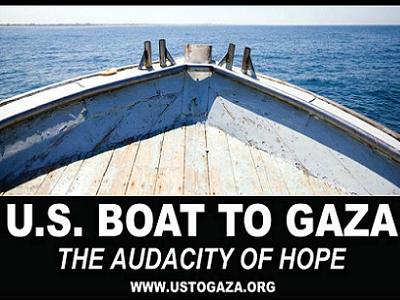
Report from the “Audacity of Hope” U.S. Boat to Gaza – Col. (Ret.) Ann Wright and Dr. Carol Murry

Speakers: Col. (Ret.) Ann Wright & Dr. Carol Murry

OʻAHU

Sunday, August 28, 2011

3:00 –  6:00pm

Revolution Books

Ann Wright and Carol Murry will focus on their experiences aboard “The Audacity of Hope”, which was prevented from sailing to Gaza by Greece, Israel and the U.S. Ann is also just returning from Jeju Island… As always, there will be a talk followed by Q&A, and then socializing. More info at http://www.revolutionbookshonolulu.org/

Wednesday, August 31, 2011

7:00 – 9:00 pm

Honolulu Friends Meeting House,  2426 O‘ahu Avenue, Honolulu, HI 96822

Sponsored by: Hawaiʻi Peace and Justice
2426 Oʻahu Avenue, Honolulu, Hawaiʻi 96822. Phone 808-988-6266 email info@hawaiipeaceandjustice.org
Visit us on the web at hawaiipeaceandjustice.org and on Facebook. Also visit: dmzhawaii.org

DOWNLOAD LEAFLET

MAUI ISLAND

TUESDAY, AUGUST 30, 2011

7:00 pm

Retired Army Col. & State Dept. Diplomat Ann Wright on “Citizen Activism”

UH Maui College, Pilina Building Multi-Purpose Room

The presentation is free and open to the public and will be held in the upstairs multi-purpose room at the back of the Student Center (Pilina) Building.  Sponsors: Maui Peace Action and the UH Maui College Peace Club.

HAWAIʻI ISLAND

Thursday, Sept. 1, 2011

6:00 – 8:00 pm

Keaʻau Community Center

Sponsored by: Malu ‘Aina Center For Non-violent Education & Action, P.O. Box AB Kurtistown, Hawaii 96760. Phone 808-966-7622 email ja@interpac.net
Visit us on the web at www.malu-aina.org

Friday, Sept. 2, 2011

7:00 pm

Holualoa Theater (Next to the Holualoa Post Office)

The presentations are free and open to the public.

The 2011 Gaza Freedom Flotilla’s U.S. boat “The Audacity of Hope” attempted to carry support letters to the people of Gaza.  Along with other international humanitarian boats, it was was blocked by military commandos from leaving Greece.  Hawaiʻi residents Ann Wright and Carol Murry were aboard the Audacity of Hope.

Ann has just returned from Korea’s Jeju Island where citizens are protesting a military base that would destroy their “Island of Peace,” called “Korea’s Hawaiʻi.”

Come hear Ann and Carol, and talk together about these issues.  Let us inspire and activate one another to stand up for justice, peace, and the earth.

Ann is a retired Army Colonel and State Department diplomat.  Carol has a doctorate in Public Health and was on the faculty of the University of Hawaiʻi.

Background on Speakers:

Ann Wright holds a Master’s and a law degree from the University of Arkansas and a master’s degree in national security affairs from the U.S. Naval War College.   She spent 13  years in the U.S. Army and  16  additional years in the Army Reserves, retiring as a Colonel.

In 1987, Col. Ann Wright joined the Foreign Service and served as U.S. Deputy Ambassador in Sierra Leone, Micronesia, Afghanistan, and Mongolia. She received the State Department’s Award for Heroism for her actions during the evacuation of 2,500 people from the civil war in Sierra Leone, the largest evacuation since Saigon. She was on the first State Department team to go into Afghanistan and reopen the Embassy there in December 2001. Her other overseas assignments include Mongolia, Somalia, Kyrgyzstan, Grenada, Micronesia, and Nicaragua.

After her distinguished 16 years in the Foreign Service, on March 19, 2003, the eve of the U.S. invasion of Iraq, Ann Wright cabled a letter of resignation to Secretary of State Colin Powell, stating that without the authorization of the UN Security Council, the invasion and occupation of a Muslim, Arab, oil-rich country would be a disaster.

Since then, she has been writing and speaking out for peace. She fasted for a month, picketed at Guantánamo, served as a juror in impeachment hearings, and has been arrested numerous times for peaceful, nonviolent protest.  She is an activist for peace and human rights who participated in the Gaza Freedom March and the the Gaza aid Flotillas of 2010 and 2011.

Ann’s home is in Honolulu. She is the co-author of the book “Dissent: Voices of Conscience”  (www.voicesofconscience.com).

Carol Murry lived and worked in rural Thailand and Swaziland; started a community health worker program on Micronesian outer islands; did leprosy research in eastern Bhutan; directed non-profit organizations with a focus on leprosy, HIV/AIDS, and community health; was University of Hawai’i faculty; and recently researched and authored publications on risk and vulnerability to HIV/AIDS among Pacific Island youth for UNICEF.

She has a doctorate in public health and masters in epidemiology from the University of Hawai’i, but considers her true education in health was as a Peace Corps Volunteer in a Bengali village hospital with no electricity, running water, or bathrooms.

During the time the Israelis were building the wall separating Gaza farmers from their orchards and dividing families, an Israeli friend, who volunteered at Malu ‘Aina, made the plight of the Gaza people so vivid that she could not look away.  The parallels with the apartheid system in South Africa during the time she was in Swaziland were inescapable.

A presentation by Ann Wright on her return from the first Freedom Flotilla inspired Carol’s application to join the 2011 Freedom Flotilla.  She was honored to stand up with Ann Wright and the other passengers and leaders of the US Boat to Gaza in the determination that freedom, justice and peace must come to Gaza and the refusal to sit down until it does.

Carol’s home is in Honolulu.

All missile defense programs are part of the same system

Bruce Gagnon posted a link to this article about the U.S. missile defense program. As he points out, the article explains how all missile defense systems are “part of the same network of systems.”  The proposed South Korean naval base in Jeju island, where islanders are waging a fierce struggle to oppose the base, is part of this network. Hereʻs a pertinent section:

In congressional testimony, you’ve highlighted the need for interoperability of all U.S. and allied interceptors and supporting sensors. Is this a realistic requirement?

Absolutely, and we’re not going for interoperability that’s achieved after the fact, but rather full integration from the get-go. MDA designs and manages the entire ballistic missile defense architecture — whether homeland or regional missile defense — from a single set of requirements and specifications. So they’re not separate systems, but literally one holistic network built to operate as a single system. It took us 10 years to get to the point where we have one systems engineering process and one set of specifications writ large for the entire globe. This allows us to do all the trades and provide the most low-risk, cost-effective means of meeting all our missile defense requirements.

Great rhetoric, but how can this be translated into the holistic system you speak of?

A good example is the Aegis ashore system. We saw this great capability on ships and saw the need to replicate this capability on land. By looking down from the top, it was a simple decision to take those [SM-3 Block 2A] missiles off the ship and build land variants of the same Aegis system. And now we have a brand new capability that never existed before, with a worldwide logistics sustainment and training program in place that costs tremendously less than had we developed a land system from scratch.

And what about systems deployed by the Israelis and those planned for NATO countries, Japan and other partners. Will they all work as a single system in combat?

The international partner program is part and parcel of our mainstream program. They’re not considered as adjuncts to U.S. missile defense, but part of the same network of systems. So with NATO, Israel or Japan, they’re all working from the same specifications that take into account all the required interfaces. We have a set process for all our partners. We typically start with studies, then move to simulations and assist in calibrating country-specific requirements from the very beginning to fit into the overall system. Today, we’re working with over 20 countries for the collective benefit of us all.

But each country has its own operational, cost and industrial base considerations. How does it all pull together?

First of all, I want to emphasize that we don’t control another country’s system or how a country chooses to develop its systems. But we put in place up-front agreements that drive genuine partnerships for designing systems that can be readily integrated. With Israel, for example — our oldest partner with whom we have an extremely mature relationship — we’ve actually replicated an Israeli command-and-control center here in the United States and similar interconnected laboratories are planned with NATO and other partners. Together we conduct many simulation excursions, hundreds of different scenarios to optimize and continually improve upon the design.

So when you ask about how we can have confidence in combat? The answer is we practice it, we exercise it, we’re full partners in flight tests to the point that beyond basic sharing of data, the links are in place to operate as a unit when we have to face actual threats.

READ THE FULL ARTICLE

URGENT: Police violence escalating against Jeju protesters

Activists and media persons on the ground in Jeju are reporting that the mayor Kang of Gangjeong village and several others have been arrested at the protest site against the proposed naval base.   Riot police have descended on the protest sites.

A Facebook post http://www.facebook.com/SaveJeju  10:45pm HST:

Gangjeong village Mayor Kang Dong-Kyun is being held inside of this naval facility at this moment.

Another post at 11:07pm HST:

More riot police being brought in at the construction HQ – right now! Crackdown on villagers is underway!

yfrog.com

Visit www.savejejuisland for more information. Follow #gangjung and #savejejuisland on Twitter for the latest new, pictures and video.

At 11:24pm HST:

Riots on Jeju Island are escalating rapidly right now – getting very dangerous. Reports of injuries and arrests. THE POLICE MUST WITHDRAW. Forward posts and images from Twitter such as this to the media ASAP! Your help is needed NOW!

Kaneʻohe Marine kills self after hazing by fellow Marines

Marine Times reports:

One Marine faces court-martial and another faces non-judicial punishment for allegedly hazing a lance corporal who killed himself in Afghanistan, according to a military investigation report obtained by Marine Corps Times.

Lance Cpl. Harry Lew, 21, killed himself with a two- or three-round burst from an M249 Squad Automatic Weapon early April 3, according to a Marine Corps investigation. He was hazed that night by two other lance corporals in 2nd Battalion, 3rd Marines, out of Marine Corps Base Hawaii, who were angry he had fallen asleep several times while manning a guard post, the report said.

NBC Bay Area reports:

An investigation into the 21-year-old’s April death says Lew “leaned over his M249 squad automatic weapon as it pointed to the sky, placed the muzzle in his mouth and pulled the trigger.”

Lew wrote on his arm: “may hate me now, but in the long run this was the right choice I’m sorry my mom deserves the truth.”

This violence and suicide is tragic enough, but look at some comments on the Marine Times article. They cheer the torture of Lew and his subsequent suicide, revealing a disturbing psychopathic culture of violence within some military circles:

Alex Milberg · Customer Service Rep. and RSO at Ultimate Defense Weapons Range

Good, one less weak link in the Corps. He endangered the lives of many Marines by falling asleep on post. Proof that hazing saves lives.

Will Jeju become another ‘Pearl Harbor’?

There have been several articles about Jeju referencing the cost of militarization and war to Hawai’i and Ke Awalau o Pu’uloa (Pearl Harbor).  One letter to the editor published in the Jeju Weekly states:

An American Jeju?

Sunday, August 14, 2011, 03:15:11

To the editor,

Jeju Island, fondly referred to as “Korea’s Hawaii,” has more in common with the US state than many know. Besides a lure for honeymooners, a balmy climate, and beautiful volcanic geology they’ve also both suffered American imperialism.

The case of Hawaii is well known – in 1893 the US Marines overthrew the Hawaiian monarchy; five years later it was annexed and declared a US territory. Jeju’s history is more contested but the facts are clear – as early as August 1945 the island was “a truly communal area . . . peacefully controlled by the People’s Committee [of Cheju Island],” a decentralized democratic government that reflected the people’s separatist feelings toward the Korean mainland. [See Bruce Cummings’ “Korea’s Place in the Sun – A Modern History,” New York, 1997, p.219]. Between 1948 and 1953, one-tenth of Jeju’s population was murdered and one-third displaced.

Jeju may soon replicate its Pacific cousin in another way: serving as a base for the American Navy. Plans for a base in Jeju were announced back in 2002, and construction is currently underway in the small fishing village of Gangjeong, not far outside Seogwipo City. The South Korean government insists the base will be for its own national purposes but the ties between the US and Korean militaries should make one sceptical.

Given that the base will be the home to a fleet of Aegis-equipped destroyers (high-tech ships designed to shoot down ballistic missiles) it’s hard not to see it in connection to US plans to create a missile “shield” around China much as is being done in Eastern Europe against Russia. [See “U.S. and Romania Move on Missile Plan,” The New York Times, May 3, 2011.]

Since 2002 the naval base has been suspended and had its location changed several times due to strong opposition on the island. The South Korean government, in an effort to placate the population, has also decided to include in the project a nearby “eco-friendly” park and the economic incentive of a commercial dock for luxury cruise liners. Such movement on the part of the authorities may suggest there is hope for the current protesters and for the island itself in not becoming another Hawaii.

Brendan Brisco has a Master’s degree in Peace and Conflict Studies and currently teaches English Literature at Gangwon-do Foreign Language High School.

In an interview on ohmynews.com, journalist Anders Riel Müller makes similar comparisons with Ke Awalau o Pu’uloa (Pearl Harbor):

http://www.ohmynews.com/NWS_Web/View/at_pg.aspx?CNTN_CD=A0001610491&PAGE_CD=&BLCK_NO=&CMPT_CD=A0101

[Interview] Anders Riel Müller
1. In April 19th, 2011, you have launched ‘SAVE JEJU ISLAND campaign by writing a paper on Ganjeong village with the title of “One Island Village’s Struggle for Land, Life and Peace”.  http://www.savejejuisland.org/Save_Jeju_Island/About_Jeju.html

First, I want to make clear that I was not involved in the launch of savejejuisland.org. The founders just asked to use my piece as the backgrounder for their website. The piece was originally written for the Korea Policy Institute. However the purpose of this article was to present the Gangjeong struggle to an international community who may know very little about Korea, Jeju, Jeju’s history and its natural beauty that is about to be destroyed. I am happy that I succeeded at that.

Yet regarding the building of the new naval base in Gangjeong village, the Korean Navy claimed that the new “eco-friendly” naval base will create jobs and increased security for the island. What do you think of the claim of the Korean Navy?

I think it is very difficult to imagine an eco-friendly naval base with 20 Aegis destroyers. First of al. Aegis destroyers each have a 100,000 horsepower engine running on diesel or natural gas. How can these destroyers in any way be eco-friendly? There will be oil spills, waste disposal, etc. in a highly ecologically sensitive area. On the other question regarding job creation: I have worked in regional development for 7 years. There is a significant difference in assessing job creation quantitatively and qualitatively. The jobs around a naval base are not anything like the jobs that people in Gangjeong today have.

2. The Navy also stated that the new naval base will provides an economic boost for the Jeju island. Then why do you and demonstrators are against economy-centered government policy?

Again the question is not whether Jeju needs jobs, but what kind of jobs they get. Again I only speak on my own behalf, but having worked in a government agency in Denmark for 6 years, we always resisted job creation linked to militarization and the prison system. Our objective was to create jobs that would benefit local people, the local communities and the environment. Military related jobs can hardly be considered sustainable. Jeju is unique because of its unique culture and eco-systems. Economic development should seek to build on these unique features, not destroy them.

3. The third argument of the government is that the naval base will provides vital security for the Jeju island. Don’t you agree with the government?

I am doubtful how a large naval base will increase security for Jeju. I grew upon a small island in the Baltic Sea in Denmark, which in many ways was in the front line of the cold war. Only one hour away from Eastern Germany and close to the Soviet Union. As a strategically important point in a small country the threat of invasion was always present as I grew up. Looking back it seemed insane to even believe that the island could be defended against such a superior power as the Soviet Union. I think it is the same case with Jeju. In case of a war with China or Japan, two super powers, what would the chances be of defending the island without being utterly destroyed in the process? The naval base would not defend Jeju, but the mainland. As such for Jeju residents a naval base is simply a loose-loose situation.

4. The ROK government claims that the base is not intended for use by the United States, as activists concern. Why do think the US may use this new naval base since the US keep aircraft careers anyway in Okinawa?

Resistance in Okinawa against US military presence is extremely strong and I think the US is thinking strategically ahead. The US wants a heavy military presence in the waters surrounding China. Jeju’s strategic location only 450 kilometers from Shanghai is simply optimal for the US. There are very few locations where the US can be this close to one of the largest industrial and financial centers of China. The US may not have a constant military presence, but in case of rising tensions with China, I think there will be no doubt that a Jeju naval base will play an extremely important strategic role again to the detriment of Jeju residents and eco-systems.

5. In the paper you pointed out that, “In a potential military conflict with China, Gangjeong will be an important strategic target, just as Pearl Harbor was for the Japanese in WWII.” Could you elaborate more on this point you made?

For the Japanese, Pearl Harbor was the most important strategic base that halted Japanese expansion in to South East Asia and the Pacific. A naval base on Jeju will make the island a similar target in a future war. During the end of World War II the Japanese heavily fortified Jeju against a possible US invasion after Okinawa. The island was spared because of the nuclear bombing in Hiroshima and Nagasaki, but the islanders still suffered severely as they were forced to build fortifications for the Japanese. My main point here is that strategically located military installations will always be prime targets in a war…and Jeju would be one if the naval base is built.

6. The ROK government’s also claim that the protest is the work of a handful of extreme activists. You were in Jeju physically until recently and encountered many Jeju residents in Ganjeong village. In your opinion, how much the claim of the government is accurate?

I don’t think the local residents in Gangjeong would accept the presence of activist if they did not feel they were a support. What is  important to understand here is that the presence of outsiders give strengths to the villagers. It is always comforting to know that people from the outside cares. The government on the other hand will of course claim that the majority are extremist elements. When I was there, people seemed to go on with their lives greeting us as we walked through the village. I don’t think they would have, if they considered us extremists looking for trouble. We were greeted and accepted by community members. If you take a closer look at who uses extremist actions look to the navy and government. Sending hundreds of police officers and military in to this tiny village every day is an extremist position and excessive use of force and again it shows to me how far Korea is from being a democratic country.

7. You stated in your paper as follows, “if this naval base is not stopped, the Gangjeong villagers’ livelihoods, histories and traditions may soon be erased from memory, all because of strategic geo-political ambitions that have nothing to do with them or their way of life.” Why did you reach such conclusion? Could you explain more on your such conclusion?

Again I want you to look at Pearl Harbor. The reason why it is called Pearl Haror is because of the rich pearl fisheries in the clean water that existed before the naval base. Where do you see any remnants of the small fishing communities and pearl fisheries that took place there before? It was all erased. Today when people think of Pearl Harbor, they think of a naval base, not about the beautiful bay full of Oysters that used to be there. That will be the fate of Gangjeong as well. Once the coastline is paved over, the fisheries ruined, farm land destroyed and the villagers move away, what will be left to remind us of the beautiful place that once was?

8. In your another paper, “South Korea’s Global Food Ambitions: Rural Farming and Land Grabs”, you stated that, “In Seoul, eating out is as common as eating at home (if not more) because the food is cheap, plentiful, and most people work late in this super competitive society. Yet South Korea imports 90% of its food from abroad.” So in your opinion, Korean farmers were victimized by urban policy makers? And why do think Korea is still “super competitive society”?

This is not unique to Korea. I think it is a problem to the whole idea of development thinking: That we go from being a agricultural society, to an industrial society, to a knowledge society. Food in that thinking is merely an input just like energy. Food is energy and we need as much as cheaply as possible to feed the workers who are underpaid. Coming from the outside visiting the country side in Korea, there is no doubt that rural communities were “sacrificed” in the name of development. I used to work in the former communist countries in Europe and I see almost the same level of poverty in the rural areas in Korea as I did there. The difference is thatSouth Korea is one of the richest countries in the world. Poland, for example, is not. I have lived on three continents and I have never lived in a country as status obsessed as South Korea. It is this material status obsession that creates this super competitive society where everything is competition almost from the day you are born. Of course these ambitions have raised the material standard of living very quickly, but once a while we need to stop for a little moment and think: “What did we loose in the process”?

9. You also pointed out that “the official image of Korea as a dynamic, global and high tech society is what most visitors and mainstream Koreans see. Environmental, social, and economic policy is centered on making Korea a modern society…and rural Korea is not part of this plan.” Then what should be done to share the fruits of this Korea’s modernity with the rural Korea?

I have worked with Korean Peasant movements and I think they have a good alternative. The peasant movements are promoting the idea of Food Sovereignty: That farmers in Korea can provide good, healthy, and local food to the cities. Farmers can also provide clean water by using organic agricultural techniques and provide clean energy to the cities through wind and solar energy, but right now all these opportunities are given to large conglomerates and companies. The cities should respect how they are dependent on these services from rural areas and reward them accordingly. Right now, what we see is resource extraction from rural areas in to the cities, but not only that, South Korea is now in the process of buying up farm land in Africa and South East Asia to produce food and energy, meanwhile the farmers in Korea are struggling to survive. Again this is not unique to Korea, but a central problem to the whole idea of modernization, development and progress. We tend to see rural areas as backwards, but we depend on them for so many of the things we take for granted in the cities.

10. A recent Norway’s bomb terrorist Breivik wrote in his paper, before the bomb blast, “a common misconception is that nationalism results in backwardness and halts progress, science and any form of development. The Marxists or capitalist globalists will say that you cannot stop or avoid globalism/multiculturalism which is of course nothing more than propaganda. Japan and South Korea proves very well that this statement is wrong. Both nations are monocultural and at the same time very developed and are considered two of the most successful countries.” As you have lived and studied not only in nordic country, Denmark, but also in Canada and Korea, what do think of Breivik’s analysis and evaluation, seeing Korea and Japan as “the most successful countries”?

Having lived abroad for so many years, it is obvious to me that Breivik has many unfounded romantic notions about Korea and Japan. I doubt he has ever visited, so I don’t understand how he can highlight Korea as “successful” country. There are no ideal countries. We all have good sides and bad sides. But people such as Breivik tend to see the world in very simplified terms such as good and bad, black and white. I think if Breivik had truly studied Korea and Japan, he would have found many things that would contradict his romantic view of these two countries. Breivik has a romantic notion of what Norway used to be as well, a Norway that never existed, just as his perspectives of Korea is an idealized notion of a Korea that never existed. He idealizes warriors and kings and “pure” heroes. In general I think it is dangerous to believe that there is something as a “pure” Korean identity or culture. Identities and cultures are always connected to other identities and cultures and formed through these interconnection. I think this kind of “purity” thinking is dangerous and can lead to disastrous actions such as we saw in Norway.

Atomic Cover-Up: The Hidden Story Behind the U.S. Bombing of Hiroshima and Nagasaki

Last week, on the 66th anniversary of the atomic bombing of Nagasaki by the U.S., Amy Goodman interviewed Greg Mitchell about the dangerous U.S. psychological avoidance of the social, ecological and moral consequences of that act.  Mitchell co-authored “Hiroshima in America: A Half Century of Denial,” with Robert Jay Lifton. It is an excellent history and analysis of the impact of the atomic bombing of Japan on the politics and collective psyche of the U.S.

Atomic Cover-Up: The Hidden Story Behind the U.S. Bombing of Hiroshima and Nagasaki

As radiation readings in Japan reach their highest levels since the Fukushima Daiichi nuclear power plant meltdowns, we look at the beginning of the atomic age. Today is the 66th anniversary of the U.S. atomic bombing of Nagasaki, which killed some 75,000 people and left another 75,000 seriously wounded. It came just three days after the United States dropped an atomic bomb on Hiroshima, killing around 80,000 people and injuring some 70,000. By official Japanese estimates, nearly 300,000 people died from the bombings, including those who lost their lives in the ensuing months and years from related injuries and illnesses. Other researchers estimate a much higher death toll. We play an account of the 1945 atomic bombing of Nagasaki by the pilots who flew the B-29 bomber that dropped that bomb, and feature an interview with the son of Pulitzer Prize-winning journalist George Weller, who was the first reporter to enter Nagasaki. He later summarized his experience with military censors who ordered his story killed, saying, “They won.” Our guest is Greg Mitchell, co-author of “Hiroshima in America: A Half Century of Denial,” with Robert Jay Lifton. His latest book is “Atomic Cover-Up: Two U.S. Soldiers, Hiroshima & Nagasaki and The Greatest Movie Never Made.”

READ THE FULL TRANSCRIPT OF THE INTERVIEW

Marshall Islanders worried about hypersonic jet debris

Last week, the U.S. military “lost” one of its Falcon Hypersonic Technology Vehicles over the Pacific Ocean.   Radio Australia featured an interview with Giff Johnson, journalist in the Marshall Islands about the increased level of missile activity over the Pacific, the secrecy and threat of aborted launches to inhabited islands, and the contamination risk of depleted uranium and other toxins in the missiles.   Here is a link to the audio file of the interview.   Below is the transcript of the interview:

SOURCE:   http://www.radioaustralia.net.au/pacbeat/stories/201108/s3295273.htm

Marshall Islanders worried about hypersonic jet debris

Updated August 17, 2011 09:17:31

We’ve all heard it – “faster than a speeding bullett” – well that concept has now gone beyond superman and comic book/tv fiction to reality.

The US has experimented with an aircraft – Falcon Hypersonic Technology Vehicle 2 – at its top speed it could travel the 17,000 kilometres between London and Sydney in about 49 minutes. Last week the glider went out of control and came down somewhere in the vicinity of Marshall Islands where a Minuteman missile warhead blew it up on re-entry over Marshall Islands. It raises many safety issues for Marshall Islands.

Presenter: Geraldine Coutts
Speaker: Giff Johnson, Marshall Islands correspondent

JOHNSON: People in the Marshall Islands know very little other than what is publicly released by the Defence Department on these aborted tests and interestingly on the Minuteman missile re-entry vehicle. It’s a dummy warhead that they target on Kwajalein Atoll on the Marshall Islands. It said that it was blown up northeast of Kwajalein Atoll. Well the interesting thing if you look at a map northeast of Kwajalein Atoll, there’s a bunch of inhabited islands, so we haven’t heard anything more the defence department, people are asking questions, but it’s a concern as people start to hear about more of these missions being aborted near the Marshall Islands.

COUTTS: Was it actually launched from Kwajalein or Johnson?

JOHNSON: No, these shots are launched from Vandenberg air force base, in California and they’re targeted on Kwajalein, in the Marshall Islands and Kwajalein is a major missile testing facility. These are not missile tests that involve intercepts. The Minuteman was just a test of the Minuteman re-entry vehicle to see if it was working and the glider, of course, is this hypersonic glider is a new weapon system that they’re developing. So they’re targeted out here and sometimes there are launches from Kwajalein trying to intercept incoming missiles.

COUTTS: Alright. Well the safety issues, there are a number of them. How do you see that?

JOHNSON: Well, we need to get more information from these US defence department agencies and if they’re acknowledging that re-entry vehicles are being destroyed within minutes of splashdown in the Marshall Islands and in the vicinity of inhabited islands. It doesn’t do much for peoples confidence to have no information about what’s going on and there’s very little released publicly by the air force or in this case, the Hypersonic glider from Darpa, the defence department research agency. So yeah, the Kwajalein elected senators in the parliament here are raising concern about what islands are in the hazard zone and obviously anything that’s targeted on Kwajalein is coming across inhabited islands and, of course, Kwajalein is inhabited too, not only by Marshall Islanders, but by Americans and so there’s just a lot of questions about where this debris is going. And then with the glider, it stopped communicating with home-base, so as far as we know, nobody knows where it went.

COUTTS: Now, someone, even though it’s moving so fast, you’re not likely to see it, but someone along the coastline is going to see something. So no one’s picked up a piece of debris from it?

JOHNSON: Not as far as I know, but there are people who live on very remote islands with very little technology for communicating and so it’s possible that people could see something and not even know that there was a test happening and we’ve got islands that don’t have telephones, don’t have internet, and don’t even have a radio communication. So people could see something and just not know what it is.

COUTTS: So the whole thing is treated by the military with utmost secrecy, so the civilian contingency get no information whatsoever?

JOHNSON: Well, the defence department releases a statement before and after each test and they acknowledge when it’s successful or when it’s been aborted and they give a few details. But the details in terms of the population in the Marshall Islands, where the whole point of why these missiles are targeted out here is two fold. One is it’s four thousand miles, so it gives them a good flight test from California for a long range missile re-entry vehicle, but also face it, there aren’t very many people out here and the Americans wouldn’t feel too happy if these missiles were targeted on California, so that’s part of the reason they’re doing it, just like the Bikini tests in the 40s and the 50s. There just weren’t very many people out here and the problem though the 60,000 or 50,000 people who are here would probably like to get a little more information about where these bits and pieces are being blown up.

COUTTS: How often would tests like this be conducted?

JOHNSON: There’s been quite a bit of activity at Kwajalein in the last few months. They’ve already had a couple of missile test missions and then this hypersonic glider and in a brief conversation I had with the missile range commander a couple of weeks ago. He said this upcoming year is going to be quite busy. So I think normally, maybe a test every quarter something like that, may be three or four a year. But it seems like they’ve been more this year and the pace has been stepped up at Kwajalein.

COUTTS: Did the commander actually explain to you why it will be busy next year?

JOHNSON: I don’t have details on that, but I do know that what’s been going on with the missile range is that after installation of an underwater fibre optic cable to Kwajalein, the army has been able to remote much of its command and control work on the missile testing to Huntsville, Alabama, and so it’s a lot less expensive for people to run tests missions, because they don’t have to send everybody out to Kwajalein now. They can just sit in the control room in the US and have real time data on all the missile tests and this is a big selling point for getting customers to use the ranges that the cost is reduced. So presumably that has something to do with it.

COUTTS: Well, with testing like the Falcon Hypersonic technology vehicle to the glider that’s capable of moving 17,000 kilometres in about 49 minutes and all the other tests that you’re talking about, presumably a lot of it are nuclear powered. Is there any sort of discussion about what’s happening with the environment, are you noticing the marine environment at all, having any impact on it?

JOHNSON: These are not nuclear powered, but the re-entry vehicles contain what’s known as depleted uranium in order to make them simulate a real nuclear warhead for the purpose of missile defence and radar telemetry discrimination, because the whole issue of missile defence is can they pick a real warhead out of all the junk that an enemy would presumably throw up to confuse the radar. So yes, depleted uranium is in the re-entry vehicles, they land, they hit, explode into the lagoon or into the ocean. I mean there must be some contamination, but there’s never that I’m aware of been any published studies about contamination, although I know that Kwajalein senators have raised the environmental issue from time to time about the depleted uranium and what hazard it causes, but as far as I know, the army has always maintained that there’s no threat from it.

Agent Orange buried on Okinawa, vet says

Months after U.S. veterans disclosed that they buried agent orange at Camp Carroll in Korea, more veterans have come forward admitting that they buried agent orange in Okinawa.  The Japan Times reports that despite U.S. denials of storing agent orange on Okinawa, a dozen veterans reported disposing of agent orange at nine U.S. military bases in Okinawa:

http://search.japantimes.co.jp/cgi-bin/nn20110813a1.html#.TkXJE9ogxTg.facebook

Saturday, Aug. 13, 2011
 
Red alert: U.S. Marine Scott Parton stands near what he says were barrels of Agent Orange at Camp Schwab in this 1971 photograph. SCOTT PARTON

Agent Orange buried on Okinawa, vet says

Ex-serviceman claims U.S. used, dumped Vietnam War defoliant

By JON MITCHELL

Special to The Japan Times

In the late 1960s, the U.S. military buried dozens of barrels of the toxic defoliant Agent Orange in an area around the town of Chatan on Okinawa Island, an American veteran has told The Japan Times.

The former serviceman’s claim comes only days after Foreign Minister Takeaki Matsumoto said that he would ask the U.S. Department of Defense to come clean on its use of the chemical on the island during its 27-year occupation of Okinawa between 1945 and 1972. The U.S. government has repeatedly maintained that it has no records pertaining to the use of Agent Orange in Okinawa.

The veteran’s allegation is likely to cause considerable concern in Okinawa, as Agent Orange contains highly carcinogenic dioxin that can remain in the soil and water for decades. The area where the veteran claims the barrels were buried is near a popular tourist and housing area.

The 61-year-old veteran, who asked to remain anonymous, was stationed between 1968 and 1970 in Okinawa, where he drove a forklift in a U.S. Army supply depot. During that time, he helped load supplies — including Agent Orange — onto trucks for transport to the port of Naha, from where they were shipped to Vietnam.

The veteran said that in 1969, one of the supply ships became stranded on a reef offshore and he had to take part in the subsequent salvage operation.

“They brought in men from all over the island to Naha port. We spent two or three days offloading the boat on the rocks. There were a lot of broken containers full of drums of Agent Orange. The 55-gallon (208-liter) barrels had orange stripes around them. Some of them were split open and we all got poured on,” he said.

Following the removal of the damaged barrels, the veteran claims he then witnessed the army bury them in a large pit. “They dug a long trench. It must have been over 150 feet (46 meters) long. They had pairs of cranes and they lifted up the containers. Then they shook out all of the barrels into the trench. After that, they covered them over with earth.”

Dig here: In this photo taken in July, a 61-year-old U.S. veteran draws a map of the location on Okinawa where he alleges dozens of barrels of Agent Orange were buried in 1969. JOE SIPALA

Two other former service members interviewed by The Japan Times — soldier Michael Jones and longshoreman James Spencer — backed up the veteran’s claim that Naha’s port was used as a hub to transport thousands of barrels of herbicide. Spencer also said he witnessed the 1969 salvage operation to unload the containers from the listing ship, though he was unable to confirm the contents of the containers.

But the veteran making the allegations said he was sure. “They were Agent Orange. I recognized the smell from when I handled (the barrels) at Machinato (Service Area).”

Since his exposure to the defoliant’s dioxin during the salvage operation, the veteran has suffered serious illnesses, including strokes and chloracne. The U.S. Department of Veterans Affairs (VA) — which handles compensation for ailing service members — pays the former soldier more than $1,000 a month in medical fees related to Agent Orange exposure.

But the VA claims he was exposed to dioxin during the six-month period that he was stationed in Vietnam.

Under the Agent Orange Act passed by the U.S. Congress in 1991, all American veterans who spent time in Vietnam are assumed to have come into contact with the defoliant — making them eligible for health benefits and compensation.

But due to the Pentagon’s repeated denials that Agent Orange was ever stored in Okinawa, it does not pay these benefits to U.S. veterans who claim dioxin-exposure on the island.

The veteran said he is aware of the risk of discussing the issue — especially given the sensitivity of current Japan-U.S. relations over Okinawa, where negotiations are currently under way to realign U.S. forces stationed there. “I worry if I go public with my name on this, they’ll take away my benefits,” he said.

In 2002, the prefectural government uncovered a large number of unidentified barrels in the Chatan area near the location where the veteran claims he witnessed the trench being dug. According to a source close to the Chatan municipal office, after the barrels were uncovered, they were quickly seized by the Naha-based Okinawa Defense Bureau, which is under what is now the Defense Ministry.

“I asked the Chatan town base affairs division if they had a report from the defense bureau. They said no. The town still does not know what the substance was, how the barrels were treated or if the bureau conducted an analysis of the substance,” the source said.

Over the past six months, The Japan Times has gathered firsthand testimony from a dozen U.S. veterans who claim to have stored, sprayed and transported Agent Orange on nine U.S. military installations on Okinawa — including the Kadena air base and Futenma air station — between the mid-1960s and 1975.

Among those who have come forward are Joe Sipala, a 61-year-old former U.S. Air Force mechanic, who says he sprayed the defoliant regularly to kill weeds around the perimeter of the Awase Transmitter Site, and Scott Parton, a marine at Camp Schwab who alleges that he saw dozens of barrels of Agent Orange on the base in 1971. Both men’s allegations are supported by photographs of barrels of the defoliant on Okinawa. They are currently suffering serious illnesses — including type-2 diabetes and prostate disorders — related to their contact with the defoliant, and Sipala’s children show signs of deformities consistent with exposure to dioxin. However, the VA is continuing to reject the men’s claims due to the Department of Defense’s denials that the defoliant was ever present on Okinawa.

The accounts of these 12 veterans suggest the wide-scale use of Agent Orange on the island during the Vietnam War. They say the defoliant was used and stored in massive quantities from the northern Yambaru district to Naha port in the south. The defoliant’s carcinogenic properties were not fully revealed until the mid-1980s.

Okinawans expressed concern over the issue. A retired teacher whose school was located near one of the nine bases where Agent Orange had been sprayed recently explained how several of her students had died of leukemia — one of the diseases listed by the U.S. government as caused by exposure to dioxin.

Yoshitami Oshiro, a member of the Nago Municipal Assembly, called for an investigation into the claims of Parton, the former marine, that he had seen large numbers of barrels at Camp Schwab — which is in Nago.

This is not the first time the U.S. military has been accused of disposing toxic waste this way.

In 2005, Fort Mainwright, Alaska, made headlines after construction workers discovered tons of PCB-contaminated earth beneath a planned housing unit. In May, three U.S. veterans claimed they helped bury barrels of Agent Orange on Camp Carroll in South Korea in 1978. The Pentagon is currently investigating this assertion.

Kaori Sunagawa, an expert in environmental law at Okinawa International University, expressed her concern about possible contamination by Agent Orange.

“Okinawan people need to know the truth about this issue. The government has to conduct research to see if the contamination has spread. We need to know if there is still a risk to human health and the environment,” she said.


Rethink U.S. missile defenses in Pacific instead of pushing for Jeju naval base

On NYT.com:

Letters to the International Herald Tribune

U.S. Defenses in the Pacific

Published: August 10, 2011

Regarding Christine Ahn’s article “Unwanted missiles for a Korean island” (Views, Aug. 6): China’s objection to being surrounded by the U.S. Asia-Pacific missile defense system — set to be reinforced by a naval base on Jeju Island — is understandable and could indeed fuel an arms race which China but not the United States could afford.

Russia sees a similar threat in the U.S. missile defense projects in Eastern Europe. And the Cuban missile crisis of 1962 demonstrated chillingly that the United States was prepared to risk a nuclear war to protect its own security.

Rather than pressuring Seoul to construct the Jeju naval base and thereby jeopardize both its relationship with China and the economy and environment of a beautiful island, Washington should instead take the advice of Joseph Nye Jr. to rethink how the United States uses its military power (“The way to trim the U.S. military budget,” Views, Aug. 6). Mr. Nye could have proposed “smart diplomacy” as well.

Xiao Ling, Singapore