Someone posted this op ed about the Massie incident from a few years ago on a listserve. It’s a sobering reminder of the oppressive conditions Hawai’i endured under US occupation.
>><<
Posted on: Sunday, October 14, 2001
Focus
The Massie case: Injustice and courage
By David Stannard
Seventy years ago last month, in the pre-dawn hours of a Sunday morning, two Honolulu police officers awakened a young man named Horace Ida at his home in Kalihi-Palama. Ida dressed hurriedly and went with the detectives, thinking he knew what they were after.
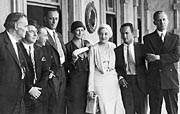
The four defendants and their supporters were at ‘Iolani Palace shortly after being found guilty of manslaughter and sentenced to serve a one-hour “prison term” in 1932. From left: Clarence Darrow, chief defense counsel; defendants E.J. Lord and A.O. Jones; Maj. Gordon Ross, high sheriff; Grace Fortescue, mother of Thalia Massie and niece of inventor Alexander Graham Bell; Thalia and Lt. Thomas Massie; and George Leisure, defense counsel. Advertiser library photo • May 4, 1932
Two hours earlier, while driving his sister’s car, Ida had a near collision with another auto at the corner of King and Liliha streets. An argument broke out and one of the men riding with Ida got in a brief scuffle with a woman in the other car. Ida assumed the woman remembered his license plate number and decided to file charges.
But soon after arriving at police headquarters Henry Ida found himself under arrest for a far more serious crime. The 20- year-old wife of a Pearl Harbor Navy officer identified him as one of five local men who allegedly had kidnapped, beaten, and repeatedly raped her earlier that evening after she had left a Waikiki nightclub alone.
The woman’s name was Thalia Massie, the daughter of a wealthy and politically powerful Washington, D.C., couple. And for the better part of the next year Honolulu was swept up in an unprecedented frenzy of accusations, threats, and violence.
“The Massie case” remains the most notorious criminal incident in the modern history of Hawai’i. Associated Press editors in 1932 voted it, along with the Lindbergh baby kidnapping, the biggest criminal case in the country. Books and articles have been written about it, and at least one Hollywood film was based – very loosely – on it. But by now many people have forgotten what actually happened, and many more have never heard of the case.
The story deserves retelling because it remains powerfully relevant today. Not only because of the tragedy and racial injustice associated with the case but also because of its less-heralded lessons in straightforward moral courage.
Controlling the story
All the men accused of raping Thalia Massie were from impoverished or working class backgrounds. Two were Hawaiian, two were Japanese, and one was Chinese-Hawaiian. From the start, based on little or no evidence, local newspapers assumed the men were guilty and referred to them in print as “thugs,” “degenerates,” and “fiends.” Their alleged victim was described as “a white woman of refinement and culture.”
Although the Honolulu press would be filled for months with racially inflammatory articles and editorials on the case, few in the business, political, or military communities wanted the story to spread beyond the Islands. During the preceding decade tourism had begun to take off, Hawai’i’s semi-autonomous political status remained precarious, and the Navy commandant at Pearl Harbor was not eager for Washington to question his ability to maintain order. A blanket was thrown over news of the events, and at first the story was confined almost entirely to local newspaper accounts.
At the same time, authorities pressed for an aggressive prosecution to placate an enraged Navy and local haole community. Few expected anything but a quick conviction and lengthy prison sentences for the five men.
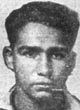
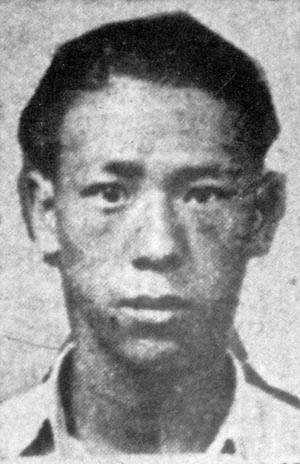
Benny Ahakuelo was accused of taking part in a gang rape.
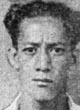
Henry Chang was defamed as part of a gang of young bucks.
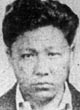
Horace Ida was beaten over a crime he didn’t commit.
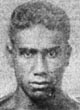
Joe Kahahawai was killed after a rape trial ended in hung jury.
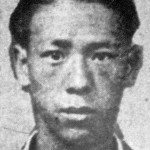
David Takai, like others accused, stuck to his word.
Advertiser library photo
Vicious, racist violence
But after a three-week trial and the longest jury deliberation ever in Hawai’i, the jurors declared themselves deadlocked. A mistrial was declared. Before a decision could be made about retrying the five men, however, Thalia Massie’s supporters and family took matters into their own hands.
First, Horace Ida was seized on a Honolulu street by a carload of sailors and was beaten, clubbed, and whipped with leather belts. Then, with the aid of two Navy enlisted men, Thalia’s husband and mother kidnapped and murdered one of the other defendants, Joseph Kahahawai. Police captured the killers with Kahahawai’s naked corpse, wrapped in a bloody sheet, lying on the back seat of their car as they were driving toward Koko Head to dispose of it.
At this point the story could be contained no longer. As the story erupted in the United States, the president called a special Cabinet meeting at the White House. Congress held emergency weekend hearings. The Justice Department and the FBI sent a team of investigators to Hawai’i. Every major American newspaper ran front-page stories on the case.
Sympathy for white woman
Almost without exception, the expressed sympathy of America’s politicians and journalists was not for the murdered young man, but for his killers. From coast to coast newspapers, magazines, and radio commentators described Hawai’i as – in the words of a syndicated Hearst editorial – a place where “the roads go through jungles, and in those remote places bands of degenerate natives lie in wait for white women driving by.”
Not to be outdone, Time magazine blamed the killing of Joseph Kahahawai on the victim and his friends, describing them as “five brown-skinned young bucks” who demonstrated the well-known “lust of mixed breeds for white women” when they raped Thalia Massie in the first place. The fact that the men had not been convicted of the alleged crime by a local jury only proved to the American press that Hawai’i itself was a “cesspool” of anti-white racial hatred that did not deserve territorial status.
Accordingly, the New York Post called for a battleship to sail into Honolulu harbor and rescue the killers from the civil authorities who had them under arrest. And everywhere the cry went up for the United States to impose martial law in the Islands.
Darrow defends killers
Into this furor, then, stepped Clarence Darrow, the most famous criminal lawyer in American history. Much of Darrow’s celebrity was based on his spectacular courtroom defenses of the oppressed and downtrodden.
But now, at age 74, he was broke, financially ruined by the Depression. So, for the equivalent of about $400,000 today, he agreed to defend four white people charged with killing a young Hawaiian man – a murder that even Darrow later admitted they were guilty of committing.
To a large extent Darrow’s strategy was the same one used by defenders of lynching in the South. Asserting flatly that Kahahawai had indeed participated in a gang rape of Thalia Massie – something that Honolulu prosecutors had been unable to prove – Darrow took the position that the murder was a justified “honor killing.” As such, he contended, customary “unwritten law” demanded that the accused should go free.
Facing Darrow across the courtroom was Honolulu’s newly appointed prosecutor, John Kelley. From the first day of jury selection until their final summations Darrow and Kelley went to war with one another.
Years later the New York Times, which ran nearly 200 stories on the case while it was in progress, would recall it as one of Darrow’s three most compelling trials ever. The others were the Scopes “Monkey Trial” over the teaching of evolution in Tennessee and the Leopold and Loeb murder trial in Chicago. But neither of the other two, the Times said, contained a moment of high drama to compare with Thalia Massie – under cross-examination by prosecutor Kelley – tearing a piece of evidence to shreds on the witness stand and rushing across the courtroom in tears to the waiting arms of her husband and the applause of a standing-room-only crowd of spectators.
Getting away with a lie
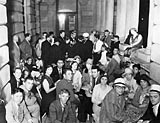
A packed courtroom
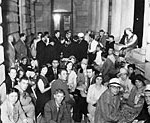
Hundreds of Hawai’i residents and others tried to gain access to the courtroom during the Massie trial but were turned away. Advertiser library photo • 1932
Reporters from throughout the world were in Honolulu for the trial, and a special radio hookup was installed so that Darrow’s closing argument could be carried live on the American continent.
Few juries have ever been under as much pressure as this one. On the one hand, there was no doubt that the four accused defendants had killed Joseph Kahahawai. On the other hand, there was equally little doubt that a conviction would bring, at the very least, what was called a “commission” form of government to Hawai’i, an arrangement only one step short of martial law. Congress and the American press had openly warned of such a consequence, and even prosecutor Kelley – while appealing to the jury for a verdict of guilty – admitted that a fair and honorable decision by them could mean the end of civilian rule in the Islands.
In addition, many of the jurors were employed by companies controlled by the corporate oligarchy that then dominated business in Hawai’i or they worked for firms with close connections to the Navy. Thus, their livelihoods and the economic well being of their families were at stake, in addition to the threatened political status of the place that was their home.
Surprising many who expected another hung jury, the panel reached a verdict. The defendants were found guilty of manslaughter. It wasn’t murder, but it was a conviction carrying a mandatory sentence of 10 years imprisonment.
Predictably, the national uproar grew louder. The thought that three white U.S. Navy men and a middle-aged Washington socialite might spend time in the Territorial prison – even if they had kidnapped and murdered a young Hawaiian man – seemed unthinkable.
And, as things turned out, it was. Despite the verdict, the killers would never spend a day in prison. After a flurry of diplomatic maneuvering between Washington and Honolulu, Territorial Governor Lawrence Judd commuted the sentences of the convicted killers to one hour, to be served in his office. In return, Hawai’i was spared martial law until the outbreak of World War II.
Within days of the commutation the Massies, Thalia’s mother, the convicted Navy men, and Clarence Darrow boarded a ship and left Hawai’i forever. Months later, an independent investigation by Mainland detectives, funded by the Territory, demonstrated beyond doubt that the accused men could not possibly have committed the alleged rape. Indeed, compelling evidence suggested that the supposed crime had never even occurred.
Cult of the killers
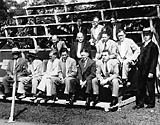
A multi-ethnic jury
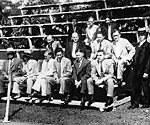
Jury members in Joseph Kahahawai’s murder trial broke from deliberations at one point to attend a baseball game. The jury refused to accept the racism embedded in the arguments presented by the defense. Advertiser library photo • 1932
The first historical assessments of the Massie case were not written until the mid-1960s.
Although not without sympathy for the accused, most accounts then and since have focused with tabloid-like fascination on those characters in the drama who behaved most contemptibly.
They include Thalia Massie, who falsely charged the five men in the first place; Thalia’s husband and mother, and the Navy enlisted men who helped the other two murder an innocent man; Navy Adm. Yates Stirling, who fabricated lies about conditions in Hawai’i in an effort to advance his own career; and Clarence Darrow, who borrowed a tactic from the Ku Klux Klan to defend his clients.
Heroism left out of story
In contrast, little attention has been paid to those who behaved well under extraordinarily difficult circumstances. And yet it is with them – a true racial and ethnic cross-section of Hawai’i then and now – that the valuable lessons of the Massie case reside.
First there are the accused men themselves. Horace Ida, Joseph Kahahawai, Henry Chang, David Takai, and Benjamin Ahakuelo. One of them was nearly beaten to death. Another was kidnapped, then shot and killed with a single bullet to his heart. All of them endured months of vicious defamation in the press and the threat of lengthy imprisonment for a crime they did not commit. And police and prosecutors tried all the usual tactics – including individual offers of immunity if one would inform on the others – and some that were not so usual, such as pitting the men against one another racially. Despite the threats and enticements, none of them ever budged from their insistence that they had done nothing wrong.
Then there were the lawyers who stepped forward in the first trial to defend the accused men without compensation. William Heen, of Chinese-Hawaiian ancestry, perhaps the best attorney in the Islands and the first non-haole Circuit Court judge in the Territory. A young local Japanese lawyer, Robert Murakami, recently graduated from the University of Chicago Law School. And a prominent haole originally from Mississippi, William Pittman.
Not only did they put their careers on the line, defending five almost penniless young men amid racial and political near-hysteria, but they did so by publicly exposing that turmoil for what it was. And none did so more effectively than Pittman, in a Southern drawl, summing up his defense by accusing the prosecution of bending to the will of “a conspiracy of white people – the small group of hypocritical haoles more anxious to satisfy the Navy than to seek justice.”
After the murder of Joseph Kahahawai the grand jury at first refused to indict the killers, despite the fact that they had been caught with the dead man’s body in the back seat of their car. Of the grand jury’s 21 members 19 were white. And, as one of them openly said, they were fearful of what would happen to their “standing in the community” if they voted to indict four well-connected white people for the murder of a poor Hawaiian. But the judge, Albert Cristy, who also was white, risked disqualification from the case and possibly his entire judicial future by repeatedly demanding an indictment from the grand jurors – and finally getting it.
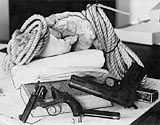
Methods of murder
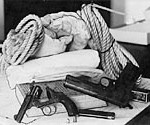
Evidence presented by authorities showed that Joseph Kahahawai had been kidnapped, shot to death, and wrapped in a bloody sheet. Advertiser library photo • 1932
Then there was Jack Kelley. Originally from Montana and a former law partner of William Heen, Kelley was trying his first case as a prosecutor when he went up against Clarence Darrow. Not intimidated by the immense political pressure he was under or by the legendary reputation of his opposing counsel, he matched Darrow point for point. Describing Darrow’s defense as advocacy of the “serpent of lynch law,” he warned the jury that nothing could be worse than allowing that to become the law of the land.
The jury was made up of three haole-Hawaiians, two local Chinese, one Portuguese, and six whites. After two days of deliberation – and fully aware of the ominous larger consequences – they brought in their unanimous verdict of guilty.
Darrow was outraged. Of the non-white jurors, he complained that during the trial “it was not easy to guess what they were thinking about, if anything at all.” Adding that “obviously they do not think as we do,” he concluded that “a jury of white men would have acquitted.” With this last comment Darrow conveniently forgot that a single negative vote from among the jury’s half-dozen haole members would have blocked the convictions.
Together with the first jury that had deadlocked in the rape trial, 24 jurors had heard both cases in an intensely politicized and menacing environment. Among them were seven whites, nine haole-Hawaiians, four Chinese, two Portuguese, and two Japanese. None had anything personal to gain – and a great deal to lose – by facing down the local and national white power structure and voting their consciences. They did it anyway.
There were others. Princess Abigail Kawananakoa, Hawai’i’s conservative Republican National committeewoman and a wealthy heiress to the Hawaiian monarchy, received a telephone call one night at her elegant home. It was from someone she had never met, a poor Hawaiian woman whose son had been arrested for a crime she said he didn’t commit. After speaking to Joseph Kahahawai’s mother for a while, the Princess hung up and called William Heen, urging him to take the case. She followed the subsequent events closely, speaking out publicly against what she called the “travesty” of a two-tiered justice system in the Islands, “one for the favored few and another for the people in general.”
At a very different place on the Islands’ social scale, George Wright was the haole editor of the English-language section of the Japanese newspaper Hawaii Hochi. Wright had been a civilian machinist at Pearl Harbor before being fired for union activities. Along with his boss, Hochi publisher and editor Frederick Makino, of haole and Japanese parentage, Wright maintained a lonely editorial drumbeat of criticism throughout the entire Massie affair – pointing out crippling flaws in the charges against the five men from the very beginning and never wavering from a demand for justice in the face of an avalanche of racial prejudice.
Need to remember
Just as it is essential that we continue to remember those who stood up to the likes of Joseph McCarthy in the 1950s, so it is important that we honor those who publicly opposed the forces of racism and oppression during the Massie case.
It took character and courage to speak out against the racial and political injustices that permeated life in Hawai’i at that time, at a time when a former Advertiser assistant editor recalled how American naval officers commonly referred to Hawaiians as “niggers.”
The example should cause all of us to consider what we would have done under those circumstances – and to reflect on what we are doing now, as more subtle forms of oppression tear at Hawai’i’s social fabric. What will people think, 70 years from now, as they look back on how we treat the poorest and the weakest and most damaged among us? How we behave now will be our most enduring legacy.
David Stannard is a professor of American Studies at the University of Hawai’i. He is writing a book on the Massie case that focuses on the involvement of local people in that struggle for justice. He would like to hear from anyone with personal memories or family stories or photographs about the events of that time. You can call him at 235-4924, e-mail him at stannard@hawaii.rr.com, or write to him at the Department of American Studiesm, University of Hawai’i, Honolulu, HI 96822.