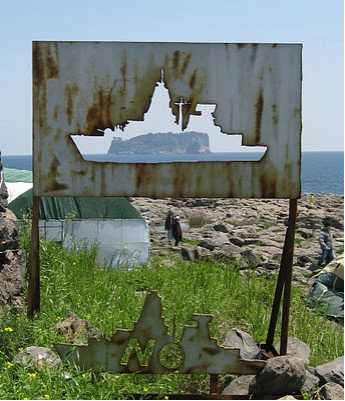
Militarization of Central America and the Caribbean: The U.S. Military Moves Into Costa Rica

The U.S. is sending 46 warships and 7000 marines to Costa Rica allegedly to “fight drugs”.  An article from Global Research is posted below, along with an action alert sent by  United for Peace and Justice to its supporters:

>><<

The outrageous announcement that 46 US warships and 7000 Marines are heading for Costa Rica to “fight drugs” should alert all peace and justice organizations to the real significance of this action.  Such a move will raise legitimate alarm in the Caribbean, Central and Latin America of the real intent of the United States and react accordingly.

Regardless whether this was done with the connivance of the Costa Rica government or not, as peace and justice activists, we are opposed to the extension of US military force, especially, at these times, when our Brothers and Sisters in the South are moving forward in their struggle for national sovereignty and independence from US influence.

Endorse the “Declaration Against US Military Forces in Costa Rica, the Declaration against Invasion and Military Impunity”:

– We the undersigned and organizations of our support network, categorically reject the U.S. military ships entering Costa Rican territory, as well as any further increase of militarism to attempt to solve conflicts in global politics.

– We oppose the permission granted by the Costa Rican Legislature, which allows for joint patrols against trafficking of drugs into Costa Rica with up to 46 warships, 200 helicopters, 10 AV-8B Harrier aircraft and 7,000 marines.

– With this action, the government of Costa Rica aims to join the U.S. military agenda in Latin America. The solution to drug trafficking is social, not military.

– Costa Rica, with its neutral and pacifist tradition, cannot allow its territory to be used for a military objective that violates their sovereignty. This U.S. military contingent will be able to move freely throughout Costa Rican territory with immunity for its troops. Such a military presence in a country without an army is unacceptable.

– We call on our respective governments and peoples to jointly promote all possible action to defend Costa Rican sovereignty, and to reject this military action.

Call to Action: United for Peace & Justice encourages UFPJ Member Groups and other organizations to individually endorse this declaration and communicate it to Hendrik Voss, School of the Americas Watch, hvoss@soaw.org.   To support endorsement, we encourage that issue information and calls to action be forwarded to member group constituencies.

Background:

We Love Costa Rica article, 46 US Warships Plus 7,000 US Marines On Route To Costa Rica?

Global Post Article, 7,000 US Marines Landing on the beaches of Costa Rica

Thank You,
We are…. United for Peace & Justice

+++

http://www.globalresearch.ca/index.php?context=va&aid=20171

Militarization of Central America and the Caribbean: The U.S. Military Moves Into Costa Rica

By Mark Vorpahl

Global Research, July 19, 2010

Nestled between Panama to its south and Nicaragua to its north, Costa Rica is a Central American nation roughly the size of Rhode Island.

If another nation were to send Rhode Island a force of 7,000 troops, 200 helicopters, and 46 warships in an effort to eradicate drug trafficking, it is doubtful that the residents of Rhode Island would consider this offer “on-the-level.” Such a massive military force could hardly be efficiently used to combat drug cartels. The only logical conclusion is that the nation whose troops now are occupying this other country had another agenda in mind that it didn’t want to share.

In early July, by a vote of 31 to 8, the Costa Rican Congress approved the U.S. bringing into their nation the same military force described above, justified with the same dubious “war on drugs” rationale. According to the agreement, the military forces are supposed to leave Costa Rica by the end of 2010. This begs the question, however, if such an over the top display of military muscle is needed now to combat the drug cartels, what will be done in the next few months to make their presence unnecessary? The history of such U.S. military deployments around the world suggests a more credible outcome than what the agreement states. Once the U.S. moves such massive forces into a country, they rarely move them out.

When push comes to shove, the political machinery in Costa Rica is subservient to U.S. government and corporate interests. Nevertheless, there are many in Costa Rica who are declaring that the agreement is a violation of their national sovereignty and is unconstitutional. (In 1948 Costa Rica abolished its army, which was sanctioned in its constitution.) Legislator Luis Fishman has vowed to challenge the decision of the Congress in the courts.

Shifting Strategy and Tactics

The buildup of U.S. armed forces in Costa Rica is part of an escalating pattern that indicates a shifting of strategy and tactics for the U.S. in controlling what the Monroe Doctrine infamously described as the U.S.’s “backyard” — that is, all of Latin America. Since the U.S. government inspired covert coup d’etats and political reversals of popular governments and/or movements in Guatemala, Brazil, Chile, Nicaragua, and El Salvador in previous decades, U.S. rulers had figured they had things stitched up to their liking in Latin America. The political elites in Latin America were uniformly in the pockets of the U.S. corporate empire and appeared to be more or less in control of their people. They commonly outlawed strikes and at times even trade unions, eliminated minimum wage laws, and gave enormous tax breaks to U.S. corporations.

Therefore, the U.S. Empire builders could use their political and economic might alone to subjugate these neo-colonies to a very profitable neoliberal agenda. This agenda included allowing U.S. corporations easy access to pillage these nations’ public sectors through privatization, letting multi-national corporations overrun these nations’ local markets and farms through the elimination of trade barriers, and increasing the exploitation of their workers and the devastation of their natural resources by tossing out national labor and environmental standards. Because of the profits enjoyed by a few as a result of these measures, they carried the day, though they, in turn, created a simmering spirit of rebellion in the semi-colonies’ peasantry and workers that would inevitably find expression.

As the U.S. began to set its sights on and send its resources to other parts of the world, most notably the Middle East and Asia, the web they had wrapped around Latin America began to unravel. This was most apparent in Venezuela where a U.S.-backed coup attempt in April of 2002 failed because of the massive mobilizing of the Venezuelan people in defense of their democratic rights. All subsequent attempts of the Venezuelan oligarchy, in collusion with the U.S. State Department, to get rid of Chavez resulted in their humiliation because of the constant support and organizing of the country’s lower classes. It became apparent to the U.S. ruling class that they could no longer rely on the Venezuelan oligarchy, which had lost direct control over the political situation. What is more, the popular upsurge witnessed in Venezuela in the past decade, opened up floodgates for anti-imperialist organizing across the continent, resulting in the election of a number of left-wing presidents.

Not only was the neoliberal agenda of the U.S. being blocked, an alternative to the U.S. Free Trade policies was being set up. The Bolivarian Alternative for Latin America and the Caribbean (ALBA), which was initiated by Venezuela and Cuba, began to build a trading block based on exchange according to different nations’ needs rather than U.S. corporate profits. While ALBA needs to be more substantially developed in order to fulfill its promise, especially in regards to organizing grassroots control to determine its priorities, it is a challenge to U.S. corporate and political dominance in the region.

U.S. Military Moves

As a result, the U.S. government began to shift its reliance from solely economic and political means to control Latin America towards taking military measures, even while engaged in wars in Iraq and Afghanistan. What have been some of these measures?

In 2006 the U.S. conducted military exercises off the coast of Venezuela called “Operation Partnership of the Americas.” This exercise involved four ships, 60 fighter planes, and 6,500 U.S. troops.

In 2006 the U.S. State Department classified the islands of Aruba, Bonaire, and Curacao, with their military bases jointly contracted to Holland and the U.S., as “The Third Frontier of the United States.” U.S. aircraft carriers, war ships, combat planes, Black Hawk helicopters, nuclear submarines, and thousands of troops began to build up in Curacao in particular. In 2009 a U.S. military plane was intercepted in Venezuelan airspace that had flown from Curacao’s base.

In 2008 the U.S. reactivated the Fourth Fleet to patrol Caribbean waters. This fleet had been out of commission since 1950. Now it operates with the potential of acting as a floating base for the U.S. to conduct military strikes throughout Central and South America.

In 2009 the U.S. made a deal with Colombia to build up its military personal in seven bases, from 250 to 800 American troops with 600 civilian contractors, effectively taking control over these installations. This was widely denounced throughout Latin America as an action aimed at intimidating Venezuela. In December of that year a U.S. drone plane flying from one of these Colombian bases violated Venezuelan airspace.

From 2009 to 2010 the U.S. worked behind the scenes to legitimize a military coup in Honduras against lawfully elected President Zelaya, who had aligned the nation with ALBA. Part of the U.S.’s motivation behind its actions was to maintain control of Soto Cano’s Airbase, with its 550 U.S. troops and 650 U.S. and Honduran civilians. In the 1980’s the U.S. had used this base for a training ground and launching pad for the Contra terrorists in Nicaragua and El Salvadorian death squads opposed to the Farabundo Marti National Liberation Front (FMLN). There is good reason for concern that this Airbase will again be used for similar operations today.

In 2009 the U.S. and Panama agreed to open up two naval bases in Panama, which will be the first time U.S. military forces will be based in this nation since 1999.

War on Drugs?

Most of these measures have been justified on the grounds of combating drug trafficking, including the military buildup in Costa Rica. However, they have not curtailed this problem at all. Such U.S. military buildups have generally been accompanied by an increase in drug trafficking, as has happened in both Columbia and Afghanistan. Based on this record it can only be concluded that the “War on Drugs” rationale is a red herring for public relations consumption, not the actual motivation.

This military build up in Costa Rica is the latest in a series of moves the U.S. has made in Latin America that seeks to use threats and arms to reverse the strength of popular anti-imperialist forces across the region. The U.S. is playing with the possibility of erupting a continental conflagration for the sake of corporate profits.

While it is doubtful that the U.S. wants to directly engage in a military conflict with, most likely, Venezuela right now, preparations for this possibility are being made. What is more likely in the short term is that the U.S. military will use its forces to engage in sabotage and intimidation in hopes of reversing support for the nations aligned with ALBA. It is also very possible that the U.S. military will help to support proxy armies, such as Colombia’s, in military conflicts that align with U.S. interests. However, this is a dangerous game. Even in the short term, the U.S. ruling class may drag the nation into another direct conflict, in spite of their intentions, that could spread to involve numerous other nations.

Peace and International Solidarity

While U.S. workers are suffering from unemployment, insufficient health care, drastic cuts to education and social services, as well as environmental catastrophe in the Gulf of Mexico created by the Obama governmental collusion with BP, the priorities of the U.S. ruling class are elsewhere. They are more concerned with pouring money into military buildups that threaten war. The target of such a war or wars would be the popular working class movements in Latin America, whose only crime has been to struggle to liberate themselves from super exploitation and political repression. It is the same economic and political elite in the U.S. that are denying U.S. workers what is rightfully theirs that are opposing the efforts of workers and peasants throughout the continent to empower themselves.

It is the task of the anti-war movement not only to oppose the wars in Iraq and Afghanistan, but also to prevent future U.S. wars in Latin America. Wherever anti-war activists seek to mobilize people against war, they should also seek to educate about the U.S. empire’s military moves in Latin America.

Furthermore, it will require international solidarity to combat what the U.S. elite is doing in Central and South America. There was recently an event that could go some way towards preparing this solidarity. In Sanare, Venezuela, from June 21 – 25, a series of meetings were held entitled “Ecuentro of the Americas: Resisting Militarization and Promoting a Culture of Peace.” It consisted of delegates of organizations from 19 nations across the continent, including School of the Americas (SOA) Watch of the U.S. You can read more about this at http://www.soaw.org/

Mark Vorpahl is a union steward as well as an anti-war and Latin American Solidarity activist. He can be reached at Portland@workerscompass.org.

Christian supremacism in the military

http://www.alternet.org/action/147511/meet_the_military_man_battling_dangerous_christian_extremism_in_the_military/

Meet the Military Man Battling Dangerous Christian Extremism in the Military

By Matt Harwood, TruthOut.org

Posted on July 12, 2010, Printed on July 21, 2010

http://www.alternet.org/story/147511/

In his fight against British imperialism, Mahatma Gandhi described the life cycle of successful civil disobedience: “First they ignore you, then they laugh at you, then they fight you, then you win.” Mikey Weinstein, the 55-year-old founder of the Albuquerque, New Mexico-based Military Religious Freedom Foundation (MRFF), likes to quote it, knowing full well he’s crossed the line into a bloody-knuckle brawl. Over the past year, Weinstein and his organization have recorded a tremendous string of victories in the fight against Christian supremacists inside the armed forces.

In January, the MRFF broke the story on the Pentagon’s Jesus Rifles, where rifle scopes used in Afghanistan and Iraq were embossed with New Testament verses. In April, he got the military to rescind its invitation to the Reverend Franklin Graham to speak at May’s National Prayer Day because of Islamophobic remarks. Most shockingly, MRFF received its second nomination for the Nobel Peace Prize in late October. These high-profile victories have earned him the enmity of the hardcore Christian Right and the mentally unstable. And the crazies are getting crazier. Weinstein and his family are bombarded with hate mail, from the grammatically incorrect and easy to dismiss — “I hope all your kids turn out gay as hell, take it in the ass, and get aids and die!!!!” — to the kind of threats that immediately make you leap out of your chair and double-check that the doors and windows are locked. (MRFF has referred multiple death threats on Mikey, his family, and MRFF employees to the FBI.)

Unlike Gandhi, Mikey’s no pacifist. Aggression rises up in his voice like a white shark’s fin breaks the waves. In a recent conversation, Mikey bragged how a punk wouldn’t shut up in a movie. When a confrontation ensued and the man took a wild swing, Mikey put him down. None of this is surprising. Weinstein boxed during his Air Force days, his face marked by a strong jawline sitting below a bald head on top of a stocky body — a cross between Rocky Marciano and Butter Bean. Simply put: Mikey Weinstein can be a brute and a zealot. He knows this and admits it freely. But he believes it’s the only position a reasonable person can take when confronted with a faction dedicated to mutating the U.S. military into “a weaponized Gospel of Jesus Christ.”

But for all of his rhetorical excesses and bravado, Weinstein’s fight is simple and correct. The United States military cannot favor one religious sect over another, staying true to the Constitution’s establishment clause that service members pledge to defend. More pragmatically, the military cannot favor one religious sect over another because it’s destructive of good order and discipline, creating divisions between service members when they must rely on the guy next to them to survive in a firefight. Yet inside the U.S. military a small, determined, and fanatical clique wants to abuse its power and prosetlyze to service members below them in the chain of command. Through this captive market, they can inject their peculiar ideology into the most powerful institution on earth. As Weinstein likes to say, this isn’t just a civil rights issue, it’s a national security threat of the gravest magnitude. The description sounds hyberbolic, but according to Weinstein there’s a pervasive Christian supremacist milieu inside the U.S. military that’s a danger not only to constitutional order, but to the American wars in Afghanistan and Iraq. What’s ironic about Mikey’s fight is that he never thought about becoming “a civil rights activist.” He discovered his calling by rising up like a grizzly bear for his son.

The Academy

The Weinstein family is an Air Force family. After graduating from the Naval Academy in 1953, Mikey’s father switched to the Air Force to pursue new opportunities in a new service. Mikey followed in his footsteps, as did his two sons, Casey and Curtis. Casey, the oldest, even met his wife Amanda at the Air Force Academy while they were cadets there. Mikey’s daughter Amber dates an Academy graduate — 2nd Lt. Mack Delgado, a Christian with a cross tattooed on his chest, a detail Mikey points out every time his name’s brought up. It’s a family whose life orbits around the Academy, although that gravitational pull has slipped.

As recounted in his 2006 book, With God on Our Side, Weinstein’s confrontation with Christian supremacism began during his youngest son Curtis’s freshman year at the Academy in Colorado Springs. Sitting at the base of Pike’s Peak, Colorado Springs has been called the Christian Mecca. More than any city in America, evangelical Christianity saturates its streets. For instance, James Dobson’s Focus on the Family sits just across the interstate from the Air Force Academy’s airfield. Before he was outed for allegedly doing meth and banging a male prostitute, the Rev. Ted Haggard ran the 14,000-strong New Life Church in Colorado Springs. That extreme conservative religiosity has long permeated the Academy. Unsurprisingly, it doesn’t like or respect diversity of any kind, as two generations of Weinstein’s would discover.

Entering the Cadet Area at the Academy as a “doolie” in 2003, Curtis was asked from both naive and intolerant Christian cadets why the Jews killed their savior. During an intramural game, an upperclassmen asked him, “How it felt to kill Jesus.” The religious discrimination got so unrelenting that Curtis complained to his father in June 2004. “The next person that calls me a fucking Jew or accuses me of killing Jesus, I’m going beat the fucking shit out of them,” Mikey recounted to CNN in 2005. His older son, who graduated in 2004, confirmed the evangelical sea all Academy cadets swam in during their tenure there. “Dad, this is just the way it is,” Casey said. “Senior cadets would sit down and say, ‘How do you feel about the fact that your family is going to burn in hell?'”

Bad memories flooded back from Mikey’s own time at the Academy, which he never told anyone about except for his wife, Bonnie. During his freshman year at the Academy, Mikey first faced anti-Semitic notes taped to his door that quickly escalated into two violent ambushes. The first time Mikey says he was attacked from behind inside an Academy academic building and thrown down the stairs, waking up in a pool of his own blood. The second time came while he was in the john. His attacker kicked in the stall and tore him up. “I was a victim, and having to admit that, even now, fucking pisses me off and makes me feel ashamed,” he told the co-author of With God on Our Side, David Seay. Mikey was reduced to an Auschwitz Jew rather than the Warsaw Ghetto Jew he idolizes.

“I remember as an 18-year-old the overwhelming sense of helplessness of being abused, of utter degradation and humiliation,” Mikey says. And the anti-Semitism then directed at Curtis gave him another chance to redeem himself and be that Warsaw Ghetto Jew. And he did. A former Judge Advocate General (JAG), a Reagan White House lawyer during the Iran-Contra scandal, and a former general counsel to billionaire and former presidential candidate Ross Perot, Mikey couldn’t be dismissed as a Che Guevara T-shirt- wearing armchair revolutionary. And as a lawyer, he made it hard to ignore him. In October 2005, he sued the Air Force Academy, seeking a ban on religious proselytizing or evangelizing by superior officers after finding evidence of systematic evangelical coercion festering inside the Academy’s walls. While the lawsuit was later dismissed in October 2006, the precedent was set. The initial lawsuit that Mikey leveled at the Air Force Academy morphed into MRFF as the winter of 2005 slid into 2006. Mikey left his lucrative job as an executive of business development at Perot Systems to continue agitating religious reform inside the military.

“Who will guard the guards,” he asks. “We will, the Military Religious Freedom Foundation will.” In the process, he has systematically exposed himself and his family to terroristic threats, virulent anti-Semitism, and financial ruin.

Neo-Crusaders

Quickly, Mikey realized that the infection wasn’t isolated; the virulence was military-wide. He likens it to nuclear contamination. “If you had a geiger counter, there wouldn’t be a place you couldn’t find it,” he says.

For decades, he discovered, evangelical para-church organizations had cropped up with the sole purpose of evangelizing service members. One group, Campus Crusade for Christ’s Military Ministry, described the service members that come under its sway as “government-paid missionaries for Christ.” At Fort Jackson in South Carolina, Military Ministry snapped pictures of soldiers posing with their rifles and their Bibles, an image eerily similar to jihadist propaganda videos. The same soldiers participated in Bible studies where one outline asked “Can a Christian Soldier Kill?” “NO to murder, YES to killing,” the outline declared, because the soldier was god’s “angel of wrath,” punishing evil.

Other examples MRFF uncovered were no less disturbing. Inside the Military Police building at Fort Riley, a printout slapped on an office door carried conservative columnist Ann Coulter’s sunken face and this quote: “We should invade their countries, kill their leaders and convert them to Christianity.” A more subtle evangelical hubris also appeared inside the Pentagon. In 2007, MRFF’s discovery of nine Pentagon officials appearing in a promotional video for Campus Crusade’s Christian Embassy caused the Department of Defense’s inspector general to rebuke seven military officers. For one officer, United States Air Force Maj. Gen Peter J. Sutton, that appearance proved embarrassing when he was assigned to Turkey as chief of defense cooperation. According to Sutton’s own testimony to the inspector general, his Turkish driver approached him with an article from the Turkish newspaper Sabah, which carried a picture of his appearance in the video and described him as a member of “a radical fundamentalist sect.”

But the Christian supremacist rot inside the military wasn’t confined to home or overseas posts. It had spread to the worst possible battlefields: Afghanistan and Iraq. Tipped off by service members, MRFF has discovered chaplains handing out Bibles in Arabic, Dari, and Pashtun in theatre. In another instance, a lieutenant colonel and 15 to 20 armed troops cordoned off a city block in Iraq and told a missionary he knew from home that he would protect him and his missionaries while they evangelized Iraqis. These are all serious violations of military regulations. United States Central Command’s General Order 1A, issued in December 2000, couldn’t have been clearer for service members fighting overseas: “Proseltyzing of any religion, faith or practice” was prohibited.

According to MRFF’s senior researcher, Chris Rodda, the organization has adopted a crude categorization scheme for incoming complaints such as these: “holy crap,” “holy shit,” “holy fuck,” and “holy fucking shit.” One “holy fucking shit” tip MRFF received described an incident in Samarra in 2004, when a National Guard unit painted an Arabic phrase on their armored pickup truck. It read: Jesus Killed Mohammad. Examples like these continue to accumulate with untold damage to U.S. military operations, Mikey says, despite the emphasis on winning hearts and minds in Afghanistan and Iraq, the focus of Gen. David Petraeus’ counterinsurgency manual. In these environments, fanatical Christian soldiers become self-tripped IEDs. When news broke out in May 2008 that a soldier shot up a Koran at a Baghdad shooting range, a violent riot broke out among 1,000 Afghanis in which three people died.

Mikey talks about Christian supremacists like they’re vampires, demons determined to drain secularism and pluralism out of the military. That realization turned what was once a personal fight against anti-Semitism into a more lofty principle. “Wherever I see unconstitutional religious predators in the U.S. military, of any stripe, I don’t care if I live or die. Someone’s gonna get a beating and we’re going to do it,” he says. “The two ways to administer the beating is to go into the media or into court,” he explains, a strategy distilled from his fight at the Academy. Lance Benzel, a journalist for Colorado Spring’s The Gazette, recently summarized Mikey’s civil rights agitation aptly: “Condemn in the strongest language possible. Publicly embarrass. Sue if necessary. Each new step raises the pressure on his publicity-averse targets.” What the U.S. military has realized over the years is that the mosquito they swatted at didn’t only have bite, it had malaria.

Some Christians, out of ignorance or sincere apocalyptic belief, believe Mikey is the anti-Christ. (He’s actually a reluctant agnostic.) Google “Mikey Weinstein” and you’ll see descriptions like “Jesus-basher,” “AntiChrist,” and “anti-Christian Jewish supremacist.” One “Concerned American” on the website “Powered by Christ” argued Weinstein’s “doing all he can to create an anti-Jewish backlash and help bring about the predicted endtime Holocaust of Jews that’ll be worse than Hitler’s.”

There’s one problem with this assumption. Ninety-six percent of MRFF’s 18,300 military clients are Christians — many Roman Catholics and mainline Protestant — that have been treated by their more spirit-filled comrades and commanders as not Christian enough. “This is not a Christian-Jewish issue,” Mikey argues, “it’s a constitutional right and wrong issue, and Christian fundamentalism does not recognize the supremacy of the Constitution over its sectarian theocratic dictates.”

Elizabeth Sholes, the public policy director of the California Council of Churches/IMPACT, which represents 1.5 million progressive Protestant members, denied Weinstein and MRFF are anti-Christian. She says he simply fights for religious freedom.

Sholes is a good person to describe Mikey’s enemies, as she sits on the left side of the great schism in American Protestantism. While Sholes supports an evangelical’s right to witness to whomever they please, she, like Mikey, believes they cannot do so when they are representatives of the government. “Our Constitution was established to give everyone the right to conscience, the right to free expression of religion” she says, “but not to commandeer the institutions of government to make that happen.” Yet Sholes says aggressive evangelicals within the military get it upside down, believing the government violates their religious freedom when government regulations forbid its public servants to proseltyze the saving grace of their savior.

Sholes, a believer in the Protestant social gospel tradition, argues Mikey’s enemies represent the very worst of Christianity — the apocalyptic rapturites confident of their own salvation and most everyone else’s belly flop into the lake of fire. These types of Christians go by many names, she says: fundamentalists, dominionists, the Christian Right, Christian nationalists. I asked Sholes if Christian supremacists is an accurate description. She says yes. But Shole’s assessment goes even further, comparing Christian supremacists to Nazis. Asked if they represent Christian fascism, she doesn’t hesitate: “Yes.”

“We hate a small subset of Christianity that goes by this term, dominionist fundamentalist Christianity,” Mikey says.

Hate on the Homefront

Case in point: On May 25, the 5th floor of the Dallas County Courthouse was cleared so Mikey’s lawyer, Randy Mathis, could take the deposition of Rev. Jim Ammerman while six deputy sheriffs stood guard, rotating in and out of the jury room. In his 30 years of practicing law, Mathis never saw this type of security for a deposition unless the person being deposed was already a prisoner of the state. Spokeswoman Kim Leach for the Dallas County Sheriff’s Department confirmed extra security was provided, but could not provide details except to say the judge had requested it because of a “security issue.” One possible reason for the extra security is that Ammerman is batshit crazy, a man who holds so many wild and dangerous beliefs he can be seen as the grandfather of the craziest fringes of the Tea Party movement. To be clear, Ammerman, who will turn 85 in late July, is not the threat. It’s those who listen to his conspiratorial screeds, according to Mikey and Bonnie.

A former Navy pilot, Green Beret, and Army chaplain who rose to the rank of full colonel, Ammerman is an early purveyor of the One World Government ideology that believes foreign troops are knowingly stationed in U.S. national parks, and that former President Bill Clinton and current Secretary of State Hillary Clinton are members of the Illuminati — a secret society determined to install a one-world government. As he stated in his deposition, he also believes there are 125 FEMA-built concentration camps inside the United States with more in construction right now.

What’s striking about all this is that Ammerman’s organization is currently one of the U.S. military’s largest ecclesiastical endorsing agencies for chaplains. As President and Director of the Chaplaincy of the Full Gospel Churches, he currently endorses 270 Pentecostal chaplains across all branches of the military. Ammerman’s tinfoil-hat beliefs, however, have brought scrutiny before — from the Pentagon, itself. In September 1997, Lt. Gen. Normand G. Lezy of the USAF ordered an investigation of Ammerman and his endorsing organization for using military chaplains “as agents to collect and convey military intelligence information for Mr. Ammerman’s political purposes.” The two other reasons Lezy gave for opening an investigation were no less inflammatory: Rev. Ammerman’s encouragement of groups with “supremacist viewpoints” and his repeated suggestions that a military coup of the United States was imminent.

Mikey and his wife Bonnie are currently suing Rev. Ammerman because of the actions of Gordon Kingenschmitt, a former Navy chaplain and self-styled “traveling evangelist” he endorses. Klingenschmitt became a hero of the Christian Right in 2006 when he was court-martialed by the Navy for insubordination after he attended a Religious Right protest outside the White House in uniform. When the evangelical Episcopal Church pulled his chaplain endorsement after his reprimand, Ammerman’s Chaplaincy of the Full Gospel Churches picked him up.

An avowed enemy of MRFF, which applauded the Navy’s decision, Klingenschmitt began channeling the Old Testament’s King David in his fight against godless secularism. Last year, Klingenschmitt issued multiple imprecatory prayers, basically a curse, calling for Weinstein and his family’s destruction. During his first curse, Klingenschmitt quoted the Bible’s most violent imprecatory prayer:

Almighty God, today we pray imprecatory prayers from Psalm 109 against the enemies of religious liberty, including Barry Lynn and Mikey Weinstein, who issued press releases this week attacking me personally. God, do not remain silent, for wicked men surround us and tell lies about us. We bless them, but they curse us. Therefore find them guilty, not me. Let their days be few, and replace them with Godly people. Plunder their fields, and seize their assets. Cut off their descendants, and remember their sins, in Jesus’ name. Amen.”

In a revealing exchange during the deposition, Klingenschmitt told Mathis that he and Mikey were both anti-Christians for suing him. Then, without prompting, Klingenschmitt added, “And it’s a little bit anti-Semitic because King David was Jewish, and King David prayed that Psalm to God as a member of the Jewish faith.”

His absurd Biblical exegesis aside, Randy Mathis says Klingenschmitt’s prayers are coded directives to other Christian supremacists to harm Mikey, Bonnie, and their children, done on behalf of Ammerman. “They’re trolling for assassins,” he says. If a conspiracy exists and that was indeed its intent, there’s evidence it worked. Kingenschmitt’s curses have ratcheted up the hate directed at Mikey and MRFF to extreme levels. “Since these fatwahs were issued, the threats and hate mail have increased exponentially,” the lawsuit filed last September states. “Plaintiffs justifiably live in fear of imminent violence against their person and their family.”

Things have deteriorated more rapidly since the New Year. In January, MRFF discovered that the Pentagon had a $660 million multi-year contract with Michigan-based Trijicon, which supplies rifle scopes to the U.S. military that had New Testament citations inscribed on them. One scope read “2COR4:6,” a reference to Second Corinthians 4:6 which states: “For God, who commanded the light to shine out of darkness, hath shined in our hearts, to give the light of the knowledge of the glory of God in the face of Jesus Christ.” The Pentagon, along with countries like Canada, Great Britain, Israel, New Zealand, and Australia, have all since either raised concerns about the scopes or demanded Trijicon wipe the scopes of their New Testament citations purchased by their respective militaries. Then the news broke that MRFF successfully had Rev. Franklin Graham’s speaking invitation at the Pentagon’s National Day of Prayer event revoked. The son of legendary presidential sycophant Rev. Billy Graham, the younger cleric didn’t have his father’s discretion in public and had assailed Islam repeatedly, once calling it “A very evil and wicked religion” after 9-11.

“We moved to another level,” Bonnie says of getting Graham booted from the event.

Then on April 15 at 11:18 p.m., an e-mail popped into Mikey’s box. It’s subject read: “Bad Leo Frank,” and displayed a picture of a young bookish man, hair parted to the side, with glasses framing a skinny face. A minute later, another e-mail appeared in Mikey’s MRFF account. It read: “Good Leo Frank” and showed the lynched corpse of the same man dangling like strange fruit from a tree. Considered a textbook case of Southern prejudice and cruelty, Leo Frank was a Jewish pencil factory manager in Atlanta, Georgia who was murdered by vigilantes for the murder of a 13-year-old girl many believe he didn’t commit.

A little more than 12 hours later, the final e-mail dropped into Mikey’s inbox. The subject read “Re: Good Leo Frank.” The e-mailer knew a version of Leo Frank’s murder too. “He was guilty as sin, just like you,” it read. “Tried, convicted, sentenced, appealed, denied. When jew money bought him a Clinton style pardon, white justice stepped in. Are you ready?”

Since Mikey’s very public fight began half a decade ago, the family has had to take increasingly extreme security precautions, as people left dead animals on their lawn, shot projectiles into their home, and drew crucifixes and swastikas on the side of their house. The family has two attack-trained German Shepherds, referred to as “the girls,” that patrol their property with a third one on the way. The house is equipped with floodlights, surveillance cameras, and when things get really bad, Curtis tells me, a team of security professionals camp out and watches over the property. But that e-mail, among other threats, made him embrace the Bill of Rights even more: he and Bonnie got concealed firearms permits.

Bonnie, who suffers from multiple sclerosis, now carries a gun in her purse. She and Mikey now regularly go shooting to keep their skills sharp. “I have to have my gun as my friend,” Bonnie said. “It reminds me on a daily basis, if not hourly basis, that there are really crazy people out there and at any moment they can shoot.” To remain comfortable with the weapon, Bonnie aims the unloaded gun at the TV and pulls the trigger.

The hatred takes a toll on her. “When I talk about this my chest tightens up; I get full of stress,” she says. She is very, very afraid, she tells me.

Extended Family

Zachari Klawonn is an unfortunate young soldier. Not only is he a Moroccan-born U.S. Army Specialist and a Muslim-American, the twenty-year-old is stationed at Fort Hood, where Maj. Malik Nadal Hassan went jihadi postal on his comrades, butchering 12 soldiers and a civilian in November.

“I am just an American soldier who happens to be Muslim,” he says. Not everyone at Fort Hood sees it that way, and his faith has not endeared him to some soldiers. In February, someone on base wanted him to know it — badly, at 2:00 a.m. on a Monday morning. That night, someone repeatedly kicked the door to his barracks room, making him leap from bed. When he opened the door, he found an empty hallway and a note, folded twice and wedged into the doorframe. It read: “FUCK YOU RAGHEAD BURN IN HELL.” It was an incident reminiscent to what happened to Mikey during his Academy days. The nighttime visit, shoveled on top of a pervasive base culture that associated Islam with terrorism and repeatedly used the ethnic slur haji, made Klawonn decide to stand up for himself. It also didn’t hurt that Klawonn’s own comrades would hurl the most offensive slur imaginable after the Fort Hood Massacre; they called him “Zachari Hasan.”

“Enough was enough,” Klawonn says, and he filed a complaint with his unit’s equal opportunity officer to force the Army “to take a good hard look at that moral compass and start using it.”

But that arrow didn’t move. Instead, Klawonn was forced off-base because Fort Hood could not assure his security. Too compound his problems, Fort Hood also did not pay out his housing stipend, and Klawonn had to survive on loans and pawning belongings. “I was running out of hope quite frankly,” he said. “I lost hope in the system.” With nowhere to turn, Klawonn did research online and found Mikey and MRFF. Within 24 hours, MRFF reached out to Klawonn’s chain of command. “I felt the urgency in the matter just completely take a 180,” he said. He was told immediately that his living expenses would be reimbursed. In another act of kindness, MRFF extended him a loan to carry him until Fort Hood reimbursed him. Within the next pay cycle, Klawonn was collecting his Army paycheck again. “It’s clear and it’s evident, MRFF definitely has some big push,” Klawonn.

“He’s the Jackie Robinson of the U.S. military,” Weinstein says.

Klawonn’s story isn’t an aberration. MRFF receives multitudes of thank you’s from veterans and service members serving across the globe. One thank you came from a U.S. Navy veteran, a self described “religious Jew,” who described extreme religious coercion during hospital stays at the Iowa City Veterans Affairs Medical Center in 2007. “During two hospitalizations, despite my written and verbal instructions to the contrary, the hospital staff was not content to just refuse to contact my rabbi,” wrote Akiva David Miller, now the director veterans affairs for MRFF, “they sent a proselytizing Protestant chaplain in to see me — while I was bedridden and wired to a heart monitor — to tell me that Jesus was the Messiah of the Jews too, and that my only hope was salvation through Jesus Christ.” Miller and his rabbi protested and the medical center retaliated by discontinuing Miller’s care. When they cut of his pain medication, Miller asked his doctor why. He response: “You’re a religious Jew. Why don’t you try prayer or meditation?” Miller contacted MRFF. Mikey flew out to Des Moines and held a press conference that launched a full investigation that confirmed Miller’s discrimination. And with the help of his old boss Ross Perot, Mikey got Miller care at the Dallas V.A. Medical Center.

While Mikey considers his approximately 18,300 clients new members of his family, his fight has naturally eviscerated other family relationships. Bonnie Weinstein tells of many friends and family who have left their sides when Mikey began trying to reconstruct the wall between church and state in the military, but she didn’t provide details.

She didn’t have to. On June 25, Colorado Spring’s Gazette printed letters to the editor on Benzel’s piece on Mikey. The comments took an even more absurd turn than usual, considering the type of e-mails and comments Weinstein and MRFF generate. Paul Baranek, the father of Mikey’s daughter-in-law Amanda, wrote a letter to the editor calling Mikey an anti-Christian bigot and chastised the paper for giving him more press. “This man’s motives are anything but noble, and the more publicity you give him, the more you encourage his crusade against Christianity,” Baranek wrote. Mikey responded in typical Mikey fashion: “I want to fucking strangle him,” he told me. But a more constructive and devastating response came from Baranek’s own daughter, Mikey’s daughter-in-law Amanda, published in the Gazette:

I was raised with the idea instilled in me that only a person with unstable and unsound beliefs tries to silence those with beliefs different from his or her own. Ironically, it is Paul R. Baranek who instilled this belief in me, the same man now wishing to silence Mikey Weinstein. Technically speaking, Paul Baranek is my father, but it is more accurate to describe Mikey Weinstein as my father. It is not by blood but by heart and choice that makes Mikey my father. He is the one who believes in me. He is the one who protects me. He is the one who defends me. He is the one who stands and speaks for me when no one will listen. He is the one who knows me. And he, Mikey Weinstein, is the one that I call father, that I call Dad.

But she wasn’t finished, echoing a sentiment seen in countless e-mails to MRFF: “But Mikey is much more than just MY father. Every military member seeking help from MRFF, whether they are Jewish, Muslim, Hindu, Atheist, or Christian (and most of them, like me, are Christian) is treated the same way he treats his own children,” she wrote. “Mikey is the only person willing to protect our military members and stand up for them when no one else will listen, ensuring they have the same constitutional right of religious freedom guaranteed by our country’s forefathers, the same rights that he himself fought to protect during his service in the Air Force.”

The letter, with all its awkward airing of family hatreds, proved one thing: Mikey Weinstein can be an incredible asshole sometimes, but to those that know him, he’s an indefatigable protector of the weak when they have nowhere else to turn.

“The care with which he handles each and every person who has decided to appeal to him for help…is what matters to us,” says Sholes. “His personal style is just not the issue.”

“My family is my life,” he declares repeatedly to me over multiple conversations.

No Dominion

The fight has changed Mikey. He has a darker view of American history now, acknowledging the genocidal underbelly of the American Christian conception of “manifest destiny.” He also feels like he’s beset by enemies from every conceivable angle — fearful an imbalanced Christian fanatic could step out of the darkness and end it all, as well as resentful he can’t rely on even liberal Democrats for support. In May, the Pacific Palisades Club awarded Mikey its Anne Froehlich Political Courage Award but then quickly yanked it back, the club’s president justifying it by saying they weren’t aware Mikey defended the Reagan administration during Iran-Contra. (The Air Force assigned him the task.) In disgust, former Ambassador Joe Wilson and his wife Valerie Plame, the CIA agent outed by the Bush administration during the run-up to the Iraqi War, gave back the same award they won years before. The club flip-flopped again and returned the award with apologies. Mikey will receive it in Los Angeles this fall.

Sholes compares the last five years of Mikey’s life to the famous Vietnam battle of Khe Sanh: “He’s been under fire relentlessly and he’s just exhausted emotionally.” Bonnie says their struggle, and she believes it’s their struggle, has taken a lot from them, especially their wealth. “Our security is completely gone,” she said. At times there’s an air of fatigue in her voice, that the stress of all this has ground her and her husband down. Yet she says service members would have no one to turn to if MRFF closed shop

And the e-mails seeking counsel and help just keep coming. In May, 43 members of the U.S. Army — 29 of which were Catholic and mainline Protestant — reached out to Mikey complaining about the emblem at of Evans Army Community Hospital at Fort Carson. The emblem shows a cross with a stake at the end accompanied by the Latin phrase “Pro Deo et humanitate,” meaning “For God and humanity.” The official Army Heraldry Manual says the symbol dates back to the Crusades when Christian pilgrims would stake a cross in the ground to mark their camp, and he wants it retired. Mikey says it shouldn’t be ignored that the Fort Carson cross looks eerily like the cross emblazoned on the Web site of the Hutaree militia, the apocalyptic militia the FBI raided in March. He compares the casual Christian supremacy at Fort Carson to the casual racism of the “Sambo’s” restaurant chain that died out after the Civil Rights movement took hold in America. And just a few weeks ago, Mikey received complaints about a new commander at Dobbins Air Reserve Base in Georgia. During the change of command ceremony, the new head of the 94th Airlift Wing, USAF Col. Timothy E. Tarchick, declared, “My personal priorities are first, my Lord and Savior Jesus Christ, second, my family, and third, everything else.” Imagine Tarchick said this, argues Mikey: “My personal priorities are first, Allah and Savior Mohammed, second, my family, and third, everything else.”

According to Mikey, these recent incidents mean the fight will continue on. Sometimes he says he feels like he’s “screaming into the abyss each morning.” In essence, he’s a civil rights Sisyphus. He shoulders the boulder up the hill, only to watch it come crashing down again.

“I worry about him,” Amber says, knowing full well her father won’t stop “unless someone shot him dead.”

Looking back on the 20th century, one of the morbid realizations of any civil rights activist is that their wick doesn’t last long. There’s no reason to think the 21st century will be any different. That doesn’t deter Weinstein. Neither does poverty. He says he’ll sell everything to continue his fight. He is a man on fire, but he’s hoping his wick will burn out naturally.

© 2010 TruthOut.org All rights reserved.

View this story online at: http://www.alternet.org/story/147511/

Resolution Opposing U.S. Imperialist Wars and Militarism

http://pma2010.org/node/176

Resolution Opposing U.S. Imperialist Wars and Militarism

Full text

Resolution Opposing U.S. Imperialist Wars and Militarism
Prepared for the 2010 U.S. Social Forum People’s Movement Assembly

WHEREAS, Pentagon spending has doubled to over $700 billion in the past eight years, and the U.S. Empire maintains over 700 military bases around the globe to wage perpetual war in its unending pursuit of profits and power;

WHEREAS, in the process, the U.S. military kills innocent civilians and destroys infrastructure, undermines democracy and human rights, threatens the sovereignty of nations, displaces farmers and indigenous people from their land, and wreaks environmental devastation;

WHEREAS, the U.S. government uses the so-called War on Terror as justification for the militarization of the U.S. border, the wholesale targeting of Muslim and Arab communities, the expansion of police departments, the prison industrial complex, and other institutions and policies aimed at silencing all those seen as threats to capitalism, white supremacy, patriarchy and heterosexism;

WHEREAS, U.S. wars in Iraq and Afghanistan have stolen more than $1 trillion away from vital needed services, such as universal healthcare, affordable housing, and living wage jobs in communities victimized by the economic crisis – especially people of color, who bear the brunt of these crises due to structural racism, and immigrants, who become scapegoats in times of economic recession;

WHEREAS, the Pentagon continues to invest billions of our tax dollars and human resources each year into developing new and more advanced weapons systems that have no civilian or military justification, while the average living standard in the United States has long been on the decline, and unemployment has steadily been on the rise;

WHEREAS, mobilizing hundreds of thousands of troops for war, and dropping tons of munitions on urban centers and rural communities not only destroy lives, but pushes the planet closer to ecological destruction by consuming a massive amount of fossil fuels, destroying critical ecosystems, and creating resource scarcity;

WHEREAS, we believe all people should have the right to self-determination and peaceful existence; that collective security comes from mutual respect, not by hoarding of the world’s resources by a few; and we must move beyond empire and militarized methods of control; and

WHEREAS, people in the United States have a stake in challenging the power of war-making institutions and converting the vast resources now wasted on war-making into productive capacity for raising the quality of life for all; and we see our futures intertwined with the futures of the people of the Global South, and believe that we have a responsibility to hold this government accountable; therefore, be it

RESOLVED, that we, the undersigned organizations, united in our opposition to imperialist war and militarism, commit to building a movement for a truly just and lasting peace; and be it further

RESOLVED, that we stand in solidarity with our brothers and sisters who are struggling under the weight of U.S. militarism and imperialism for peace, justice and self-determination in other countries; and be it further

RESOLVED, that we demand an immediate withdrawal of all foreign troops from Iraq and Afghanistan, and call on the U.S. government to provide reparations to address the humanitarian crises in these countries, as well as repair the physical damage caused by its invasion and occupation; and be it further

RESOLVED, that we reject any planned attack on Iran, and call on the U.S. government to stop funding Israel’s occupation and colonization of the Palestinian people; and be it further

RESOLVED, that we call on the U.S. government to respect the self-determination of people in Africa, Asia Pacific, Latin America, and the Middle East, and demand a total abolition of all foreign military bases and other infrastructure for wars of aggression, including military interventions, operations, trainings, exercises, and laboratories dedicated to weapons construction; and be it further

RESOLVED, that we call on the U.S. government to put the vast resources now wasted on war-making toward meeting urgent civilian needs, including the funding of jobs in housing, health care, education, clean energy and infrastructure repairs, and preventing the layoff of state and local public workers; and be it further

RESOLVED, that we declare October 2010 a month of people’s resistance against empire, and be it further
RESOLVED, that on October 2, we will take to the streets of Washington, DC to call for moving the money from wars, weapons and war planning to jobs, homes and education; and be it further
RESOLVED, that on October 3-7, we will mark the anniversary of the launching of the Afghanistan war with decentralized international days of action for an immediate ceasefire, negotiations and total withdrawal of all US and NATO troops.

AfroEco
CAAAV Organizing Asian Communities
Causa Justa: Just Cause
Communities for a Better Environment
Direct Action for Rights and Equality
Desis Rising Up & Moving
DMZ Hawaii/Aloha Aina
Grassroots Global Justice – Beyond Empire
Grassroots International
Hawaiian Independence Action Alliance
Labor Community Strategy Center
Malcolm X Grassroots Movement
Malu ‘Aina
National Priorities Project
Nodutdol for Korean Community Development
Ohana Koa / Nuclear Free and Independent Pacific
Palestine Solidarity Group-Chicago
Peace Action
People Organized to Win Employment Rights (POWER)
Veterans for Peace Chapter 27
Veterans for Peace Chapter 47 (Southwestern Pennsylvania)
West Coast Famoksaiyan
Women for Genuine Security

Rush to Judgment: Inconsistencies in South Korea’s Cheonan Report

Japan Focus has published a new article that questions the forensic evidence and conclusions of the South Korean government related to the sinking of the Cheonan.

>><<

http://japanfocus.org/-JJ-Suh/3382

Rush to Judgment: Inconsistencies in South Korea’s Cheonan Report

Seunghun Lee (Department of Physics, University of Virginia)

J.J. Suh (SAIS, Johns Hopkins University)

On the night of March 26, 2010, the 1,200 ton Republic of Korea (ROK) Navy corvette Cheonan was severed in the middle and sank off Baengnyeong Island in the West Sea (or Yellow Sea). Forty-six crew members died in the incident. After almost two months of investigation, the ROK government released an interim report that traced the cause of the Cheonan’s sinking to the explosion of a North Korean (DPRK) torpedo.1 The report, however, contains a number of inconsistencies that call into question the government’s conclusion and the integrity of its investigation. In order to address these inconsistencies and to restore public confidence in the investigation, the ROK government must form a new team to restart the investigation from the beginning. We recommend that the international community continue its insistence on an objective and thorough investigation while reiterating its commitment to peace and stability on the Korean peninsula.

READ MORE…

Cheonan sinking and New Cold War in Asia

Thanks to Sung-hee Choi for forwarding this analysis about the sinking of the South Korean ship Cheonan and its implications for peace in NE Asia and three petitions to end the Korean War:

1. ———- Forwarded message ———-

From: Martha Duenas <martduenas@yahoo.com>
Date: Sat, Jul 10, 2010 at 12:00 AM
Subject: [famoksaiyanfriends] SIGN THE PETITION “60 Years Is Enough–End the Korean War Now!”!
To: Famoksaiyan Friends <famoksaiyanfriends@lists.riseup.net>

60 Years Is Enough–End the Korean War Now!

You can view this petition at: http://www.thepetitionsite.com/tell-a-friend/7483361

Message from Christine Hong:

—–

Dear everyone,

Please take a moment to sign (and to pass to allies–particularl y folks who live in the 9th District) the petition, “60 Years Is Enough–End the Korean War Now!” Our aim is to get Congresswoman Barbara Lee to introduce a statement calling for a peaceful resolution to the as-yet unended Korean War on the House floor on Tuesday, July 27 (Korean Armistice Day), of this year.

Many thanks for your support. Christine

(* Thanks very much, Martha. Sung-Hee)

__________________________________________________________________________

2. Solidarity for Peace And Reunification of Korea

http://www.spark946.org/bugsboard/lee/mj_english_doing.htm

Sign the petition

for a Korean peninsula Peace Treaty

Join the people who are signing petitions for a Korean peace treaty, to be delivered to the governments of four countries : South Korea, North Korea, China and U.S.

Send your name, organization, state by e-mail (to SPARK)

The name list will be published as an advertisement in the newspaper on every 27 July, the day when the Korean War Armistice Agreement was signed in 1953, More than 30,000 people have signed the petition by now.

→ Peace Agreement for the Korean Peninsula (proposed draft)

__________________________________________________________________________

3.

http://www.endthekoreanwar.org/index.php?option=com_wrapper&view=wrapper&Itemid=17

National Campaign to End the Korean War

About the National Campaign to End the Korean War
The National Campaign to End the Korean War is the collaboration of more than 50 leading Korean-American, veterans, and human rights organizations working to promote a U.S.-Korea policy that will bring about a lasting peace on the Korean peninsula. Our goal is to finally end the 1950-1953 Korean War through the signing of a peace treaty between the United States and North Korea. For more information, please visit: http://www.endthekoreanwar.org.

>><<

http://peacekorea.org/zbxe/45895#0

Cheonan sinking and New Cold War in Asia

2010. 06. 30

Wooksik Cheong, the Representative of Peace Network.

En Hye Lee, Peace Network Intern, contributed to translation Korean into English.

While there was a huge impact on Cheonan ship sinking on March 26th, there is also a significant impact on Northeast Asia as well. “The flapping of butterfly’s wing in Brazil can bring about a disastrous tornado in Texas.” Like the butterfly effect, the Cheonan incident has the danger to trigger the new cold war in Northeast Asia.

The relations between the North and South which returned to the Cold War era after President Lee took office are getting towards a fierce confrontation after the Cheonan incident. South Korean allies, the US and Japan, are actively supporting Lee administration and trying to raise the level of pressures and sanctions on North Korea. However, North Korea’s long-time friends, China and Russia which also took equal distance diplomacy towards both North and South Korea after the Cold War, have quite different responses. They raise questions on Lee administration’s results of Cheonan investigation, expressing awareness to South Korea, US, Japan which are attempting to push North Korea into the corner on account of the Cheonan incident. Ostensibly, it can be said that the confrontational structure is reemerging.

Unbalance in six party talks can be explained with different perspectives of geopolitics in Northeast Asia. The Obama administration’s ambition of making allies with Northeast Asian countries in order to restrain and contain China was capitalized on the Cheonan accident and succeeded in restoring US-Japan alliance. The US has realized the original bill of Futenma’s relocation, which was the ‘hot potato’ between the US and Japan. Though Japanese Prime minister Hatoyama resigned, the Cheonan incident was used as a method to calm down the oppositions in Japan caused by accepting US demands. Also, the US has got the “bond” and this will lead US-South Korea alliance to the way the US wants.

In addition, South Korea-US joint naval exercise, which is expected to kick off in West Sea, is seen as military restraint against China as well as armed protest toward North Korea. So China is seriously responding to this issue. One of the Chinese national newspaper editorials, titled “Yellow Sea no place for US carrier” mentions that “the deployment of a carrier off of China’s coast is a provocation that will generate hostility among the Chinese public toward the US.” China’s perspective is well presented in this part. It is a warning sign toward the US-led Northeast Asia alliance system, which seem to become strong and rigid on account of the Cheonan incident.

The fundamental problem is that even if the six parties say they want “peace and stability in Northeast Asia”, there is a huge difference in ways and methods. US, Japan, and South Korea which are the 3 nations that concluded North Korea as a suspect of the Cheonan incident claim that taking strong actions to North Korea will help both Korean peninsula and Northeast Asia have peace and stability. On the other hand, China and Russia, nations having huge doubts on the results of the investigation, are demanding “calmness and restraint” mentioning that retaliation against the North will cause the increasing tension including military confrontation. These responses from China and Russia, adjacent to North Korean border, are based on the concerns that the imminent state in Korean peninsula could lead to the damage of their critical interests. Unlike Japan, which is between the Korean peninsula and East sea, or the US near the Pacific, China and Russia are considering geopolitically factors. This is why China and Russia are keeping eye on the conflict in Korean peninsula. Surprisingly, however, South Korean government, which is right next to the demarcation line close to the North, does not care about this imminent situation much more than the US and Japan do and it is getting ready to fight against North Korea.  This attitude is based on a significantly dangerous ‘strategic miscalculation’ that is recognized as the ‘reunification through absorption’.

US is on two tracks, South Korea is on one track?

Cheonan accident has a critical impact on the six party talks as well. First, North Korea, China and Russia are generally positive with the earliest resumption of six party talks, however, South Korea, US, and Japan are taking passive attitude relating six party talks to the Cheonan incident. Of course there is a difference. South Korea is going towards one track of Cheonan diplomacy, which is under the strong basis of ‘No need to resume six party talks without solving the Cheonan incident’. On the other hand, the US is trying to approach this with two tracks. It is trying to reach the conclusion that the North is guilty and to push forward with denouncement and sanctions against North Korea. Furthermore it is expecting denuclearization on Korean peninsula through six party talks. The US’ diplomatic dogma against hostile nations, dealing with both ‘sanctions and dialogues’, can be confirmed in the Cheonan incident.

However, it can be said that not only South Korea’s one track but also US’ two tracks cannot be successful. The two tracks which are referred to the theory of ‘carrot and stick’ and ‘sanctions and dialogues’ will definitely cause the similar reactions from the North. North Korea has been steadily dealt South Korea, US, Japan with the slogan of “Confrontation as confrontation, dialogue as dialogue”. Moreover, North Korea has been demanding for lifting sanctions on condition of resumption of six party talks. In this situation, if there are some additional sanctions on the North, which argues its innocence, or if a statement denouncing North Korea is adopted from the UN Security Council, we can hardly expect the possibility of resuming six party talks. Once the UN Security Council adopts the statement of denouncing North Korea again, it is likely for North Korea, which gave us a warning of ‘ultra hard line actions’, to counter with launching long range rockets or with the third nuclear test.

The concerns that the Cheonan tragedy might lead to new cold war in Northeast Asia is just an idle fear, and it is better to remain as an idle fear. There are 3 things that need to be resolved.  First is to reinvestigate the cause of the Cheonan sinking. Not only North Korea but also China and Russia are raising questions on the results of the Lee administration’s investigation. In this situation, the matter will get worse if the US, South Korea and Japan force North Korea with denouncements and stringent sanctions against the North. Some say that it is more realistic if there is a joint investigation team among North and South Korea, US, and China. Second is normalizing inter-Korean relations as soon as possible. Demarcation line is the ‘divided line’ of Korean peninsula and ‘the line of the balance power in Northeast Asia’. In this sense, it is geopolitically impossible to say that peace and stability in Northeast Asia can be maintained without getting rid of unstable inter-Korean relations. Third is the resumption of six party talks within the earliest possible time. There has to be continuous investigation for the truth of the Cheonan incident, and it is obvious that it will take a huge amount of time to get the true result even though the joint investigation team of 4 nations works together. In this sense, dealing investigation of Cheonan first and six party talks afterwards is not an appropriate approach.

There has to be new ways of thinking that the Cheonan sinking is emphasizing the necessity of constructing peace regime and denuclearization on Korean peninsula with the earliest resumption of six party talks. Now is the time to find the way to prevent the confrontation on Korean peninsula and the new cold war in Northeast Asia.

UN Special Committee decision concerning Puerto Rico

(English Version)


Special Committee decision concerning Puerto Rico

The Special Committee,

Bearing in mind the Declaration on the Granting of Independence to Colonial Countries and Peoples, contained in General Assembly resolution 1514 (XV) of 14 December 1960, as well as the resolutions and decisions of the Special Committee concerning Puerto Rico,

Considering that the period 1990-2000 was proclaimed by the General Assembly, in its resolution 43/47 of 22 November 1988, as the International Decade for the Eradication of Colonialism, and that by resolution 55/146 of 8 December 2000, the General Assembly declared the period 2001-2010 the Second International Decade for the Eradication of Colonialism,

Bearing in mind the 28 resolutions and decisions adopted by the Special Committee on the question of Puerto Rico, contained in the reports of the Special Committee to the General Assembly, in particular those adopted without a vote in recent years,

Recalling that 25 July 2010 marks the one hundred and twelfth anniversary of the intervention in Puerto Rico by the United States of America,

Noting with concern that despite the diverse initiatives taken by the political representatives of Puerto Rico and the United States in recent years, the process of decolonization of Puerto Rico, in compliance with General Assembly resolution 1514 (XV) and the resolutions and decisions of the Special Committee on Puerto Rico, has not yet been set in motion,

Stressing the urgent need for the United States to lay the groundwork for the full implementation of General Assembly resolution 1514 (XV) and the resolutions and decisions of the Special Committee concerning Puerto Rico,

Noting that the inter-agency Task Force on Puerto Rico’s Status designated by the President of the United States, which submitted its second report in December 2007, reaffirmed that Puerto Rico is a territory subject to United States congressional authority and that initiatives concerning Puerto Rico’s status have been subsequently presented to the Congress of the United States,

Also noting the “Panama Proclamation”, adopted by the Latin American and Caribbean Congress for the Independence of Puerto Rico, which was held in Panama from 17 to 19 November 2006 and attended by 33 political parties from 22 countries of the region, the conclusions of which were reaffirmed in Mexico City on 29 March 2008 at the meeting of the Standing Committee for Puerto Rican Independence; and the declaration of the Socialist International Committee for Latin America and the Caribbean, adopted at its meeting in Buenos Aires in April 2010, supporting a review of the case of Puerto Rico by the United Nations General Assembly,

Further noting the debate in Puerto Rico on the search for a procedure that would make it possible to launch the process of decolonization of Puerto Rico, and aware of the principle that any initiative for the solution of the political status of Puerto Rico should originate from the people of Puerto Rico,

Aware that Vieques Island, Puerto Rico, was used for over 60 years by the United States Marines to carry out military exercises, with negative consequences for the health of the population, the environment and the economic and social development of that Puerto Rican municipality,

Noting the consensus existing among the people and the Government of Puerto Rico on the necessity of ensuring the clean-up, decontamination and return to the people of Puerto Rico of all the territory previously used for military exercises and installations, and of using them for the social and economic development of Puerto Rico,

Also noting the complaints made by the inhabitants of Vieques Island regarding the continued bombing and the use of open burning for clean-up, which exacerbate the existing health problems and pollution and endanger civilian lives,

Further noting the consensus among the people of Puerto Rico in favour of the release of the Puerto Rican political prisoners, some of whom have been serving sentences in United States prisons for more than 29 years for cases related to the struggle for Puerto Rico’s independence,

Noting the concern of the people of Puerto Rico regarding violent actions, including repression and intimidation, against Puerto Rican independence fighters, including those that have recently come to light through documents declassified by federal agencies of the United States,

Also noting that in the final document of the Fifteenth Summit of the Non Aligned Movement, held in Sharm el-Sheikh, Egypt, from 11 to 16 July 2009, and at other meetings of the Movement, the right of the people of Puerto Rico to self-determination and independence is reaffirmed on the basis of General Assembly resolution 1514 (XV); the Government of the United States is urged to assume its responsibility to expedite a process that will allow the Puerto Rican people to fully exercise their inalienable right to self-determination and independence; the Government of the United States is urged to return the territory and occupied installations on Vieques Island and at the Roosevelt Roads Naval Station to the Puerto Rican people, who constitute a Latin American and Caribbean nation; and the General Assembly is urged to actively consider the question of Puerto Rico in all its aspects,

Having heard statements and testimonies representative of various viewpoints among the people of Puerto Rico and their social institutions,

Having considered the report of the Rapporteur of the Special Committee on the implementation of the resolutions concerning Puerto Rico,

1. Reaffirms the inalienable right of the people of Puerto Rico to self-determination and independence in conformity with General Assembly resolution 1514 (XV) and the applicability of the fundamental principles of that resolution to the question of Puerto Rico;

2. Reiterates that the Puerto Rican people constitute a Latin American and Caribbean nation that has its own unequivocal national identity;

3. Calls upon the Government of the United States of America to assume its responsibility to expedite a process that will allow the Puerto Rican people fully to exercise their inalienable right to self-determination and independence, in accordance and in full compliance with General Assembly resolution 1514 (XV) and the resolutions and decisions of the Special Committee concerning Puerto Rico;

4. Notes the broad support of eminent persons, governments and political forces in Latin America and the Caribbean for the independence of Puerto Rico;

5. Again notes the debate in Puerto Rico on the implementation of a mechanism that would ensure the full participation of representatives of all viewpoints prevailing in Puerto Rico, including a constitutional assembly on status with a basis in the decolonization alternatives recognized in international law, aware of the principle that any initiative for the solution of the political status of Puerto Rico should originate from the people of Puerto Rico;

6. Expresses serious concern regarding actions carried out against Puerto Rican independence fighters, and encourages the investigation of those actions with the necessary rigour and with the cooperation of the relevant authorities;

7. Requests the General Assembly to consider the question of Puerto Rico comprehensively in all its aspects;

8. Urges the Government of the United States, in line with the need to guarantee the Puerto Rican people their legitimate right to self-determination and the protection of their human rights, to complete the return of occupied land and installations on Vieques Island and in Ceiba to the people of Puerto Rico; respect fundamental human rights, such as the right to health and economic development; and expedite and cover the costs of the process of cleaning up and decontaminating the impact areas previously used in military exercises through means that do not continue to aggravate the serious consequences of its military activity for the health of the inhabitants of Vieques Island and the environment;

9. Requests the President of the United States of America to release Oscar López Rivera and Carlos Alberto Torres, who have been serving sentences in United States prisons for over 28 years, and Avelino González Claudio, all of whom are Puerto Rican political prisoners serving sentences in United States prisons for cases relating to the struggle for the independence of Puerto Rico;

10. Notes with satisfaction the report prepared by the Rapporteur of the Special Committee,1 in compliance with its resolution of 9 June 2008;

11. Requests the Rapporteur to report to the Special Committee in 2010 on the implementation of the present resolution;

12. Decides to keep the question of Puerto Rico under continuous review.

Pentagon Provokes New Crisis With China

http://rickrozoff.wordpress.com/2010/07/10/2061/

Stop NATO
July 10, 2010

Pentagon Provokes New Crisis With China

Rick Rozoff

Three news features appearing earlier this week highlight tensions between the United States and the People’s Republic of China that, at least in relation to the language used to describe them, would have seemed unimaginable even a few months ago and are evocative more of the Korean War era than of any time since the entente cordiale initiated by the Richard Nixon-Mao Zedong meeting in Beijing in 1972.

To indicate the seriousness of the matter, the stories are from Global Times, a daily newspaper published in conjunction with the People’s Daily, official press organ of the ruling Communist Party of China, and Time, preeminent American weekly news magazine. Both accounts use as their point of departure and source of key information a July 4 report in Hong Kong’s major English-language daily.

On July 6 writer Li Jing penned a news article for Global Times called “US subs reach Asian ports: report,” which detailed the following recent developments:

“Three of the largest submarines of the US Seventh Fleet surfaced in Asia-Pacific ports last week, the South China Morning Post reported Monday [July 5]. The appearance of the USS Michigan in Pusan, South Korea, the USS Ohio in Subic Bay, the Philippines, and the USS Florida in the strategic Indian Ocean outpost of Diego Garcia was a show of force not seen since the end of the Cold War, the paper said, adding that the position of those three ports looks like a siege of China.” [1

The piece from the Hong Kong newspaper cited was entitled “US submarines emerge in show of military might: Message unlikely to be lost on Beijing as 3 vessels turn up in Asian ports,” and was in fact dated July 4.

The author, South China Morning Post Asia correspondent Greg Torode, described the simultaneous arrival of three “Ohio-class submarines” equipped with “a vast quantity of Tomahawk cruise missiles” as a reflection of “the trend of escalating submarine activity in East Asia….” [2]

He further added this noteworthy data: “Between them, the three submarines can carry 462 Tomahawks, boosting by an estimated 60 per cent-plus the potential Tomahawk strike force of the entire Japanese-based Seventh Fleet – the core projection of US military power in East Asia.”

The author quotes without identifying his name or nation a veteran Asian military attache with reported close ties to both Chinese and U.S. military officials: “460-odd Tomahawks is a huge amount of potential firepower in anybody’s language.

“It is another sign that the US is determined to not just maintain its military dominance in Asia, but to be seen doing so…that is a message for Beijing and for everybody else, whether you are a US ally or a nation sitting on the fence.” [3]


[USS Ohio]

On July 8 Time magazine’s Mark Thompson elaborated on the earlier report with language, including that of his title, “U.S. Missiles Deployed Near China Send a Message,” derived from the South China Morning Post piece, which Thompson claims contained information planted by “U.S. officials…on July 4, no less” [4] in a clear signal to the government in mainland China.

The Time journalist added details, though, not in the original story, replete with a good deal of editorializing that perhaps serves the same source he attributes the contents of the Hong Kong article to and for the same reason: As a shot across the bow to China.

His account of last week’s deployments included: “A new class of U.S. superweapon had suddenly surfaced nearby. It was an Ohio-class submarine, which for decades carried only nuclear missiles targeted against the Soviet Union, and then Russia.”

The U.S. has eighteen nuclear-powered Ohio class ballistic missile submarines, fourteen still armed with nuclear warhead-tipped Trident missiles and four which “hold up to 154 Tomahawk cruise missiles each, capable of hitting anything within 1,000 miles with non-nuclear warheads.”

“The 14 Trident-carrying subs are useful in the unlikely event of a nuclear Armageddon, and Russia remains their prime target. But the Tomahawk-outfitted quartet carries a weapon that the U.S. military has used repeatedly against targets in Afghanistan, Bosnia, Iraq and Sudan.” [5]

With the arrival of the USS Ohio in the Philippines, the USS Michigan in South Korea and the USS Florida “in the strategic Indian Ocean outpost of Diego Garcia” [6] on the same day, “the Chinese military awoke to find as many as 462 new Tomahawks deployed by the U.S. in its neighborhood.” [7]

The Time report also revealed that all four Ohio class Tomahawk-armed submarines were operationally deployed away from their home ports for the first time.

Thompson wrote that the coordinated actions were “part of a policy by the U.S. government to shift firepower from the Atlantic to the Pacific theater, which Washington sees as the military focus of the 21st century.”

Regarding the submarines still carrying Trident missiles, he rhetorically added, “Why 14 subs, as well as bombers and land-based missiles carrying nuclear weapons, are still required to deal with the Russian threat is a topic for another day.” [8]

All three journalists cited – Jing, Torode and Thompson – place the U.S. submarine deployments within a broader and also a more pressing context.

The South China Morning Post writer stated: “In policies drafted under then-president George W. Bush, a Republican, and continued by the administration of his successor, Democrat Barack Obama, the Pentagon is shifting 60 per cent of its 53 fast-attack [as distinct from ballistic and guided missile] submarines to the Pacific – a process that is now virtually complete.

“But the presence of the larger cruise-missile submarines shows that, at times, the US forward posture will be significantly larger.”

The USS Ohio, for example, “has been operating out of Guam for most of the last year, taking advantage of the island’s expanding facilities to extend its operations in the western Pacific.

“It is due to return soon, but the Florida and the Michigan are likely to remain in the region for many months yet, using Guam and possibly Diego Garcia for essential maintenance and crew changes.”

Additionally, “The presence of the Florida, based on the US east coast, appears to confirm the US is still routinely bringing submarines under the arctic ice cap to East Asia.” [9]

Just as the Pentagon is moving nuclear submarines under the northern polar ice cap to the Indian Ocean, so it has recently reached an “agreement [that] will allow troops to fly directly from the United States over the North Pole” to Afghanistan and “the region” by way of Kazakhstan, which borders China as well as Russia. [10]

The U.S. military “siege of China” is proceeding on several fronts, on land as well as under water and in Central as well as South and East Asia. But what primarily had been a policy of surveillance and probing China’s perimeter is now entering a new phase.

That the U.S. currently has over 60 per cent of the Tomahawk cruise missiles assigned to its Japan-based Seventh Fleet near China emphasizes the qualitative escalation of Washington’s show of strength vis-a-vis Beijing. One related to, as was seen above, a strategic shift of attack submarines nearer China and also to the crisis on the Korean Peninsula that was exacerbated by the sinking of a South Korean warship, the Cheonan, in March.

There has even been speculation that U.S. submarine deployments and other “messages” delivered to China of late were designed to pressure Beijing into taking a tougher stance toward North Korea over the Cheonan incident. What journalists have been referring to as messages would in an earlier age have been called saber-rattling and gunboat diplomacy.

U.S.-China relations sharply deteriorated this January when the Obama administration finalized an almost $6.5 billion arms sales package for Taiwan which includes 200 Patriot missiles. [11] An article on the subject in the New York Times on January 31 was titled, revealing enough, “U.S. Arms for Taiwan Send Beijing a Message.”

China suspended military ties with the U.S., and bad blood has persisted throughout the year, resulting in Secretary of Defense Robert Gates scrapping plans to visit Beijing early last month when he was effectively disinvited by Chinese officialdom on the prompting of the military.

The White House and the Pentagon have been sending a number of unequivocal – and increasingly provocative – messages to China this year.

The new U.S. administration signalled a confrontational approach early on. In May of 2009 Secretary of State Hillary Clinton, barely three months in her post, stated, “The Obama administration is working to improve deteriorating U.S. relations with a number of Latin American nations to counter growing Iranian, Chinese and Russian influence in the Western Hemisphere….” [12]

Later in the year then Director of National Intelligence (and retired admiral and former commander-in-chief of the Pacific Command) Dennis Blair released the latest quadrennial National Intelligence Strategy report which said “Russia, China, Iran, and North Korea pose the greatest challenges to the United States’ national interests. [13]

While Blair headed up the Pacific Command (PACOM) from 1999-2002, his role included overseeing a vast area of the planet that includes China (since the Ronald Reagan administration assigned it to that military command in 1983).

Arrogating the right to divide the entire world into military zones, areas of operation, has never been attempted by any other nation, any group of nations, not even all the nations of the world collectively (in the United Nations or otherwise). But the U.S. has and does do just that. It has even added two new Unified Combatant Commands – Northern Command and Africa Command – in recent years, in 2002 and 2007 respectively.

The Pacific Command is the oldest and largest of the six current regional commands (the others being the Africa, Northern, European, Central and Southern Commands), and was formed during the dawning of the Cold War in 1947. Its area of responsibility takes in over 50 per cent of the world – 105 million square miles – 36 nations and almost 60 per cent of the world’s population.

300,000 troops from all major branches of the U.S. armed forces – the Air Force, Army, Marine Corps and Navy – are assigned to it, 20 per cent of all active duty American service members.

Pacific Command is in charge of military defense treaties with Australia, Japan, New Zealand, the Philippines and South Korea.

The U.S. is also alone in assigning the world’s oceans and seas to naval commands. Washington has six naval fleets – the Fourth Fleet (the Caribbean, Central and South America) was reactivated in 2008 after being disbanded in 1950) – and just as Pacific Command is the largest unified, multi-service command, so the Seventh is the largest forward-deployed fleet, with 50-60 warships, 350 aircraft and as many as 60,000 Sailors and Marines at any given time. It is based in Japan and its area of responsibility includes over 50 million square miles of the (largely western) Pacific and Indian Oceans.

The U.S. also has eleven aircraft carriers, ten of them nuclear-powered and all eleven part of strike groups. [14] (China has no and Russia one carrier.)

The Time magazine article quoted from earlier mentioned that the deployment of four U.S. guided missile submarines to East Asia and the Indian Ocean is not the only development that China needs to be concerned about. The U.S. is simultaneously presiding over six-week biennial Rim of the Pacific (RIMPAC) military exercises in Hawaii with over 20,000 troops, 36 warships and submarines (25 American) and 180 planes and helicopters.

PEARL HARBOR- USS Benfold (DDG 65) arrives at Joint Base  Pearl Harbor-Hickam for RIMPAC 2010. RIMPAC is a biennial, multinational  exercise designed to strengthen regional partnerships and improve  multi-national interoperability

[RIMPAC 2010]

This year’s RIMPAC, which began on June 23 and is to be completed by the end of July, includes for the first time the participation of France, Colombia – with which the U.S. has recently concluded an agreement for the use of seven of its military bases [15] – and the Southeast Asia nations of Malaysia and Singapore. The other countries involved are Australia, Canada, Chile, Indonesia, Japan, the Netherlands, Peru, South Korea and Thailand. The five-week war games involve “missile exercises and the sinking of three abandoned vessels playing the role of enemy ships.” [16]

The combined task force commander for RIMPAC 2010 is commander of the U.S. Third Fleet, whose area of responsibility is approximately 50 million square miles of the eastern Pacific, Vice Admiral Richard Hunt, who stated, “This is the largest RIMPAC that we’ve had,” and one which “clearly focuses on maritime domain awareness dealing with expanded military operations across the complete spectrum of warfare.” [17]

Time’s Mark Thompson also wrote: “Closer to China, CARAT 2010 – for Cooperation Afloat Readiness and Training – just got underway [July 5] off Singapore. The operation involves 17,000 personnel and 73 ships from the U.S., Singapore, Bangladesh, Brunei, Cambodia, Indonesia, Malaysia, the Philippines and Thailand.

“China is absent from both exercises, and that’s no oversight.” [18]

This February Cobra Gold 2010, “the largest multinational military exercise in the world,” [19}, was launched in Thailand (separated from China by only one nation, either Laos or Myanmar) and as with all previous Cobra Gold war games was run by U.S. Pacific Command and the Royal Thai Supreme Command. Joining the U.S. and Thailand in this year’s exercises, designed “to build interoperability between the United States and its Asia-Pacific regional partners,” [20] were the armed forces of Japan, Indonesia, Singapore and, for the first time, South Korea.

From June 8-25 the latest U.S. Air Force-led Red Flag Alaska air maneuvers were held near the eastern Pacific. “The Red Flag exercises, conducted in four-to-six cycles a year by the 414th Combat Training Squadron of the 57th Wing, are very realistic aerial war games. The purpose is to train pilots from the U.S., NATO and other allied countries for real combat situations.” [21]

Over a thousand airmen from five nations – the U.S., Japan, South Korea, Romania and Belgium – assembled at Alaska’s Elmendorf and Eielson Air Force Bases for air combat training which “unites forces from all over the world.”

“South Korea, a country already accustomed to working with U.S. troops, is also in Alaska to strengthen the two nations’ ties after the sinking of a South Korean warship by a North Korean submarine.

“‘We have the American Air Force in Korea, and the coalition and the combined working environment is very important,’ said Lt. Hoon Min Kim, a member of South Korea’s air force. ‘And being able to perform under a combined environment is therefore essential as well.’” [22]

The incorporation of progressively more Asia-Pacific nations into what has been referred to as an Asian NATO is by no means directed solely at North Korea nor is it understood as such by officials in Beijing.

Participants in that arrangement, among them Australia, New Zealand, Singapore, South Korea and Mongolia, have troops serving under NATO in Afghanistan. Recently 140 new South Korean forces arrived at the Bagram Air Base in Afghanistan to reinforce a base in Parwan province recently subjected to repeated rocket attacks. Seoul’s troop strength in the war zone is now at 230.

This month the government of Singapore announced it will increase its soldiers in the NATO-led International Security Assistance Force to “a record 162, from 97 last year.”

“Next month, the Singapore Armed Forces (SAF) will send a 52-man unmanned aerial vehicle (UAV) team – its biggest deployment to Afghanistan – to Oruzgan [Uruzgan], one of two provinces where Singapore has troops.” [23]

Earlier this year NATO announced that Mongolia and South Korea have become the 45th and 46th nations to provide it with troops for the war in Afghanistan. Mongolia borders both China and Russia and is the object of intense efforts by the U.S. to increase military cooperation and integration. [24] On July 6 NATO’s Assistant Secretary General for Political Affairs and Security Policy Dirk Brengelmann paid a two-day visit to South Korea, where he stated, “Our security interests and security interests of countries like Korea coincide today more than ever.”

A news report of his visit paraphrased his comments as asserting that “The world’s biggest military alliance, NATO, is looking to increase cooperation with South Korea and other partners beyond Europe and North America,” and added that “Speaking of cooperation, Brengelmann noted NATO’s show of support for South Korea in light of the sinking of its warship Cheonan….The diplomat said some NATO members also serve on the U.N. Security Council and that the NATO members will try to ensure any Security Council action on the Cheonan sinking will represent their views expressed in the NATO statement.” [25]

Another country that shares borders with China and Russia, Kazakhstan, has allowed the U.S. and NATO transit and overflight rights for the Afghan war and last week the nation’s president, Nursultan Nazarbayev, signed a law permitting the Pentagon to ship “special cargo” – armored vehicles – through his country.

The U.S. and NATO have transited hundreds of thousands of troops through the Manas Air Base (now Transit Center at Manas) in Kyrgyzstan, which also borders China, since 2001 and in recent months troops have passed in and out from Afghanistan at the rate of 55,000 a month, 660,000 a year. [26] Washington has announced plans to open new training bases in Kyrgyzstan and Tajikistan, the second nation also adjoining China.

With Afghanistan and Pakistan, which also have borders with China, the U.S. and NATO have a military presence in five nations on China’s western flank and a foothold in Mongolia. The U.S. and NATO war in South Asia will enter its tenth year this autumn with no sign of Western military presence departing from China’s backyard.

The U.S. military remains ensconced in Japan and South Korea, has returned to the Philippines (including camps in Mindanao), is solidifying bilateral and multilateral military relations with practically all nations in Southeast Asia, and for the past five years has cultivated India as a military partner. [India is currently an observer at the RIMPAC exercises.) Japan, Taiwan and Australia are being integrated into a U.S.-designed regional and broader global interceptor missile system.

The U.S. is conducting regular military exercises, building military partnerships, stationing troops and opening bases around China’s periphery, in addition to the positioning of warships, submarines and aircraft carriers in the waters off its coasts.

What alarms China most at the moment, though, is a proposed joint U.S.-South Korean military exercise in the Yellow Sea, enclosed by both Koreas to the east and China to the north and west.

China’s Global Times recently quoted Xu Guangqian, military strategist at the People’s Liberation Army’s Academy of Military Sciences, issuing this warning: “China’s position on the Yellow Sea issue demonstrates its resolution to safeguard national rights and interests. It also reflects that China is increasingly aware of the fact that its strategic space has confronted threats from other countries.” [27]

China, which just concluded six days of naval drills of its own in the East China Sea, had more reason to be concerned when it was disclosed earlier this month that a U.S. aircraft carrier would join the maneuvers off its Yellow Sea coast.

On July 8 China renewed its opposition to the planned U.S.-South Korean war games, with Foreign Ministry spokesman Qin Gang telling reporters, “China has expressed its serious concerns with relevant parties. We are firmly opposed to foreign military vessels engaging in activities that undermine China’s security interests in the Yellow Sea or waters close to China.” [28]

An unsigned editorial in the Chinese Global Times of July 8 stated, “Beijing sees the joint exercise not only as being aimed at Pyongyang, but also as a direct threat to its territorial waters and coastline,” and blamed South Korean President Lee Myung-bak for worsening relations between the two nations:

“It is not known whether Lee had thought of China’s reaction when he announced in May the drill with the US.

“Did he foresee Chinese people’s anger? Or, did he intend to provoke the country on the other side of the Yellow Sea?

“It is a shame and a provocation on China’s doorstep.

“If a US aircraft carrier enters the Yellow Sea, it will mean a major setback to Seoul’s diplomacy, as hostility between the peoples of China and South Korea will probably escalate, which Beijing and Seoul have been working for years to avoid.” [29]

President Lee met with his American counterpart, Barack Obama, on the sidelines of the Group of Eight summit in Toronto late last month, during which a previous arrangement to transfer wartime command of South Korean forces to the nation in 2012 were postponed if not abandoned. In Obama’s words, “One of the topics that we discussed is that we have arrived at an agreement that the transition of operational control for alliance activities in the Korean peninsula will take place in 2015.” In the five-year interim “if war were to break out on the Korean peninsula the United States would assume operational command of South Korean forces.” [30]

If Washington is planning direct intervention on the Korean Peninsula as its military buildup in the region, including off China’s shores, might indicate, the words of former South Korean president Kim Young-Sam a decade ago are worth recalling. Two years after stepping down as head of state, Kim revealed to one of his nation’s main newspapers that he had intervened to prevent a second Korean war, that his government “stopped US President Bill Clinton from launching an air strike against North Korea’s nuclear facilities in June 1994.”

He initiated a last-minute phone conversation with the U.S. president which “saved the Korean peninsula from an imminent war,” as “The Clinton government was preparing a war” by deploying an aircraft carrier off the eastern coast of North Korea “close enough for its war planes to hit the North’s nuclear facilities in Yongbyon.”

Furthermore, Kim warned the U.S. ambassador in Seoul that “another war on the Korean peninsula would turn all of Korea into a bloodbath, killing between 10 and 20 million people and destroying South Korea’s prosperous economy.” [31]

Any catastrophic event on the Korean Peninsula, and war is the ultimate cataclysm, could lead to hundreds of thousands of North Korean refugees fleeing to Russia and millions to China.

The nearly nine-year war in Afghanistan being waged by the U.S. and NATO has led to an explosion of violence and destabilization in three nations flanking China: Afghanistan itself, Pakistan and Kyrgyzstan.

Also, since 2001 Afghanistan has become the world’s largest producer of opium and hashish, flooding the European and other drug markets. A forum entitled “Afghan Drug Production – A Challenge to the International Community” was held in Moscow a month ago.

A Russian report on the meeting stated “The situation around drug production in Afghanistan has gained a catastrophic character. Some 100,000 people died globally from Afghan drugs in 2009 alone. In all, Afghan-made opiates have claimed one million human lives in the past decade, and 16 million more ruined their health.” [32] 30,000 of the drug-related deaths occurred in Russia. The United Nations estimates that Afghanistan currently accounts for 92 per cent of world opium cultivation.

China and Russia are viewed as, if not challengers to U.S. global dominance, impediments to its further consolidation. And not in the military sphere but in the fields of economics, trade, energy and transportation. Destabilization of their neighborhoods and frontiers is one manner of limiting competition.

All means fair and foul are employed to eliminate obstacles to uncontested supremacy, and what the world’s sole military superpower (the term is President Obama’s from his Nobel Peace Prize acceptance speech) truly excels at is expanding its international military machine with an unflinching willingness to use it.

1) Global Times, July 8, 2010
2) South China Morning Post, July 4, 2010 http://www.scmp.com/portal/site/SCMP/menuitem.2c913216495213d5df646910cba0a0a0/?vgnextoid=6c48dbee25999210VgnVCM100000360a0a0aRCRD&vgnextfmt=teaser&ss=Asia+%26+World&s=News (Subscribers only)
3) Ibid
4) Time, July 8, 2010

http://www.time.com/time/nation/article/0,8599,2002378,00.html?xid=rss-topstories

5) Ibid
6) South China Morning Post, July 4, 2010
7) Time, July 8, 2010
8) Ibid
9) South China Morning Post, July 4, 2010
10) Kazakhstan: U.S., NATO Seek Military Outpost Between Russia And China
Stop NATO, April 14, 2010

Kazakhstan: U.S., NATO Seek Military Outpost Between Russia And China

11) U.S.-China Military Tensions Grow
Stop NATO, January 19, 2010

U.S.-China Military Tensions Grow

12) Associated Press, May 1, 2009
13) Radio Free Europe/Radio Liberty, September 16, 2009
14) U.S. Consolidates Military Network In Asia-Pacific Region
April 28, 2010

U.S. Consolidates Military Network In Asia-Pacific Region

15) Colombia: U.S. Escalates War Plans In Latin America
Stop NATO, July 22, 2009

Colombia: U.S. Escalates War Plans In Latin America

16) Time, July 8, 2010
17) Navy Times, July 6, 2010
18) Ibid
19) American Forces Press Service, January 13, 2010
20) Ibid
21) http://en.wikipedia.org/wiki/Red_Flag_(USAF)
22) KTUU TV, June 24, 2010
23) AsiaOne, July 1, 2010
24) Mongolia: Pentagon Trojan Horse Wedged Between China And Russia
Stop NATO, March 31, 2010

Mongolia: Pentagon Trojan Horse Wedged Between China And Russia

25) Yonhap News Agency, July 6, 2010
26) Kyrgyzstan And The Battle For Central Asia
Stop NATO, April 7, 2010

Kyrgyzstan And The Battle For Central Asia

27) Global Times, July 6, 2010
28) Agence France-Presse, July 8, 2010
29) Global Times, July 8, 2010
30) Agence France-Presse, July 27, 2010
31) Agence France-Presse, May 24, 2000
32) Itar-Tass, June 9, 2010

South Korean villagers say ‘No!’ to U.S. Navy base

http://www.timesrecord.com/articles/2010/07/02/opinion/commentaries/doc4c2e2493e0dfe283807936.txt

jeju ship

South Korean villagers say ‘No!’ to U.S. Navy base

Times Record Opinion Page (Brunswick, Maine)
By Bruce K. Gagnon

Friday, July 2, 2010

I have recently returned from a weeklong trip to South Korea, where I visited several communities that are experiencing major expansion of U.S. military bases. Several farming and fishing villages, each more than 400 years old, are either being completely destroyed or severely impacted as their lands are taken for the enlargement of U.S. bases.

The Washington Post reported several years ago that the U.S. would be doubling its military presence in the Asian-Pacific region in order to “manage” China. Thus we now see U.S. base expansion on Guam, Okinawa and in South Korea.

One such case is the small Gangjeong fishing village on Jeju Island in South Korea. The South Korean Navy is ostensibly building this base, but when members of our organization called the South Korean Embassy in Washington, D.C., to support the opposition to the base by local residents they were told, “Don’t call us, call your own [U.S.] government. They are pushing us to build this base.”

The U.S. wants to deploy Aegis destroyers, built here at Bath Iron Works, at the base on Jeju Island largely because of its strategic proximity to China. China imports 80 percent of its oil on ships and a Navy base on Jeju would help give the U.S. ability to “control” this vital shipping lane in the Yellow Sea. While the declining U.S. economy can’t compete with China anymore, the Pentagon is embarking on a strategy that says if we can control access to declining supplies of oil then we will still hold the keys to the global economic engine.

A very provocative strategy indeed.

Gangjeong village is famous for growing tangerines and for its fishing and soft coral reefs. UNESCO has named the sea coast there as one of the world’s environmental jewels. The building of a Navy base in Gangjeong, to serve as a port for the growing U.S. Aegis destroyer fleet, will require dredging of the sea bed and destruction of the coral.

Gangjeong’s rocky coast reminds me much of Pemaquid Point here in Maine. The Navy plans to completely cover the rocks, now full of aquatic life, with cement in order to build docks for the ships.

The village of 2,000 people held a referendum where 94 percent of the residents voted against the Navy base. Sadly, though, the right-wing South Korean government is moving forward with plans for the Navy base construction, carrying out the will of the U.S. Navy.  Already more than 50 of the residents have been arrested for their nonviolent sit-ins as they attempted to block construction equipment from beginning work.

Next month Gangjeong residents will do their third weeklong pilgrimage around the entire Jeju Island in order to plead with their government to cancel plans for the Navy base. They are doing all they can to protect their fishing and farming culture. They talk about the need for someone to fight for the water, the coral, the fish, and their lands.

The Maine Veterans for Peace recently held another protest at the latest “christening” of an Aegis destroyer at BIW. Few in our state think about where these ships go once they leave Maine’s waters.

But I have now seen one community in South Korea that does not want these ships to come there.  Gangjeong’s mayor told our visiting international delegation that “Jeju Island is at a crossroads — either eco-friendly or militarized.” When he said that, I wondered how Mainers would feel if the Navy wanted to pour concrete on the rocks at Pemaquid Point? I bet Mainers would fight to the bitter end.

That is what the villagers in Gangjeong intend to do.

Bruce K. Gagnon is the coordinator of Global Network Against Weapons and Nuclear Power in Space. He lives in Bath.
Global Network Against Weapons & Nuclear Power in Space
PO Box 652
Brunswick, ME 04011
(207) 443-9502
globalnet@mindspring.com
www.space4peace.org
http://space4peace.blogspot.com/  (blog)

Hawai’i businesses try to lure workers to participate in the destruction of Guahan/Guam

Hawai’i businesses are talking as if the proposed military expansion on Guam is a done deal.  See the Pacific Business News article below.  They are beginning to swarm like flies on carrion in an orgiastic spectacle to feed on the misery and destruction the build up will cause on Guam.  Disaster capitalism.  But the resistance in Guahan / Guam is growing.    This presents a moral dilemma for Hawai’i workers: will you knowingly and willingly participate in the cultural genocide of Chamorro people to make a buck?  Remember that the Nuremberg trials of WWII war criminals established that “just following orders”  was not a defense for crimes against humanity.   In Hawai’i, there are precedents for construction workers refusing to destroy burials or sacred sites as acts of conscience.  The article notes that the businesses are having difficulties recruiting enough workers for the jobs in Guahan/Guam.  Could this be a sign that some workers are refusing to participate in such crimes?  Let’s hope so.

>><<

http://pacific.bizjournals.com/pacific/stories/2010/07/05/story1.html

Friday, July 2, 2010

Guam boom means jobs for Hawaii

But recruiters struggle to find workers for huge military building projects

Pacific Business News (Honolulu) – by Linda Chiem

Hawaii companies gearing up for the business boom on Guam already are facing hiring and recruiting challenges that will only increase as the U.S. military’s multibillion-dollar buildup there takes shape.

A number of Hawaii-based businesses, including general contractors and architectural and engineering firms, have landed lucrative multimillion-dollar contracts for construction projects on Guam, which is preparing for the U.S. military’s transfer of 8,600 U.S. Marines and 9,000 dependents from Okinawa by 2014.

The ambitious project, estimated to cost between $10 billion and $15 billion, will generate an estimated 20,000 new jobs, many of which could go to Hawaii residents.

But recruiters and employers say getting workers to go to Hagatna, Guam’s capital, a 3,800-mile and seven-hour flight from Honolulu, has been difficult given the heat, humidity and relative isolation often associated with the island.

Move the Money, Starve the Empire

http://www.fpif.org/articles/move_the_money_starve_the_empire

Foreign Policy in Focus

Move the Money, Starve the Empire

By Christine Ahn, July 1, 2010

June 26 may have been the last day of the U.S. Social Forum (USSF) in Detroit, but it might very well be the emergence of a more powerful antiwar movement in this country.

The U.S. Social Forum is a meeting place for progressive social justice organizations to discuss issues, strategies, and ideas for building a social movement in this country. The sessions on the antiwar and anti-militarism track made several linkages: between the domestic economic crisis and the bloated military budget, the expansion of U.S. bases and the displacement of farmers and indigenous peoples from their land and livelihoods, and the rise of militarism and violence against women.

We can’t address the economic crisis blighting neighborhoods throughout the United States without moving money away from war. That’s the only part of the national budget not being cut. Organizers at the USSF united two disparate sectors. One is comprised of grassroots base-building organizations with multicultural constituencies working to secure jobs, education, and services. The other includes national peace organizations with mostly white, middle-class membership.

These two groups largely organize separately. But they came together at the USSF because working poor people clearly can’t get the jobs and services they need without challenging military spending. Likewise, peace groups can’t end wars without a broad movement challenging the military-industrial complex.

25 Percent Cut

Mike Prokosch is among the organizers of the 25% Solution campaign in Massachusetts, which aims to cut a quarter, or about $250 billion, from the Pentagon and other military agencies and institutions. The campaign wants to redirect this money to social services, education, and job creation, all of which have been slashed in this era of joblessness and foreclosures.

“The military industrial complex is shaping peoples’ choices and lives,” Prokosch says, referring to the cycle of dependency that military bases and institutions generate in towns in which it dominates the local economy. He points to how Dorchester’s high unemployment (which doubled in the last year), cuts in job training for youth job training programs, and surging dropout rates have fueled the military enlistment rates for the city’s youth. And the only sector of the economy that hasn’t been slashed is the military.

“The more the military base grows the more the cycle of dependency grows,” says Prokosch, who has spent his entire life in the cause of peace. He remains clear-eyed about the odds. After all, he reminds us, the U.S. Empire has been growing for over a century and the defense budget for over 60 years. But he remains hopeful of the potential of a broad base of diverse communities across the country working together to take on the military-industrial complex: “If we want to do this, we we’re going to have to build something larger and more powerful than the military industrial complex that can scare Congress more.”

Barbara Lott-Holland, an organizer with the Bus Riders Union of the Labor Community Strategy Center, describes the tremendous militarization of low-income neighborhoods in Los Angeles. “Our neighborhoods are militarized zones in this country,” Lott-Holland says, “terrorized in the name of the war on drugs, the war on gangs, the war on poverty.” She describes how the United States has the largest prison population in the world, with over 2.2 million in prison, of which one million are black men. “There are more black men in prison than there were during slavery.” Many inner cities today require students to go through metal detectors as they enter the school and have police patrolling the hallways and grounds. “More high schools now look like prisons,” says Lott-Holland, and many classrooms in elementary schools in Los Angeles don’t even have windows. Lott-Holland believes that “this country systematically treats youth as criminals,” monitoring every move of brown and black youth from their schools to their neighborhoods.

U.S. Military Abroad

Just as money for jobs, health care, education, and housing is going from taxpayer pockets to feed the military-industrial complex, so is the money for foreign military operations being used to displace farmers and indigenous people in every region of the world. Members of the No U.S. Bases movement described how the over 700 U.S. bases around the world have become sites of conflict between American soldiers and the local population. Meanwhile, the United States continues to expropriate land from farmers and indigenous people to expand or build new bases.

One site of resistance is Guam, also known by its indigenous name, Guahan. An incorporated U.S. territory, Guam is the intended relocation site of 8,000 Marines from Okinawa. Unsurprisingly, the U.S. government didn’t consult the people of the island, a disturbing parallel with the eras of Spanish and Japanese colonialism.

Lisa Natividad of the Guahan Coalition for Peace and Justice explains that the island is very small, only 212 square miles. From top to bottom, the island is 32 miles, and the widest point is eight miles wide. Despite Guam’s small land mass, the United States is still planning to transfer the troops, which will include their families, other military personnel, and the construction of massive infrastructure to accommodate nearly 80,000 people that will occupy nearly 40 percent of the land. According to Natividad, the Department of Defense drafted an environmental impact statement that outlined plans to dredge 72 acres of the reef surrounding the island and reclaiming 2,200 acres of land. “Looking at the legacy of militarism,” Natividad said, “the build-up of the bases will mean worsening health outcomes and shorter lives.” Natividad says there are over 100 Superfund sites on Guam.

Since 2006, Natividad and other women have been informing their community about the impact of this expanded base and drafting comments to be included in the environmental impact assessments. They are also looking to strengthen ties with neighboring islands in Micronesia and in the north, which are also being assessed for occupation and militarization.

U.S. military aid has also been having an impact on the militarization of Colombia and fueling of guerrilla and paramilitary wars. “The history of the Colombian conflict is not separate from U.S complicity,” says Claudia Castellenos, a human rights lawyer from Colombia. Last year, the Colombian government signed an accord with the United States that will permit seven additional U.S. military bases. “The presence of U.S. cooperation signifies the increase militarization,” says Castellenos, “which supports the paramilitaries against the population.” Plan Colombia, the U.S. bilateral aid package that includes military assistance, has coincided with the death and disappearance of thousands of people. Castellanos is working with women’s organizations to establish leadership development schools for their children “because they will decide if they will participate in these wars or not.”

Transnational Feminists Unite

Another potentially strong linkage that emerged was the connection between feminists here in the United States and those working to confront patriarchy and militarism abroad. At a workshop entitled “Transnational Feminist Organizing to Resist Militarism and Empire,” women discussed how militarism is used to rape women, inflict violence on people, contaminate the environment, and strip farmers and peasants of their land and sovereignty. Brazilian feminist Alessandra Ceregetti from the World March of Women, an international feminist grassroots movement, talked about how they promote peace and demilitarization.

Graciela Sanchez of the Esperanza Peace and Justice Center in San Antonio, Texas — home to five U.S. military bases — offers some wisdom on how women might be at the center of organizing against militarism. “We have to learn to do the work as mujeres (women) to change the culture of violence, of war, of hate, of greed toward that of our abuelitas (grandmothers) of love, sharing, compassion, respect, honesty, and truth.

She also gives a stinging critique of how organizing in this country has been centered and defined by men and by identity politics. “I can’t separate my queer self, my woman self, my working-class-background self, my immigrant-family-from-Mexico self, or my curly-headed self,” says Sanchez. “We can’t separate our identities; we must look at issues holistically and make the connections.”

Toward Ending Empire

On the last day of the USSF, several dozens of major antiwar and social justice groups gathered to discuss how to build a powerful movement to counter the military industrial complex. Organized by Peace Action, War Times, and the Beyond Empire Working Group of Grassroots Global Justice, the morning caucus attracted a multicultural, multi-generational, and multi-issue audience representing a broad swath of the U.S. population to continue conversation on how to move the money from war.

“There’s one imperial strategy,” says Gwyn Kirk of Women for Genuine Security, “And people here and around the world are brought in to support empire.” Veterans from Iraq Veterans Against the War also pointed to the need to bring in veterans, soldiers, and their families as they are the ones also directly impacted by unending wars. A resolution submitted to the National Movement Assembly of the USSF to oppose U.S. wars and militarism urged a focus on October 2010 as a month of solidarity actions.

As we took a group photo, we started with the chant, “End the War,” and then realized that our motto was off. We adjusted it to, “End the Empire.”