Iraq Vets: Coverage of Atrocities Is Too Little, Too Late

http://www.truthout.org/iraq-vets-coverage-atrocities-is-too-little-too-late58527

Iraq Vets: Coverage of Atrocities Is Too Little, Too Late

Tuesday 13 April 2010

by: Dahr Jamail, t r u t h o u t | Report
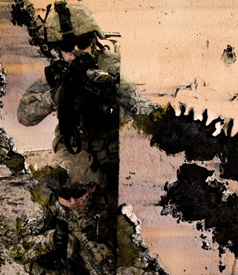
photo
(Image: Jared Rodriguez / t r u t h o u t; Adapted: Spc. Jeffery Sandstrum / U.S. Army, thomas.merton)

The WikiLeaks video footage from Iraq taken from an Apache helicopter in July 2007 showing soldiers killing 12 people and wounding two children has caused an explosion of media coverage. But many Iraq vets feel it is too little and too late.

In contrast to most of the coverage that favors the military’s stated position of forgiving the soldiers responsible and citing that they followed the Rules of Engagement (ROE), Iraq war veterans who have spoken to the media previously about atrocities carried out against innocent Iraqis have largely been ignored by the mainstream media in the United States.

Also See: Iraq War Vet: “We Were Told to Just Shoot People, and the Officers Would Take Care of Us”

This includes Josh Steiber, a former US Army specialist who was a member of the Bravo Company 2-16 whose acts of brutality made headlines with the WikiLeaks release of the video “Collateral Murder.”

Steiber told Truthout during a telephone interview on Sunday that such acts were “not isolated incidents” and were “common” during his tour of duty. “After watching the video, I would definitely say that that is, nine times out of ten, the way things ended up,” Steiber was quoted as saying in an earlier press release on the video, “Killing was following military protocol. It was going along with the rules as they are.”

Steiber was not with his unit, who were the soldiers on the ground in the video. He was back at his base with the incident occurred. While not absolving of responsibility those who carried out the killing, Steiber blames the “larger system” of the US military, specifically how soldiers are trained to dehumanize Iraqis and the ROE.

“We have to address the larger system that trains people to respond in this way, or the same thing will probably happen again,” Steiber told Truthout.

However, Steiber explained that during his basic training for the military, “We watched videos celebrating death,” and said that his leaders would “pull aside soldiers who’d not deployed, and ask us if somebody open fired on us in a market full of unarmed civilians, would we return fire. And if you didn’t say ‘yes’ instantly, you got yelled at for not being a good soldier. The mindset of military training was one based on fear, and the ability to eliminate any threat.”

Steiber was released from the military as a conscientious objector, and is now a member of the group Iraq Veterans Against the War (IVAW).

“I saw many instances, frequently, of the military killing civilians,” Steiber added, “One thing we were told was that if a roadside bomb went off, anybody in the area was considered an enemy. Obviously those are innocent civilians since most of them, if not all of them, are not involved with the bombing. So I would consider those innocent civilians as lives lost. That policy came down from high up [the chain of command].”

When Truthout asked Steiber how many times this happened with his unit, he said, “Between five and ten times, and each time we’d end up killing people.”

The group to which Steiber belongs, IVAW, sponsored the Winter Soldier hearings that took place March 13-16, 2008, in Silver Spring, Maryland. The hearings provided a platform for veterans from Iraq and Afghanistan to share the reality of their occupation experiences with the media.

While the hearings garnered major coverage from foreign media outlets, they were ignored by mainstream US media outlets. The censorship of that event is reflective of an overarching censorship by the mainstream media in the US of veterans from both occupations who have tried to tell their stories to the public.

Garret Reppenhagen, who testified at the Winter Soldier hearings, served in Iraq from February 2004-2005 in the city of Baquba, 40 kilometers (about 25 miles) northeast of Baghdad.

“There are so many incidents like this that happen in Iraq it’s bound that eventually one of them hits the vein of public attention, like this one,” Reppenhagen told Truthout of his opinion of the WikiLeaks footage, “Film helps – like this, and Abu Ghraib – the video and film documentation helps spurn public attention. So, it’s sad that these instances happen, and they are occurring and it has to do with how we conduct ourselves in this conflict – clearly there are things that need to be done for soldiers to adhere to the Geneva Conventions.”

Reppenhagen doubted the media uproar caused by the leaked video would change how soldiers in Iraq and Afghanistan conduct themselves. “I still doubt enough support will be garnered to change how we operate in theater. Eventually I hope there’ll be a critical mass of people coming out and telling their stories about these things.”

Bryan Casler, a corporal in the Marines, who served both in Iraq and Afghanistan, has also spoken out publicly about atrocities committed by US soldiers he’d witnessed in Iraq.

“First, my response to the video is utter disgust,” Casler told Truthout, “You watch it and the first thing you see is them blow away a group of men who are obviously not hostile – obviously breaking any ROE they had. Then you watch them blow away a van coming to rescue the wounded people … a van that happens to have kids in it.”

Casler admitted that he has experienced some frustration in not having had mainstream media coverage when he has spoken out about what he witnessed in Iraq. “You have to share this, because as an Iraq veteran, and talking with other vets, we know this is happening all the time. This is damning video for a propaganda machine trying to say we’re over there trying to save the Iraqi people. But this isn’t happening just in Iraq, but anywhere the military is engaged in fighting with the local population.”

The US military’s response to the WikiLeaks video has been to claim that it was an isolated incident, and the soldiers were properly following their ROE.

In an interview on the ABC News “This Week” program on Sunday, US Secretary of Defense Robert Gates said the soldiers were operating in “split second situations,” and that, “It’s unfortunate. It’s clearly not helpful. But by the same token, I think – think it should not have any lasting consequences.”

Casler begs to differ with Gates’ response.

“The argument about this being just a few bad apples – pilots are known for keeping their cool in tough environments, but the whole time you have to remind yourself, it’s not these pilots committing the atrocities – these guys had years of training and practice to do this, and loads of money making it happen,” Casler told Truthout, “This is what they are trained to do. American taxpayer money was paid to make them into this. This is not a few bad apples.”

In a response similar to Steiber’s, Casler added, “I don’t think anybody is murderous by nature – this is why the military trains you every day, both when you’re deployed or not, because people are not naturally killers – so the training is to have no barrier to killing. And that’s what you see in the video.”

When asked how he felt about the incident getting the coverage it has, Casler said he was pleased.

“I’m happy the average person might see this,” he told Truthout, “So I’m happy this is finally getting the coverage it deserves, and every vets story coming back needs this type of coverage. The military is censoring what is happening over there – but this video blows this apart. I hope more videos like this get leaked to the media, because people need to know about this.”

Casler may not have to wait long.

WikiLeaks.org is now poised to post another damning video of US forces slaughtering civilians – this time in Afghanistan.

On May 5, 2009, US aircraft bombed a number of homes in the Afghan village of Abdul Basir Khan in Farah Province. According to Afghan officials, the death toll was upwards of 140 civilians. The Pentagon initially claimed the entire incident was fabricated, but then later conceded that people were killed by the airstrike, but that “no one will ever” know the exact number. They also claimed that the pilots had no idea civilians were in the area.

More recently, on April 12, four Afghan civilians were killed in Kandahar when US troops fired on a bus in Afghanistan. The slaughter sparked furious protests and an expression of “regret” from the military. The Afghan government said a woman and child were among the dead, and that at least 18 others were wounded in the shooting.

After serving a tour in Iraq, Staff Sgt. Camilo Mejia became the first conscientious objector to the Iraq war.

Mejia claimed that he left his post in order to avoid duties that he considered to be war crimes, particularly citing the torture and abuse of Iraqi prisoners by US soldiers. He was court-martialed and listed as a prisoner of conscience by Amnesty International while serving his prison sentence.

“It was sad,” Mejia said of his reaction to the WikiLeaks video from Iraq, “You talk to other people, and they are shocked and can’t believe it. The fact that people are surprised and it’s getting so much coverage like it’s isolated and new – this is stuff we’ve been talking about for a long time, we know this is happening.”

Mejia, in addition to talking with people about atrocities he committed and witnessed in Iraq, told Truthout he was surprised at the reaction to the video, given that he and others had shared similar information at the Winter Soldier hearings two years ago.

“We’re talking a couple of years from when we talked about this stuff and exposed it – and here it is getting coverage … it’s like we live in a twilight zone where people don’t pay attention to when things actually happen, but then longer after the fact, when somebody else says the same thing, it’s huge news,” Mejia added.

Two of the Iraqis shown being murdered in the WikiLeaks video were employees of the Reuters news agency: photographer Namir Noor-Eldeen and driver Saeed Chmagh.

While most mainstream media in the US has reported on the Pentagon’s statements saying that two internal investigations have cleared the soldiers of any wrongdoing, and that they were following the ROE, international media like Al-Jazeera English have reported on reactions from the families of the victims of the attack.

In particular, the families of the slain Iraqi civilians are seeking justice for the deaths, and want the military personnel responsible for the deaths to be taken to court.

Two young children, whose father was killed in the attack, could not understand why they were targeted. “We were coming back and we saw an injured man,” said Sajad Mutashar, whose father was killed in the attack while he and his sister were wounded, “My father said, let’s take him to hospital. Then I heard only the bullets … Why did they shoot us? Didn’t they see we were children?”

His uncle, Satar, is demanding that the pilot be taken to court. “Nobody gave the children anything, their rights are gone and the Americans didn’t even compensate for the destroyed car. I sold it for $500 to spend the money treating them,” Satar told Al Jazeera.

The family of Saeed Chamgh, one of the Reuters employee killed in the attack, is also demanding justice for his death. “The pilot is not human, he’s a monster,” Safa Chmagh, Saeed’s brother, said, “What did my brother do? What did his children do? Does the pilot accept his kids to be orphans?”

Salwan Saeed, Saeed’s son, said, “The American has broken my back by killing my father. I will not let the Americans get away with it. I will follow the path of my father and will hold another camera.”

Mark Taylor, an international law expert and a director at the Fafo Institute for International Studies in Norway, told reporters the evidence so far “indicated that there’s a case to be made that a war crime may have been committed.”

Taylor said US authorities, and especially the US military, have to take a closer look at this investigation. “There are questions about the way the investigation was conducted and whether or not it was done in a proper manner,” he said, adding, “There are precedents of US soldiers being prosecuted for crimes in Iraq, for crimes of murder, rape and manslaughter. So it’s not unprecedented that this could go forward both in military courts as well as in civilian criminal courts in the US.”

Taylor believes the case raises larger questions about the laws of war, and added, “I think what this video shows is really a case that challenges whether the laws of war are strict enough.”

Marjorie Cohn is a former president of the National Lawyer’s Guild, a professor of law at Thomas Jefferson School of Law and co-author of the book “Rules of Disengagement: The Politics of Honor and Military Dissent.” She spoke with Truthout about possible war crimes committed by the soldiers in the WikiLeaks video.

“I think there’s clearly enough there to warrant an investigation,” Cohn said, referring to the need for an investigation of war crimes committed by US soldiers in the video, “I’m distraught and disappointed the US government refuses to launch an investigation about whether or not there’ve been violations of the law.”

Cohn cited the three possible violations to Truthout. “What I thought after watching the video, is that it looks like there were three possible violations of the Geneva Conventions. There were civilians standing around, there was no one firing at the US soldiers, and at least two people with cameras … there may have been people armed, like there are many people armed in the US, but this does not create the license to fire on people. That’s one violation of the Geneva Conventions – targeting people who are not a military necessity who do not pose a threat.”

Cohn said that the second and third possible violation of the laws of war are evident in the scene on the tape when the van attempts to rescue the wounded and a later scene of a US tank rolling over a body on the ground. “The soldiers shot him and those in the van, another possible violation of the Geneva Conventions – preventing the rescuers,” she added, “Third, when the wounded or dead man was lying on the ground, and a US tank rolled over him, effectively splitting him in two – and if he was dead, that was disrespecting a body – another violation of the Geneva Conventions.”

In that scene that occurs at 18:50 into in the full version of the WikiLeaks video, a soldier is heard saying, “I think they just drove over a body.” To this another soldier is heard laughing before he respond, “Really?”

Shortly thereafter, a soldier is heard saying, “Well, they’re dead, so.”

Cohn concluded, “So I see several possible violations, certainly enough to warrant an investigation by the US military.”

—————

View Coverage of Winter Soldier:

Camilo Mejia speaks on a panel at Winter Soldier titled “Racism and War: the Dehumanization of the enemy.

Garret Reppenhagen discusses the evaporation of the Rules of Engagement upon his arrival to Iraq.

Bryan Casler on his experience in Iraq and Afghanistan.

Jeju update: Farmers are being pushed out to make way for the Naval base

I’m reposting the recent update from Sung Hee Choi about the struggle against a proposed naval base in Jeju, South Korea.  While the base is a South Korean military base, it is a part of the overall U.S. strategy for Northeast Asia to encircle China with missile defense systems.  Villagers have fought vigorously against the base.  Jeju is renowned for its environment, its diving women and mandarin oranges, and its fierce independent spirit.   Recently, the mandarin trees have been disappearing.  Is it part of a psychological operations campaign?

>><<

http://nobasestorieskorea.blogspot.com/2010/04/jeju-update-are-things-currently.html

Sunday, April 18, 2010

[Jeju Update] Are the Things Currently Happening, the Kinds of Military Operations?

____________________________________________________________________
* It is a short personal essay aiming to deliver some current news happening in the Gangjeong village where 94% villagers have been against the Jeju naval base plan. Staying in Gangjeong from April 8 to 17, 2010, I could more closely see the changing scenes in the village and hear the villagers’ stories that had not been well reported even in the Jeju media. Even though more refined and compensated reporting should be done, I thought it is some urgent to let the news known now, while hoping that I could deliver or translate of the writings based on more collected voices and on the officially refined. The below photos taken April 15 to 16 show the 7sites of the vinyl houses and tree sites currently being removed in the naval base planned area, since around the end March, according to a villager.

A young artist Kim in Gangjeong, took most of photos, while I compensated a few to support his.

____________________________________________________________________

For more photos on the Gangjeong village and people’s struggle
against the Jeju naval base plan, please see:
April 15, April 12, April 11, April 10, April 9, April 3, April 2, March 20, March 5~6, Jan 18 (2010)

강정 마을과 제주 해군 기지에 대항하는 사람들의 투쟁에 관한
더 많은 사진들을 보실 수 있읍니다:
_________________________________________________________________________________________
1. Suffering of a Vinyl House Renter

Mr. Koh, who was one of the 32 villagers who initiated the struggle against the naval base plan in the Gangjeong village, when the naval base construction issue first came to the Gangjeong, Jeju Island, in April, 2007, is currently experiencing hard time because he has recently been notified from the woman landowner who lives outside the village and whose face he only became to see for the first time when she called him to meet each other and told him that she had sold the land to the navy and he should remove all his facilities and appliances that he has installed inside the vinyl house on her land that he has rented seven years ago and since then, worked hard to cultivate the small tomatoes to make the livelihood for his family. The woman landowner, the school teacher, told him on the day that some compensation money for it would be given to him.

He replied her that he did not need any money but only wanted to work in his rented green house and asked her to please wait for some period until the time when she has to finally show the navy that all things cleared.

Is such case only happening to him? Where would the renters of the vinyl houses in the village go, once they know that their landowners living outside the village suddenly appear to them and that they should give up the farming in their lands because they have already sold the lands to the navy?


Site1: tangerine vinyl house removed, across the vigil tent.
2. Some Vinyl Houses and trees in the Planned Naval Base Area, Quietly Removed?
The same villager has also informed that some vinyl houses and trees in some sites in the planned naval base area have been quietly removed since around the end of March. He said that those vinyl houses and trees had belonged to the people who had been in favor of the naval base plan. Most of those live outside the village and are not the villagers, They have sold their lands to the navy, by its cajoling and/or enforcing them.

One of the questions:

What kinds of the visual and psychological propaganda effects of the navy’s such quite military-operation’- like (some vinyl houses that were quietly removed) might bring to the villagers and travelers (specially the mainland travelers who have seldom known the process of the Defense Department’s reckless naval base plan and villagers’ strong opposition against it?

Mr. Koh say, “It was like a military operation when the navy first infiltrated the village to cajole the Gangjeong sea-diving women and many village leaders with money to vote for the naval base plan and stood behind the screen so that the cajoled people could pass the agenda for the naval base plan, with the totally manipulating scale. [Since then the majority of the Gangjeong villagers most of who were in opposition against the naval base plan expelled the wrong leaders and gone through the democratic process themselves, including electing the current mayor, Kang Dong-Kyun: The vote result regarding the naval base construction issue, in August, 2007, has been still same: 94% opposition against the naval base plan.

Now, looking at the terrible scenes of the removed vinyl houses, another sneaking, infiltrating military operation is happening, that moves secretly behind the screen again?


Site2: a tangerine vinyl house(above photo) beside the small market (left side in the below photo) was also removed: The small path in the right side in the photo is ‘Olle’ (meaning the travel path) to the Joongduk coast. Site3: trees removed across the small market in the site 2.


Site4: trees removed near the vinyl house areas next to the Joongduk coast

3. The Trial, postponed to May 27, by the request of the navy?

The villagers have waited for the result of final trial against the Ministry of National Defense on the cancellation of the approval disposal on the naval base plan, which was originally to be held on coming April 22. The judge has been heard to appear to be fair and understanding the reckless and undemocratic procedures in the Ministry’s driving process of the naval base plan, despite the villagers’ strong opposition of it. Villagers have thought since the judge seemed to be fair, the villagers would win. If then, a breakthrough indeed in the struggle… they have thought.

However, shockingly, it was recently known that the trial date was postponed to May 27, more than a month later. The navy has quietly persuaded the judges or some politicians to postpone the judgment so that it could earn the time to prepare to justify their process?

Even though we may know the specific reasons of it and measures against it that would be soon discussed later, it is more than disappointing but alarming to the villagers who have suffered for more than three years’ struggle.

The Navy may be waiting for the result of June 2 election in which the majority party is still ahead of the minority parties in the public poll, while preparing step by step for the realization of the plan.


Site5: vinyl house 1 of the removed tangerine trees in the near area with the site 4.


Site6: vinyl house 2 of removed of the tangerine trees in the same area with the site 5, just across the path.

4. The Dream that has to be told.

Mr. Koh says why he has so fought hard against the naval base plan:

“I don’t want to let my children lose their hometown. Even though I was born in Gangjeong, I spent most of my youth in another country, thanks to my much older sister and in the city, traveling many times for making living, under the racial, class discrimination. I so became to want to have the place where I can feel as home. So I returned back to Gangjeong, when I was 32, then I met my nine year younger wife here in Gangjeong. Since then, I could finally stay at one place here in my hometown. Because of my long years’ bitter experience to leave my home when I was young, I became to have the strong wish that I do not want to let my children lose their hometown. (He is proud of his brilliant and thoughtful eldest daughter who is getting the scholarship from the renowned Cheju(=Jeju) University, his second daughter who is a high school student, and his six year old son whom he so loves) They and their descendents will not have the experience any more that I have enjoyed when I was a child here: swimming in the most abundant and cleanest water in the Jeju Island, looking at the sweet fishes that go against the water flow in the Ganngjeong stream every May. If the naval base enters in Gangjeong village, the Gangjeong will be no more called as a village. It will be called, “Gangjeong Naval Base Headquarter” something like that.. How I can stand it? How can I tell my poor children that you have no more your real hometown? Could they still taste the fresh shells that I collected with you in the sea today? How could the Jeju Island be still the Island of Peace?”
In a village that has been called the most beautiful and nature-preserved in the Jeju Island, the villagers desperately call for your help to support their cause: No Jeju Naval Base!


Site7: trees removed in the near areas of 4. 5, 6

‘Collateral Murder’ veterans apologize to the Iraqi people

http://org2.democracyinaction.org/o/5966/t/9615/p/salsa/web/common/public/content?content_item_KEY=2491

FOR IMMEDIATE RELEASE April 15th, 2010

Contact:
Laura Taylor: 202-510-3711
info@civsol.org

VETERANS OF “WIKILEAKS” INCIDENT ANNOUNCE

“LETTER OF RECONCILIATION” TO IRAQIS INJURED IN ATTACK

Two former soldiers from the Army unit responsible for the Wikileaks “Collateral Murder” incident have written an open-letter of “Reconciliation and Responsibility” to those injured in the July 2007 attack, in which U.S. forces wounded two children and killed over a dozen people, including the father of those children and two Reuters employees.

Ethan Mccord and Josh Stieber deployed to Baghdad with Bravo Company 2-16 in 2007. Ethan was on the ground at the scene of the shooting, and is seen on the video rushing one of the injured children to a U.S. Vehicle; “When I saw those kids, all I could picture was my kids back home”. Ethan applied for mental health support following this incident and was denied by his commanding officer.

Josh Stieber was not at the scene of the shooting but says similar incidents happened throughout his 14-month tour; “The acts depicted in this video are everyday occurrences of this war.”
 Josh states that these casualties demonstrate the impact of U.S. military policy on both the civilians and the soldiers on the ground.

Ethan and Josh claim that though their unit was following the Rules of Engagement that day, they are taking responsibility for their role in the incident and initiating a dialogue around it; “Though we have acted with cold hearts far too many times, we have not forgotten our actions towards you. Our heavy hearts still hold hope that we can restore inside our country the acknowledgment of your humanity, that we were taught to deny.”

The letter, which they hope to get to the family who lost their father and whose children were injured in the attack, states that they “are acknowledging our responsibility for bringing the battle to your neighborhood, and to your family. We did unto you what we would not want done to us.”

Ethan and Josh are available for interviews. The letter can be seen at: www.lettertoiraq.com

BACKGROUND ON JOSH STIEBER:
Branch of service: United States Army (USA)
Unit: 1st ID
Rank: Spc.
Home: Laytonsville, Maryland
Served in: Baghdad (Rustamiyah) 07-08 Fort Riley, KS 06-07, 08-09

BACKGROUND ON ETHAN MCCORD:
Branch of service: United States Army (USA)
Unit: 1st ID
Rank: Spc.
Home: Wichita, Kansas

http://org2.democracyinaction.org/o/5966/p/dia/action/public/index?action_KEY=2724&start=175

AN OPEN LETTER OF RECONCILIATION & RESPONSIBILITY TO THE IRAQI PEOPLE

A newly released Wikileaks “Collateral Murder” video has made international headlines showing a July 2007 shooting incident outside of Baghdad in which U.S. forces wounded two children and killed over a dozen people, including the father of those children and two Reuters employees. Two soldiers from Bravo Company 2-16, the company depicted in the video, have written an open letter of apology to the Iraqis who were injured or lost loved ones during the attack that, these former soldiers say, is a regular occurrence in this war. You can view the Wikileaks video here: http://wikileaks.org/ and you can view the Press Release here

AN OPEN LETTER OF RECONCILIATION & RESPONSIBILITY TO THE IRAQI PEOPLE

From Current and Former Members of the U.S. Military

Peace be with you.

To all of those who were injured or lost loved ones during the July 2007 Baghdad shootings depicted in the “Collateral Murder” Wikileaks video:

We write to you, your family, and your community with awareness that our words and actions can never restore your losses.

We are both soldiers who occupied your neighborhood for 14 months. Ethan McCord pulled your daughter and son from the van, and when doing so, saw the faces of his own children back home. Josh Stieber was in the same company but was not there that day, though he contributed to the your pain, and the pain of your community on many other occasions.

There is no bringing back all that was lost. What we seek is to learn from our mistakes and do everything we can to tell others of our experiences and how the people of the United States need to realize we have done and are doing to you and the people of your country. We humbly ask you what we can do to begin to repair the damage we caused.

We have been speaking to whoever will listen, telling them that what was shown in the Wikileaks video only begins to depict the suffering we have created. From our own experiences, and the experiences of other veterans we have talked to, we know that the acts depicted in this video are everyday occurrences of this war: this is the nature of how U.S.-led wars are carried out in this region.

We acknowledge our part in the deaths and injuries of your loved ones as we tell Americans what we were trained to do and what we carried out in the name of “god and country”. The soldier in the video said that your husband shouldn’t have brought your children to battle, but we are acknowledging our responsibility for bringing the battle to your neighborhood, and to your family. We did unto you what we would not want done to us.

More and more Americans are taking responsibility for what was done in our name. Though we have acted with cold hearts far too many times, we have not forgotten our actions towards you. Our heavy hearts still hold hope that we can restore inside our country the acknowledgment of your humanity, that we were taught to deny.

Our government may ignore you, concerned more with its public image. It has also ignored many veterans who have returned physically injured or mentally troubled by what they saw and did in your country. But the time is long overdue that we say that the value of our nation’s leaders no longer represent us. Our secretary of defense may say the U.S. won’t lose its reputation over this, but we stand and say that our reputation’s importance pales in comparison to our common humanity.

We have asked our fellow veterans and service-members, as well as civilians both in the United States and abroad, to sign in support of this letter, and to offer their names as a testimony to our common humanity, to distance ourselves from the destructive policies of our nation’s leaders, and to extend our hands to you.

With such pain, friendship might be too much to ask. Please accept our apology, our sorrow, our care, and our dedication to change from the inside out. We are doing what we can to speak out against the wars and military policies responsible for what happened to you and your loved ones. Our hearts are open to hearing how we can take any steps to support you through the pain that we have caused.

Solemnly and Sincerely,

Josh Stieber, former specialist, U.S. Army

Ethan McCord, former specialist, U.S. Army

The veterans are inviting other vets and U.S. citizens to sign on to their letter.

Vet kills himself in front of Dayton vet center

http://www.daytondailynews.com/news/veteran-commits-suicide-in-front-of-dayton-va-center-656012.html

Did war vet kill self to make a statement?

Man had been in VA emergency room earlier in the morning.

By Lucas Sullivan and Margo Rutledge Kissell

Staff Writers Updated 11:23 PM Friday, April 16, 2010

DAYTON — Jesse Charles Huff walked up to the Veterans Affairs Department’s Medical Center on Friday morning wearing U.S. Army fatigues and battling pain from his Iraq war wounds and a recent bout with depression.

The 27-year-old Dayton man had entered the center’s emergency room about 1 a.m. Friday and requested some sort of treatment. But Huff did not get that treatment, police said, and about 5:45 a.m. he reappeared at the center’s entrance, put a military-style rifle to his head and twice pulled the trigger.

Huff fell near the foot of a Civil War statue, his blood covering portions of the front steps.

Police would not specify what treatment Huff sought and why he did not receive it. Medical Center spokeswoman Donna Simmons declined to answer questions about Huff’s treatment, citing privacy laws. But police believe Huff killed himself to make a statement.

Scott Labensky, whose son lived with Huff, agreed. He said the veteran was injured by a ground blast while serving in Iraq and received ongoing treatment for a back injury and depression.

“He never got adequate care from the VA he was trying to get,” Labensky said. “I believe he (killed himself) to bring attention to that fact. I saw him two days ago. He was really hurting.”

Simmons said Huff received care at the center since August 2008 and his care was being handled by a case manager.

The suicide rate among 18- to 29-year-old men who have left the military has gone up significantly, the government said in January.

The rate for those veterans rose 26 percent from 2005 to 2007, according to data released by the Department of Veterans Affairs.

The military community also has struggled with an increase in suicides, with the Army seeing a record number last year. Last May, Wright-Patterson Air Force Base focused on suicide recognition and prevention after four apparent suicides involving base personnel within six months.

Huff arrived early Friday in a cream-colored van police found parked about 200 yards from a south entrance of the medical center. The van contained some U.S. Army clothing, a carton of Newport cigarettes and a prescription bottle of Oxycodone with Huff’s name on the side.

Oxycodone is often used to treat severe pain.

As a precaution, bomb squad technicians blew apart a backpack Huff carried before committing suicide.

Koohan Paik/Nation: Living at the ‘Tip of the Spear’

http://www.thenation.com/doc/20100503/paik/print

Living at the ‘Tip of the Spear’

By Koohan Paik

This article appeared in the May 3, 2010 edition of The Nation.

April 15, 2010

I was born in Pasadena in 1961 but raised in South Korea and other Pacific Rim locales, finally settling in Hawaii. During my coming-of-age years, between 1971 and 1982, my family lived on a beautiful small island in the western Pacific: lush jungles, remote waterfalls and mysterious freshwater caves. I remember riding horses through abandoned coconut groves and balmy nighttime spearfishing in some of the most abundant reefs in the world.

That place was Guam, at the southern tip of the Northern Mariana Islands, a US colony. Many people think of Guam only as a giant military base, the nexus of US forward operations in the Pacific islands–“the tip of the spear,” as the Pentagon calls it. That has certainly become its primary fate. The base occupies fully a third of the island and is off-limits to civilians, including the indigenous Chamorro people, who claim the oldest civilization in the Pacific. Even during my childhood, though I barely noticed it at the time, there was the constant background drone of B-52s roaring overhead to and from Vietnam, and submarines cruising the coasts. Such is the island’s current trauma, after an agonized history that has included repeated invasions and four occupations of varying degrees of brutality over four centuries–by Spain, Japan and twice by the United States.

Despite these serial humiliations, the Chamorros–a unique mélange of Micronesian, Spanish and Asian bloodlines–have always maintained optimism, courage and a resilient sense of humor. So far, they have successfully navigated their delicate existence as traditional peoples on a Pacific island, while also trying to play supportive roles–as nonvoting “citizens” in a US colony, even patriotic active soldiers–for their current master. But now they’re going to need all the resiliency they can muster to deal with the next blow the United States has in store.

I returned to Guam for a monthlong visit with old friends this past November. I was stunned to find the forests of my childhood being replaced by tarmac at an alarming rate; the remaining wild beaches and valleys being surveyed as potential live-fire shooting ranges; and an enormous, magnificently rich coral reef slated for dredging in order to build a port for the Navy’s largest aircraft carrier. I witnessed the rage and hurt, exploding suddenly–and so unexpectedly–from the Chamorro people and other island residents, who have had no say in the planning of cataclysmic changes that will turn their homeland into an overcrowded waste dump for the creation of the hemisphere’s pre-eminent military fortress. My friends told me it’s all part of what’s called the Guam Buildup.

Though technically Americans, people born in Guam have few American rights if they choose to live in their homeland. They can’t vote for president; they have only one, nonvoting representative in Congress, and Congress can overturn any law passed by Guam’s legislature. The island remains one of only sixteen UN-designated “non-self-governing territories”–in other words, colonies. As such, its people have no legal route to appeal any decisions made in Washington. A burgeoning resistance movement is under way, which the military is well aware of. They have hopes that a visit by President Obama, twice postponed and now set for June, will help ease the growing agitation. Given the mood of the people, I doubt Obama can calm anything.

The upcoming changes are all aimed at fulfilling a Pentagon vision set forth in its 2010 Quadrennial Defense Review. The “Guam Buildup [will] transform Guam,” says the report, “the westernmost sovereign [sic] territory of the United States, into a hub for security activities in the region,” intended to “deter and defeat” regional aggressors. Guam will be ground zero for mega-militarization in the Pacific and beyond. John Pike of Globalsecurity.org, a Washington-based think tank, hypothesizes that the military’s goal is to be able “to run the planet from Guam and Diego Garcia [an Indian Ocean atoll owned by Britain] by 2015,” “even if the entire Eastern Hemisphere has drop-kicked” the United States from every other base on their territory.

The swell of US military activity in the Pacific is not confined to Guam. All across the hemisphere, island communities are inflamed over a quiet, swift rearrangement and expansion of US bases throughout the Pacific–on Okinawa (Japan); on Jeju (a joint US-South Korea effort); on Tinian (in the same archipelago as Guam, but part of the Commonwealth of the Northern Mariana Islands); on Kwajalein and the rest of Micronesia; and on the Hawaiian islands of Oahu, Big Island and Kauai. The US Pacific Command calls it an Integrated Global Presence and Basing Strategy. These imperial intentions have barely registered in the American media, despite gargantuan expenditures and plans. Nonetheless, this projection of American colonial assumptions and aggression is taking its toll throughout the Pacific Rim.

The centerpiece of the Guam Buildup is the transfer of about 8,600 marines from Okinawa. When you add their families and construction teams, including entire low-wage crews from the Philippines and Micronesia–there goes the “jobs bonanza” locals were promised–the expected influx will be 80,000 more people on Guam. The island, about half the size of Cape Cod, has a population of about 178,000. The people of Guam, whose largest ethnic group are Chamorro (37 percent of the population), followed by Filipino (25 percent) and then statesiders (10 percent), doubt their island has the carrying capacity to absorb a 50 percent population surge.

In November the Defense Department released a mandatory Draft Environmental Impact Statement (DEIS) assessing the buildup’s effects. It elicited the most blistering responses ever to come from the Environmental Protection Agency, newly resuscitated after the Bush years. The EPA gave the DEIS its lowest possible ranking for proposing entirely ineffective mitigation actions. The agency further enumerated a litany of ecological catastrophes. Hundreds of acres of jungle and wetlands habitat will be covered with concrete and tract developments in order to house tens of thousands of newcomers. There will be massive raw-sewage spills and a shortage of drinking water. The Navy’s plans include the destruction of seventy-one acres of an exquisitely healthy coral reef, home to at least 110 unique coral species, in order to build a berth for a nuclear-powered aircraft carrier, which transports eighty-five fighter jets and 5,600 people.

Meanwhile, the Army wants to turn a pristine limestone forest that stretches from the hills to the sea–site of a prehistoric village that is listed with the National Registry of Historic Places–into a shooting range. In addition, it wants to build ammunition storage bunkers in wetlands areas. The Air Force hopes to build a missile defense shield, as well as hangars, airstrips and helicopter pads, turning Guam into the planet’s premier parking lot for billion-dollar fighter jets, helicopters and drones.

The DEIS provided no adequate alternative actions to any of these problems. Nor did it mention that dredging the reef will dislodge radioactive sediment that accumulated during the 1960s and ’70s when ships traveling from atomic test sites in the Marshall Islands came to Guam to be washed down at Apra Harbor.

The DEIS was written as if Guam’s people, land and culture counted for nothing. The vice speaker of the Guam legislature, Benjamin Cruz, charged that the “problem you had with the original DEIS is that it was done virtually.” Cruz pointed out that the report, prepared at a staggering cost of $87 million, was written by consultants who had never been to Guam and who had simply cobbled together the 11,000-page document based on Internet research and phone calls to Guam government agencies.

The EPA’s excoriating response to the DEIS has prompted lawmakers to question not only the cost of the buildup but also the costs of mitigating the project’s environmental, social and cultural impacts. The governor of Guam estimates that $3 billion will be needed to upgrade infrastructure before any military construction begins. Military construction is already priced at more than $10 billion, assuming that Japan fulfills its promise to kick in $6 billion to help remove US troops from Okinawa. If Japan begs off, the price tag for US taxpayers will soar to more than $13 billion. Surprisingly, Republican Senator Kay Bailey Hutchinson of Texas sharply criticized Pentagon officials at a Senate appropriations hearing in March about the unexpected exorbitant costs of current Asia-Pacific basing strategies. She suggested that the best solution might be permanent bases on the US mainland, “where you don’t have training constraints and you don’t have urban buildup, and it is a more stable environment for our families.”

By contrast, Democratic Senator Jim Webb of Virginia, who has advocated for an increased military presence in the Marianas since the 1970s, is intent on seeing the buildup through. He supports two solutions: pouring billions into massive infrastructure development (highways, waste facilities, power plants, etc.) and moving all the live-fire training to the gemlike island of nearby Tinian. However, many Guam residents feel that infrastructure spending misses the true cultural and environmental dangers of the population spike; and on Tinian, local farmers, who would be forced off their land (à la Bikini Atoll, circa 1946), are aghast that live-fire training would mark the end of agrarian culture there.

The incident that set these plans for the Guam Buildup in motion was the 1995 gang-rape of a 12-year-old girl by US marines stationed at the Futenma Air Base in Okinawa, one of several shocking incidents involving assaults on local girls by marines. Outraged residents pressured the conservative government to reduce or eliminate the American military presence in Japan. Protests culminated in a 2006 realignment agreement between Japan and the Bush administration to close the air base and send half of its troops to a new air base on Henoko Bay, on Okinawa’s east coast, with the other half going to Guam by 2014.

But fierce resistance in Okinawa has derailed the move. Japan’s new prime minister, Yukio Hatoyama, who was swept into power in September on his promise to reduce the number of US troops, caught military planners off guard by refusing to allow base construction at Henoko. In October, Hatoyama incensed Defense Secretary Robert Gates by putting the Marines’ move on hold until he determines an alternative to the Henoko site. The relocation of Futenma remains stalemated.

The people of Guam have never before opposed military plans for their island. In fact, the Chamorros and Filipinos from Guam are arguably the most patriotic people in the nation; more soldiers from the Marianas have fought and died in American wars since 1950, per capita, than those from any other region in the country. However, the sheer magnitude of destruction proposed by the Guam Buildup is unprecedented and has pushed these patriots to their limit. For the first time in the island’s history, they are uncharacteristically speaking out against the military. At a recent public hearing, Chamorro veteran soldier Janet Aguon, who fought in two wars, said, “I’m truly sick and tired of the United States of America and the Department of Defense treating the people of Guam as if they were trash. So my message to President Obama, the DoD, the secretary of the Navy: take the military and put them in your own country and not on our tiny little island.”

Military planners are worried. The Hawaii-based commander of Marine forces in the Pacific, Lt. Gen. Keith Stalder, told the Washington Post in March, “I see a rising level of concern about how we are going to manage this.”

Meanwhile, demilitarization activists have begun networking. The goal: a Pacific for the people. Those from Guam are allying themselves not only with those from Tinian and other Mariana Islands but also with all their Pacific Rim cousins, particularly on Okinawa, in Hawaii and on Jeju Island. These three locations, with Guam, will be sites for the nation’s most advanced missile technology–the ultimate geopolitical “Kick Me” sign. As an example of this pan-Pacific concordance, retired Col. Ann Wright recently joined Pacific Islanders outside the gates of Pacific Command Headquarters on Oahu to protest the Guam Buildup.

“We want Admiral Willard [head of the Pacific Command] to hear this: No means No!” said Wright. “When you force yourself on someone against their will, it’s called rape–rape of the people, the culture and the land. We Americans must stop our government’s military expansion in the Pacific.”

Carmen Artero Kasperbauer, a Chamorro elder whose family’s land is now part of an air base, told the military daily Stars and Stripes, “We hate being possessions to the federal government. That’s why people are angry.” But Kasperbauer, like most Chamorros, doesn’t direct her anger at the troops. “I’m not talking about the uniformed military. We love the uniformed military. Our son…helped liberate the Kuwaitis. But he can’t help liberate me.”

Increasingly, Guam residents are discussing the urgency of political self-determination. “We’re being moved back and forth across a chessboard by two countries: one that once occupied us [Japan] and one that currently does,” pointed out university instructor Desiree Ventura, author of the popular blog The Drowning Mermaid. Clearly, the need for sovereignty is more dire than ever, exposing the real question at hand: is President Obama ready to release Guam’s people from their colonized status?

About Koohan Paik

Koohan Paik is an Hawaii filmmaker and co-author, with Jerry Mander, of The Superferry Chronicles: Hawaii’s Uprising Against Militarism, Commercialism and the Desecration of the Earth (Koa). more…

Tokunoshima residents reject idea of a new U.S. air base

http://www.yomiuri.co.jp/dy/national/20100414TDY03T01.htm

Tokunoshima averse to Futenma / Local mayors lead opposition to relocating U.S. air station to Kagoshima island

Yoshifumi Sugita / Yomiuri Shimbun Staff Writer

Seen from a company jet about two hours out of Haneda Airport, Tokunoshima island in Kagoshima Prefecture looked bigger than I expected.

In the northern part of the island lies Nesugatayama (recumbent mountain)–so nicknamed for its shape, which looks like a woman lying down. Sugarcane fields create a patchwork of green and reddish brown.

The 2,000-meter runway at Tokunoshima Airport extends along a coast in the northwest of the island, looking as if it might keep going and shoot right off the island. North of the airport is a tideland where sea lettuce, a local specialty, is grown.

Prime Minister Yukio Hatoyama has seen this island as a trump card to resolve the dispute over the relocation of the U.S. Marine Corps’ Futenma Air Station in Okinawa Prefecture, and honor his own pledge to transfer the facility to a different prefecture.

However, the traditionally conservative island residents are averse to U.S. military bases and have a growing distrust of the ruling Democratic Party of Japan.

An islandwide opposition campaign led by three local mayors has grown more and more intense. Hatoyama has said he aims to settle the relocation issue by the end of May, but during my visit I sensed little chance that the government could obtain the necessary consent of the local people.

Tokunoshima island caught the attention of Seishu Makino, a DPJ member close to Hatoyama. Makino, a House of Representatives member for Shizuoka Constituency No. 1, was introduced by a person from the island to 62-year-old Hidetada Maeda, a former speaker of the Amagicho Municipal Assembly.

Guided by Maeda, Makino has made several visits to the island since November and met with the mayors of Amagicho, Isencho and Tokunoshimacho to take their pulse regarding the relocation.

On a Jan. 25 visit, Makino was accompanied by DPJ staffer Kiyoshi Sugawa, a special researcher of the Cabinet Secretariat. Makino asked the three mayors to meet with Chief Cabinet Secretary Hirofumi Hirano.

The following day, however, the mayors turned down the offer out of concern such a meeting could result in their agreeing to the relocation plan.

Maeda said he pushed for Tokunoshima island as an alternative location to host the Futenma base in a bid to shore up the island’s economy.

“This island is dying. There’re only a few places to work,” Maeda said. “If we accept Futenma, we’ll get government aid. The island won’t be able to survive unless we do something to revitalize it, such as creating a special economic zone to produce sugarcane.”

===

Protest rally draws thousands

However, many residents rose up in protest against the idea of relocating the Futenma base to their island when it came to light that the three town mayors had spoken with Makino. About 4,200 people joined in a protest rally held by the mayors March 28, organizers said.

“This is a matter of grave concern to our island,” said rally participant Shigeru Haruyama, 69.

“As a fellow resident of an island, I was furious about incidents that American soldiers caused in Okinawa Prefecture. I made a banner and a headband to join the rally to object [to the relocation plan],” Haruyama said.

The mayors are planning to organize another rally for about 10,000 people Sunday. Michiko Yoshitama, a 55-year-old coffee shop manager in Isencho, said she would close her shop and take part.

“For the first time, I can share the agony felt by people in Okinawa Prefecture, as the base relocation issue has become a matter of concern to me. We should advertise the ‘slow life’ as one of our island’s assets,” Yoshitama said.

Going about the island, I received the impression that opponents of relocation were in the absolute majority. The spread of this opposition seems related to the political culture of the island, which was once called an “island of political war.”

The so-called Yasutoku war–a battle over a Diet seat in a former Amami islands constituency–has been fought since 1983. It was begun by Okiharu Yasuoka, a former justice minister belonging to the Liberal Democratic Party, and Torao Tokuda, the head of the Liberal League.

Tokuda’s second son, Takeshi, followed in his now-retired father’s footsteps and became a member of the House of Representatives. He joined the LDP in 2006. The three town mayors now support Takeshi.

Hirano called Takeshi Tokuda on Thursday seeking a solution, but Tokuda reportedly made it clear Tokunoshima could not be a candidate for relocation.

The islanders are sensitive to the idea that accepting the base would benefit the Hatoyama administration.

“You’ll be ostracized if you say you support the DPJ’s policies,” said a self-employed man in his 50s who is one of the few island residents in favor of accepting the base. However, if an identical idea is proposed by the LDP, he said, the islanders will accept it.

With the combination of anxiety toward U.S. military forces and local anti-DPJ sentiment, opposition to accepting Futenma has grown significantly.

“I know Tokunoshima enjoys peace because of the bases in Okinawa Prefecture. But it does not make sense for [the Hatoyama administration to say,] ‘We have to decide by May, so please accept the base, Tokunoshima residents,'” Tokunoshimacho Mayor Hideki Takaoka said.

“[The administration] should have started looking for a new location after holding exhaustive discussions on the Japan-U.S. Security Treaty and defense issues. The Hatoyama administration’s approach is too clumsy,” he said.

Hatoyama’s Futenma waffling irks Guam

http://search.japantimes.co.jp/cgi-bin/nn20100413f2.html

Tuesday, April 13, 2010

Hatoyama’s Futenma waffling irks Guam

Islanders in limbo, no say on plans for their fate made from afar

By KAKUMI KOBAYASHI and HIDENORI TAJIMA

Kyodo News

HAGATNA, Guam — Guam has been frustrated by the indecision of Prime Minister Yukio Hatoyama over the stalled plan to relocate U.S. Marines from Okinawa to the U.S. territory as well as its limited political influence over the issue.

While businesspeople relying on economic windfalls from a military buildup yearn for clarity from Hatoyama regarding his promised reworking of the relocation plan, some Guam residents have become vocal about the situation in the face of the prospects of an additional base-hosting burden and the sense of being regarded as “two-thirds American.”

“Everything right now is dead,” Nick Captain, president of Captain Real Estate Group on Guam, said, referring to a 63 percent sales decline to $251 million in 2009 compared with 2007.

Guam’s economy, which had been improving through 2007, has lost steam because of two major negative factors, Captain said. One has been the global financial crisis that followed the bankruptcy of Lehman Brothers and the other the change in the Japanese government.

“A holy grail for the local economy and real estate market involves the transfer of marines from Okinawa to Guam,” he said.

Japan and the United States agreed to move some 8,000 marines and their family members from Okinawa to Guam by 2014.

Guam Gov. Felix Camacho and business leaders earlier welcomed the agreement, expecting the entire construction project, worth an estimated $12 billion, to help shore up the island’s economy, which had been hit by a slump in tourism.

This strong support for the buildup has not been felt recently. Hatoyama’s lack of decision over the relocation plan discouraged potential investors from plowing funds into infrastructure and construction on the island.

On top of that, many residents have become skeptical that hosting more military operations will benefit the civilian community.

Judith Won Pat, speaker of the Guam legislature, said residents in general realize the strategic significance of the island that the U.S. government describes as “a hub for security activities in the region” in the latest Quadrennial Defense Review report.

“The people are more accepting of the military,” which already controls nearly 30 percent of the land on Guam, Won Pat told Japanese reporters in February.

But a report, formally called the Draft Environmental Impact Statement, indicated that more civilian land could be appropriated for a firing range and a massive amount of coral reef could be destroyed by dredging for a naval port for aircraft carriers, according to Guam legislators.

“The people now are starting to question the benefits and to worry about what’s going to happen,” Won Pat said.

Insufficient infrastructure is another problem. Judith Guthertz, chief of the legislature’s committee on the buildup, urged the military to halve the number of incoming marines because the community cannot deal with an influx of population.

Nearly 80,000 additional residents, including temporary construction workers, are expected by 2014 on Guam, whose current population is around 170,000, according to the buildup plan.

On Feb. 11, the 15-seat legislature unanimously adopted a resolution demanding the military revise the buildup plan, branding it as “grossly flawed.” The U.S. Environmental Protection Agency meanwhile deemed the plan “environmentally unsatisfactory.”

Guthertz warned that if the military “steamrolls” opponents to the buildup, it would only alienate itself from the community on the island, whose size is less than half that of Okinawa Island.

In an apparent bid to buck the buildup, Camacho urged people not to forget the sacrifices Guam has made for American security. “We have seen our brave Guamanian sons and daughters fight abroad and die in battle under the United States flag,” he said in a policy speech in February.

Guam is also calling on Japan to help reform the buildup plan and make it more beneficial to civilians because islanders have little say regarding Japan-U.S. negotiations.

Guam residents can’t cast ballots in presidential elections and its representative in Congress does not have the right to vote. “These two big powerful countries (Japan and the United States) are making a decision for our future without us even being at the table,” Won Pat said.

On the day the resolution was adopted, two Diet members from the ruling bloc — Mikio Shimoji and Tomoko Abe — went to the Guam legislature. They squeezed the visit into a whirlwind fact-finding trip on the island as part of a governmental delegation over the transfer of marines from Okinawa.

“We’ll ponder what Japan can do so Guam’s history and culture will be conserved and its economy will grow. Let’s work together and have closer communications,” Shimoji, a lawmaker from Okinawa, said, getting a round of applause.

Meanwhile, a citizens’ group, We Are Guahan, has encouraged Guam residents to get more closely involved in the controversial buildup. The group announced in mid-March that it has collected more than 11,000 signatures from people calling for a meeting with President Barack Obama during a future trip to the territory.

The group is also busy updating people on the latest information about the buildup. “We’re committed to insisting that we have a voice and choice in our future,” said Cara Flores-Mays, a 28-year-old member.

More GIs committed suicide than were killed in combat

http://www.congress.org/news/2009/11/25/rising_military_suicides

Rising military suicides

The pace is faster than combat deaths in Iraq or Afghanistan.

By John Donnelly

More U.S. military personnel have taken their own lives so far in 2009 than have been killed in either the Afghanistan or Iraq wars this year, according to a Congressional Quarterly compilation of the latest statistics from the armed services.

As of Tuesday, at least 334 members of the military services have committed suicide in 2009, compared with 297 killed in Afghanistan and 144 who died in Iraq, the figures show.

Lawmakers in recent years have been increasingly concerned about the growing problem of military suicides, especially in the Army. They have been holding hearings, passing bills and approving billions of dollars more than requested to improve mental health care for military personnel and veterans.

But even those who have been most intensely focused on the issue said they found the new numbers alarming. So far in 2009, the Army has had 211 of the 334 suicides, while the Navy had 47, the Air Force had 34 and the Marine Corps (active duty only) had 42.

“These numbers are just staggering and, tragically, are an indication that we are simply not doing the job of providing adequate mental health care for both our active-duty service people and our veterans, said Bob Filner, D-Calif., chairman of the House Veterans Affairs Committee.

Armed forces personnel traditionally have had a much lower suicide rate than the population at large. Because the most recently available national suicide statistics from the Centers for Disease Control are from 2006, it is impossible to know whether the current military rate is higher than the current civilian rate. However, the civilian suicide rate for males ages 20-29 hovered around 20 per 100,000 during the first half of this decade. The Army said its suicide rate is now a bit higher than that for the first time.

Moreover, the total number who have killed themselves in 2009 is probably higher than 334, because the figure does not include unavailable suicide statistics for 2009 for Marine Corps reservists or veterans of Iraq and Afghanistan who have left the service.

The veterans’ numbers, in particular, could yet swell the totals considerably. The Department of Veterans Affairs said an average of 53 Iraq and Afghanistan veterans committed suicide each year between 2002 and 2006. And that number only includes suicides among the quarter of all veterans who use the VA’s health system.

The rising number of suicides has coincided with U.S. military forces redeploying frequently to Iraq and Afghanistan.

Army leaders say they are unable to conclude that the deployments are the main cause of the suicide increase — one-third of the active-duty soldiers who killed themselves in 2009 have no deployment history, according to Army Vice Chief of Staff Gen. Peter Chiarelli.

But many senior members of Congress say they believe there is a connection.

Filner wants to hold hearings soon, saying they would show that the number of casualties in the Iraq and Afghanistan wars is much higher than officially acknowledged once psychological wounds are accounted for.

Rep. John P. Murtha, D-Pa., chairman of the House Defense Appropriations Subcommittee and a Marine Corps veteran of Vietnam, attributes the rising mental health problems to a lack of time at home between deployments.

“I was shocked to hear there’s more suicides than people lost in Afghanistan” he said, attributing the upward trend to the “stress of a long war where people just don’t have the opportunity to come home to get healed.”

The Army, which accounts for the bulk of the suicides, is taking an aggressive approach to preventing them, through periodic screening and education to get help to those who need it, Chiarelli said at a Nov. 17 press briefing.

“Everyone is distressed at this extremely high rate,” said Gene Taylor, D-Miss., a senior member of House Armed Services. “About the only good thing is that Gen. Chiarelli has focused his efforts on it.”

Congress is aware of the problem and has taken steps to address it, noted Daniel K. Akaka, D-Hawaii, chairman of the Senate Veterans’ Affairs Committee and a senior member of the Senate Armed Services Committee.

“In the past two years, Congress passed sweeping legislation to address veterans’ mental health issues — from a far reaching omnibus bill to raise VA mental health standards to a suicide prevention hotline,” he said.

The newly enacted fiscal 2010 defense authorization law, for example, requires significant increases in mental-health providers in all the military services. Chiarelli said the Army needs hundreds more mental-health and substance-abuse counselors than it has.

Filner, meanwhile, has drafted legislation that would require the secretaries of Defense and Veterans Affairs to set up a pilot program to help servicemembers reintegrate in society after they return home from deployments. The program would mandate psychological evaluations and screenings for brain trauma and provide for follow-up care.

Filner is convinced the process of questioning military personnel is not thorough enough and that too much of a stigma is still attached to honestly speaking about emotional problems.

While the gross numbers are of concern, they do not tell the story so much as the rate of increase when compared with suicide rates in the overall population.

The Army and Marine Corps rates used to be lower than the comparable civilian rate. For example, it was 9 per 100,000 among those who had served on active duty in the Army in 2001. But in 2008, by comparison, the Army suicide rate among those who had served on active duty was 20.2 per 100,000 people.

Similarly, the active-duty Marine Corps rate in 2008 was 19.5 per 100,000 or just shy of the most recent civilian rate statistics available. It had been much less of a problem just a few years ago, going as low as 12.5 per 100,000 in 2002, Marine Corps figures show.

The suicide problem is expected to become more prominent as the debate continues over deployments in Afghanistan. As the public grows more restive about continued warfare on two fronts, lawmakers will be under pressure to address those concerns, and the political pressure will grow as next year’s midterm elections get closer.

The deployments to Afghanistan will probably only grow in the months ahead. President Obama is expected to announce next week that the U.S. force of about 68,000 in Afghanistan will swell next year, perhaps by 50 percent. Meanwhile, the approximately 115,000 U.S. forces in Iraq will go down to 50,000, but not until August 2010.

EARTH DAY 2010 Bay Area Groups Demand Halt Of Military Build-up in Guam: Environmentally Destructive & Costly

FOR IMMEDIATE RELEASE

Contact Person:  Erica Benton (510)-928-8247, Rev. Deborah Lee (415) 297-8222

Press Conference & Earth Day Action:

Bay Area Organizations, Scholars and Environmentalists Demand Halt of Military Build-up in Guam:

Environmentally Destructive and Costly

Date:  Thursday, April 22, 2010

Time:  10:30 am

Location: St. Patrick’s Church, 756 Mission Street, San Francisco

Features:  Music, Visuals, expert and community speakers:

Speakers and Press Contacts:

Rima Miles, Refaluwasch Carolinian from Saipan, member of One Love Oceania

Erica Benton, musician & member of Famoksaiyan, a Chamorro and Guam advocacy group

Yoko Fukumura, Okinawan Women Act Against Military Violence

Rev. Deborah Lee , Women for Genuine Security

Aileen Suzara, Filipino American Coalition for Environmental Solidarity

Spokeperson from POWER

Center for Biological Diversity, Miyo Sakashita

Supporting Groups:  Women for Genuine Security, Famoksaiyan (Chamorro and Guam/Marianas Advocacy Group), One Love Oceania, American Friends Service Committee, POWER, Movement Generation, Sonoma County Peace Crane Project, Center for Biological Diversity.

April 5, 2010, SAN FRANCISCO, CA* – On April 22,  Earth Day, several groups will gather outside St. Patrick’s Church in San Francisco demanding a halt to US military expansion on the Pacific island of Guam. Their voices join recent EPA concerns that the Department of Defense’s plan will have devastating impacts on 71 acres of coral reef and fails to come into compliance with the Clean Water Act and Endangered Species Act. The plan will threaten the habitat of thousands of species of marine life, including endangered species such as green sea turtle, hawksbill sea turtle and spinner dolphin.  At a time of economic recession and mounting national debt, the US base expansion on Guam will be one of the largest buildups in recent history, costing US taxpayers an estimated $9 Billion. On Earth Day, San Franciscans will witness the release of a letter signed by 70 environmentalists, scholars, community and religious leaders who are calling on the White House and the Council on Environmental Quality to halt the build-up.

The Environmental Protection Agency, in its evaluation of the Draft Environmental Impact Statement (DEIS), gave the plan the worst possible rating, calling it “inadequate” and “insufficient,” and stating that the impacts  of dredging on the high quality coral reefs of Apra Harbor “are of sufficient magnitude that EPA believes the action should not proceed as proposed.”  The proposed build up, would bring 79,000 more people to Guam, increasing the population of 173,456 by 47%.  According to the EPA, the plan fails to adequately address the impact of this population increase on the water supply and wastewater treatment on Guam, creating adverse public health impacts.

Environmental research organizations, such as the Center for Biological Diversity stated in their public comment:  “The Navy has failed to meet the statutory requirements of the National Environmental Policy Act (NEPA) and regulations of the Council on Environmental Quality…. because it improperly limited the scope of the DEIS and failed to include sufficient information on alternatives, impacts to cultural resources and social justice issues, and Greenhouse Gas Emissions.”

“Our communities in Guam are counting on us to be a voice for them in Washington,” says Erica Benton, a local bay area resident with family ties to Guam and a member of Famoksaiyan, a group which voices concerns for Guam and Chamorros in the diaspora. “The island is an unincorporated territory of the US, which basically means they cannot vote for US presidents and only have a non-voting delegate in Congress. We hope our leaders here in California take a stand with us, and for the environment.”

“This Earth Day, we have to address that the military is one of the biggest polluters on the planet, and the largest contributor to greenhouse gases. The massive build up on Guam directly contradicts efforts to protect our environment from global warming,” says Reverend Deborah Lee, a member of Women for Genuine Security, the local chapter of a global women’s network that works to protect the health and safety of communities around US military bases. The US military has an enormous carbon footprint which must be addressed for the health of local communities and the security of our entire planet.”

As the largest Chamorro population outside of Guam resides in California, groups are calling on California Congressional Representatives and President Obama to:

1) Halt of the current plans for the build up;

2) Before the DOD goes forward, require a rewrite of the Draft Environmental Impact Statement, with an appropriate public comment period of at least 6 months. The new DEIS should address socioeconomic and cultural impacts on local communities, clearly outlined mitigation of environmental impacts and greenhouse gases, and impacts to self-determination.  The process of writing the DEIS should be transparent and include participation of community and environmental watchdog groups.

3) Require the DOD to clean up existing contamination and toxic sites, on and off-base, caused by military operations on Guam, before any base expansion projects are considered;

The San Francisco Earth Day action takes place across the street from the EPA’s Earth Day Festival 11-3 pm at Yerba Buena Garden.  The action is also in solidarity with rallies that will be held in Washington DC and Okinawa, Japan this Sunday, April 25th in protest of a new US base in Okinawa which already holds 30 bases.  100,000 people are expected to rally in Okinawa this Sunday.  The Guam build-up plan includes the proposed transfer of 8,000 Marines from Futenma Air Station in Okinawa after decades of local protests.

Background:

At 30 miles long and around 8 miles wide, Guam is currently home to over 100 toxic sites. The island and surrounding regions use as a military dumping ground since World War II is evidenced today in the record high cancer rates among the population. The military currently occupies 1/3 of the island and now proposes additional land takings. Guam has lived under US administration since 1898 and remains a US colony, one of 16 non-self-governing territories listed by the United Nations.

The proposed Defense Department plan involves moving 8,600 Marines and their 7,000 dependents from Futenma Marine Air Station (Okinawa, Japan) to Guam by 2014; the acquisition of 2,200 additional acres for military use, including live fire training, the expansion of Andersen Air Force Base, and the dredging of 71 acres of vibrant coral reef in Apra Harbor.

Large numbers of contracted workers would also be sent to actualize the Guam buildup, boosting the U.S. territory’s population by 45 percent — adding another 79,000 people to its current 180,000 residents.  (Greenwire Feb 25).

Since the release of the DEIS on November 30, 2009, community groups in Guam have been organizing to have their concerns be heard. One such organization, the We Are Guåhan coalition, recently collected over 10,000 signatures to petition President Obama to step off the base and hear the concerns of the local people when he visits there in June. We have not been able to say yes or no to this (buildup),” says Jon Blas, resident of Guam and member of We Are Guåhan. “Hawaii said no. California said no. But we were never given the opportunity. It’s not fair, especially because it is looking like this is going to hurt us more than help us.” We Are Guåhan’s growing membership felt that a strong message must be sent to Washington DC. The petition states: “The military buildup will permanently change our island and our lives. The needs of all Guam’s people must come first, for this island is our home. It is critical that President Obama hear our concerns.”

As Kyrgyz victims mourn, U.S. military flights resume, but fate of Manas air base is uncertain

http://wire.antiwar.com/2010/04/09/kyrgyz-victims-mourned-us-base-fate-on-hold-4/

Kyrgyz victims mourned, US base fate on hold Kyrgyz victims mourned, interim leader says US air base fate not a top priority for new govt

YURAS KARMANAU

AP News

Apr 09, 2010 13:40 EDT

Thousands of grieving, angry mourners flooded the capital’s main square Friday to honor victims of Kyrgyzstan’s revolt — with many blaming the country’s absent president for ordering security forces to fire on those protesting his government.

At least 76 people died in the violence and more than 1,400 were injured, the Health Ministry reported Friday. That figure included 67 people injured overnight in clashes between looters and security forces.

Flights, meanwhile, resumed at the U.S. Manas air base in this Central Asian nation after being halted Wednesday during the uprising. Manas is a key support center for the international military campaign against the Taliban in Afghanistan.

Covering their eyes and folding their hands in prayer, families and friends sobbed for the lives that were lost in the sprawling Ala-Too Square, where protesters were shot dead at an opposition rally as some stormed the main government building in Bishkek, the capital.

President Kurmanbek Bakiyev, who fled Bishkek to seek support in his clan’s southern power base, was often a focus of their anger.

“We grieve over our heroes. They are real heroes who have sacrificed their lives for the future of Kyrgyzstan,” said Khatima Immamaliyeva, a 44-year-old office worker holding a red carnation and crying. “Bakiyev must bear responsibility for the deaths.”

Another mourner, 26-year-old Azimbek Sariyev, said “my friend Talas perished. I hope he hasn’t died for nothing. We have ousted Bakiyev, and won’t allow the rulers to mock us.”

U.S. Central Command spokesman Maj. John Redfield said normal flights had restarted at Manas as of Friday afternoon, according to a statement e-mailed to The Associated Press. Around 1,100 troops are stationed there, including contingents from Spain and France, in support of NATO operations in Afghanistan.

Kyrgyzstan also hosts a Russian military base and is the only nation where both Cold War foes have bases.

Roza Otunbayeva, the head of the opposition’s self-declared interim government, said the base agreement will be continued at least for the near future. Opposition figures in the past have said they wanted to close the U.S. base, located at the international airport serving the capital.

The status of the base has been a significant strategic question since the uprising Wednesday.

“We have no intentions whatsoever to deal with the American base now. Our priority is the lives of the people who suffered. A top priority is to normalize the situation, to secure peace and stability,” Otunbayeva said as she visited a hospital in Bishkek that had treated many wounded.

She also said the interim government would not negotiate with Bakiyev, whose regime the opposition has accused of corruption.

Since coming to power in 2005 amid street protests known as the Tulip Revolution, Bakiyev had ensured a measure of stability. But the opposition said it came at the expense of democratic standards and accused Bakiyev of enriching himself and his family, just like Askar Akayev, the ruler he overthrew.

Akayev, who now teaches mathematics at Moscow State University, said this week’s revolt was a natural outcome of the policies followed by Bakiyev’s government.

“For the last five years, he has ruled without heed to the constitution, has reinforced his own power and put in place an authoritarian and repressive regime,” he told The Associated Press in Moscow.

“I think that a very sorrowful fate awaits him because in having given the command to open fire on the population he has signed his own death warrant,” Akayev said.

Bakiyev told a Russian radio station on Thursday that “I don’t admit defeat in any way.” But he also said he recognized that “even though I am president, I don’t have any real levers of power.”

“What has taken place is a veritable orgy carried out by armed groups and I do not believe this is a defeat for me,” Bakiyev said.

He spoke from the southern Jalal-Abad region, where Bakiyev’s popularity is said to remain high — raising concerns he might try to secure his survival by exploiting the split between the more urban north and rural south.

Otunbayeva, the interim leader, said the new leadership would do everything possible to prevent a civil war.

“We are controlling the situation here, we are mobilized, alert,” she said. “We have the means, the resources and the possibilities. We have people’s support.”