U.S. military forces will expand to seven bases in Colombia

According to the AP article below, the U.S. and Colombia signed an agreement to expand U.S. military presence in Colombia via a base use agreement. While the bases will technically be Colombian bases, the U.S. treats these ‘leased’ bases as part of the vast international network of bases. Ecuador recently expelled the U.S. military from its Manta base.  The imperial nature of this foreign base agreement is revealed by the fact that immediately after Ecuador canceled the U.S. base agreeemnt, the U.S. expanded its presence in the region to the seven Colombian bases reported in this article and two bases in Panama.  Furthermore, “U.S. military personnel will continue to enjoy diplomatic immunity from prosecution.” The article also notes that “the boost in aid and cooperation also has coincided with a sharp increase in extrajudicial killings by Colombia’s military.”

>><<

http://wire.antiwar.com/2009/10/30/us-colombia-sign-pact-to-expand-us-use-of-bases/

US, Colombia sign pact to expand US use of bases

Agreement signed to expand US military use of Colombian bases

FRANK BAJAK

AP News

Oct 30, 2009 10:32 EST

In a private, low-key ceremony, the U.S. ambassador and three Colombian ministers on Friday signed a pact to expand Washington’s military’s presence, a deal that Venezuela’s Hugo Chavez has called a threat to the region’s security.

U.S. Ambassador William Brownfield signed along with Colombia’s foreign, justice and defense ministers at the Foreign Ministry in Bogota, said U.S. Embassy spokeswoman Ana Duque.

Foreign Minister Jaime Bermudez said that the pact restricts U.S. military operations to Colombian territory — alluding to fears expressed by leftist leaders in the region that the deal would make Colombia a base for asserting U.S. power in South America.

Although details were not immediately released, a government communique said the pact “respects the principles of equal sovereignty, territorial integrity and nonintervention in the internal affairs of other states.”

Officials have said it would increase U.S. access to seven Colombian bases for 10 years without boosting the number of service personnel and contractors beyond the cap of 1,400 specified by U.S. law.

U.S. counter-drug flights that previously operated out of Manta, Ecuador, would be based at the Palanquero base in the central Magdalena valley and Navy port calls would be more frequent.

“We are not bringing U.S. soldiers to Colombia for combat,” Bermudez told reporters. “We’re not going to see an unusual number of U.S. military personnel, nor U.S. planes in excess. What we’re going to see is what we’ve always seen.”

The top U.S. Defense Department official for Latin America, Frank Mora, told The Associated Press in August there would be no “U.S. offensive capacity” such as fighter jets from any of the bases. However, U.S. construction is planned at Palanquero to expand facilities.

President Chavez, who survived a 2002 coup attempt that he claims was U.S.-backed, has said Washington could use the bases agreement to destabilize the region.

However, South America’s main power broker, President Inacio Lula da Silva of Brazil, dropped initial objections to the bases agreement after senior U.S. officials and Colombia’s conservative president, Alvaro Uribe, made separate visits to explain it.

Uribe also assured regional leaders at an August summit that U.S. military operations would be restricted to Colombian territory, where a half-century-old leftist insurgency persists as well as violence related to drug trafficking.

U.S. law specifies that no more than 800 U.S. military personnel and 600 civilian contractors may be in Colombia at any one time. Currently, there are some 230 U.S. service personnel and 400 contractors in the country, said Bermudez.

Under the pact, U.S. military personnel will continue to enjoy diplomatic immunity from prosecution. Some Colombians had objected to exempting U.S. military personnel from local criminal jurisdiction.

Increased U.S. military aid to Colombia’s armed forces since 2000 has been key to the recent weakening of the country’s main leftist rebel group. The U.S. military has offices at armed forces headquarters and advisers attached to Colombia’s main army divisions.

Although there’s no evidence of any direct correlation, the boost in aid and cooperation also has coincided with a sharp increase in extrajudicial killings by Colombia’s military.

Duque said the agreement’s text would be published in the U.S. Federal Record within about a month.

Source: AP News

US, Japan at odds over air base

US, Japan at odds over air base

By North Asia correspondent Mark Willacy

Posted Mon Oct 26, 2009 10:11am AEDT

http://www.abc.net.au/news/stories/2009/10/26/2723915.htm?section=world

Japan’s new centre-left government is finding itself squeezed between the Obama administration and the people of the southern islands of Okinawa.

At the heart of the row is a US air base which the Japanese Prime Minister, Yukio Hatoyama, had suggested could be moved.

But the Obama administration has rejected any talk of re-locating the base outside of Okinawa.

It has cast a shadow over the US President’s visit to Japan next month.

The United States has had air bases on Okinawa since 1945, when it occupied the island chain after a savage 82-day battle. There are now 14 US bases on Okinawa.

One of the biggest is Futenma, host of the 4,000-strong 1st Marine aircraft wing, which is located right in the heart of the city of 90,000 people.

Residents have long complained of noise and air pollution and threats to public safety from fighter jets, transport planes and attack helicopters – a protest which intensified after the crash of a Marine Corps helicopter into an Okinawa University five years ago.

During the election campaign two months ago, Mr Hatoyama spoke of moving Futenma out of Okinawa – an idea embraced by residents of the main island.

“I’d prefer to move Futenma right out of Okinawa,” one protester said.

“There are too many US bases and personnel here as it is.

“The Government must not ignore calls from the people of Okinawa to remove this base – it must go,” another resident said.

But the US marines are not going anywhere. While Washington has signed an agreement with Japan to move the Futenma base to another part of Okinawa, the US Defence Secretary, Robert Gates, has rejected any talk of shifting the base out of the island altogether.

And Mr Gates is prepared to play hardball with the Japanese.

“Without the Futenma realignment, the Futenma facility, there will be no consolidation of forces and return of land in Okinawa,” he said.

Washington would like to see this spat resolved before Mr Obama arrives, but Mr Hatoyama is refusing to be rushed.

“We won’t have an agreement before Mr Obama’s visit,” Mr Hatoyama said.

“We must take heed of the feelings of the Okinawan people.”

Mr Hatoyama has vowed to pursue a more equal relationship with Japan’s closest ally, but it seems on this issue Washington will not budge.

Stryker brigade prepares for Iraq deployment

The article says that the Army is the “owner” of Pohakuloa, but it actually occupies Hawaiian national lands that were stolen by the U.S. Much of the land is actually leased from the State of Hawaii.

>><<

http://www.starbulletin.com/news/20091026_new_look_stryker_team_trains_to_help_finish_mission_in_iraq.html

New-look Stryker team trains to help finish mission in Iraq

By Gregg K. Kakesako

POSTED: 01:30 a.m. HST, Oct 26, 2009

POHAKULOA TRAINING AREA, Hawaii » Col. Malcolm Frost, preparing for a summer deployment to Iraq, faces a daunting task after losing nearly half of his Stryker brigade to transfers and attrition.

Frost also realizes that his 2nd Stryker Warrior Brigade Combat Team could be making history when the U.S. draws down its force of more than 143,500 soldiers to a 50,000 “noncombat” force in August.

“I see this as a tremendous honor,” said Frost, 43, last week as he observed a platoon from Charlie Company, 1st Battalion, 21st Infantry, practice entering a faux Iraqi town and clearing several of its structures on this vast training range on the Big Island.

“It’s finishing the mission and finishing the mission with honor,” he said. “We will leave it under Iraqi control where the government is sovereign and free. There is a good chance we will be a part of history.”

By early summer Frost will deploy with 4,300 soldiers from the 25th Infantry Division and 322 eight-wheeled Stryker combat vehicles that have been refitted and re-equipped from previous Iraqi deployments.

Although the 2nd Brigade has many combat veterans, Frost’s team of leaders are new to their current jobs. Frost assumed command of the brigade in June.

However, Frost went to Iraq in 2007 with Schofield Barracks’ 3rd Bronco Brigade Combat Team and did one tour in Afghanistan.

Upward of 75 percent of the soldiers in his Stryker unit have served at least one combat tour in Iraq or Afghanistan.

After the 2nd Brigade returned from Iraq in February and March after 15 months, it lost 2,000 of its soldiers. Some chose to leave the military. Others sought reassignment and transfers or further Army schooling.

“In one day 900 departed,” Frost added.

All six battalion commanders in the 2nd Brigade are new, as are many of its key noncommissioned officers. But many have been under fire in other units.

That includes Maj. Jim Tuite, the executive officer of the 1st Battalion and a 1995 West Point graduate. Tuite served in Mosul, Iraq, with the 3rd Armored Cavalry Regiment in 2007.

Staff Sgt. Tom Cronin, 47, served with 2nd Stryker Brigade during its 2007-2009 deployment. He had two knee surgeries before he was allowed back into the Army just before the brigade left for Iraq.

The reason for his dedication?

“My business is to fight,” says Cronin.

Frost said preparations for his soldiers will include “core war-fighting tactics to protect themselves and the Iraqi people.”

There will also be an emphasis on tasks designed “to assist and advise” Iraqi security forces and the government. Nearly 50 high-level Army officers will be assigned to Frost’s brigade to fill out stability training teams with missions to train local leaders.

“In the end we will be ready for the whole spectrum that can be thrown at us an any given day.”

Frost believes he will know the brigade’s assigned operating area in northern Iraq by the time the brigade leaves for the National Training Center in California for a month beginning in February.

At the Mojave Desert training center, Frost hopes to employ scenarios based on the economics, ethnic composition and conditions of the towns and villages in his area of operation.

As he observed 2nd Platoon trying to master the techniques of clearing a building after a firefight, Frost asked one of the 25th Division’s observer-trainers whether the platoon had taken the time to photograph and search an “Iraqi insurgent” killed during the fight.

“They didn’t,” the trainer told Frost. He also noted that the “insurgent” played by a fellow 25th Division soldier had a homemade bomb hidden under his shirt.

“That will go into the AAR,” said Tuite, referring to the after-action report.

Frost said that each platoon will repeat the same exercise several times while training here.

“Each time the circumstances will be a little different and difficult,” he said. “The soldiers will even have to do the same exercise at night.”

From now until Thanksgiving, Stryker units will be rotated through Pohakuloa for two weeks of field training. In December the brigade will conduct a major computerized simulation exercise at Schofield.

Before they are shipped to California, the Strykers bound for Iraq will have undergone minor internal retrofits, including the installation of troop seats and ballistic floor plates and an alternator upgrade.

In Kuwait the vehicles will be equipped with slate armor to deflect rocket-propelled grenades so they detonate before penetrating the vehicle. Another improvement, known as the “pope’s glass,” shields the vehicle commander when he pokes his head out of the top of the Stryker.

WIDE-OPEN SPACES

The Pohakuloa Training Area on the Big Island is the largest maneuver training area in the Pacific.

Owner: U.S. Army, but used by all services as well as FBI agents and local law enforcement officers

Location: 38 miles west of Hilo

Size: 134,000 acres

Maneuver training area: 43,148 acres (21 areas)

Airfield: Capable of handling one C-130 cargo plane

Billets: 1,680 beds (troops generally stay in the field)

Water: 26 truckloads (180,000 gallons) need to be hauled in every day

Source: U.S. Army

US Announces Military Base in Romania to Become “Permanent”

http://news.antiwar.com/2009/10/23/us-announces-military-base-in-romania-to-become-permanent/

US Announces Military Base in Romania to Become “Permanent”

Enduring US Presence at Site Used in Iraq Invasion, CIA Renditions

by Jason Ditz, October 23, 2009

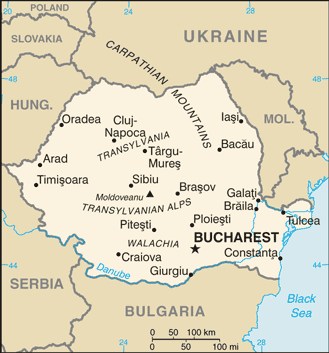
In an announcement today which likely surprised no one, the US army announced that the military base just northwest of the Black Sea Port City of Constanta, Romania will become a “permanent” base for the American military.

The announcement of a permanent American presence in the former Warsaw Pact and current NATO member nation will likely underscore a growing US presence in Eastern Europe.
The base was notably used in early 2003 as a stopping off point for thousands of American soldiers en route to launching the invasion of Iraq. Romania contributed several hundred troops to the invasion.

The base was also used as a stopping off point for multiple CIA rendition flights and was rumored to have been one of the secret “black ops” sites the CIA used for detention and interrogation of captives.

Hot Button Henoko Part 2: Clock ticking on base, its delicate environment

http://search.japantimes.co.jp/cgi-bin/nn20091020a3.html

Tuesday, Oct. 20, 2009

HOT BUTTON HENOKO

Clock ticking on base, its delicate environment

By ERIC JOHNSTON

Staff writer

Second of two parts

NAHA, Okinawa Pref. — There are many reasons why the plan to relocate U.S. Marine Corps Air Station Futenma to the shores of Camp Schwab on the Henoko Peninsula in northern Okinawa Island remains stalled.

Key among them is the debate over the environmental impact the facility would have on the surrounding air, land and sea.

Last week, Okinawa Gov. Hirokazu Nakaima released his opinion on the results of a preliminary environmental study on what building the Futenma replacement facility would mean for life underneath the flight paths of the two planned runways, designed in a V pattern.

That life includes coral reef colonies in the bay that will be affected by the filled-in area off the cape to accommodate the runways and marine species in surrounding waters, particularly the endangered dugong, now the symbol of an international campaign to block construction of the facility.

Nakaima’s opinion contained strong criticism of the methodology used by the central government in carrying out the study. Nakaima also expressed support for inking a formal agreement with the U.S. that would set how low approaching aircraft can fly over surrounding communities, for ensuring that the new facility in the bay does minimal damage to the coral reefs, and for possibly establishing a dugong sanctuary.

Much of the governor’s language indicated he felt the initial environmental assessment was incomplete and had been a rush job. But Nakaima also suggested that despite his criticism he would be willing to accept the facility if his environmental concerns are addressed.

The environmental assessment of the bay around Henoko that is required before filling in the land for the two runways can start has political and environmental components.

Japan and the United States are now nervously watching the clock, as closing Futenma and relocating its aircraft operations to Henoko is the centerpiece of a broader 2006 realignment on reorganizing the U.S. forces in Japan.

The Henoko airfield is supposed to be operational by 2014. Its delay, postponement or cancellation would impact other terms of the agreement, particularly the downsizing of the Marine Corps presence in the prefecture.

While construction preparations within Camp Schwab, which will essentially be expanded out into the bay under the plan, are moving forward, there is no visible sign on the beaches or surrounding bay that work to start the landfill has begun.

The consensus in Okinawa, as well as among many Japanese and U.S. officials involved in the relocation issue, is that even if the Democratic Party of Japan-led coalition government had come to power highly supportive of the new facility, completing it by 2014 would still be a logistic impossibility. But Nakaima disagrees.

“I think there is still time to meet the 2014 deadline, but the central government has to quickly decide what to do,” Nakaima said Oct. 13.

Environmental activists have long opposed the new facility, arguing that its presence and subsequent pollution will damage the coral reefs and mangrove forests, and threaten the local dugongs and sea turtles, not to mention disrupt currents.

The activists have also warned local residents that despite earlier assurances from Tokyo and Okinawa politicians, including Nakaima, noise pollution from aircraft will be a problem.

On the eve of U.S. Secretary of Defense Robert Gates’ visit to Japan, the nation’s media reported Sunday from Washington that the U.S. is now willing to consider relocating the Henoko runways farther out on the cape in an apparent effort to placate those who worry about noise pollution.

But altering the plans to fill in deeper areas of the sea raises even more questions about the effect on the marine environment, creating a whole new set of environmental, logistic and political headaches for Tokyo, Washington and Okinawa.

In 2003, environmental protesters took their cause to the United States, filing a case in San Francisco Federal Court that named the Okinawan dugong as the primary plaintiff, along with Okinawa residents and environmental conservation groups in the U.S. and Japan.

The court eventually ruled against the Pentagon, which was named as the defendant. The judge ordered the Defense Department to follow U.S. laws under the National Historic Preservation Act when it came to preparing environmental conservation measures for the Henoko facility.

The San Francisco case was notable not only for its ruling but also for bringing to light U.S. plans for the Henoko facility that include building a 214-meter-long seaport.

That revelation raised questions in Okinawa over whether the U.S. will push Japan, which is responsible for the landfill project, to build a large port to accommodate ships, turning Henoko into something other than a simple replacement facility for landlocked Futenma. In the 2006 gubernatorial election, Nakaima told voters he would not let that happen.

The demands for adjustments in the Henoko plan on the part of Nakaima because of noise pollution concerns in particular created worries in the U.S. about the operational viability of the new facility.

The U.S. House of Representatives recently passed the National Defense Authorization Act for Fiscal 2010 (beginning next April). Contained within the act is a section that prohibits the secretary of defense from accepting, or authorizing any other Defense Department official to accept, a Futenma replacement facility unless the secretary certifies to Congress that the replacement facility satisfies minimal naval aviation safety requirements.

“The passage of the act puts congressional pressure on U.S. Defense Secretary Gates to force Japan to negotiate with Okinawan officials over things like overfly routes and minimum altitudes, negotiations that the central government is unlikely to undertake with any sense of urgency, and in which Nakaima has little room to compromise, given the antibase sentiment,” said one Japan-based U.S. official familiar with the report.

Often caught in the middle of the political and environmental struggles over the Futenma issue are the marines stationed in Okinawa. They face routine public complaints over the noise generated by their aircraft operations.

Lt. Col. Douglas Powell, director of the marines public affairs office at Camp Foster, said marines in Okinawa engage in 1,500 public relations activities a year. To save money, Congress also recently instituted a policy of having most U.S. service members deployed abroad, and their dependents, reside in base housing.

“The new policy will save between $30 million and $50 million annually and we’re aiming to have nearly all military personnel and their families on-base,” Powell said.

Such efforts to be good guests, as Powell said, while welcomed by large numbers of Okinawa citizens and by those businesses that benefit from the U.S. military presence, are now overshadowed by the environmental concerns over constructing the Henoko base and, by extension, the larger political question of just how large the U.S. military presence in Okinawa should be, or if there should be one at all.

The specific debates over how marine life will be affected if the Henoko base is built are a pretext to larger discussions about how U.S. Marine Corps life in Okinawa will be affected.

Hot Button Henoko, Part 1: Opposition to Futenma move won’t go away

A good series from Japan Times giving some background on the political changes in Japan and its relevance to the Okinawa bases issue.  Part 2 will be in a separate post.

>><<

http://search.japantimes.co.jp/cgi-bin/nn20091019a4.html

Monday, Oct. 19, 2009

HOT BUTTON HENOKO

Opposition to Futenma move won’t go away

By ERIC JOHNSTON

Staff writer

First of Two Parts

To understand why the stalled relocation of the U.S. Marines’ Futenma air base is now arguably the most entrenched political problem facing the Japan-U.S. relationship, it’s a good idea to sit for a long time on the warm beach of Henoko in northern Okinawa.

On this beach next to Camp Schwab, where plans call for a new facility to be built on reclaimed land, a group of local residents opposed to moving Futenma’s functions here have set up a tent and are maintaining a protest vigil that has surpassed 2,000 days.

“It’s our responsibility to ensure that the Henoko bay area, which is home to coral reefs and endangered dugong, remains pristine for our grandchildren. For peace and environmental reasons, the last thing Okinawa needs is another U.S. military base, especially here,” said Hiroshi Ashitomi, cochair of a citizens’ group opposing construction of the new facility and one of the leaders of the sit-in.

The 20 to 30 protesters a day who are usually at the camp on the turquoise bay are often joined by visitors from mainland Japan and abroad. Ashitomi and the others often provide briefings to university students on the social and environmental issues related to the relocation plan, explanations of why they are opposed, and reports on what local Okinawan media are saying about the building of the new base with two runways in a V-shape, a plan the governments of Japan and the United States agreed to in 2006.

While largely a friendly, uneventful camp-out, protesters have occasionally been roused to action. One of the more dramatic incidents was a confrontation last year on the bay and underwater when Japan Coast Guard divers tried to set up cameras on the seabed.

On June 18, 2008, when coast guard boats appeared and divers began setting up cameras and other equipment on the seabed, protesters donned wet suits and air tanks, jumped into small boats and kayaks, and went out to stop them.

Video taken by the protesters shows seven divers surrounding a lone protester underwater and the physical confrontation that followed, as well as a standoff on the surface between other coast guard boats and protesters.

The confrontation fortunately ended without serious injury. But the incident galvanized local political opposition to the Henoko plan. Exactly one month later, on July 18, the prefectural assembly, which had just been captured by the Democratic Party of Japan and other parties opposed to the Futenma plan, passed a resolution calling for the replacement facility to be built outside Okinawa.

Last year, Yukio Hatoyama visited Okinawa and said that if he became prime minister he would work to have Futenma relocated outside Japan. In autumn 2008, Seiji Maehara, now minister of land, infrastructure, transport and tourism and state minister for Okinawa and Northern Territories affairs, told supporters that advisers to Barack Obama had indicated to him earlier that year they were willing to reconsider the entire 2006 agreement if Obama became president.

Such comments by Hatoyama and Maehara raised expectations among Henoko opponents that an Obama presidency and a DPJ-led government would lead to the cancellation of the relocation plan.

By June 2009, an opinion poll conducted by the local Okinawa Times and the Asahi Shimbun showed 68 percent of Okinawa residents opposed relocating Futenma within the prefecture, against only 18 percent in favor.

Survey respondents who were opposed said relocating to Henoko would not reduce the overall burden of the U.S. bases in Okinawa, which hosts 75 percent of all U.S. bases in Japan, and would destroy the marine environment.

Those who approved said relocating to Henoko would get Futenma out of crowded Ginowan, in central Okinawa, and into an area where noise and other problems would be much less of an issue. Others said that in exchange for allowing the Henoko facility to be built, Tokyo would hopefully reward Okinawa with subsidies for local economic development.

In addition to the DPJ-led coalition taking power on the national level, local political opposition to the Henoko plan was further strengthened in the Aug. 30 election when all five winning candidates from Okinawa announced they would oppose funding for the Henoko facility and negotiate with the U.S. to have Futenma relocated outside of not just Okinawa but Japan.

The changed political landscape means the only prominent politician in Okinawa still talking about relocating Futenma within the prefecture is Gov. Hirokazu Nakaima. But Nakaima finds himself surrounded by those who disagree with him and faces a tough re-election campaign in November 2010, where his opponents will likely to be more organized and better financed than they were in 2006 when Nakaima faced a split opposition and won partially by telling voters that he didn’t support the current plan.

Today, however, Nakaima is caught in a tug or war.

The combatants are those in the prefectural assembly and Tokyo who oppose a Henoko facility, the mayor and residents of Ginowan who are demanding Futenma close as early as possible, and members of his Liberal Democratic Party and base supporters.

The latter worry that if the opposition gets its way, the money the U.S. military on Okinawa contributes to the local economy in the form of employment of local residents, base land lease payments, personnel-related spending, and base-related contracts with local businesses, will dry up, leaving what is already one of Japan’s poorest prefectures even worse off.

According to the prefecture, the economic impact of the U.S. military amounts to at least $2 billion annually.

Nakaima has dealt with the pressure, and accusations that he has caved in to Tokyo and Washington, by attempting to convince Okinawans that the Henoko base agreement is a done deal.

“Relocating outside of Okinawa Prefecture would be best. But we can’t resist accepting relocation within the prefecture. However, the central government needs to come up with a plan for resolving the issue as quickly as possible,” Nakaima told reporters in Naha last Tuesday, the day he released his opinions of an environmental impact assessment report on the Henoko plan.

A decision by Tokyo, however, will not come soon despite pressure from both the Okinawans and Washington, which is viewing with increasing concern the growing political opposition in Japan not only to the Futenma relocation plan but also extension of the Maritime Self-Defense Forces refueling mission in the Indian Ocean.

On Friday, Hatoyama said a final decision on the Futenma issue is unlikely before next summer.

“I think we will need a conclusion around the midpoint of the period between the Nago mayoral election and the Okinawa gubernatorial election,” he said.

On the one hand, Hatoyama has said he wants Futenma to leave the prefecture.

On the other hand, the DPJ’s manifesto for the recent Lower House election did not specifically commit the party to carrying out his promise, merely to “review the realignment of the bases and the way they should be,” which those who oppose the Henoko plan fear gives him wiggle room to get out of his verbal promise, but those who hope that a compromise with the U.S. can be reached see as a possible way out of the current stalemate.

Publicly, the United States continues to insist that it wants to stick to the 2006 agreement and the current plans for the Henoko facility. But privately, American officials who deal with Japan and Okinawa say relocating to Henoko is so fraught with logistic problems there is no way the agreement can be carried out by 2014 even if the political opposition in Japan is somehow overcome.

Alternatives to Henoko have yet to be floated by high-ranking policymakers on either side. Years ago, there was talk among some outside policy experts about consolidating the marines now at Futenma with the adjacent Kadena air force base and relocating them farther south to Shimoji Island, where an airport with a 3,000-meter runway is located. The runway and airport are currently used primarily for commercial aviation training. But for political and operational reasons, such proposals were rejected.

Though next year marks the 50th anniversary of Japan’s security treaty with the United States, with political pressure in Okinawa and the rest of Japan on the rise to relocate the Futenma replacement facility outside Japan, highly visible celebrations and public discussion may lead to more political headaches all around for both Tokyo and Washington.

“Some in the U.S. have recently been promoting, a little too loudly, 2010 as the 50th anniversary of the security treaty. Given the current political atmosphere in Tokyo and Okinawa, this is a mistake and may further strengthen opposition in Okinawa and to the Henoko facility,” said one Japan-based U.S. government official, speaking anonymously.

In the meantime, the sit-in protest at Henoko continues. Protesters say they will take to their boats again if construction proceeds. But despite the recent political changes that appear to favor their cause, none of those camping out there are ready to declare victory.

“We’ve been here for more than 2,000 days and have heard lots of promises from politicians in Okinawa and Tokyo, none of which have panned out. While we are hopeful the Hatoyama government will eventually close Futenma and relocate it outside the prefecture, nobody expects that to happen soon,” said Ashitomi.

Marshall Island Chief sues over illegal taking of Kwajalein for U.S. missile base

MARSHALLS CHIEF FILES SUIT AGAINST U.S. BASE

Former president Kabua says lease treaty illegal

By Giff Johnson

MAJURO, Marshall Islands (Marianas Variety, Oct. 12, 2009) – A powerful traditional chief in the Marshall Islands has stepped up the battle for control of a United States missile testing range by filing a court challenge to a treaty that gives the U.S. control of the base after 2016 when the current lease expires.

Former Marshall Islands President and powerful traditional chief Imata Kabua said Thursday the Marshall Islands government illegally “took the lands at Kwajalein Atoll and gave them to the United States of America to occupy and use exclusively, first from 2016 to 2023, and then to 2066” in Compact of Free Association approved by the two governments in 2003.

His lawsuit filed in the High Court says the government took islands at Kwajalein Kwajalein Atoll “without a lease and has failed and refused to engage in good faith bargaining to secure a new lease” and instead “has demanded that (Kabua) accept the terms dictated by defendant.”

Since the early 1960s, Kwajalein has been a center of U.S. anti-missile defense testing. It is the target for long-range intercontinental ballistic missiles fired from California and many of the islands in this boomerang-shaped coral atoll are studded with radar and other sophisticated missile tracking gear.

An agreement for extension of American use of the Reagan Test Site at Kwajalein was approved by the two governments in 2003, but Kabua has refused to sign a “land use agreement” needed to implement the U.S.-Marshall Islands treaty. Landowners have been at loggerheads with the U.S. over rent. The U.S. is providing $15 million annually, now about $17 million because of inflation adjustment, while the landowners demanded $19 million.

An existing land use agreement from the first Compact of Free Association expires in 2016. The second Compact increased the rent payments, while extending American use of Kwajalein to 2066, with an option to renew to 2086. Last month, Marshall Islands President Litokwa Tomeing flew to Kwajalein to present a draft land use agreement to Kwajalein leaders. While three other traditional chiefs who control land at Kwajalein say they are ready to approve the deal, Kabua, whose domain includes the most land at the missile range, has not budged.

The lawsuit says the action by the Marshall Islands government to “take” the lands over which Kabua is paramount chief is a direct violation of the country’s constitution. All land in the Marshall Islands is privately held, and the Constitution requires the approval of landowners for any lease or sale of property.

“It’s not money I’m after (with the lawsuit),” Kabua said in an interview from Honolulu. “It’s my rights under the Constitution.”

More than $25 million — the accumulated increase in rent payments since 2003 — is sitting in a bank account waiting for landowner signatures on a new land use agreement before it will be released.

Kabua accused his government of “applying economic pressure on (Kabua) to accept a lease on terms dictated by (the government).”

Kabua called the land use agreement proposed by the President as “one-sided” and not offering “just compensation” to him for use of the lands beyond 2016.

He said that if the government’s “failure and refusal to comply with the Constitution and the laws of the Republic is allowed to continue unabated, (Kabua) will suffer irreparable harm and injury to his Iroijlaplap (paramount chief) title and interest in land.”

Through his California-based attorney David Lowe, Kabua is asking the High Court to resolve the legal status between Kabua and the Marshall Islands government regarding Kwajalein lands “particularly as to (Kabua’s) right to occupy, use and have the quiet enjoyment of (these) lands from and after termination of the Land Use Agreement (in 2016).”

Marianas Variety:

www.mvariety.com

Copyright © 2009 Marianas Variety. All Rights Reserved

Will the new bases in Panama be U.S. or Panamanian bases? It makes no difference.

According to the blog post below, the Panamanian government quickly clarified that the new planned navy bases were Panamanian bases, not U.S. bases.  But this makes no difference.  The base in Manta, Ecuador was also an Ecuadorian base, but the U.S. had agreements to utilize the base.  This is consistent with the new basing strategy of the U.S. which includes leased bases on foreign soil.  The U.S. presence is still a violation of sovereignty and a provocative presence.

>><<

http://www.panama-guide.com/article.php/20090929125340415

Flap Over New Navy Bases in Panama Continues

Tuesday, September 29 2009 @ 12:53 PM EDT

Contributed by: Don Winner

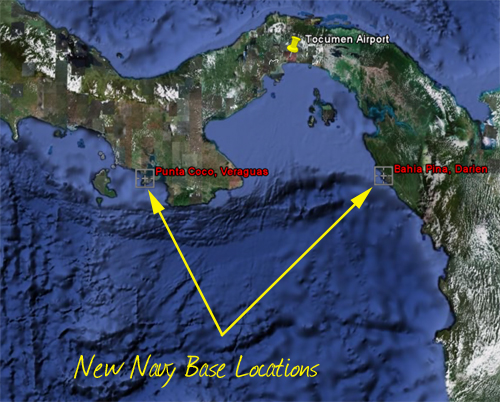
By DON WINNER for Panama-Guide.com – Panama’s Minister of Government and Justice Jose Raul Mulino further clarified their plans to install new new naval bases along Panama’s Pacific coast in order to improve their capability to combat drug trafficking at sea. They will build new facilities at Bahía Piña in the Darién province near the border with Colombia, and in Punta Coca in the province of Veraguas. (See annotated photo map below.) These bases will be used as launching points to search for vessels carrying drugs from South America towards Mexico and markets in the United States. Mulino said Panama will install these bases “to continue our commitment to the security of our territory. These bases will be clearly Panamanian which will be used by the different security institutions such as the National Border Service, the National Police, and the Naval Air Service.” There was a minor flap yesterday when the news wires picked up the idea that these bases would be built and used by the United States, which is not the case. Panama’s Vice President Juan Carlos Varela clarified yesterday that these will be Panamanian bases, built by Panama and operated by Panamanians. The US Navy and Coast Guard assist Panama in patrolling these waters of the Pacific ocean to detect and interdict drug trafficking vessels, as they have been doing for decades. However the specter of any kind of US military presence in Panama causes instantaneous reactions here and the lunatic fringe took the opportunity to spew. With one glance at the image below you can appreciate the positioning of these new bases, strategically placed to help extend the reach of the available surface forces out into the waters of the Pacific.

panama 20090929125340415_1

Panama agrees to host two U.S. naval bases

http://en.rian.ru/world/20090928/156270170.html

Panama agrees to host two U.S. naval bases

02:0328/09/2009

MEXICO, September 27 (RIA Novosti) – Panama will sign before October 2009 a treaty with the United States on the opening of two U.S. naval bases on its territory, a senior Panamanian government official said on Sunday.

According to Panama’s La Prensa newspaper, a preliminary agreement was reached between Panamanian President Ricardo Martinelli and U.S. Secretary of State Hillary Clinton during recent talks in New York.

“The U.S. and Panama will sign before October 30 an agreement on the deployment of two naval bases on the pacific coast of our country to fight international drug-trafficking,” said Minister of Government and Justice Jose Raul Mulino.

“One of the bases will be located in Bahia Pina…450 kilometers [280 miles] east of the capital, Panama City, and another one – in Punta Coca about 350 km [217 miles] west of the capital,” Mulino added.

The U.S. government will also allocate additional $7 million to Panama this year for the fight against organized crime and illicit drug trade.

According to Panamanian intelligence, there are over 2,000 hideouts on the Pacific coast of Panama, which international drug cartels use as transshipment bases for narcotics shipped from South America to the United States.

All U.S. bases in Panama were closed and U.S. military forces left the country at the end of 1999 in accordance with the Panama Canal treaties.

Military goal: “run the planet from Guam and Diego Garcia by 2015”

http://www.democracynow.org/2009/10/9/forcibly_exiled_for_nearly_40_years

Forcibly Exiled Nearly 40 Years Ago, Diego Garcia Natives Fight to Return to Island Home Now Used as Key US Military Outpost

We turn now to another island that is a key military outpost for the United States. Located in the Indian Ocean, Diego Garcia has often been used for strikes on Iraq and Afghanistan and played a critical role in the US extraordinary rendition program. Unlike Guam, Diego Garcia has no inhabitants resisting the US military. All of the island’s residents were forcibly removed in the early 1970s. For the last four decades, former residents of Diego Garcia and their descendants have been fighting for the right to return. We speak with Olivier Bancoult, a leader of the exiled people of Diego Garcia and president of the Chagos Refugees Group; and David Vine, author of the book Island of Shame: The Secret History of the US Military Base on Diego Garcia. [includes rush transcript]

Guests:

Olivier Bancoult, leader of the exiled people of Diego Garcia and president of the Chagos Refugees Group.

David Vine, author of the book Island of Shame: The Secret History of the US Military Base on Diego Garcia.

JUAN GONZALEZ: We turn now to another island that is a key military outpost for the United States. Located in the Indian Ocean, Diego Garcia has been used for—often used for strikes on Iraq and Afghanistan. The island also played a critical role in the US extraordinary rendition program.

The military analyst John Pike recently described Diego Garcia as the most important facility the US has. According to Pike, the military’s goal is to be able to run the planet from Guam and Diego Garcia by 2015.

Unlike Guam, Diego Garcia has no inhabitants resisting the US military. All of the island’s residents were forcibly removed in the early 1970s by the British as part of an agreement with the United States. Most of the former residents of Diego Garcia were shipped to Mauritius, located over a thousand miles away. For the last four decades, former residents of Diego Garcia and their descendants have been fighting for the right to return.

We’re joined now by Olivier Bancoult. He is a leader of the exiled people of Diego Garcia and president of the Chagos Refugees Group. He was expelled from his native Diego Garcia when he was four years old.

We’re also joined by David Vine, author of the book Island of Shame: The Secret History of the US Military Base on Diego Garcia.

Olivier Bancoult, I want to start with you. Welcome to Democracy Now!

OLIVIER BANCOULT: Thank you for inviting me to Democracy Now!

JUAN GONZALEZ: Could you talk to us first about the experience of the removal, what you and your family remember of the removal by the British and how it came about?

OLIVIER BANCOULT: Yeah. The way that we have been removed, it was forcibly removed by the British government in order to make place for the US military base in Diego Garcia. We all have to move, first on Diego Garcia and then followed by the outer island, Peros Banhos and Salomon. So that means that we have been removed twice. And we have been dumped in the slum of Port Louis without any consideration and without any planning.

And the whole what we used to do in Chagos was now the same in Mauritius. Life become more and more difficult for us. This is why we have been trying to see what we can do, and it give me this opportunity to be here in the United States to just try to have an open dialogue with the new administration of Barack—President Barack Obama administration, to see. And it’s very important that on this day I’ve been—learned that President Barack Obama had been awarded Nobel Peace Prize. And I think that he will use it in order to solve the problem, to put an end to all the—solve the problems faced by Chagossian community since the uproot, their removal from their birthplace.

JUAN GONZALEZ: And when the British removed your people from the island, how many people were removed? Did they offer any kind of compensation to the families for the properties they lost? And what kind of compensation did they receive?

OLIVIER BANCOULT: When we were removed, we were, in all, 2,500. But there was no compensation. This had been followed by all the legal battle, not only by hunger strike, by demonstration, by Chagossian women. And for some years, we have received very little compensation, which was not enough in order to pay all the debt we had done during our stay in Mauritius, because in Chagos, everyone has his own house, whereas in Mauritius, we have to pay rent, and we don’t have money, we don’t have a job. And this is why we consider that compensation was not enough. And people are still living in poverty, and we have been dumped the slum of Port Louis, the capital of Mauritius.

JUAN GONZALEZ: David Vine, you have chronicled this incredible story that is little known throughout the rest of the world. How did the British end up depopulating the island on behalf of the United States?

DAVID VINE: It was—and this is one of the main points of my book Island of Shame—it was, from the beginning, a US plan. The US identified Diego Garcia as the site for a military base beginning in the late 1950s and approached the British to gain access to the islands and to remove the Chagossians. And with the help of a $14 million secret payment that we made to the British government, we secured their agreement to give us access to the island and then to forcibly remove all the Chagossians, which was ultimately done, again, on our orders.

JUAN GONZALEZ: And the island remains under whose sovereignty right now?

DAVID VINE: It remains a British colony, actually the last created British colony. But the base is firmly a US base. It’s a massive Air Force and Navy base.

JUAN GONZALEZ: Now, you went all around the world trying to dig up the documents on this. Tell us how you got involved in investigating this scandal.

DAVID VINE: I got involved about eight years ago, when some of the lawyers representing the Chagossians in lawsuits in the United States and Britain contacted me to serve as an expert witness in their suits, to go and live with the Chagossians and to document the effects of the expulsion on their lives. But very quickly, I realized there was a larger story that I wanted to understand and tell, and that was how US government came to order the expulsion of the Chagossians and orchestrate it and why we have a military base in the Indian Ocean in the first place.

JUAN GONZALEZ: And why is Diego Garcia so important?

DAVID VINE: Largely because of its proximity to a large swath of the globe, from south—from southern Africa through, and especially, the Middle East and the Persian Gulf, all the way to South and Southeast Asia. But it’s been the control that the United States has been able to exert over the Middle East and the Persian Gulf, and its oil and natural gas supplies, in particular, that have made Diego Garcia so strategically important.

JUAN GONZALEZ: Now, you make the point in your research that the leaders of Congress were not always favorable to this idea of establishing this base on Diego Garcia and that, in effect, folks in the Pentagon attempted to circumvent the political leadership in terms of being able to reach the point that they have now of this major military base.

DAVID VINE: That’s right. Actually, members of Congress were not told at all about the base until the end of the 1960s, when the Navy went to Congress asking for an appropriation for the construction of what they called an “austere communications facility,” although, from the beginning, they had plans for a much larger base. But members of Congress were simply not informed about the expulsion of the Chagossians and were lied to, in fact.

At the end of the 1960s and in the early 1970s, when they asked about local inhabitants, they were simply told that the island was home to a few transient laborers. This was part of a public relations plan that the British helped craft, where they would, quote, “maintain the fiction,” unquote—and those were the words they used—“maintain the fiction” that the islands were inhabited by transient laborers, rather than an indigenous people that the Chagossians are, who had been living there for more than five generations, since the time of the American Revolution.

JUAN GONZALEZ: And Olivier Bancoult, your reaction to being labeled by the Pentagon “transient laborers”? What was life like on Diego Garcia before the military came?

OLIVIER BANCOULT: Life was very good. Everyone was enjoying life in harmony and peace, because we have our culture, we have our tradition. We all have a house. We all have a job. We used to work in a coconut plantation, where just after working our work, we used to go to the sea to fish. And there is an idea of share between each other. We all live as one family. And we have our culture, like our special meal, like our music, which had been taken [inaudible], because everyone wants to promote culture, but what about our culture? They just want to destroy it. This is why it’s so important for us to have our dignity and our fundamental rights back as all human beings to be able to live in our birthplace.

JUAN GONZALEZ: And the rest of the population of the island was scattered, not just to Mauritius. What other parts of the world did they end up in?

OLIVIER BANCOULT: Yeah, most of the Chagossians was—they have been in Port Louis, the capital of Mauritius. But we have others of our brothers and sisters in Seychelles, and where we still are fighting—the most important for them is how life was in Chagos, is very different to Mauritius and to other place, because we prefer to be in our birthplace, as all human beings, because it’s something very important to all human beings.

JUAN GONZALEZ: And David Vine, you traced some of this diaspora to other parts of the world, as well, even to England directly?

DAVID VINE: That’s right. In the past six years or so, the Chagossians, as a result of the struggle that Olivier described, that they’ve been waging for more than four decades now, the Chagossians won the right to full British citizenship, which includes the right of a vote in Britain. So we’ve seen in the past several years about a thousand or more Chagossians moving to Britain, where they’ve—some have been able to improve their lives a bit. Many are actually working in low-wage jobs at places like Gatwick Airport. But the diaspora has spread, while they continue their struggle to return to their homeland and receive proper compensation for what they’ve suffered in exile.

JUAN GONZALEZ: And you mentioned that this is an island that journalists—no journalist has ever visited?

DAVID VINE: Since the very early 1980s, essentially no journalist has been allowed to go. I was denied and turned down on multiple occasions when I asked both the US and British governments for permission to go to the islands to carry out my research. And journalists have effectively been barred there for more than two decades.

JUAN GONZALEZ: Well, I’d like to thank you both for being with us, David Vine, author of the book Island of Shame: The Secret History of the US Military Base on Diego Garcia, and Olivier Bancoult, a leader of the exiled people of Diego Garcia and president of the Chagos Refugees Group.

DAVID VINE: Thank you so much.

OLIVIER BANCOULT: Thank you so much.

JUAN GONZALEZ: Thank you for being with us.