Appeal to Support Okinawa!

From: norman kaneshiro <nkaneshi@yahoo.com>
Subject: Okinawa needs OUR help…
To: “Norman Kaneshiro” <nkaneshi@yahoo.com>
Date: Thursday, May 7, 2009, 9:24 AM

Hello All:

The details for this message will be long, so I’ll cut to the chase. I was just sent a news video from 5/5/09 that shows the escalation of an ongoing struggle in northern Okinawa (Henoko and neighboring areas). Here is the link to the video (sorry only in Japanese and no subtitles; I’ll provide summary below and more detail thereafter):

検証 動かぬ基地vol.88 「環境アセス準備書」と「意見書」

**SUMMARY: Basically, the Japanese Defense Ministry has released an environmental assessment for the extension of US military bases into the coast (5400 pages long) that was released on 4/1/09. The newsreel, however, shows that a 30 minute informational meeting was made to present the information, but did not address the concerns of the residents being affected. They literally made their report and left. Even on the day of the informational meeting, construction crews were busy at work making preparations for building the bases. Opponents of the bases point out that the 5400 page report does not mention one of the key environmental issues at hand: the dugong. The ministry is accepting opinions from the general public (most likely only in Okinawa) until May 15, 2009.

**MY REQUEST: I would like to ask all of you to write your support for the people of Henoko, Takae, and other neighboring areas being affected by the construction of the bases. Start thinking about what you would like to write and be ready to send it to me via email BY SUNDAY 5/10. Japanese or English is fine. I will be printing and mailing it to Okinawa on 5/11 and it should reach by 5/14. Please check your email tomorrow for other details such as if you need to include your name, etc. EVEN IF YOU DON’T WANT TO SHOW YOUR NAME, please be ready to submit anyways.

These letters will NOT have any legal standing and will probably NOT be read by any government body. NONETHELESS, we should send it as a symbolic show of support and, if anything, to give encouragement to the residents of these areas. So even if it’s a short note, please send it in because quantity is important. ALSO, please circulate this among your friends and family.

**EMOTIONAL HIGHLIGHTS FROM NEWSREEL: Even if you don’t understand everything, I think you can get the general idea from the emotions on screen. I am sorry my Japanese isn’t better, but I can give you a rough translation of some of the things in the video. The old lady with the white sweater addressing the meeting said, “People here believe that everyone will be getting lots of money if we let the bases come. They believe that, they are banking on that. So tell me, ‘yes’ or ‘no’, will every household here get tons of money?”

The man in the plaid shirt (Kayo-san, a Henoko resident and a sit-in protester at Henoko for the last 10 years) following her said in outrage, “You expect us to talk about Okinawa’s future…the future of OUR children, in just 30 minutes? Impossible!”

Despite the deluge of questions and concerns, the officials wrapped up the meeting not addressing any of these concerns. You can see the old woman telling one of the officials, “Answer us, don’t run away, answer us…” only to be told, “I am not responsible here.”

You can see the forlorn look in even the young residents’ eyes. Young man in blue, Gishitomo-san, said these comments, “I don’t want them to build 100m. That means 100m of our land being taken away. I don’t even want to see 1cm taken away. These are the kinds of things I wanted to bring up at the meeting. Our voices don’t reach them…too far away. So, I have no opinion.”

Groups are working hard to collect opinions and testimonies. As the young activist says, the opinions must be sent in because that is the only way they will be heard.

An official from the Japan World Wildlife Federation is shown commenting on how strange it is that the dugong is not mentioned in the report at all, when it is a key issue in the environmental assessment. He says that it would make a huge difference in the report. I think the newsreel goes on to show experts on dugong saying that they are present in all those coastal waters. A local resident can saying that he has seen dugong in his area.

**IN CLOSING: Sorry for the long message, but this is not a simple matter. Even though we are far away, many people in Okinawa feel connected to us. Many activists and residents in Okinawa have told us that they need our voices from the international front to muster the courage of the local people and to shake their government into the awareness that the world’s eyes are on them. We can’t do much physically to help, but we can offer our voices. Nonetheless, until you see the tears in their eyes, you cannot know how much that means to those residents in peril to hear someone from so far away say they understand their situation and that they stand together in their hearts.

Norman

Army drops 3 charges against Lt. Watada

HonoluluAdvertiser.com

May 7, 2009

Army drops 3 charges against Iraq war objector Watada

By William Cole
Advertiser Military Writer

The Army yesterday said it has given up efforts to retry 1st Lt. Ehren Watada on three charges for refusing to deploy to Iraq in 2006, but has not made up its mind about two other court-martial charges or the possibility of administrative punishment.

More than a year and a half after he would have left the Army – had he deployed as ordered – the 1996 Kalani High School graduate still reports to a desk job at Fort Lewis in Washington state.

Watada is likely to continue to have to do so as the Army weighs its next move.

The Honolulu man, the first commissioned officer to publicly refuse deployment to Iraq, said the war was illegal and unjust, and that participating in it would make him a party to war crimes.

Watada, who said he would have deployed to Afghanistan, also accused the Bush administration of deception in starting the Iraq war.

Fort Lewis spokesman Joe Piek yesterday said the Army was informed late last week that the U.S. Justice Department – which represents the Army in the case – had decided against continuing with an appeal of an October 2008 federal court ruling.

U.S. District Judge Benjamin H. Settle of Tacoma ruled at that time that the Army could not retry Watada on a charge of missing his Stryker brigade unit’s movement to Iraq, and two specifications of conduct unbecoming an officer for taking part in a press conference and participating in a Veterans for Peace convention.

Watada raised double jeopardy, the constitutional protection against being tried twice for the same crime, after a military judge declared a mistrial at Watada’s first court-martial in February 2007.

Two other charges of conduct unbecoming an officer were withdrawn, but not dismissed, as a result of Watada’s court-martial, officials said.

The Army appealed Settle’s October ruling, but the Justice Department under the Obama administration has now dropped that appeal.

Asked why the appeal was dropped, Piek said, “That would be a question you would have to ask (the Justice Department). I don’t know.

“Right now, the other two specifications of conduct unbecoming an officer are still relevant in the case.”

He said the leadership at Fort Lewis “is considering a full range of judicial and administrative options that are available, and those range from court-martial on those two remaining specifications, to nonjudicial punishment, to administrative separation from the Army.”

‘Significant victory’

At one time, Watada faced up to six years in prison for refusing to board a plane for Mosul, Iraq. Jim Lobsenz, an attorney for Watada, in October said his client at most faced one to two years on the remaining two charges. But the attorney said he was confident the remaining two charges, if pursued, would be thrown out as well.

Ken Kagan, another attorney representing Watada, yesterday said the Army conceivably could have drawn out its appeal on the three charges against Watada into late 2010 or early 2011.

“So having this one cleared away and no longer an issue is a significant victory in the sense that now we can focus on really getting this thing resolved,” Kagan said.

Kagan said the Justice Department’s solicitor general “sought to take that leadership position” in dropping the Army appeal.

“It’s obviously a bold decision to depart from past policies, so we’re very pleased they saw fit to do that,” he said.

Kagan said discussions continue with the Army “to see if we can find some common ground” on the remaining issues.

global spotlight

Watada gained international attention as an Iraq war objector, and he served as a rallying point for the antiwar effort.

But he also was reviled by many in the military who said he violated his oath as an officer, and that he had no right to decide whether the Iraq war was just or unjust.

Piek, the Fort Lewis spokesman, said Watada’s service in the Army was scheduled to end in December 2006, but the soldier was subject to “stop loss” – the ability to keep troops in for deployment – and was subject to his unit’s deployment to Iraq.

His brigade returned from Iraq in September 2007 after 15 months, and Watada would have been eligible then to leave the Army.

Piek said Watada now is part of the rear detachment headquarters for I Corps.

“He’s still coming in doing PT (physical therapy) and then works from 9 to 5 and occasionally I see him here at the gym,” Piek said.

Piek added that “what is most disturbing for us, is that this case really needed to be heard by a jury and to be decided by a jury, and it’s very unfortunate that more than two years ago the first court-martial ended in a mistrial on a technicality.”

Lt. Col. John Head, the military judge, made the decision to call off the court-martial in its third day as Watada was ready to take the stand in his own defense.

Source: http://www.honoluluadvertiser.com/article/20090507/NEWS08/905070367

Puerto Rican Independentistas arrested for civil disobedience in U.S. Congress

(original article in Spanish follows the English translation)

Independentistas who disrupted U.S. Congress are arrested

Six Puerto Ricans demand with civil disobedience in the House of Representatives freedom for Puerto Rico

By José A. Delgado/ jdelgado@elnuevodia.com

May 6, 2009

http://www.elnuevodia.com/arrestanaindependentistasqueirrumpieronencongresodeestadosunidos-565647.html

WASHINGTON – Singing “Oubao Moin” (note: in indigenous Caribbean language means “Land of Blood” — popular Puerto Rican poem and song that ends with “glory to the working and suffering hands who will build our free country”) and demanding that the federal government define what it wants to do with Puerto Rico, a group of six Puerto Ricans today carried out an act of civil disobedience in the United States House of Representatives.

The demonstrators, including artists and workers, asked president Barack Obama and the federal Congress- this time with a message of peace- to once and for all grant independence to Puerto Rico.

Artists Luis Enrique Romero, María “Chabela” Rodríguez and José Rivera (Tony Mapeyé), as well as mechanical designer Luis Suárez, nurse Eugenia Pérez-Martijo and retired worker Ramón Díaz carried out the protest bearing Puerto Rican flags and signs that read “111 years of colonialism is a shame.” Singer and actor Carlos Esteban Fonseca accompanied the protestors, but maintained a distance from the protest.

Authorities of the House of Representatives took them from their seats before they could read a statement they had prepared for the occasion. Capitol security detained the group of demonstrators, who were later arrested.

“We, seven Puerto Ricans, have come here to protest against the colonialism to which Puerto Rico is subjected. We come in good will, in peace. We want to be a free nation,” said Suárez.

In statements to El Nuevo Día, the demonstrators said that the selected date had no symbolism.

They recognized that their peaceful demonstration contrasts with the shooting attack carried out by five Nationalists on March 1, 1954, from the same spectator area of the U.S. House of Representatives where they protested. But they stated that the message against the colonial situation was the same.

“We are not politicians; we are just common people,” said Romero, who has acted in theater, television and film for the last three decades in Puerto Rico.

For his colleague Fonseca, member of the group Caribe Gitano, the demand for decolonization and the independence of Puerto Rico must be made in Washington. “Our legislators cannot even guarantee us space on our own television channels, because it is territory occupied by the federal government,” he said.

“They are the ones who must resolve the status,” Suárez added.

The protestors indicated that they have been organizing their demonstration for the past several months, and that it was only a coincidence that it took place a few days from the time the resident commissioner in Washington, Pedro Pierluisi, will present his proposed legislation to promote a federal consultation about the political future of Puerto Rico. It was in Pierluisi’s office that the demonstrators obtained their tickets to enter into the House.

“Freedom does not submit to electoral processes. Slaves do not conduct referenda to be enslaved,” commented retired worker Díaz.

The civil disobedients sent letters to president Obama, speaker of the House of Representatives Nancy Pelosi, and vice president of the United States Joseph Biden, in his role as President of the Senate. “Puerto Rico has been a colony for 111 years: a humiliating colonial condition in the 21st century. The time has arrived for this crime against our people to be resolved,” they stated in the letters.

Arrestan a independentistas que irrumpieron en Congreso de Estados Unidos

Seis boricuas reclaman con desobediencia civil en el hemiciclo de la Cámara baja la libertad de Puerto Rico. Escucha a uno de los manifestantes.

Por José A. Delgado/ jdelgado@elnuevodia.com
6 mayo 2009
http://www.elnuevodia.com/arrestanaindependentistasqueirrumpieronencongresodeestadosunidos-565647.html

WASHINGTON – Cantando “Oubao Moin” y reclamando al Gobierno federal que defina qué quiere hacer con Puerto Rico, un grupo de seis puertorriqueños efectuó hoy un acto de desobediencia civil en el hemiciclo de la Cámara de Representantes de Estados Unidos.

Los manifestantes, incluidos artistas y trabajadores, le pidieron al presidente Barack Obama y al Congreso federal – esta vez con un mensaje de paz -, que le otorguen ya la independencia a Puerto Rico.

Los artistas Luis Enrique Romero, María “Chabela” Rodríguez y José Rivera (Tony Mapeyé), así como el diseñador mecánico Luis Suárez, la enfermera Eugenia Pérez-Martijo y el obrero jubilado Ramón Díaz llevaron a cabo la protesta portando banderas de Puerto Rico y cartelones que leían “111 años de coloniaje es una vergüenza”. El cantante y actor Carlos Esteban Fonseca acompañó a los manifestantes, pero se mantuvo alejado de la protesta.

Las autoridades de la Cámara de Representantes los sacaron de las gradas antes que pudieran leer una declaración que habían preparado con ocasión del evento. La seguridad del Capitolio detuvo al grupo de manifestantes y posteriormente éstos fueron arrestados.

“Nosotros, siete puertorriqueños, hemos llegado hasta aquí para protestar por el coloniaje a que está sometido Puerto Rico. Venimos en buena voluntad, en paz. Queremos ser una nación libre”, indicó Suárez.

En declaraciones a El Nuevo Día, los manifestantes dijeron que la fecha seleccionada no tuvo ningún simbolismo.

Reconocieron que su manifestación pacífica contrasta con el ataque a tiros que cinco nacionalistas realizaron el 1 de marzo de 1954 desde las mismas gradas de la Cámara de Representantes federal que ellos mismos ocuparon. Pero, indicaron que el mensaje en contra de la situación colonial era el mismo.

“No somos políticos, somos gente, común y corriente”, señaló Romero, quien ha hecho teatro, televisión y cine durante las últimas tres décadas en Puerto Rico.

Para su colega Fonseca, miembro del grupo Caribe Gitano, el reclamo a favor de la descolonización e independencia de Puerto Rico tiene que hacerse en Washington. “Nuestros legisladores ni siquiera nos pueden garantizar espacio en nuestros canales de televisión, pues es un campo ocupado por el Gobierno federal”, dijo.

“Quienes tienen que resolver el status son ellos”, agregó, por su parte, Suárez.

Los desobedientes señalaron que su manifestación fue organizada desde hace varios meses y que era sólo una coincidencia que ocurriera a pocos días de que el comisionado residente en Washington, Pedro Pierluisi, presente su proyecto de ley que promoverá una consulta federal sobre el futuro político de Puerto Rico. Fue en la oficina de Pierluisi que los manifestantes obtuvieron sus boletos para entrar al hemiciclo cameral.

“La libertad no se somete a procesos electorales. Los esclavos no hacen referendos para ser esclavizados”, comentó, por su parte, el obrero jubilado Díaz.

Los desobedientes civiles le enviaron cartas al presidente Obama, a la presidenta de la Cámara de Representantes, Nancy Pelosi, y al vicepresidente de Estados Unidos, Joseph Biden, en su carácter de Presidente del Senado. “Puerto Rico ha sido una colonia por 111 años: una condición colonial humillante en el siglo 21. Ya es tiempo de que este crimen en contra de nuestra gente, sea resuelto”, indicaron en las cartas.

11 arrested blocking Stryker deployment from Washington

http://seattletimes.nwsource.com/html/localnews/2009168374_protest04m.html

Tuesday, May 5, 2009 – Page updated at 03:37 AM

11 arrested near Fort Lewis trying to block Strykers headed for Afghanistan

By Sandi Doughton
Seattle Times science reporter

Eleven people were arrested Saturday night trying to block a convoy of Stryker military vehicles from Fort Lewis in protest of the wars in Iraq and Afghanistan.

Some of the members of Port Militarization Resistance, an anti-war organization with chapters in Tacoma and Olympia, were cited for disorderly conduct and reckless endangerment.

Some were jailed, but all of those had been released by Sunday afternoon after posting bail.

Tacoma police attempted to head off the protest by blocking the entrance to the Port of Tacoma dock where vehicles and equipment from the 5th Brigade, 2nd Infantry Division Stryker Brigade Combat Team were being loaded onto ships for deployment to Afghanistan.

But the protesters moved their operations away from the Port, targeting the armored personnel carriers as they pulled out of the gate at Fort Lewis, and at an exit off Interstate 5 that leads to the Port.

The activists either stood or lay down in the road, said spokesman Shyam Khanna. Though their actions only briefly delayed the convoy, Khanna said they helped draw attention to the Obama administration’s military buildup in Afghanistan.

“It shows we’re willing to make a real sacrifice to accomplish our vision to end the war,” he said.

Port Militarization Resistance tries to prevent the shipment of military gear through civilian ports. The cost of one 2008 protest at the Port of Tacoma, which ran 12 days, was estimated at $1 million for extra security.

“Our goal is to raise the economic cost of these military shipments, to the point where no port is willing to take them,” said Khanna, who spent 10 days in jail after a 2007 protest at the Port of Olympia.

He said the protests will continue the next several nights, as more Strykers and gear are moved off the fort.

Sandi Doughton: 206-464-2491 or sdoughton@seattletimes.com

Filipinas protest US soldier rape acquittal

Transcript of video news story follows.

April 25, 2009

Filipinas protest US soldier rape acquittal

Philippines protests and calls to end US Visiting Forces Agreement in response to appeals court decision

Transcript

(VOICEOVER): A Philippine appeals court overturned the 2006 rape conviction of a US marine and ordered his immediate release on Thursday, setting off condemnations from activists to major newspapers across the country. A suburban Manila court convicted Lance Corporal Daniel Smith (pix of Smith) of raping a Filipino woman in the company of fellow Marines at the former US Subic Bay Naval base three years ago and sentenced him to life in prison. The US base was closed in 1992 on the insistence of the Philippines, but the US maintains a military presence there under a status of forces agreement with the country. The case has become a rallying point for anti-American protests in the country. (protesters holding placards reading: “Acquittal of Smith is a collusion between US and Philippine governments.”) The Philippine Court of Appeals overturned the ruling, indicating the sexual act was consensual. “No evidence was introduced to show force, threat and intimidation applied by the accused,” the court said in its 71-page decision, which is final. It ordered the immediate release of Smith, 23 years old, of St Louis, Missouri, from his detention at the US Embassy in Manila. Smith’s lawyer said his client “got the justice that he deserved,” but activist groups condemned it, saying it was proof of President Gloria Macapagal Arroyo’s subservience to America.

LOTLOT REQUIZA, PROTESTOR (SUBTITLED TRANSLATION): “Our group is very angry about the acquittal of Daniel Smith because we know this is a collusion between the United States and the (Gloria) Macapagal-Arroyo government. What Gloria is doing is saddening and unfathomable because now Filipino women have no protection in their own country.”

(VOICEOVER): In March, Nicole, the woman who accused Smith of rape altered her testimony and emigrated to the United States in a dramatic twist in the case, saying she was no longer certain that a crime had taken place. The Philippine Daily Inquirer, the largest newspaper in the country, reports that Evalyn Ursua, the lawyer who represented Nicole before the recantation, condemned the courts ruling.
TEXT ON SCREEN: “It was a sweet ending to a story line two allies have been writing all along.” Ursua said. She went on. She said–

(VOICEOVER) (TEXT ON SCREEN): “I see this as a culmination of a long pattern to make this case go away. We clearly see political maneuverings to make us lose this… The Philippine government never supported Nicole from day one. Everything just fits, falls into place… We already saw pressure from the US, the hand of the US from day one. We also saw how the Philippine government gave in to the pressure.”

The high-profile case prompted Washington to threaten to call off large-scale exercises with Manila until Smith was transferred to a detention center within the US Embassy. The lawyer, Ursua, took exception to part of the ruling that said the prosecution failed to prove force while Smith was with an intoxicated Nicole inside a moving van at the Subic Bay Freeport, a former US naval base. Ursua said–

(SUBTITLED TRANSLATION): “We do not agree with that because you have to take into context that Nicole was severely intoxicated. She tried to resist but she was too intoxicated,” said Ursua.

In the lower court, In proving rape against Smith, the prosecution had shown the evidence that Nicole was too drunk to have consensual sex when she was with Smith on the night of November 1, 2005. The appeals court found that it wasn’t rape, but a spontaneous, unplanned romantic episode stirred by alcoholic drinks. The reversal sets a discouraging precedent for other rape complainants, Ursua said.

VOIVEOVER (TEXT ON SCREEN): “It will discourage victims from reporting and pursuing their cases. This will influence trial courts in how they look at cases of similar circumstances, where the victims are in a state of intoxication,” said the lawyer.

The Philippine Daily Inquirer reports that Sen. Francis Pangilinan said he was disturbed by the ruling and wondered if Nicole’s “highly questionable recantation” had a heavy impact on the court.

(VOICEOVER) (TEXT ON SCREEN): “It must be remembered that the recantation of Nicole was facilitated by lawyers of the accused. One cannot help but wonder if all that was done in order to lay the groundwork for this acquittal. The acquittal raises more questions than answers.”

Sen. Francis Escudero said Smith’s acquittal was “unfortunate and only reinforces our position that the US Visiting Forces Agreement carries too high a social cost and should be immediately abrogated. We believe this is as good a time as any to act decisively and finally abrogate the VFA. The time for debate and discussion is over; how many Nicoles must there be for us to realize that sovereignty should be absolute and non-negotiable?

(VOICEOVER): He went on–

(TEXT ON SCREEN): “The issue of military security, which has long been the rationale for the VFA, takes second precedence to the more important issues of social welfare, the Filipina’s rights, and our national sovereignty,” he said.

DISCLAIMER:

Please note that TRNN transcripts are typed from a recording of the program; The Real News Network cannot guarantee their complete accuracy.

Source: http://therealnews.com/t/index.php?option=com_content&task=view&id=31&Itemid=74&jumival=3612

Landlord sues Superferry over rent

Looks like the Hawai’i Superferry skipped town without paying rent for its harbor facilities.   Their landlord is suing them. Brad Parsons, a blogger who has closely tracked and analyzed the Superferry fiasco had this to write:

Saturday, April 25, 2009

They’re not comin’ back?

Well, this is interesting. The first shoe drops. How about the other shoe? Of more interest will be what happens to the monthly payments due to DOT, the explanation for that, and what DOT does about that relative to the Harbors Operating Agreement beyond the fact that with the Court’s reversal at a minimum the Kahului Harbor portion of the Harbors Operating Agreement should now be considered voided until the Chap. 343 EIS is done. And again this begs the question for new scoping meetings for the Chap. 343 EIS. If not this kind of vessel, then what kind?

Here’s the Honolulu Advertiser article:
http://www.honoluluadvertiser.com/article/20090424/BREAKING01/90424078/-1/RSS01?source=rss_breaking

Updated at 9:03 p.m., Friday, April 24, 2009

Landlord sues Superferry over rent

Advertiser Staff

Waterfront Partners sued Hawaii Superferry in Circuit Court today, alleging that Superferry has failed to pay $51,310 in rent on its leased headquarters at One Waterfront Plaza.

The landlord alleges Superferry stopped making lease payments on March 20, the day after Superferry ceased operations in Hawai’i because of a state Supreme Court ruling. Superferry officials are looking for lease options for the Alakai and a second catamaran but have not ruled out returning to the Islands.

The Supreme Court ruled that a law allowing Superferry to operate while the state prepares an environmental impact statement was unconstitutional.

In the complaint filed with the court yesterday, the landlord accuses Superferry of breach of contract and unjust enrichment. The suit alleges Superferry leased the office space through July 2013.

Superferry officials could not be reached for comment.

Report from Seoul conference of the Global Network

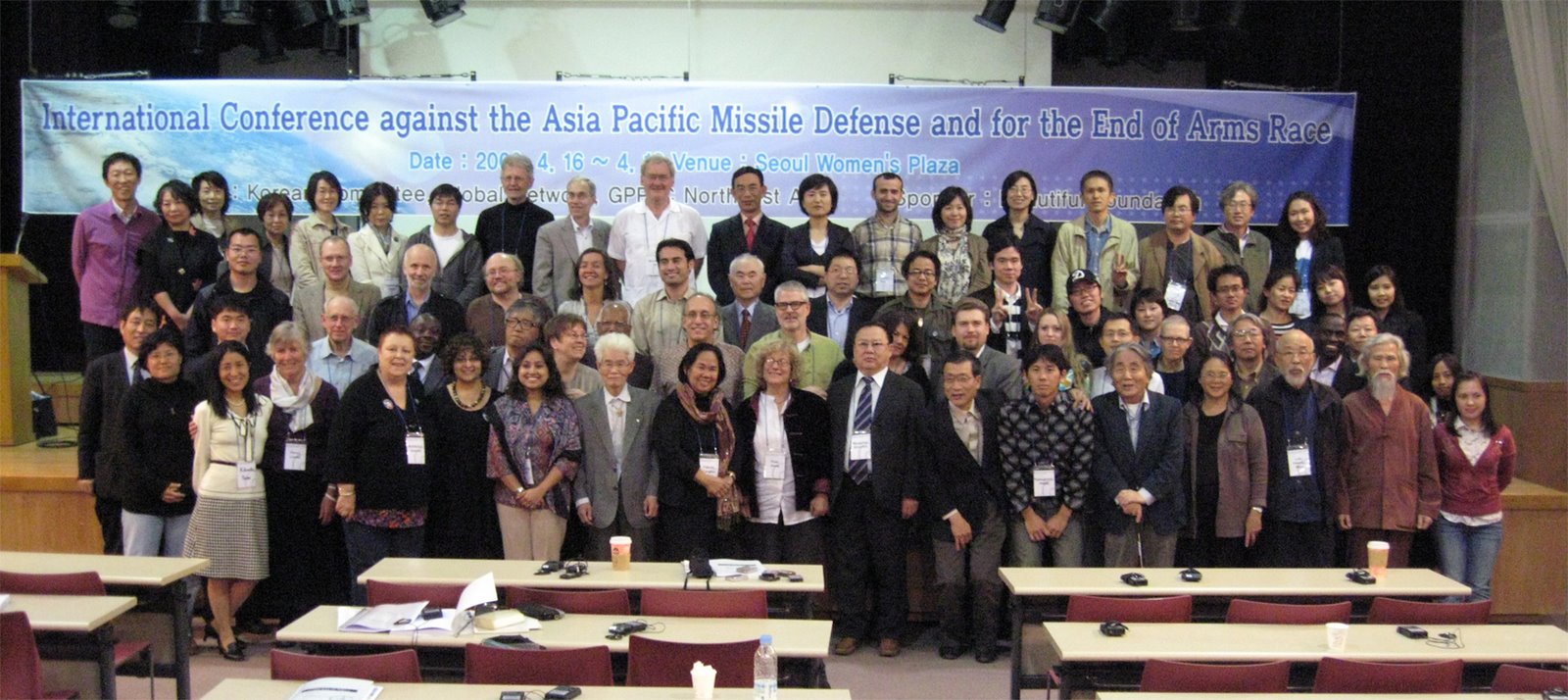
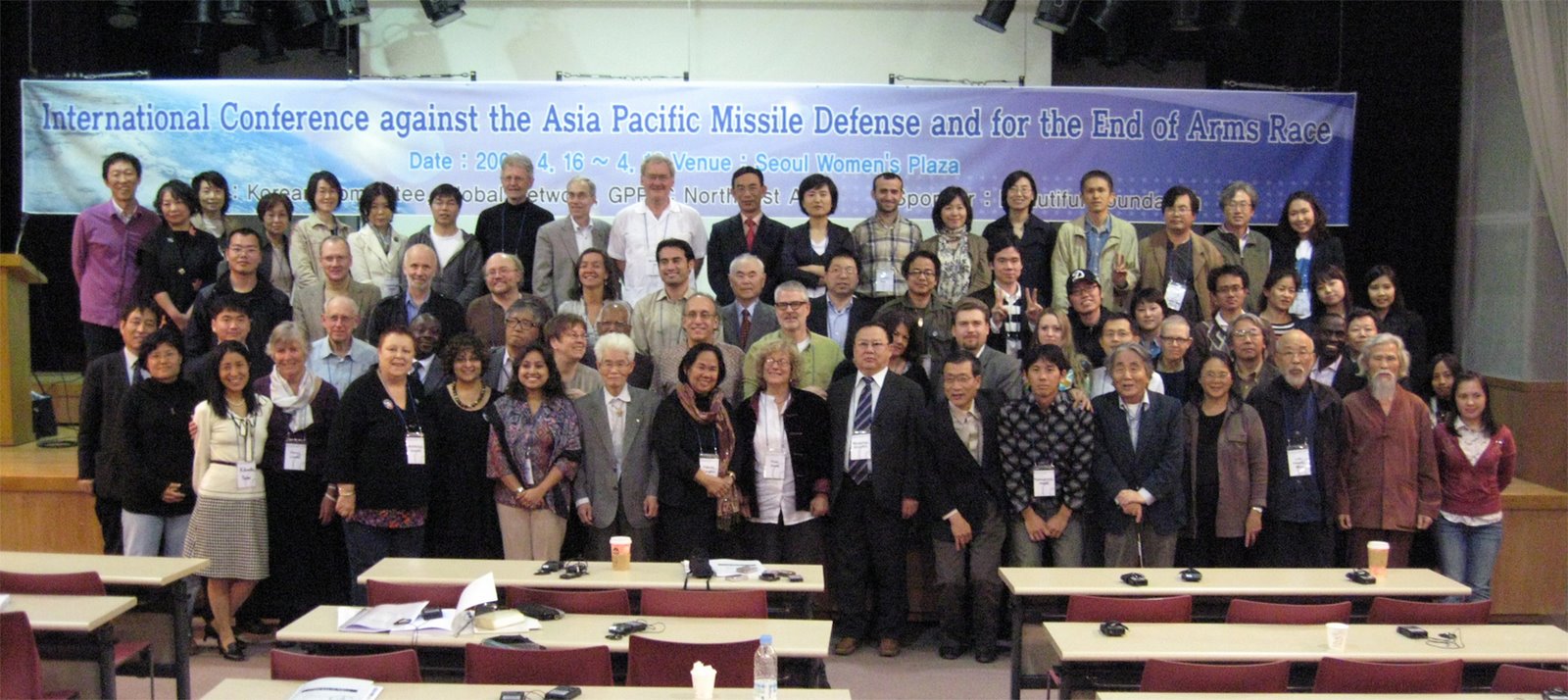
Here is a report by Bruce Gagnon from the 17th annual Global Network Against Weapons and Nuclear Power in Space conference in Seoul, South Korea.  Katy Rose from Kaua’i was the representative from DMZ-Hawai’i / Aloha ‘Aina and AFSC Hawai’i.  It sounded like an amazing conference.  The highlight for Katy was the visit Mugeon-ri, a village resisting eviction to make way for the expansion of a military base.  We look forward to Katy’s reports in the near future.

seoul91

Coordinator Trip Report – South Korea

This trip report covers the period of April 13-20 as I traveled to Seoul, South Korea to attend the Global Network’s (GN) 17th annual space organizing conference. Traveling with me was Mary Beth Sullivan and Tom Sturtevant, a leader from Maine Veterans for Peace.

A Korean Organizing Committee, comprised of 10 groups, organized the GN conference and they collectively did a wonderful job of hosting the large international delegation that came from about 25 countries. In addition to our GN international delegation the conference was also supported and attended by many international activists from the Global Partnership for the Prevention of Armed Conflict (GPPAC).

Our first day was a field trip by bus to visit the DMZ along the border between North and South Korea. Our timing for the conference could not have been better as we arrived on the heels of the intense controversy surrounding North Korea’s launch of a rocket into space. The U.S. and Japan used the launch to justify their own deployments of “missile defense” systems in the region, which are ultimately aimed both at China and North Korea. The militarist rhetoric was flying as evidenced by one right-wing commentator from the U.S. who said, “The lesson of North Korea’s rogue launch is that America needs more missile defense not less. Militarily and technologically, our adversaries can catch up with us only if we chose to stand still.”

Our trip to the DMZ was led by well-known photographer Si-Woo Lee who spent two months in a South Korean jail accused of “taking pictures” of the DMZ. He fasted for two months in protest of his arrest. His case generated a great deal of national and international support, and he was ultimately acquitted. At the DMZ, we had a group photo taken with North Korea just behind us, and at one point I watched a bird fly back and forth between the two countries. It reminded me that humans build walls between each other while nature knows nothing about boundaries and lines of separation. The next day the group color photo was published at the top of page one in a leading national newspaper.

One of out of four families in South Korea has relatives in the North. Thus the drive for peaceful reunification of the country is deep in the hearts of the people. Unfortunately, the U.S. is expanding its military presence in South Korea and trying to drive the two nations further apart, while 60% of South Koreans want American bases closed and the troops to leave the country.

Our April 17 space organizing conference, attended by about 100 people, was without a doubt the most professionally organized event we’ve had during the GN’s 17 years of operation. The meeting facilities at the Seoul Women’s Plaza were first rate, we had simultaneous translation from Korean into English, and the food and sleeping accommodations at this same location were excellent.

Wooksik Cheong from the Korean Peace Network, a key conference organizer, in his speech called U.S. missile defense deployments [Aegis destroyers, PAC-3, and THAAD] in South Korea and Japan the “iron curtain of the 21st century.”

Global Network board member Atsushi Fujioka from Japan, a professor of Economics in Kyoto, told the assembled “Not to trust missile defense. It is like trusting a key of the henhouse to a wolf.” Atsushi, who helped bring 20 fellow Japanese to the conference reported that, “In Japan the U.S. Navy and Marine bases are shifting to Okinawa, the closest point to China. I think the major target of missile defense will not be North Korea, but China and Russia.”

Similarly, Koji Sugihara, representing the Japanese peace group called No to Nukes & Missile Defense Campaign, recently wrote “Under Article 9 of the Constitution, which renounces war and prohibits the maintenance of armed forces, Japan is not supposed to have a war industry….Japan’s cooperation with the U.S. in missile defense development is unusually intense. In fact, Japan’s islands have been turned into a huge missile defense-testing site. North Korea’s missile tests in July 2006, and its nuclear test in October 2006, served as a pretext for the acceleration of the U.S.-Japan missile defense plan.”

Physical evidence of this Asian-Pacific acceleration of U.S. missile defense deployments were witnessed by conference participants when we took a second field trip on April 18 to Pyeongtaek where the U.S. military is dramatically expanding an existing base. There we saw multiple launch vehicles for the PAC-3 – the latest version of the Patriot missile system that is now being deployed in South Korea and throughout Japan.

We were given a tour of the surrounding area, much of it farm land, that is being gobbled up by the U.S. base that will grow from 8,999 to more than 23,000 American soldiers. The U.S. is moving troops away from the DMZ onto this giant Air Force and Army “hub” base where they will be out-of-range of North Korean weapons fire. Farmers and local activists from the Pyeongtaek Peace Center have been vigorously protesting against this expansion for several years but the U.S. will not be denied.

Earlier in the day on April 18 we held the annual membership business meeting of the Global Network where we had a stimulating strategy discussion and approved new board members from South Korea, Japan, Poland, U.S., and the Czech Republic. It was also agreed to pursue the proposal by board member J. Narayana Rao to hold our 2010 GN space conference in Nagpur, India. The U.S. is now dragging India into the space weapons race in an already unstable part of the world.

Our annual Peace in Space Award, for extraordinary work on the issue, was presented during the conference to Sung-Hee Choi (South Korea), Atsushi Fujioka (Japan), and J. Narayana Rao (India). Sung-Hee had been the primary force behind our decision to meet in South Korea this year and showed her dedication to the organization by being a tireless organizer before and all during the event.

Our third and final field trip was on April 19 as we headed north to Mugeon-ri where the U.S. is expanding another military area – this time for tank and Bradley fighting vehicle training. Since 1980 local rice farmers have been organizing to resist the taking of their beautiful lands for warfare preparation. Mugeon-ri is just a short distance from the North Korean border. The U.S. has already taken a huge area and now wants 30 square kilometers of additional land that will displace hundreds more farmers.

In 2002 two 15-year-old local schoolgirls, walking to a friend’s birthday party, were run over and killed on a narrow street in the town by U.S. tanks. To this day no one has been held responsible for their killing.

Because Mugeon-ri is near to the North Korean border, and has similar terrain, the military training that goes on there is viewed by the Korean peace movement as a preparation for an attack by the U.S. So not only do the farmers face losing their lands but they also face the sad reality that their lands are being used to train to kill their relatives in nearby North Korea.

The roads around Mugeon-ri are lined with yellow banners proclaiming their message – “We want to live in our hometown.” The people have lived on this land for more than 400 years.

That evening, after feeding us a fine traditional Korean meal, we joined the struggling farmers for a candlelight vigil under a make-shift shelter where they have been holding nightly vigil for the past year. During that time we shared heartfelt words and sang to each other. The people pleaded with us to share their story when we returned home to our various countries. They urged that people go to Republic of Korea and U.S. embassies and consulates around the world in protest of the taking of their farm lands.

The reality of deadly U.S. militarism has a human face. It is seen today in Iraq, Afghanistan, Pakistan, and in places like Pyeongtaek and Mugeon-ri in South Korea.

It is clear that we must all become more focused on preventing war in the Asian-Pacific as the U.S. now doubles its military presence in that part of the world. At a time when we should be dealing with the coming harsh reality of climate change we have a new president and Congress, controlled by the Democrats, who are planning to increase military spending in 2010.

Closing the conference on April 17 Francis Daehoon Lee, from the People’s Solidarity for Participatory Democracy in Seoul, said, “We are not just dealing with bad policies. Security politics is not about the safety of the people but is about the monopolizing of information, decision making, finance, and capitalist economy. Security politics is a closed circuit. In order to stop it we have to cut something inside.”

These are important words. One must ask the question: what would we cut? How do we get out from under the corporate dominated security system that feeds on fear and endless war? I would suggest the first thing we must cut is our allegiance to and faith and trust in the global war machine. Then we must stop giving them our precious tax monies. We must stop being slaves to the global war economy.

We thank our wonderful hosts in South Korea for their kind and warm hospitality. We thank them for their generous and courageous spirits and we vow to them that the Global Network will do all it can to work with groups in the region to roll back U.S. militarism before another deadly war begins.

Bruce K. Gagnon
Coordinator
Global Network Against Weapons & Nuclear Power in Space
PO Box 652
Brunswick, ME 04011
(207) 443-9502
http://www.space4peace.org
globalnet@mindspring.com
http://space4peace.blogspot.com (Blog)

Marine acquitted of rape – It was “a spontaneous, unplanned romantic episode”

http://newsinfo.inquirer.net/inquirerheadlines/nation/view/20090424-201103/CA-Smith-not-guilty-of-rape

CA: Smith not guilty of rape

All-women court: Twas a romantic episode

By Dona Pazzibugan
Philippine Daily Inquirer

Posted date: April 24, 2009
MANILA, Philippines-It wasn’t rape, but a spontaneous, unplanned romantic episode stirred by alcoholic drinks.

This was the ruling of an all-female division of the Court of Appeals acquitting Lance Cpl. Daniel Smith of raping a Filipino woman code-named Nicole on Nov. 1, 2005 at the Subic Bay Freeport Zone.

In overturning the conviction handed down by the Makati Regional Trial Court in December 2006, the Court of Appeals Special Eleventh Division ordered the immediate release of the American Marine who has been under the custody of the US Embassy.

The division was composed of Associate Justices Remedios Fernando (chair), Myrna Dimaranan-Vidal and Monina Arevalo-Zenarosa, who penned the decision.

The court disregarded Nicole’s March 28, 2009, affidavit that was interpreted as a recantation of her original claim that she was raped by Smith with the help of his fellow Marines S/Sgt. Chad Brian Carpentier, L/Cpl. Dominic Duplantis and L/Cpl. Keith Silkwood.

The trial court had acquitted the group except for Smith, now 24, who was sentenced to life imprisonment.

“Ultimately, it must be pointed out that in resolving the case, we disregard the alleged recantation of Nicole submitted on March 8, 2009. Nor did we open the sealed draft decision penned by retired Justice Agustin S. Dizon which was attached to the records,” the appellate court said in its 71-page decision.

The court said it acquitted Smith based on a “careful and judicious perusal of the evidence on record,” which it said did not convince them of the “moral certainty of the guilt of the accused (Smith).”

“What we see was the unfolding of a spontaneous, unplanned romantic episode with both parties carried away by their passions and stirred up by the urgency of the moment caused probably by alcoholic drinks they took, only to be rudely interrupted when the van suddenly stopped to pick up some passengers,” the court said.

Shattering reality

“Suddenly the moment of parting came and the Marines had to rush to the ship. In that situation, reality dawned on Nicole-what her audacity and reckless abandon, flirting with Smith and leading him on, brought upon her.

“That must have been shattering. But added to this was the mocking moment she heard from inside the van: ‘Leave that bitch!’ or words to that effect, which really broke her as she shouted back her denial: ‘I am not a bitch!’,” the court went on.

From the court’s point of view, Nicole cried rape out of shame-“dumped in a curb literally with her pants down”-upon the thought of her mother and boyfriend Brian.

“She had to hit back in the only way she could-to salvage at least a vestige of her self-esteem,” the court concluded.

The court simply did not believe Nicole’s claim that Smith and his friends took advantage of her being drunk and unconscious.

No evidence to show force

“No evidence was introduced to show force, threat and intimidation applied by the accused (Smith) upon Nicole, even as the prosecution vainly tried to highlight her supposed intoxication and alleged unconsciousness at the time of the sexual act,” it said.
The court pointed out that the formal charges filed in the trial court did not say that Nicole was “deprived of reason or unconscious” at the time.

The court questioned Nicole’s claim that she was already drunk while she danced with Smith inside the Neptune Club, and that the last thing she could remember was going out of the bar with Smith and then “when I recovered consciousness, he was already on top of me, kissing me all over even as I was resisting his advances.”

“When a woman is drunk, she can hardly rise, much more stand up and dance, or she would just drop. This is a common experience among Filipino girls,” it said.

Witnesses’ testimony rehearsed

“The curious thing is that,” said the court, “she danced non-stop to the urgent beat of rock and hip-hop music in an inebriated state for 15 minutes without stumbling clumsily on the floor.”

“This gap in her narration with the malingering explanation that she was dizzy and could not remember is dubiously fanciful for being what the court perceptively describes as contrary to ordinary experience of man,” the court said.

The court found the testimonies given by three persons at the Neptune Club who described Nicole’s supposed drunken state to be “rehearsed.”

The court was suspicious that the witnesses uniformly used the word “pasuray-suray” (walking unsteadily as if swaying) in describing Nicole before the court, but they never used the word when they spoke to investigators.

“The uniform description gives the impression that the testimonies were rehearsed,” the court said.

Deceptive posturing

The appellate court overturned the lower court’s conclusion that contusions in Nicole’s private parts were caused by forcible entry. It said that the medico legal officer, Dr. Rolando Ortiz II, admitted that “it was probable that even in consensual sex, contusions could be inflicted by finger grabs as in Nicole’s case.”

The court concluded that Nicole’s portrayal of herself as a “demure provinciana lass going on a first-time vacation to Subic” as mere “deceptive posturing.”

“On hindsight, we see this protestation of decency as a protective shield against her own indecorous behavior,” the court said.

“Her going to Subic from far away Zamboanga with her stepsister, (with) two American friends whom they met only about three months earlier and accepting their offer of free hotel accommodations and other things as well-in her words, “to enjoy”-do not coincide with the demure provinciana lass we are talking about,” the court said.

The high-profile case prompted Washington to threaten to call off large-scale exercises with Manila until Smith was transferred to a detention center within the US Embassy, where he remains to this day.

The woman has since left for the United States to live with her American boyfriend who she had met after the alleged rape. With a report from Tetch Torres, INQUIRER.net

Vicenza Councilwoman testifies in Congress against US military base

Citizens from Vicenza, Italy, opposed to a new U.S. military base testify before Congress

FOR IMMEDIATE RELEASE April 22, 2009
CONTACT: Stephanie Westbrook, 202 320 0752

WHAT: Vicenza City Councilwoman testifies before Congress on behalf of Italian citizens opposed to a new U.S. military base in Vicenza, Italy
WHEN: 10 am, April 23, 2009
WHERE: U.S. Capitol Building, H-143

WASHINGTON ? On Thursday, April 23 a delegation of Italian citizens opposed to a new U.S. military base in Vicenza, Italy, will testify before the House Subcommittee on Military Construction, Veterans Affairs, and Related Agencies.

Vicenza is a UNESCO World Heritage site and showcase of renowned Renaissance architect Andrea Palladio. The new base will be located in a residential area completely surrounded by houses and just one mile from the historic city center. Vicenza is already home to several U.S. military installations, including Camp Ederle, which dates back to 1955, and was just recently designated as Army Command for Africom.

Since May 2006, when news of the proposed base first began to leak out, ordinary citizens of all ages from across social, cultural and political boundaries have kept up constant opposition, organizing an endless succession of protests and demonstrations – bringing 150,000 people to the streets of Vicenza.

Last year, opposition to the base led to a political shift in the city; after decades of governing the city, the ruling coalition was voted out. The new Administration ran on a platform opposing the base and promised a local referendum, which took place in October with over 95% voting against the base.

“We are very pleased to have this opportunity to illustrate the concerns of the people of Vicenza,” said Cinzia Bottene, a City Councilwoman from Vicenza who will testify on behalf of the citizens. “These concerns have been recognized as valid in meeting with members of Congress and we welcome the chance to have them recorded in the Congressional Register. It demonstrates that the matter is anything but closed.”

This trip comes on the heels of a lobbying delegation this past March in which citizens from Vicenza met with members of both the House and the Senate and is part of the ongoing efforts to block construction of the new base.

The delegation is available for interviews and will be in Washington through Saturday, April 25.

###

Superferry vs. Pirates?

Mahalo to Mike Reitz for pointing out that this story of pirates is very deceiving and may be partially about hyping a threat in order to secure funding for the expensive Littoral Combat Ship (LCS), a prototype of which was made by Austal Corporation, the same company that made the Hawai’i Superferry and its soon to be built sisters, the Joint High Speed Vessel (JHSV).    The article by John Feffer gives an excellent analysis of the origins of the “pirate” problem in Somalia (they call themselves the coast guard).  It also looks at the process by which the defense contractors help to create threats that can be fixed by their product.

======

Source: http://www.tomdispatch.com/post/175062/john_feffer_the_piracy_problem

posted April 21, 2009 3:54 pm

Tomgram: John Feffer, The Piracy Problem

Sometimes, it seems as if all U.S. global geopolitics boils down to little more than a war for money within the Pentagon. In the best of times, each armed service still has to continually maintain and upgrade its various raisons d’être for the billions of dollars being poured into it; each has to fight — something far more difficult in economic hard times — to maintain or increase its share of the budgetary pie. The remarkable thing is that we are now in the worst of economic times and yet, for one more year, the Pentagon can still pretend that it just ain’t so. After eight years in which the Bush administration broke the bank militarily, an already vastly bloated Pentagon budget will miraculously rise once more, even if by a relatively modest 4%, in the coming fiscal year. But don’t for a second think that the Army, Air Force, Marines, and Navy aren’t already scrambling for toeholds suitable for a more precarious future.

Our unchallenged imperial Navy rules the sea lanes of the planet. Its 11 aircraft carrier battle groups, those vast water-borne military bases, roam the oceans of the world without opposition. But there’s a problem. Right now, as John Feffer, co-director of the invaluable website Foreign Policy In Focus and TomDispatch regular, points out below, the American war of note is on the ground in (and in the air over) the Af-Pak theater of operations, which leaves the Navy scrambling for meaning — that is, future money.

Right now, the Army and the Marines are getting the headlines and the attention, which could mean the lion’s share of future loot, as they recalibrate based on a counterinsurgency future. (One, two, many Afghanistans…) So, thought of in naval terms, the Somali pirates — that is, an actual threat at sea — have arrived just in the nick of time, providing an excuse for a new wave of potential expenditures aimed at creating the equivalent of counterinsurgency warfare at sea. In fact, think of those pirates as just the leading edge of a wave of new naval missions involving various forms of low-intensity operations afloat: not just piracy but also “seaborne terrorism, nuclear proliferation, drug smuggling, and human trafficking” for which naval planners and boosters are already starting to beat the drums.

And of course, no new mission should lack its preferably expensive, high-tech weaponry: in this case, the Littoral Combat Ship, a mighty pile of money in a relatively small package. A third the size of a destroyer, this $500 million craft is meant to patrol the planetary shallows, even if it has so far proved a production-plagued nightmare. Nonetheless, Secretary of Defense Gates has just modestly upped the craft’s production — and there’s more to come from Navy “reformers.” Count on a new array of smaller, shallow-water vessels that could be formed into little armadas already termed by one naval officer “Influence Squadrons.”

Right now, of course, unmanned aerial drones are the hottest thing in the new Air Force counterinsurgency arsenal (and the Navy’s commissioning them as well), so how about unmanned robo-boats? Don’t worry: they’re already being considered as part of the new Navy mission. The sea’s the limit, so to speak. Tom

Monsters vs. Aliens

Why Terrorists and Pirates Are Not About to Team Up Any Time Soon

By John FefferIn the comic books, bad guys often team up to fight the forces of good. The Masters of Evil battle the Avengers superhero team. The Joker and Scarecrow ally against Batman. Lex Luthor and Brainiac take on Superman.

And the Somali pirates, who have dominated recent headlines with their hijacking and hostage-taking, join hands with al-Qaeda to form a dynamic evil duo against the United States and our allies. We’re the friendly monsters — a big, hulking superpower with a heart of gold — and they’re the aliens from Planet Amok.

In the comic-book imagination of some of our leading pundits, the two headline threats against U.S. power are indeed on the verge of teaming up. The intelligence world is abuzz with news that radical Islamists in Somalia are financing the pirates and taking a cut of their booty. Given this “bigger picture,” Fred Iklé urges us simply to “kill the pirates.” Robert Kaplan waxes more hypothetical. “The big danger in our day is that piracy can potentially serve as a platform for terrorists,” he writes. “Using pirate techniques, vessels can be hijacked and blown up in the middle of a crowded strait, or a cruise ship seized and the passengers of certain nationalities thrown overboard.”

Chaotic conditions in Somalia and other countries, anti-state fervor, the mediating influence of Islam, the lure of big bucks: these factors are allegedly pushing the two groups of evildoers into each other’s arms. “Both crimes involve bands of brigands that divorce themselves from their nation-states and form extraterritorial enclaves; both aim at civilians; both involve acts of homicide and destruction, as the United Nations Convention on the High Seas stipulates, ‘for private ends,'” writes Douglas Burgess in a New York Times op-ed urging a prosecutorial coupling of terrorism and piracy.

We’ve been here before. Since 2001, in an effort to provide a distinguished pedigree for the Global War on Terror and prove the superiority of war over diplomacy, conservative pundits and historians have regularly tried to compare al-Qaeda to the Barbary pirates of the 1800s. They were wrong then. And with the current conflating of terrorism and piracy, it’s déjà vu all over again.

Misreading Piracy

Unlike al-Qaeda, the Somali pirates have no grand desire to bring down the United States and the entire Western world. They have no intention of establishing some kind of piratical caliphate. Despite Burgess’s claims, they are not bent on homicide and destruction. They simply want money.

Most of the pirates are former fisherman dislodged from their traditional source of income by much larger pirates, namely transnational fishing conglomerates. When a crippled Somali government proved incapable of securing its own coastline, those fishing companies moved in to suck up the rich catch in local waters. “To make matters worse,” Katie Stuhldreher writes in The Christian Science Monitor, “there were reports that some foreign ships even dumped waste in Somali waters. That prompted local fishermen to attack foreign fishing vessels and demand compensation. The success of these early raids in the mid-1990s persuaded many young men to hang up their nets in favor of AK-47s.”

Despite their different ideologies — al-Qaeda has one, the pirates don’t — it has become increasingly popular to assert a link between radical Islam and the Somali freebooters. The militant Somali faction al-Shabab, for instance, is allegedly in cahoots with the pirates, taking a cut of their money and helping with arms smuggling in order to prepare them for their raids. The pirates “are also reportedly helping al-Shabab develop an independent maritime force so that it can smuggle foreign jihadist fighters and ‘special weapons’ into Somalia,” former U.S. ambassador to Ethiopia David Shinn has recently argued.

In fact, the Islamists in Somalia are no fans of piracy. The Islamic Courts Union (ICU), which had some rough control over Somalia before Ethiopia invaded the country in 2006, took on piracy, and the number of incidents dropped. The more militant al-Shabab, which grew out of the ICU and became an insurgent force after the Ethiopian invasion, has denounced piracy as an offense to Islam.

The lumping together of Islamists and pirates obscures the only real solution to Somalia’s manifold problems. Piracy is not going to end through the greater exercise of outside force, no matter what New York Times columnist Thomas Friedman may think. (In a recent column lamenting the death of diplomacy in an “age of pirates,” he recommended a surge in U.S. money and power to achieve success against all adversaries.) Indeed, the sniper killing of three pirates by three U.S. Navy Seals has, to date, merely spurred more ship seizures and hostage-taking.

Simply escalating militarily and “going to war” against the Somali pirates is likely to have about as much success as our last major venture against Somalia in the 1990s, which is now remembered only for the infamous Black Hawk Down incident. Rather, the United States and other countries must find a modus vivendi with the Islamists in Somali to bring the hope of political order and economic development to that benighted country.

Diplomacy and development, however lackluster they might seem up against a trio of dead-eyed sharpshooters, are the only real hope for Somalia and the commercial shipping that passes near its coastline.

From the Shores of Tripoli

It would have been the height of irony if the sharpshooters who took out the three Somali youths in that lifeboat with their American hostage had been aboard the USS John Paul Jones, a Navy guided-missile destroyer. Considered the father of the American Navy, Jones was quite the pirate in his day. Or so thought the British, whose ships he seized and looted.

We are left instead with the lesser irony of the sharpshooters taking aim from the USS Bainbridge. This ship was named for Commodore William Bainbridge, who fought against the Barbary pirates in the battles of Algiers and Tunis during the Barbary Wars and was himself taken prisoner in 1803.

The parallels between the pirates of yesterday and today are striking. Then, as now, American observers miscast the pirates as Muslim radicals. In fact, as Frank Lambert explains in his book The Barbary Wars, those pirates actually served secular governments that were part of the Ottoman Empire (much as Sir Francis Drake plundered Spanish ships on behalf of Queen Elizabeth in the sixteenth century or Jones served the United States in the eighteenth). Then, as now, the pirates resorted to preying on commercial shipping because they’d been boxed out of legitimate trade.

The Barbary pirates took to looting European vessels because European governments had barred the states of Algiers, Tripoli, and Morocco from trading in their markets. Back then, the fledgling United States accused the Barbary pirates of being slavers without acknowledging that the U.S. was then the center of the global slave trade. Today, the U.S. government decries piracy, but doesn’t do anything to prevent the maritime poaching of fishing reserves that helped push pirates from their jobs into risky but lucrative careers in freebooting.

The most improbable link, however, involves the conflation of terrorism and piracy. In the aftermath of September 11, pundits and historians identified the U.S. military response to the Barbary pirates as a useful precedent for striking out against al-Qaeda. Shortly after the attacks, law professor Jonathan Turley invoked the war against the Barbary pirates in congressional testimony to justify U.S. retaliation against the terrorists. Historian Thomas Jewett, conservative journalist Joshua London, and executive director of the Christian Coalition of Washington State Rick Forcier all pointed to those pirates as Islamic radicals avant la lettre to underscore the impossibility of negotiations and the necessity of war, both then and now.

The battle against the Barbary pirates led to the creation of the U.S. Marine Corps (“…to the shores of Tripoli“) and the first major U.S. government expenditure of funds on a military that could fight distant wars. For historians like Robert Kagan (in his book Dangerous Nation), that war kicked off what would be a distinguished history of empire, which he contrasts with the conventional wisdom of a United States that only reluctantly assumed its hegemonic mantle.

Will the current conflict with the Somali pirates, if successfully linked in the public mind to global terrorism, serve as one significant part of a new justification for the continuation of empire and a whole new set of military expenditures needed to sustain such a venture?

The New GWOT?

The United States has the most powerful navy in the world. But what it can do against the Somali pirates is limited. Big guns and destroyers are incapable of covering the necessary vast ocean expanses in which the relatively low-tech pirates operate, can’t respond quickly enough to pin-prick attacks, and ultimately aren’t likely to intimidate what Secretary of Defense Robert Gates has quite correctly termed “a bunch of teenage pirates” with little to lose.

“The area we patrol is more than one million square miles and the simple fact of the matter is we just can’t be everywhere at once to prevent every attack of piracy,” says Lt Nathan Christensen, of the U.S. Fifth Fleet in Bahrain. Last year, approximately 23,000 ships passed through the Gulf of Aden. Pirates snagged 93 of them (some large, some tiny). Yet, in part because these trade routes are so crucial to global economic wellbeing, this minuscule percentage struck fear into the hearts of the most powerful countries on the planet.

The failure of the U.S. Navy to stamp out piracy has led to predictable calls for more resources. For instance, to deal with nimble, low-intensity threats like the speedy pirates, the Pentagon is looking at Littoral Combat Ships instead of another several-billion-dollar destroyer. The Navy is planning to purchase 55 of these ships, which, at $450-$600 million each, will come in at around $30 billion, a huge sum for a project plagued with costs overruns and design problems. With the ground (and air) war heating up in Afghanistan and the CIA in charge of operations in Pakistan, the Navy is understandably trying to keep up with the other services. The Navy’s goal of a 313-ship force, which boosters champion regardless of cost, can only be reached by appealing to a threat comparable to terrorists on land. Why not the functional equivalent of terrorists at sea?

Pirates are the perfect threat. They’ve been around forever. They directly interfere with the bottom line, so the business community is on board. Unlike China, they don’t hold any U.S. Treasury Bonds. Indeed, since they’re non-state actors, we can bring virtually every country onto our side against them.

And, finally, the Pentagon is already restructuring itself to meet just such a threat. Through its “revolution in military affairs,” the adoption of a doctrine of “strategic flexibility,” and the cultivation of rapid-response forces, the Pentagon has been gearing up to handle the asymmetrical threats that have largely replaced the more fixed and predictable threats of the Cold War era, and even of the “rogue state” era that briefly followed. The most recent Gates military budget, with its move away from outdated Cold War weapons systems toward more limber forces, fits right in with this evolution. Canceling the F-22 stealth fighter aircraft and cutting money from the Missile Defense Agency in favor of more practical systems is certainly to be applauded. But the Pentagon isn’t about to hold a going-out-of-business sale. The new Obama defense budget will actually rise about 4%.

George W. Bush’s Global War on Terror, or GWOT, turned out to be a useful way for the Pentagon to get everything it wanted: an extraordinary increase in spending and capabilities after 2001. With GWOT officially retired and an unprecedented federal deficit looming, the Pentagon and the defense industries will need to trumpet new threats or else face the possibility of a massive belt-tightening that goes beyond the mere shell-gaming of resources.

The War on Terror lives on, of course, in the Obama administration’s surge in Afghanistan, the CIA’s campaign of drone attacks in the Pakistani borderlands, and the operations of the new Africa Command. However, the replacement phrase for GWOT, “overseas contingency operations,” doesn’t quite fire the imagination. It’s obviously not meant to. But that’s a genuine problem for the military in budgetary terms.

Enter the pirates, who from Errol Flynn to Johnny Depp have always been a big box-office draw. As the recent media hysteria over the crew of the Maersk Alabama indicates, that formula can carry over to real life. Take Johnny Depp out of the equation and pirates can simply be repositioned as bizarre, narcotics-chewing aliens.

Then it’s simply a matter of the United States calling together the coalition of the willing monsters to crush those aliens before they take over our planet. And you thought “us versus them” went out with the Bush administration…

John Feffer is the co-director of Foreign Policy In Focus at the Institute for Policy Studies. His writings can be found at his website, and you can subscribe to his weekly e-newsletter World Beat here.