Schofield Soldier Charged with Exposing Himself

Schofield Soldier Charged with Exposing Himself

Written by Tina Chau – tchau@kgmb9.com

September 26, 2007 03:38 AM

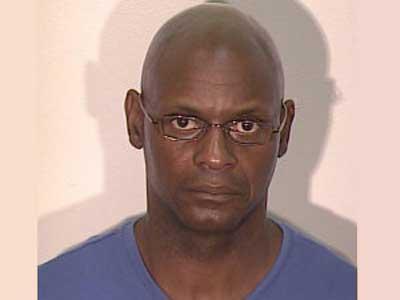
Kenneth Stanley, 22, was in his military garb when his mug shot was taken.

The soldier was arrested at Schofield Barracks and has been charged with exposing himself to young girls as they walked home from school.

Police said there are at least seven victims and that the flasher tended to strike between 2 p.m. and 4 p.m.

Two of the alleged incidents happened within blocks of each other in Aiea, on Lalani Street and Olopana Street and a third one in Mililani by Mililani High School.

Police said all three took place on separate days.

“As a parent here, I’m concerned for the children in the area,” said Mililani mom Cesceli Nakamura.

Several area schools have alerted parents about two guys in a black car driving up and down Kipapa Drive in Mililani, apparently putting on these unwelcome shows.

It is unclear whether it is related to the Stanley case, but parents are worried, especially after another alarming incident near Mililani High last week.

Police said a man tried to kidnap a 14-year-old girl by pulling her into some bushes.

Fortunately, she got away.

“She struggled and was able to get free,” said the school’s vice principal.

Letters were sent home to parents about that incident along with details of other reports by students who said they were offered drugs near campus.

This current case has parents being extra careful.

“I do have my young one who bikes to school and she comes home by herself sometimes,” said Neille Hagen, a mother of three. “We just informed them not to ever take a ride home with a stranger even if they presented themselves as a police officer.”

An official from Schofield Barracks said they were unaware of any arrests, but are looking into the incident.

Source: http://kgmb9.com/main/content/view/337/40/

Pearl Harbor and ‘Iolani Palace

http://hnn.us/articles/41662.html

History News Network

9/17/07

When’s a Palace an Emblem of Democratic Aspirations?

By Ron Briley

Mr. Briley is Assistant Headmaster, Sandia Preparatory School.

A recent visit to Hawaii during the annual meeting of the Pacific Coast Branch of the American Historical Association offered an opportunity to observe the impact of historical narratives well beyond the narrow confines of the history conference papers and sessions. Visits to the Arizona Memorial at Pearl Harbor and the ‘Iolani Palace, the royal residence constructed by King Kalakaua in 1882, offer contrasting historical narratives regarding the American presence in Hawaii. The Pearl Harbor experience reinforces the popular national notion of American innocence, while the guided tour of the ‘Iolani Palace provides a tale of how the United States government and business interests participated in the overthrow of legitimate Hawaiian authority. Conflicting narratives of American innocence and imperialism in the history of Hawaii obviously have larger implications for how the Untied States is perceived in the world today. Although the long lines at Pearl Harbor, as opposed to the handful of tourists at the Palace, provide ample support for the hegemonic belief in the United States of American innocence.

The Arizona Memorial at Pearl Harbor remains a moving experience, and the National Park Service does an excellent job of expediting the overflow crowds through the roughly seventy-five minute film and tour. Before the short boat ride to the Memorial, the Park Service seeks to create an atmosphere of reverence and respect amongst the restive tourists with the screening of a twenty-minute film which places the Japanese attack on Pearl Harbor within historical context. With the large number of Japanese tourists visiting the Memorial, there is no overt racism in the cinematic narrative. Japan is clearly portrayed as the aggressor in the Pacific, but this is neither due to the Japanese people nor Emperor Hirohito. Rather, the blame for the war is placed upon Japanese militarists, such as Premier Togo, who gained control of the government, invading China and allying with Hitler. On the other hand, Admiral Yamamoto becomes the noble man of the Japanese military, opposing the assault upon Pearl Harbor but executing his mission with precision.

The Americans are depicted as champions of democracy who seek to defend Hawaii, as well as the Philippine Islands and Vietnam, from Japanese conquest. There is no suggestion that the American military presence in Hawaii and the Philippines was motivated by any other concerns than promoting democracy. Of course, the history of American involvement with Hawaii and the Philippines is much more complicated. The U.S. military cooperated with American business interests to overthrow the Hawaiian monarchy, while U.S. Marines fought ferocious battles against Filipino insurgents following American acquisition of the Philippines from Spain in the 1898 Treaty of Paris ending the Spanish-American War.

Visitors to Pearl Harbor are not encouraged to question the reasons for the American presence in the Pacific. A more nuanced interpretation would introduce a note of ambiguity, with which many Americans are uncomfortable, into the perception of American innocence. It is no sign of disrespect to the fallen at Pearl Harbor to seek a better understanding of American foreign policy and the origins of World War II in order to avert future conflicts. It is fair to describe the Japanese as the aggressors at Pearl Harbor, but it misleading to depict the United States as having no economic or political ambitions in the Pacific.

This myth of Pearl Harbor exacerbates the sense of American purity which makes it difficult for many citizens to comprehend the complexities of the modern world. For example, many equate Pearl Harbor and 9/11 as manifestations of assaults upon an innocent America. One does not have to subscribe to the simplistic rhetoric and conclusions of Ward Churchill to recognize that it is crucial for Americans to examine the world view of those who wish to attack the United States. While the 9/11 victims were innocent, the history of American expansionism is more complicated. For example, the post World War II legacy of the U.S. supporting undemocratic regimes has its origins in the Truman Doctrine, for the litmus test of anticommunism all too often placed the United States in alliance with some unsavory bedfellows such as Saddam Hussein or the Shah of Iran.

This more conflicted history of America’s presence on the international stage is provided for Hawaiian tourists who stray from the beaten path and visit the ‘Iolani Palace. Here, visitors are cautioned about demonstrating proper reverence for the past, except this time the respect is for Queen Lili’uokalani whose monarchy was toppled in 1893 by American businessmen in cahoots with the United States Navy. As tourists move through the beautiful palace in their padded booties, they are informed that in 1895 the Queen was placed on trial, in her own throne room, for treason against the newly-constituted Republic of Hawaii, which represented the aspirations of American businessmen, such as Sanford Dole, rather than the indigenous Hawaiian people. The Queen was placed under house arrest for almost a year in a second floor bedroom of the Palace, where she worked on a quilt reflecting themes of Hawaiian sovereignty. Meanwhile, many of the royal furnishings were sold at public auctions by the new government. Lili’uokalani appealed to President Grover Cleveland to oppose a treaty of annexation and restore her monarchy. He said he was appalled by the takeover but five years later the United States backed the conquest of Hawaii. In the favorable expansionist atmosphere fostered by the Spanish-American War, Hawaii was accepted as an American territory, although statehood was not conferred until 1959. Lili’uokalani never regained her throne, and she died in 1917. The ‘Iolani Palace remains a symbol of Hawaiian nationalism and pride.

The narrative of Pearl Harbor is well known, and the Arizona is a worthy memorial and tourist destination. But the story of Lili’uokalani and the ‘Iolani Palace remains off the beaten path. Disregarding the troubled history of the Hawaiian monarchy distorts the American presence in paradise. History never takes a holiday, and an unquestioning acceptance of the American myth of innocence in Hawaii may cloud perceptions of the complicated international milieu in which we live and work.

Construction begins on NSA/Navy center

Posted on: Friday, August 31, 2007

Work starts on national security center in Wahiawa

By Lynda Arakawa
Advertiser Central O’ahu Writer


Hawaii news photo – The Honolulu Advertiser

Mike Stramella; Cynthia Dearfield; Rear Adm. T.G. Alexander, commander of Navy Region Hawai’i and Naval Surface Group Middle Pacific; U.S. Sen. Daniel K. Inouye; Army Lt. Gen Keith Alexander, director, National Security Agency/chief, Central Security Service; Gerry Majkut; Navy Capt. Jan Tighe, commander, National Security Agency/Central Security Service; Theron Holloway; Navy Capt. Clifford Maurer; Cary Sparks; and Henry Lee break the ground with ‘o’o sticks during a ceremony for the new Hawai’i Regional Security Operations Center at the U.S. Naval Computer and Telecommunications Area Master Station Pacific in Wahiawa. The building, which is scheduled for completion in late 2010, is part of the largest construction contract in the history of the Naval Engineering Facility Command.

The National Security Agency/Central Security Service Hawai’i yesterday broke ground on its new operations facility in Wahiawa that security officials said will help strengthen the nation’s intelligence capabilities.

The new 234,000-square-foot, two-story building adjacent to Whitmore Village is expected to be completed in September 2010. It’s part of a 270,000-square-foot complex built on 70 acres at the Naval Computer and Telecommunications Area Master Station Pacific.

The $318 million project also includes an access road and improvements to Whitmore Avenue and Kamehameha Highway.

The new Hawai’i Regional Security Operations Center – to be located at a previously decommissioned circular antenna array known as the “elephant cage” – will replace an aging underground facility in Kunia.

NSA officials said it’s unclear how many personnel will work in the new facility and how many will be new positions. They said most of the 2,700 current personnel at the Kunia facility building will move to the new structure and that the agency also expects “limited hiring” for specific skills starting in 2009.

The Kunia Regional Security Operations Center, now known as the National Security Agency Hawai’i, performs intelligence gathering and analysis missions supporting U.S. interests in areas including the Pacific, Far East, Southeast Asia and the Indian Ocean.

Security officials yesterday expressed high expectations for the new facility.

“This state-of-the-art facility will enable us to strengthen our intelligence support to the nation’s policymakers and combatant commanders,” said Navy Capt. Jan Tighe, commander of the National Security Agency/Central Security Service, Hawai’i. “It will provide NSA/CSS Hawai’i with an open, flexible, collaborative work environment allowing us to respond to new threats in an agile and timely manner.”

The new facility was initially planned to be a 350,000-square-foot, three-story building, but NSA Hawai’i spokeswoman Liz Egan said it was scaled down because of construction costs in Hawai’i.

In addition to the complex, contractor DCK Pacific LLC, will build an 8,000-foot access road connecting the facility to Whitmore Avenue that officials said will help divert traffic away from homes.

The project also includes improvements to Whitmore Avenue, including additional turn lanes, traffic signal upgrades at the Kamehameha Highway intersection and a sidewalk extension from Kamehameha Highway to Kahi Kani Park. Officials said improvements also will be made to Kamehameha Highway at and around the intersection with Whitmore Avenue.

The road construction work will be done around rush hour periods to reduce the impact on the community, said Naval Facilities Engineering Command Hawai’i spokeswoman Denise Emsley.

Alena Pule, president of the Whitmore Community Association, said she supports the project.

“I feel a new era for the community and the military,” she said.

Pule also said the access road will help alleviate traffic in the area “so there is safety for our kids … and the community.”

An NSA spokeswoman said officials have yet to decide the future of the existing underground Kunia facility, also known as “the Tunnels.”

The 250,000-square-foot Kunia facility, adjacent to Schofield Barracks, was built in the 1940s following the Pearl Harbor attack. Military officials wanted to have an aircraft assembly plant less vulnerable to enemy attack.

Reach Lynda Arakawa at larakawa@honoluluadvertiser.com.

Source: http://the.honoluluadvertiser.com/article/2007/Aug/31/ln/hawaii708310326.html

Range of failures led to Army collision with Aiea overpass

Posted on: Sunday, July 29, 2007

Range of failures led to Aiea overpass crash

By William Cole
Advertiser Military Writer

hawaii707290359ar_b

Traffic on the H-1 came to a standstill on a Tuesday afternoon nearly a year ago after an ‘Aiea crash closed all six westbound lanes.

ADVERTISER LIBRARY PHOTOS | Sept. 5, 2006

hawaii707290359v1_b

A soldier is seen adjusting the Army rig’s equipment after it hit an ‘Aiea overpass.

ADVERTISER LIBRARY PHOTO | Sept. 5, 2006

Last year’s crash of a military truck and excavator into an ‘Aiea overpass, which led to one of the worst traffic tie-ups in state history, was the result of widespread misunderstanding by soldiers as to what constituted a “convoy,” a breakdown in responsibility, a failure to use an escort vehicle and a rush to get on the road.

It all could have been avoided had someone simply used a measuring tape to figure out the height of the load.

Those are among the findings of an Army investigation obtained by The Advertiser into the 1:30 p.m. accident on Sept. 5, 2006, on the ‘Ewa-bound H-1 Freeway, which paralyzed O’ahu roadways and affected tens of thousands on a day that was dubbed “Black Tuesday.”

“Not one piece of documentation required for this operation was completed to standard,” reported Lt. Col. Tracy E. McLean, the investigating officer.

An excavator with a 4-foot hydraulic hammer attachment was atop the Army semi-trailer when the rig slammed into the concrete overpass at between 45 and 55 mph.

The 18 1/2-foot-tall heavy machinery was more than 2 feet taller than the bottom of the footbridge, which has a maximum allowable height of 14 feet for vehicles.

The crash created an explosion of dust and rubble.

“For a few seconds, I just couldn’t see. You couldn’t see nothing,” said Leslie Kumia, who was driving a green 1994 Ford next to the truck.

Scott Ishikawa, spokesman for the state Department of Transportation, said some witnesses reported seeing the bridge buckle. Baseball-sized pieces of concrete hailed down.

“We’re fortunate we didn’t have a kid walking on that overpass at the time, because it’s meant for the schools,” Ishikawa said.

All six westbound lanes of the H-1 were shut down.

It was described as the perfect storm – an accident at the worst place at the worst time. Traffic backed up like water rushing into a clogged sink.

FAR-REACHING IMPACTS

But “Black Tuesday” has had ramifications far beyond the stories of bumper-to-bumper gridlock, half-day commutes and tourists walking to the airport, bags in hand.

An approximately $600,000 bill is still being finalized by the state Department of Transportation for delivery to the Army for the cost of tearing down the old overpass and putting up a new one.

The Army paid about $200,000 for damage and loss of use of the excavator, which was rented from Western Machinery in Kapolei, a company representative said. Costs for the Honolulu Police Department and TheBus being billed to the Army total another $26,700.

Meanwhile, an afternoon rush Zipper Lane on the H-1 is being considered that could double as an emergency contra-flow bypass.

The Honolulu Police Department’s District 3, which extends from Red Hill to Kunia, developed an emergency response plan with predetermined turn-offs and staffing requirements should something similar happen again.

Civil Defense stands ready to pass the word more quickly to TV and radio stations and newspapers.

The ensuing Army investigation found plenty of blame to go around, from the highest levels of the 29th Engineer Battalion and its 82nd Engineer Company down to the driver of the M1916A3 truck, 36-year-old Sgt. R.J. Eugin Jr.

“No one from the battalion commander on down could clearly articulate when a convoy clearance was required,” investigator McLean wrote. “Most people thought that if you send the vehicles out in groups of five or less, no convoy clearance was required, which is a misinterpretation of the regulation.”

The 25th Infantry Division convoy commander’s guide states that convoy clearances are required even if a single vehicle is involved if the vehicle requires a special hauling permit.

Had an escort vehicle been used, “the escort vehicle would likely have noticed the load was too tall before the collision with the bridge occurred,” McLean said.

Maj. Curtis Edson, the 29th Engineer Battalion’s operations officer, said in the report that the rig hit the lighting supports of at least three overhead signs before striking the overpass.

STRUGGLE FOR REPORT

The Advertiser obtained the more than 500-page Army Article 15-6 investigation through a Freedom of Information Act request, which the U.S. Army Garrison, Hawai’i, first rejected in February, saying the information was “exempt from disclosure.”

An appeal to the Pentagon reversed the garrison’s earlier refusal, but the Army still redacted multiple pages, saying some of the information was classified and its release would damage national security.

The Army said the 8th Theater Sustainment Command, the 29th Engineer Battalion’s higher headquarters at Fort Shafter, took nonjudicial, or administrative, action against leaders and soldiers involved.

Penalties included fines, reduction in grade and letters of reprimand.

But the Army said, “We will not discuss the specific actions nor release the names of the individuals disciplined due to privacy act concerns.”

“The Army immediately accepted responsibility for this accident and deeply regrets the impacts that the accident had on individuals and families throughout the island,” the service said in e-mailed responses to Advertiser questions. “The findings and recommendations from the investigation were used to modify our internal procedures to prevent a similar accident. We pride ourselves as being good neighbors and want to do our part to ensure something like this doesn’t happen again.”

The accident occurred after U.S. Army, Pacific, at Fort Shafter tasked the 82nd Engineer Company to demolish a bachelors’ quarters on Kwajalein Atoll.

Two excavators were leased for the project, including the 330 LX HYEX involved in the accident.

On June 6, unit equipment deployed from Schofield Barracks. Following the demolition work, the excavators were loaded on a barge on Aug. 9 and 10 for the voyage back to Pearl Harbor and arrived the morning of Sept. 5.

‘NO ONE … UNDERSTOOD’

That morning, there were 18 vehicles that had to travel from Pearl Harbor to Schofield, including oversized vehicles requiring special hauling permits and Army convoy clearance permission, “but no one at the company or battalion level understood this requirement,” McLean, the Army’s investigating officer, said in her report.

“There was clearly a lack of supervision and oversight at all levels within the company to ensure required paperwork for this operation was completed to standard,” she said. “During this operation, there was also a lack of discipline at the lowest levels to fill out even the most basic and routine paperwork.”

Eugin, the driver of the truck that hit the overpass, was tapped for the job when he arrived at the port that morning because there was a shortage of drivers.

In testimony, he said he had moved oversized pieces of equipment on Hawai’i highways four to five times in late 2005, and to the best of his knowledge, without DOT permits.

There was a “safety briefing” that morning covering speeds on the barge and docks and highway height restrictions, but Eugin said no one measured the load and he was not aware of the requirement to have escort vehicles.

Pfc. Bobi Jo Tieden was the “truck commander” of the vehicle, but the investigation said she had not been in the Army long and she did not have enough experience to perform her duties.

Tieden, 20, said when the rig hit the overpass, “the truck and trailer did a jack-knife effect, we were jerked and then came to a stop on the interstate.”

Eugin was negligent for departing without measuring the load and without escort vehicles, McLean said.

The convoy commander, meanwhile, failed to direct subordinates to remove a 4-foot hydraulic hammer from the excavator that made the load 18 1/2 feet tall, the report said. Had it been removed, the height would have been under 14 1/2 feet, and the equipment would have cleared the overpass.

The company commander thought it was the company executive officer’s responsibility to submit the permit to haul oversized equipment, McLean stated.

The responsibility actually falls to the company unit movement/safety officer, but she stated she never received training or guidance on her duties, and was not at the port, according to the investigation.

Additionally, there were “some difficulties” off-loading the barge that morning, and haste to get on the highway before a convoy cut-off time of 4 to 6 p.m., the report found.

NEW PROCEDURES

As a result of McLean’s recommendations, the Army said the unit involved has implemented new procedures, checks and instructions to improve the safety of the military vehicles operating in Hawai’i.

Those procedures have been shared with other units so they can implement their own safety procedures.

Among the changes, no over-sized vehicles will be transported without the specific approval of the battalion-level commander and only after proper convoy clearance and other permits are obtained and a comprehensive risk assessment is done.

Shortly after the accident, the state DOT said the Army had rarely applied for oversize load permits to transport equipment like the excavator. Instead, it relied on a contractor for much of the hauling.

The DOT’s Ishikawa said the permits office was getting one or two oversize and overweight load applications a month from the military and military contractors before the accident.

But since then, “Just this year alone, we have about 200 permit applications,” he said. “I think there’s better communication now between the DOT and the military.”

Part of the permit’s purpose is to lay out the best route to take.

Honolulu Police Maj. Debora Tandal, commander of HPD’s District 3, developed a plan to staff key intersections and divert traffic if something similar happens again.

“It’s more uniform now,” Tandal said. “So it wouldn’t be a matter of deciding we’d have (traffic control) at certain intersections. The intersections are identified.”

Ishikawa said thought is being given to having an afternoon rush Zipper Lane, and creating more openings in the H-1 median to divert traffic to the other side in the event of a highway calamity.

“It would probably be one or two lanes, but still, it’s better than no lanes,” he said.

Reach William Cole at wcole@honoluluadvertiser.com.

THE ACCIDENT

On Sept. 5, 2006, at 1:30 p.m., an Army semi-trailer hauling a rented excavator slammed into the ‘Aiea pedestrian overpass at 45 to 55 mph. The mauka portion of the overpass was damaged beyond repair, and transportation officials closed down the entire westbound H-1 Freeway for more than 12 hours.

THE INVESTIGATION

The Army concluded that the accident was the result of widespread misunderstanding by soldiers as to what constitutes a “convoy,” a breakdown in responsibility, a failure to use an escort vehicle and a rush to get on the road. Penalties against soldiers involved included fines, reduction in grade and letters of reprimand.

THE OUTCOME

Honolulu police developed an emergency response plan with pre-determined turnoffs and staffing requirements should something similar happen again. An afternoon rush-hour Zipper Lane on H-1 is being considered to double as an emergency contra-flow bypass.

THE ACCIDENT’S COST, BY THE NUMBERS

8 hours

How long it took some people to get home. Walking in any westerly direction on the town side of the overpass was usually faster than driving.

103 days

How long it took before a new pedestrian walkway opened. Crews cut out the damaged section of overpass in record time.

$826,000

Minimum the Army will pay for the overpass replacement, damage to the rented crane, and for HPD, TheBus maintenance costs associated with the accident.

Source: http://the.honoluluadvertiser.com/article/2007/May/25/ln/FP705250379.html/?print=on

Military cargo plane and passenger jet nearly collide in Honolulu

Posted on: Friday, May 25, 2007

It’s close call for C-130, go! jet

By Dan Nakaso
Advertiser Staff Writer

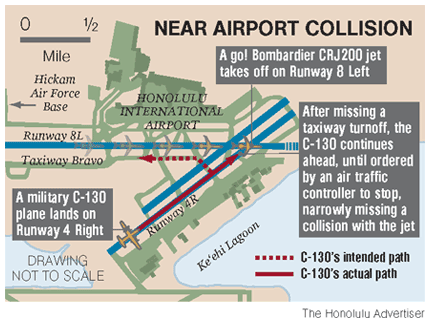
A C-130 military cargo plane came close to crossing the path of a go! passenger jet taking off from Honolulu International Airport at about 100 mph, the Federal Aviation Administration said.

“I’ve seen other incidents throughout my career but this was by far the closest,” air traffic controller Thom Gurule said yesterday. “I hate the term ‘near miss.’ This was a ‘near hit.’ I don’t want to see anything any closer.”

It was the second “runway incursion” since December at Honolulu International Airport, according to the FAA.

The C-130 pilot had just landed on Runway 4 Right and pointed the nose of his C-130 toward the path of a go! Bombardier jet taking off on Runway 8 Left, said FAA regional spokesman Ian Gregor and air traffic controller Scott Sorenson.

The pilot crossed the “hold bars” – the lines on the taxiway – and was only 110 feet from the runway edge, Gregor said, “but didn’t intrude onto the runway itself.”

The FAA ranks runway incursions from “A” – a crash or near collision – to “D,” a technical violation, Gregor said. The last incident in Honolulu in December was rated a “D,” Gregor said.

Neither the FAA nor Hickam Air Force Base, which shares runways with the Honolulu airport, could confirm which branch of the military the C-130 pilot flies for. Hickam spokeswoman Lt. Melanie McLean said the C-130 involved is not based at Hickam.

C-130s are flown by the Air Force, Navy, Marines and Coast Guard, McLean said.

She added that Hickam’s Safety Office is investigating the incident.

The Safety Office “thought it was minor in nature,” she said. “They said the aircraft and the pilots were in no danger.”

m174558525

JAPAN-BASED C-130 PILOT

Honolulu airport had two runway incursions in the fiscal year that ended Oct. 1, 2006, and three in the year to Oct. 1, 2005, Gregor said.

The FAA lists the latest runway incursion as occurring on Sunday. But air traffic controller Gurule said it was definitely 7:44 p.m. Saturday night.

The C-130 pilot was based out of Japan, Gurule said.

He twice gave the pilot instructions to “exit at Taxiway Echo, turn left, cross Runway 4 Left, then turn left on Taxiway Bravo, which runs parallel to Taxiway 8 Left,” Gregor said. “But the C-130 pilot didn’t make the left turn on Taxiway B. He kept going straight on, heading straight toward Runway 8, where the regional jet was on its take-off.”

The go! jet – known as Air Shuttle 1018 – was pointed in the diamondhead direction of Runway 8 and had just gotten permission from Gurule to take off.

Gurule then looked up just in time to see that the C-130 had not turned onto Taxiway B and instead was on the makai side of the runway facing the terminals – rolling directly into the path of the oncoming go! jet.

SPLIT-SECOND REACTION

Gurule said the C-130 pilot “was definitely in a very dangerous place to be.” The go! pilot was bearing down “past the point of no return,” Gurule said.

Gurule said he yelled at the C-130 pilot to “hold your position. … And he just stopped abruptly.”

Sorenson said Gurule “didn’t have two seconds or one second to think. It was a split-second, gut reaction to yell out to stop the pilot. Had he waited one or two seconds longer, we would definitely be talking about a different set of circumstances.”

Air Shuttle 1018 then lifted into the air in front of the C-130 and a nervous pilot came on the radio.

“There was a slight moment of silence,” Gurule said. “I asked Air Shuttle 1018, ‘Are you OK?’ You could tell the pilot was absolutely shaken up. His response was, ‘It was a little crazy for a second but we’re OK.’ Then he was concerned that maybe he did something wrong. His question to me was, ‘I was cleared for take-off, wasn’t I?'”

Gurule then directed the C-130 pilot to contact the tower about a possible “pilot deviation” and had no further contact with him.

The FAA continues to investigate the incident.

Reach Dan Nakaso at dnakaso@honoluluadvertiser.com.

Source: http://the.honoluluadvertiser.com/article/2007/May/25/ln/FP705250379.html/?print=on

Washed Ashore

Washed ashore

Keith Bettinger

Apr 11, 2007

It’s a refrain that has become frighteningly familiar: Relics of a long forgotten military operation turn up where they aren’t supposed to be, causing alarm in the community. An often frustrating and fruitless quest for answers follows, further straining the relationship between the civilian population of Hawai’i and its military tenants. This time the area in question is Ordnance Reef off of Poka’i Bay, and the relics in question are small, fibrous pellets that burn intensely when exposed to open flame. These tiny pellets are reportedly igniters for large artillery rounds and rockets left over from World War II.

According to reports in the local press, Army officials claim that ordnance dumped less than a mile from shore is not a threat to the fish and other marine life that inhabit the reef. The Army also stated that the dump does not pose a danger to the people who eat the fish around the reef or who swim in its waters.

Wai’anae residents believe differently. For them, the coast is not clear.

In May 2006, the National Oceanic & Atmospheric Administration (NOAA) conducted a survey of the ordnance site off Wai’anae. The study was part of the Ordnance Reef Project, which was under the direction of the Office of the Deputy Assistant Secretary of the Army for Environment, Safety and Occupational Health. The study employed biological, sediment and water sampling. It indicates that overall trace metals in sediments are very low and that there is little evidence of contamination of the area from discarded munitions.

But questions and concerns remain. Why? Technically speaking, the headlines of a few weeks proclaiming that it’s all clear off the Wai’anae Coast are wrong.

According to Michael Overfield, marine archaeologist with NOAA and coauthor of the report, it is a jump to say that the report concluded the reef is safe. The Army’s Office for Munitions and Chemical Matters made that conclusion, not NOAA.

‘I personally have seen grenades, grenade cans and grenade pins in 80 feet of water…I’ve got [a grenade pin] sitting on my desk’

-Waianae harbormaster William Aila

Erroneous conclusions aside, others believe the report itself is flawed. William Aila, Jr., longtime Wai’anae harbormaster, takes issue with the methodology used in analyzing the fish. He explains that the analysis didn’t target specific parts of the fish (i.e. organs) where metals or contaminants might accumulate. Instead, technicians ‘homogenized’ the fish, blending its parts together.

Others complain that the fish that were analyzed are not the kinds of fish that people eat (one of the objectives of the study was to collect fish species that are ‘harvested for human consumption’). Although the moano, the main fish taken from the Ordnance Reef area is a common food, Aila and others argue that there would be better choices.

‘The moano eats above the sand. It doesn’t eat the algae from the coral,’ the harbormaster says. ‘They should have picked a fish that people eat that are close to the coral. Those other fish [malamalama, humuhumu mimi, maka’a] are not fish that people eat.’

Aila speculates that the moano was chosen because that is the only fish researchers could catch.

Overfield points out that the choice of fish was determined by NOAA. He adds, ‘Unfortunately with fish, they don’t volunteer themselves to jump on your spear.’

Residents present at a Wai’anae neighborhood also questioned why there are so few fish swimming around the reef; these questions seemed to contradict comments made by one of the NOAA report’s coauthors to a briefing that the area was ‘teeming with life.’

Overfield says, ‘I saw a lot of reef fish down there. I saw a lot of coral growth as well. Coming out of Pˆka’i Bay to where there were large concentrations of munitions×We saw a lot of coral.’

However, one divemaster present at the meeting said quite pointedly, ‘That reef is dead.’

Uncovering the source

Sometime in the early 1920s the Army started dumping munitions at sea. These dumps included tremendous amounts of captured and unused chemical weapons. Around 64 million pounds of nerve and mustard agents along with 500 tons of radioactive waste are documented; the actual total including undocumented dumpings and dumpings for which records have been lost are likely higher.

‘They should have picked a fish that people eat that are close to the coral. Those other fish are not fish that people eat’

-William Aila

This activity continued until 1970, when public concerns prompted Congress to prohibit the practice. Now the Army is working to chronicle the history of chemical weapons dumping in an effort to see if there is any potential danger.

In a public study released in 2001, the Army’s Historical Research and Response Team identified 26 sites around the globe where the armed forces disposed of chemical agents in the ocean between World War II and 1970. (Other older sites are likely; the dumping of chemical weapons was common after World War I.) The report documents three sites in Hawai’i.

The first site was off Wai’anae, and the dump was made in late 1945. The report states that material was loaded at Wai’anae ‘to avoid moving the munitions through densely populated areas’ and that ‘the exact location of the sea disposal is unknown.’ This incident included over 4,000 tons of chemicals munitions, including hydrogen cyanide bombs, cyanogens chloride bombs, mustard bombs and lewisite.

The second dump occurred in 1944 off Pearl Harbor and included 4,220 tons of ‘unspecified toxics [sic] [and] hydrogen cyanide.’ The report notes that this material was probably loosely dumped and speculates that this is likely the source of a mortal round that injured a dredging crew in 1976.

The third documented dump occurred in 1944 ‘about five miles off of O’ahu’ and included around 16,000 100-pound mustard bombs or around 8,000 tons of chemical munitions. No one seems to know where this dumpsite is.

Although ‘the exact location is unknown,’ the Army knows where the chemical weapons should be. According to Department of War directives in effect in 1944, disposal sites were required to be at least 300 feet deep and 10 miles from the shore. In 1945 the policy was revised, changing the depth requirement to 600 feet. The policy was revised again in 1946, requiring a 6,000 foot depth for chemicals and 3,000 feet for explosive ammunition.

It is clear that the records don’t match regulations. It is also clear from other reports that munitions are often not where they are supposed to be-more are probably in places nobody has thought to look.

Currently, the Department of Defense is putting the finishing touches on a more comprehensive report covering ocean chemical weapons sites. It is expected to be released in the next month or so.

And while this new report will lead to more questions being asked and an increase in the number of folks calling for a cleanup, for now, though, there are more immediate problems lurking just off shore.

Hawaiian Jade

The munitions at Wai’anae have been found much closer than 10 miles from shore. The so-called Ordnance Reef or 5-Inch Reef (named for the presence of large, 5-inch diameter shells) ranges from .3 to 1.2 miles offshore. According to Aila, munitions have been found right off the Poka’i Bay break wall, less than 50 yards off shore at a location known to divers as Ammo Reef. Moreover, the previously mentioned cigarette-filter-size flammable nodules that have been described as ‘nitrocellulose propellant charges’ have been washing up on the shore for more than 50 years.

‘Another homeless person told me that these tablets are what we used to use to start bonfires. I lit it with a lighter and the thing just shot off. I blew it out and it restarted again by itself.’

-Alice Greenwood

‘We’ve found full-on artillery shells,’ says Aila, who has called the Navy’s Explosive Ordinance Disposal Unit twice over the past 20 years. ‘I personally have seen grenades, grenade cans and grenade pins in 80 feet of water. I’ve got one sitting on my desk.’

Aila explains that there is probably ordnance he doesn’t know about: ‘Often times people don’t tell me because it’s an interesting dive site, and they don’t want me to have the ordnance removed.’

The report and the munitions were on the April 3 meeting agenda for the Wai’anae Neighborhood Board No. 24. During the meeting board member Paul K. Pomaikai said, ‘Tonight I’m going to make an action to set a date to start the cleanup. I say that we take it all the way to Washington, D.C.’

He adds, ‘When it hits the tourists in Waikiki, then we do something? We don’t know what else is going to wash up. The stuff that doesn’t wash up is what worries me. The stuff that gets in our coral and in our fishes.’
That night the board passed a motion to ‘demand the military clean up the reef, shore and ocean starting June 1, 2007, in Wai’anae.’

According to observers, the board was uncharacteristically unanimous regarding this issue. ‘There are some real pro-military people on that board,’ says Fred Dodge, a local physician and activist familiar with the issue. ‘The fact that they went along with the motion shows how united they are on this.’

Alice Greenwood, a lifelong resident of Wai’anae, says she first learned of the pellets from the beach’s homeless residents.

“Look, this is ‘Hawaiian Jade”, [the homeless person] told me. I took the tablet and showed it around. Another homeless person told me that these tablets are what [they] used to use to start bonfires,’ she says. ‘I lit it with a lighter, and the thing just shot off. I blew it out, and it restarted again by itself.’

Greenwood was in attendance at the neighborhood board meeting. She presented one of the igniters to the Navy representative who was on hand for the monthly briefing. She requested the representative take the igniter for testing.

According to Greenwood, ‘When the ocean is calm, not many wash up. The ocean is getting rougher now, though, so we’ll probably see a bunch wash up in the next few days.’ She says she has a ‘whole jar’ filled with igniters ranging in size from one to three inches in length and she regularly collects them from the beach’s residents.

The bombs from wars past that make up Wai’anae’s explosive tide are not the same types of munitions detailed in the Army Historical Team’s 2001 report. In fact, they don’t seem to be chemical weapons at all, but are rather conventional munitions; military dives in 2002 revealed a variety of munitions including naval gun ammunition, 105mm and 155mm artillery projectiles, mines, mortars and small arms ammunition. So the question is, where did they come from? Again, no one seems to know.

The best guess is that the munitions were dumped during World War II, but there is no way to know for certain. And the lack of documentation indicates that there is no way to know the extent of the dumping zone or if other dumping zones exist elsewhere around the islands.

Furthermore, the study states that the survey found nine additional clusters of military munitions not previously identified near the shore, suggesting that there may be other discarded military munitions waiting to be discovered. But the NOAA report also indicates that levels of metals (except copper) in fish seem to be normal and no positive relationships between the ordnance and heightened levels of contaminants could be ascertained.

So is the Wai’anae issue closed? Probably not, but it’s going to be an uphill slog for community activists and legislators looking for answers and pressing for action.

J.C. King, an assistant for munitions and chemical matters for the Army says the study shows ‘there is no immediate threat to the public or the environment’ and that no cleanup is imminent.

Some locals don’t agree with that assessment. ‘What if children find those [propellants]?’ asked one resident present at the meeting. ‘They are washing up all over the place.’

‘Insead of someone who’s from outside the community, they should have someone who’s from Waianae doing the study. They should talk to the people who are at the beach all the time’

-Rep. Maile Shimabukuro

Rep. Maile Shimabukuro, who represents Wai’anae, is less than satisfied with the results of the study. ‘Instead of someone who’s from outside the community, they should have someone who’s from Wai’anae doing the study. They should talk to the people who are at the beach all the time. There seems to be a disconnect between the locals and the people doing the study,’ she says. ‘And they should’ve tested humans×People that are in the water almost every day.’

Rep. Shimabukuro has filed several Freedom of Information Act requests for documents pertaining to the Wai’anae dumpsite. So far her office has not received a substantive response.

‘There is a pattern of obstructionism, denial and not listening to the community. They are control freaks about any bit of information that comes out,’ says Aila of his interactions with the military. ‘They know that they’re in a situation where they can deny and deny until we come up with undeniable evidence and proof, and then they attempt to minimize that proof. It’s a classic pattern.’

It’s a difficult situation with no clear solution in site. A cleanup would cost millions and would damage the reef. Furthermore, given the fact that there are no records, there could be other sites around the island. The military has to consider how much it wants to put itself on the hook for.

Although Army spokesman Troy Griffen previously assured Wai’anae residents that ‘[the Army] accepts responsibility for those propellant grains as a military cleanup issue, and we’re working diligently and urgently with other agencies to determine the next actions that need to be taken,’ the Army says the new study indicates that no cleanup is necessary.

While there is no way to know where the next munitions will wash up, what is certain is that they eventually will. Or they will leak out of their containers. Or they will roll around on the ocean floor, damaging the coral. Or they will be dredged up by unsuspecting fishermen. Denying the problem only makes it worse.

According to many residents, community activists and politicians, the military is not always forthcoming when confronted with the lingering remnants of their past activities. There are complaints of willful obfuscation, misinformation and foot dragging. Only when the truth starts to come out, activists say, does the military ‘goes into damage control mode.’

As a result, many locals say that until the military adopts an attitude of willingness to clean up after itself, they will continue to feel unsure about the fish they eat and the water they swim in.

Army officials did not respond to numerous requests for information for this article.

Keith Bettinger can be contacted at kisu1492@yahoo.com.

What is the danger of submerged chemical weapons?

Until the ocean disposal of chemical weapons ceased in 1970, the military dumped millions of pounds of chemicals into the seas. Exact amounts and precise locations are unknown, but according to Craig Williams of the Kentucky-based Chemical Weapons Working Group, more than 500,000 tons has been dumped off U.S. coasts, including Hawai’i. The theory behind dumping chemical weapons in the ocean is that they will dissipate before causing any serious damage or that the pressure and cold temperatures of the depths of the ocean will render munitions inert. However, containers corrode over time, releasing the chemicals into the ocean. The longer the chemicals remain in the ocean, the greater the chances for a rupture or leak.

‘There are a number of avenues of risk associated with this,’ Williams says. ‘The highest is to marine life. In small doses chemicals can accumulate in animals and work their way up the food chain×There are also impacts on the reproductive capabilities of some species, in addition to the lethality of higher doses.’

Though military documents indicate these chemicals break down quickly in water, they can remain dangerous in their containers for years. And military studies might be misleading.

‘Some studies contradict this blanket feel-good position of the government. Each chemical agent will have a different reaction with whatever it is exposed to, whether it is water or salt water. It is inappropriate of the government to assume that chemicals will react the same way and dissipate,’ Williams adds.

Here are details of some of the known chemical munitions dumped off the Hawaiian Islands. Army records also indicate numerous other dump locations in unspecified areas around the Pacific Ocean.

Mustard 3,927 tons

These are blister agents that form a solid mass in the colder temperatures fond at ocean depths. They are heavier than seawater and not very water soluble. According to Army documents, mustard deteriorates due to hydrolysis into chemicals (thiodiglycol and hydrochloric acid) that are non-toxic or are neutralized by the seawater. However, as the mustard deteriorates a hard polymer shell develops, effectively sealing the mustard off from the seawater. Thus mustard can remain stable for years in the ocean. ‘If a mustard round or container were to rupture or begin leaking, the evidence suggests the water encapsulates the mustard that is leaking into a globular underwater oil slick that can travel significant distances before it is broken up by current or topography,’ explains Williams. This is what caused large pus-filled blisters to afflict a bomb disposal crew from Dover Air Force base called in to dispose of mustard pulled up by a dredging operation in New Jersey in 2004. A similar incident occurred here in 1976.

Lewisite 399 tons

Lewisite is a blister agent similar to mustard, but faster acting. It is denser than mustard and has a much lower melting point, so it is usually in the form of a liquid in the ocean. When it was originally manufactured (production ceased in 1943) other chemicals were added as stabilizers, and so about a third of lewisite is actually arsenic. Army bulletins say that lewisite quickly loses its blister agent properties when exposed to seawater, but during this process arsenic is released, thus resulting in increased arsenic concentrations in sediments or solution.

Hydrogen Cyanide 4,227 tons

This toxin works by preventing the body’s cells from using oxygen. According to Army bulletins, this chemical, which was used mainly in World War I, quickly breaks down in seawater.

Cyanogen Chloride 489 tons

CK, as this agent is also known, is a colorless gas which is unstable in canister munitions and can form explosive polymers. CK is very soluble in water and breaks down quickly, and through a chain of reactions eventually yields carbon dioxide and ammonium chloride.

Source: http://honoluluweekly.com/cover/2007/04/washed-ashore/

Ex-soldier, with prior murder conviction, arrested for 1999 murder

KITV.com

11458959

Darnell Griffin

Police Arrest Man In 1999 Murder Case

Suspect Previously Convicted Of Murder

POSTED: 1:36 pm HST March 30, 2007

HONOLULU — Honolulu police arrested a convicted murder in connection with a murder case that happened in 1999.

Darnell Griffin faces charges of second-degree murder in the death of Evelyn Luka.

Luka was last seen alive leaving Venus nightclub with a man matching Griffin’s description one night, according to police. Her body was found the next day along the H-2 Freeway near the Ka Uka Road overpass.

The 20-year-old woman was barely alive. She remained in a hospital for a month before she died.

Griffin’s registered DNA appeared as a possible match to the cold case. Police arrested him on a parole violation. They tested his DNA and found it was a match in Luka’s case, according to police.

Police are holding Griffin in custody. He is expected to appear in court next week.

Source: http://www.kitv.com/print/11458880/detail.html#

Soldier and wife beaten in parking altercation a hate crime?

A fight erupted in a shopping mall parking lot between a Native Hawaiian boy and the military couple, Andrew and Dawn Dussell, that hit his car.  As the verbal exchange escalated, the boy called the soldier a ‘F____ haole”.  Coming out of a store, the boy’s father Gerald Pa’akaula punched out both the soldier and the soldier’s wife.   The incident sparked a media frenzy branding the incident as an anti-haole ‘hate crime’, ‘reverse racism’.  The tenor of the public reaction was similar to the dynamics of the infamous Massie Incident where “Hawaiian” boys were accused of raping Thalia Massie, a military wife; Thalia’s husband, mother and friend kidnapped and lynched Joseph Kahahawai, one of the accused boys.

What usually goes unexamined and unreported in these incidents is the social and historical context for the conflict.  The military occupation of Hawai’i is a constant source of resentment, humiliation and conflict.   These tensions worsen when the military expands, as it is currently doing.  Often, Americans who settle in Hawai’i bring attitudes of entitlement and racial and cultural superiority that grate local sensitivities.

In the Pa’akaula / Dussell incident, Hawaiian activist Ao Pohaku Rodenhurst alleges that the Dussells escalated the conflict and that Pa’akaula was defending his family.  At another time she also reported that the Pakaula family has gotten death threats after the incident.   There’s more to this story that needs to be examined.

>><<

http://the.honoluluadvertiser.com/article/2007/Feb/27/ln/FP702270352.html

Posted on: Tuesday, February 27, 2007

Hate crime not ruled out in Waikele assault

By Peter Boylan and Gordon Pang

Advertiser Staff Writers

As debate continued over the assault on an Army couple in the parking lot of a Waikele shopping center, city Prosecutor Peter Carlisle yesterday said he had not ruled out handling the case as a hate crime.

The assault remains under investigation, and the charges are up for evaluation, Carlisle said.

Carlisle met with Andrew Dussell, a 26-year-old soldier, and his wife after they were allegedly beaten in the parking lot of the shopping center Feb. 19. The pair asked that their privacy be respected, and Andrew Dussell is under orders from the Army not to speak out about the case, Carlisle said.

Both Andrew Dussell, who has served two tours of duty in Iraq, and his wife, Dawn Dussell, a 23-year-old nursing student at Hawai’i Pacific University, suffered broken noses, concussions and facial fractures.

A police affidavit filed in court said the attack occurred after the Dussells’ car collided with a vehicle while trying to pull into a parking stall.

Gerald D. Paakaula, 44, and his son were arrested in connection with the assault. The father has been charged with second-degree assault; the son’s case is being handled by the Family Court in confidential proceedings.

The affidavit said the son was “extremely angry that his vehicle had been struck.”

“He began yelling obscenities toward Andrew Dussell, calling him a ‘f—— haole’ while kicking his driver side door,” the document said.

Paakaula was released after posting $20,000 bail. The police affidavit did not allege that he made any racial remarks.

HATE CRIME OR NOT?

On Friday, Jim Fulton, a spokesman for the prosecutor’s office, said the case didn’t involve a hate crime, but Carlisle yesterday said he hadn’t looked at all the evidence and couldn’t comment about whether a hate crime prosecution is warranted.

Carlisle said the hate crime law is “very specific.”

“Was this guy targeted because of his race? From what I’m hearing, this was despicable, vicious and violent conduct with attendant verbal hostility, but you have to analyze that.

“Was this a targeting of a victim because of race or was there another reason for the conduct?”

State Public Defender Jack Tonaki said Paakaula and the son may try to obtain private attorneys.

“We don’t have enough information about the case to make any comment,” Tonaki said.

Paakaula has one prior criminal conviction for beating his son, the same one arrested in the Waikele case, when the boy was 11 years old.

The conviction for abuse of a family member came in 2002 after beating the boy with a belt and his fists for misbehavior at school.

Paakaula’s wife, Joreen, reported to police that the beating occurred in August 2002 and lasted for 10 to 15 minutes, according to the court file. When she tried to intervene, the elder Paakaula locked her out of a bedroom and continued striking her son, who she said was “screaming” in pain and fear.

She said the beating stopped only after she summoned Paakaula’s father, who lived a few doors away from their Wai’anae home.

The boy was treated at Kaiser Medical Center for bruises and scratches to his face and body. The boy told police the incident was “all a blur” to him and that he was in “extreme pain all over.”

Paakaula, a truck driver for a soft-drink company, pleaded guilty to the charge and was sentenced to 14 days in jail and two years’ probation.

State Circuit Judge Steven Alm later released Paakaula early from his probation sentence after receiving favorable reports from his probation officer and a family therapist.

The therapist reported that the Paakaulas, including the boy, “were exceptionally motivated to treatment, open to feedback and suggestions and very eager to turn the family crisis into a growth opportunity.

“At no time have I observed tension or fear on (the boy’s) part when relating to his father,” the therapist said. “On the contrary, it was clear that they have a close and warm relationship.”

Debate over the case, including messages and telephone calls to The Advertiser, has focused on whether it may have been a case of road rage rather than a hate crime.

In dozens of e-mails and phone calls since the first story appeared Saturday, many people want to help the injured couple while others say the incident reveals an undercurrent of racial tension in Hawai’i.

PROFESSORS WEIGH IN

Much of the public debate was touched off by comments from two University of Hawai’i at Manoa professors.

Jonathan Okamura, an ethnic studies professor, said he believed the alleged beating occurred or escalated as a result of racial considerations, based on the uttering of the phrase “f—— haole.”

But Jonathan Osorio, chairman of the Kamakakuokalani Center for Hawaiian Studies, said the case should not be classified as a hate crime and that Hawaiians should not be painted with a broad brush as a result of the incident.

UH professors contacted yesterday said that while many residents see Hawai’i as a land of aloha, racial tension does exist.

Many wondered if the public outcry would have been greater if a Hawaiian couple had been beaten by Caucasians, and suggested that such a circumstance would more likely have resulted in prosecutors charging the attackers with a hate crime.

Carlisle said in response that race is relevant to an assault case only if it can be proven that a person selected a victim based on that person’s race.

Noel Kent, a UH ethnic studies professor, said much of the concerns for the Dussells can be attributed to fears by a segment of the Caucasian population here.

“I think people feel very threatened,” Kent said. “Is a lot of it going on? I think some of it is going on. There’s always been a lot of resentment of haoles — the wealth and power and dominance and sort of cultural ignorance of local ways and local customs by certain Mainland haoles.”

Meanwhile, he said, “We’re living in a time where a lot of Native Hawaiians are looking at their lands continuing to get taken away and continuing to be a marginalized group in the Islands.”

While a segment of the Hawaiian community has felt under attack and responded in various ways, “there’s a backlash against that in many ways.”

Kent said he hopes the incident will cause all people living here to re-examine how they deal with their neighbors and ask themselves what is provoking anger among them.

Advertiser staff writer Jim Dooley contributed to this report.

Reach Peter Boylan at pboylan@honoluluadvertiser.com.

HATE-CRIME LAW

State law provides this definition:

“Hate crime means any criminal act in which the perpetrator intentionally selected the victim or in the case of a property crime, the property that was the object of a crime, because of hostility toward the actual or perceived race, religion, disability, ethnicity, national origin, gender identity or expression, or sexual orientation of any person.”

The prosecutor’s office said if a second-degree assault was prosecuted as a hate crime, the felony maximum penalty of five years could be increased to 10 years, but it must be proven that the perpetrator intentionally selected the victim based on the listed categories.

Source: Hawai’i Revised Statutes, Honolulu prosecutor’s office

>><<

http://www.khnl.com/Global/story.asp?S=6541216

Protestors say Suspect in Waikele Beating was Defending Family

By:Stephen Florino

Protestors want to set the record straight on an attack in a shopping center parking lot. According to the group, the man charged with assault for beating a married couple was coming to the aid of his wife and son.

“What happened in the Waikele beating wasn’t exactly what they claim it was,” said Ao Pohakuku Rodenhurst, organizer of the protest. “It was the media that put the spin on the truth.”

45-year old Gerald Paakaula pleaded not guilty on assault charges, for beating Andrew Dussell and his wife Dawn, at Waikele Shopping Center in February.

Investigators say the Dussells bumped Paakaula’s SUV. The people inside argued, and a fight followed. The protestors cite witness statements that Dussell’s wife attacked Paakaula’s teenage son first, then beat Paakaula’s wife.

“The mother comes out, sees this, go for protect her son, and this Dawn Dussell beats her down,” said Rodenhurst. “Beats her in front of her son, and the son couldn’t do nothing because the two soldiers standing there, taunting, threatening him.”

Police say the teen started the fight. They say Gerald Paakaula ended it, by slamming Dawn Dussell onto the asphalt, and punching Andrew Dussell and kicking him on the ground.

“He was defending his family and his wife, and just so happen, Dussell got lickens,” said Rodenhurst.

“This could’ve happened to anybody, but the bottom line is the victim is now the guilty party, and the guilty is heroes,” she said. “They not no heroes. They are guilty.”

Officials from the prosecutors office say they cannot comment on an on-going case. Paakaula’s trial is scheduled to start later this month.

Aiea overpass repairs to begin

Aiea overpass repairs to start Monday night

Two westbound lanes of the H-1 freeway will be closed after 9 p.m.

art9a

STAR-BULLETIN / SEPTEMBER 2006
The Aiea Heights Drive and Kaamilo Street overpasses frame a pedestrian overpass closed since Sept. 6 after it was struck by an oversize load being carried on an Army truck. Repair work on the pedestrian overpass is scheduled to begin Monday night.

Star-Bulletin staff
citydesk@starbulletin.com

Repair work is scheduled to begin Monday night on an Aiea pedestrian overpass that has been closed since it was struck Sept. 6 by an oversize load being carried on an Army truck.

Two of the six Ewa-bound lanes of the H-1 freeway will be closed after 9 p.m. Monday through Thursday while Hawaiian Dredging Construction Co. crews do preliminary repairs on the concrete bridge.

Two right lanes will be closed Monday and Tuesday nights, and two left lanes will be closed Wednesday and Thursday. The lane closures will end at 3:15 a.m., according to the state Department of Transportation.

The westbound freeway will be closed to traffic between the Halawa Interchange and the Waiau Interchange in Pearl City for one night during the week of Dec. 3. The contractor will install a precast section that will restore passage on the walkway.

The cost of the reconstruction is estimated at $500,000, said Scott Ishikawa, Transportation Department spokesman. That includes the $150,000 tab for demolition work done Sept. 6 after the accident. The state shut down that stretch of freeway for eight hours after the accident after officials deemed it unsafe to let traffic pass with the threat of concrete falling on vehicles.

An investigation determined that the boom of the hydraulic excavator being hauled in an Army tractor-trailer was 4 1/2 feet higher than the legal limit of 14 feet. The Army suspended the licenses of the driver and assistant driver.

The state decided to rebuild the 80-foot-long pedestrian overpass because there are schools on each end, Alvah Scott Elementary School on the makai side and Aiea High School on the mauka end.

The section of overpass over the eastbound lanes is a free-standing structure and did not need repair.
Source: http://archives.starbulletin.com/2006/11/25/news/story09.html

Locals pound kapa to enshroud ancient bones

The Molokai Dispatch published a story about a kapa-making workshop on Molokai led by Mililani Hanapi.  Terri Keko’olani was one of the participants. She is one of the claimants for burials at Mokapu, site of the Marine Corps Base Hawaii Kaneohe Bay:

At the Kewanui fish pond last Sunday, 44 international students learned the Hawaiian craft of kapa-making from Mililani Hanapi as a lesson in the making of traditional clothes, but the Wauke bark they pounded will not be worn by anyone living. Hanapi, along with Terrilee Kekoolani-Raymond of Oahu and several other volunteers, are preparing the kapa for the traditional burial of the largest collection of skeletal remains in the pacific – the bones of Mo`okapu on the island of Oahu.

The kapa prepared on Molokai will be used to wrap the individual bones for reburial. The skeletal remains of 1500 individuals have been stored at the Bishop Museum since 1942, when they were extracted from the Mookapu sand dunes to clear the way for a military airstrip. The US Marine Corps has been in control of the area since 1952.

Although she agrees that University of Hawaii archaeologists have learned invaluable information about Hawaiian history from the remains, Kekoolani-Raymond says that the excavation of the bones represented an assault on the Kahiko of Mo`okapu. She is part of a group of families and organizations who have come together to take responsibility for the proper reburying of their ancestors.

The bones have been released for reburial because of movement led by people in the Oahu community who are federal claimants under the NAGPRA (Native American Graves Protection and Repatriation) Act. NAGPRA is a federal law that requires federal agencies to allow federal tribes to obtain culturally affiliated human remains and artifacts. “It is a matter of respect,” explained Kekoolani-Raymond, “This is our way of saying we are sorry. We are so sorry for allowing this to happen.”

READ THE FULL ARTICLE