The Militarization of US Government Response to COVID-19 and What We Can Do About It

This statement was written by Drake Logan, a civilian ally to About Face: Veterans Against the War, with input on content by About Face members (post 9/11 military veterans) including Lisa Ling, Krystal Two Bulls, Maggie Martin, Erica Manley, Shawn Fischer, Jovanni Reyes, Matt W. Howard, Derek S. Matthews, Ramon Mejía, and Brittany DeBarros. Editorial guidance was provided by Clare Bayard, civilian ally to About Face. Authorship is always collective.

Media inquiries please contact us at press@aboutfaceveterans.org or call Drake Logan at: +1 (415) 513–6974.

Overview

This document outlines six broad areas of current political need and opportunity as the US government ramps up the militarization of its response to the coronavirus epidemic.

About Face: Veterans Against the War (formerly Iraq Veterans Against the War) is a grassroots organization made up of post-9/11 military veterans advocating for an end to the wars in which many of them participated, along with the use of military tactics, weapons and values in communities across the United States.

We present this statement in order to generate further conversation on these points both within and beyond our organization, as well as to enter the national media conversation on coronavirus response. Our intention is to continue to revise and update this statement as the situation and our analysis evolves. Please reach out to About Face if you are a member or civilian who would like to be involved in media work on these issues, or if you would like to help create further independent media.

We need to begin by tackling these six areas of political need and opportunity in the time of coronavirus:

  1. We need to engage in and spread the practice of community-based defense instead of militarized security.
  2. We need to draw careful lines between what is acceptable military response and what is categorically unacceptable.
  3. We need to put coronavirus in context with the Global War on Terror (GWoT) and domestic militarism.
  4. We need to resist and reject Coronavirus Capitalism.
  5. We need to demand that the Department of Defense adequately protect Active, Guard, and Reserve military personnel from contracting coronavirus.
  6. We need to act in solidarity with international communities.

We hold that moments of crisis like this one expose the faulty logic of a system that conflates violence with power, authoritarianism with safety, and productivity with value. When exposed for their weaknesses, systems of oppression often grasp for reinforcement through the aggressive projection of force and control. We are witnessing this dynamic before our eyes and it’s important we contextualize it as such.

READ THE FULL STATEMENT

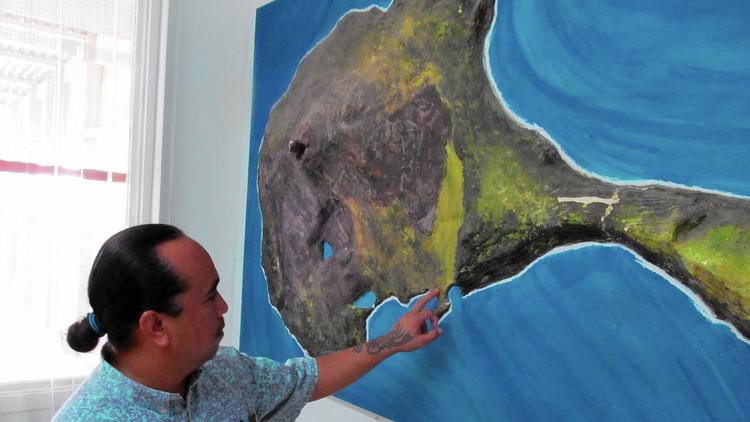
Pagan: “We love our island. We don’t want to give it up. This proposal is going to turn it into a wasteland.”


“We love our island. We don’t want to give it up,” says Jerome Aldan, the mayor of the Northern Mariana Islands. “This proposal is going to turn it into a wasteland.” (David Cloud, Los Angeles Times)

The Navy’s plan to conduct live fire training on Tinian and Pagan islands in the Commonwealth of the Northern Mariana Islands (CNMI) is another recent manifestation of President Obama’s so-called Pacific Pivot (now rebranded the “rebalance to Asia”). Meeting fierce anti-bases protests in Okinawa since the 1995 rape of a 12 year old schoolgirl by US Marines, the US and Japan have tried to relocate the Futenma MCAS to Henoko, Okinawa. This plan has been completely rejected by the vast majority of Okinawans and is now approaching a breaking point with regular civil disobedience on land and sea to protect the coral reef and seagrass habitats favored by the endangered northern Dugong.

Another element of the realignment plan involved moving up to 8000 marines plus their dependents to Guam, the US colony in the Mariana chain.  But strong opposition to the proposal, budget constraints in Congress and inadequate infrastructure on Guam have caused the US to recalibrate its plans. They are now looking at approximately 4000 marines going to Guam, 2500 to Australia on a rotating basis, and 2700 to Hawaiʻi. Additionally, the original plan to build a live fire range in Pagat point in Guam, an important ancient Chamorro cultural site, was blocked by legal and political pressure from the community. So the navy looked north to the CNMI, which is in a semi-colonial status under the U.S. The latest environmental impact statement just released looks at establishing enhanced live fire training on Tinian as well as taking over the northern island of Pagan.

Whereas the CNMI government had been more accepting of military plans in the past, this new proposal has sparked vociferous opposition. Check out the testimony from one of the public hearings.

The struggle there has finally gotten some wider media coverage, such as this piece in the Los Angeles Times “Island of Pagan opposes plan to use it for Marine invasion training” (5/17/2015):

“We love our island. We don’t want to give it up,” said Jerome Aldan, the 40-year-old elected mayor of the Northern Mariana Islands. “This proposal is going to turn it into a wasteland.”

The islanders were relocated to Saipan years ago when the volcano erupted, but now they want to return home.

Pagan is a gem of biodiversity. Biologists have been concerned about rumors that the military wanted to take over the island. Several years ago some UH researchers created a website to draw attention to the ecological resources that would be endangered by military occupation of the island.

The Alternative Zero Coalition is one group fighting the proposed plan.

Our Islands Are Sacred is a group on Facebook based in Guam that is also in solidarity with efforts to protect Tinian and Pagan.


Turbulence and Zombie Militarism: When a deadly aircraft crash is just a “hard landing”


Photo: Ken Quinata/KHON

Planet Earth seems to be experiencing a period of geophysical turbulence. Molten magma on the move. Earthquake clusters near the crater of Kilauea. The lava lake of Halemaʻumaʻu exploding and overflowing its banks, then subsiding. Earthquakes and volcanic eruptions at tectonic hotspots around the worlds including Papua New Guinea, Indonesia, Japan, and the terribly deadly swarm of quakes that killed thousands in Nepal.

The turbulence is also social and political. From #Blacklivesmatter demonstrations in Baltimore and other U.S. cities, to the worldwide #kukiaimauna #wearemaunakea protests against the Thirty Meter Telescope on sacred Mauna Kea, from kayaktivists blockading the Shell oil platform in Puget Sound, to Okinawans protesting on land and sea against the massive new reef-destroying Marine Corps base in Henoko, Okinawa, social relations are churning.

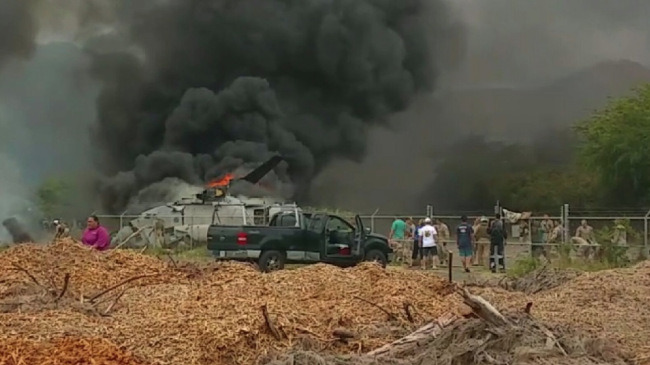
And now turbulence of the fluid dynamic sort, it seems, may have brought down a Marine Corps MV-22 Osprey tilt-rotor aircraft in a deadly crash in Waimānalo, Hawaiʻi that killed one two marines and injured 20 others. Watch this cellphone video of the crash:


Hawaii News Now – KGMB and KHNL

In the video, a large cloud of dust is kicked up by the powerful rotors. You can see the Osprey descending quickly, apparently with enough speed that the cameraperson expresses alarm. The aircraft hits the ground in the dust cloud and pieces can be seen flying off. Then flames and thick black smoke envelope the airplane followed by a fireball.

The Marines called it a “hard landing” rather than a crash, and the media has continued to parrot that terminology. The spin machine kicked in to minimize the severity of the incident, then to reaffirm the safety of the aircraft. The Marine Corps has an interest minimizing the danger of the Osprey because it has been plagued by deadly accidents and ballooning costs. Despite several attempts by the Pentagon to kill the expensive program, the Marines have been able to bring it back from the dead—zombie militarism—mindless pursuit of the objective despite the costs.

But they cannot bring back the dozens of lives lost in Osprey crashes.

The thing is, the Pentagon  has known about the hazards of the Osprey for more than ten years. The report V-22 Osprey: Wonder Weapon or Widow Maker? (2006) by Lee Gaillard of the Center for Defense Information states, “They warned us. But no one is listening.”

One of the main problems is what is called a “vortex ring state” (VRS), an aerodynamic conundrum inherent to its dual flight mode design:

We are not talking here about “glitches,” or subcomponent quality control issues, or assembly line carelessness problems. It is an aerodynamic enigma involving highly complex turbulence conditions beyond the analytic capabilities of our most advanced computational fluid dynamics simulations.

Given that the V-22’s dual-mode flight capability (as either helicopter or airplane) requires significant aerodynamic design compromises in its prop blades in an attempt to maximize their efficiency in both flight modes, the blades’ stiff, high-twist (47 degrees) design necessary for the higher speed horizontal flight mode poses severe danger when employed in rapid vertical descent situations likely to be faced in combat. This is, therefore, an essentially irreconcilable design conundrum that unfortunately cannot be ‘resolved.’ (14-15)

The report continues, citing an Operational Testing (OT) report:

As the OT-IIG report states, “When descending at a high rate with low forward speed, the rotor can become enveloped in its own downwash, which can result in a substantial loss of lift. … Should one rotor enter VRS and lose more lift than the other rotor, a sudden roll can result, which quickly couples into a[n inverted] nose-down pitch”17—i.e., an upsidedown nose-first crash. Such a maneuver at low altitude during high rate of descent into a hot landing zone would therefore result in catastrophic loss of the aircraft and all aboard.

This appears to describe what happened in videos of the crash.

osprey-crash

The news of the crash has gone international. In Japan and Okinawa in particular, there is intense interest in the danger of the Osprey. A hundred thousand people protested against the stationing of 24 Ospreys in Okinawa. The crash in Hawaiʻi will surely rekindle the opposition.

Several years ago, when the stationing of Osprey in Hawaiʻi was first announced, there was opposition from Kanaka Maoli who did not want an ancient Hawaiian fishing village site to be destroyed by the expanded Osprey hangar, and from neighbors of the Marine Corps Base Hawaii – Kaneohe Bay who feared the noise and safety impacts of the Osprey.

This crash may spark renewed opposition to the Osprey in particular, but also to the military occupation of Hawaiian “ceded” (i.e. stolen Hawaiian Kingdom lands) in Waimānalo. In the late 1990s, the Air Force conducted a series of hearings to discuss the possible closure and transfer of the Bellows Air Force Base land that was deemed “underutilized” after the end of the Cold War. Hawaiian community members wanted that the land be returned. But the Marine Corps wanted the land for its training. And the Commander of the Pacific Command, Admiral Macke (the same person who suggested that the US Marines who raped a 12 year old Okinawan school girl in 1995 should have paid for a prostitute instead) threatened to reduce the military presence in Hawaiʻi if the military didn’t get its way. So the Marines took over most of Bellows and use it for amphibious landing training as well as Military Operations in Urban Terrain (MOUT) training in a mock Afghan village. They even hired and flew in Afghan Americans from California to play Afghan villagers.

The crash coincides with the gathering in Hawaiʻi of military leaders from around the Asia-Pacific region to discuss amphibious combat skills.  It’s not clear that the Osprey flights were related to the conference.

Two workers injured by explosion in Mākua Valley

KHON reports that two grounds maintenance workers were injured in Mākua Valley when an unexploded munition exploded:

According to the U.S. Army Garrison-Hawaii’s public affairs office, two ground maintenance contractors were injured after encountering an apparent unexploded ordnance at Makua Military Reservation.

It happened at around 1:45 p.m.

An Army contracted medevac helicopter airlifted the civilians to Queen’s Medical Center.

The incident is under investigation, the army said.

Navy sonar believed to be cause of multiple whale stranding in Guam

KUAM news reports that on Monday, March 23, 2015 the Navy was conducting exercises using sonar, when three beaked whales beached themselves.

The U.S. Navy is now confirming that the day three whales were beached in Southern Guam, sonar testing was in fact being conducted. But Joint Region Marianas is waiting for test results to confirm whether in fact there’s a connection.

Michael O’Connell was doing construction work on his friend Steve Addison’s property in Merizo Monday morning when all of a sudden he saw a whale stuck on the reef. Immediately he along with his friends dropped what they were doing called the proper authorities and rescued the beaked whale. But that wasn’t the only rescue that day – one of O’Connell’s friends also rescued another beaked whale also in the Merizo area.

And yet there was another report of a beaked whale in Merizo, but that one didn’t make it alive.

According to Department of Agriculture biologist Brent Tibbats, these types of whales generally live in the open ocean or in deep water. Tibbats adds that beaked whales are associated with underwater sounds such as sonar which have caused them to beach in the past.


According to the Pacific Daily News, divers who were in the water on March 23 reported hearing loud pinging noises. One biologist believes there is a link between the sonar use and the whale beachings.

Divers who were in the water the same day a dead whale was found in Merizo reported hearing loud “pinging” sounds in the water.

Guam Department of Agriculture fisheries biologist Brent Tibbatts believes the noises indicate the use of sonar and said divers recorded video with the loud noises.

“I’ve heard from free-dive fishermen in Merizo and two dive boats at Blue Hole and in Agat that reported loud pinging while divers were in the water that morning,” said Tibbatts.

The Navy confirms that it was conducting sonar exercises that morning:

Joint Region Marianas public affairs officer Lt. Tim Gorman said on Monday, March 23, ships taking part in the Multi-Sail 2015 exercise left Naval Base Guam and their first use of sonar was at 10 a.m.

But the navy is denying that its sonar is to blame. Instead, the blame earthquakes that happened one and two days before the stranding:

“Marine mammals strand and die from natural causes including illness, disease, predation, and other environmental factors,” Gorman said. “For instance, a 4.7 magnitude earthquake took place on March 21 and a 5.5 magnitude earthquake took place on March 22 east of Guam. We don’t know yet if they played a role in the stranding,” Gorman said.

Aloha Mauna Kea – Day of Solidarity and Action

noTMT

Please support this call to action by MANA and hauMANA to oppose desecration of Mauna Kea. Actions will be happening at UH Mānoa, UH Hilo and at Mauna Kea.

E hoʻā i ka lāhui kākou – ignite into action! MANA and hauMANA are organizing an Aloha Mauna Kea, Day of Solidarity and Action. Bringin it home to UH Mānoa where the decisions to desecrate are made. In conjunction with actions at UH Hilo and the aloha ʻāina warriors holding it down on the mountain, please join us this week in a great showing of solidarity and love-for our people and for Mauna Kea. It’s time to turn up the heat! #TMTshutdown #alohaaina
Please share.

Navy Wants to Bomb the Gulf of Alaska?!

Screen_Shot_2014-10-03_at_2.41.24_PM

The Eyak Preservation Council, an organization formed in the aftermath of the Exxon Valdez oil spill, is dedicated to:

grassroots environmental and social change organization dedicated to promoting sustainable communities and protecting and preserving wild salmon habitat and Indigenous culture in the ancestral Eyak homelands of the Prince William Sound and Copper River watersheds.

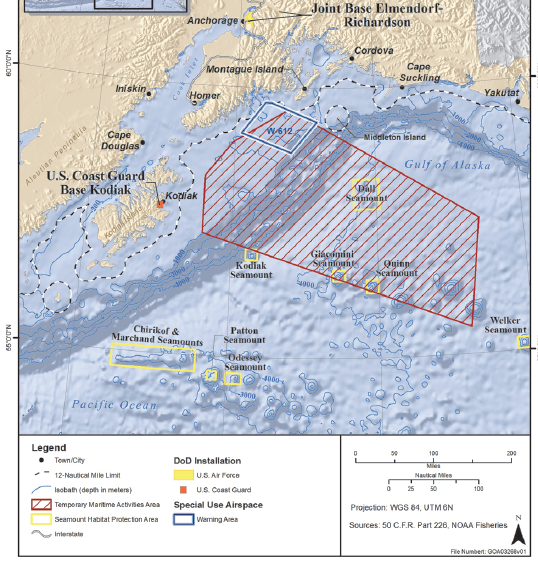
They are now fighting the Navy which wants to conduct live fire exercises in the Gulf of Alaska where the salmon grow to maturity.

The Navy is planning summer training exercises in the Gulf of Alaska for up to 42 days annually from April to October for a five-year period.

These “war games” will involve use of high-frequency and mid-frequency sonar for submarine exercises, plus a wide variety of live weapons and explosives – bombs, heavy deck guns, torpedoes, missiles, large carrier strikes (ships will be blown up & sunk; none of which will ever be recovered).

Click HERE to Sign their petition

And visit the Eyak Preservation Council website: http://www.eyakpreservationcouncil.org/navy-training-facts/ and see the links to letters on the left side of the page or call: 907-424-5890.